A financial report can be punctual, properly formatted and wrong. It can pass from one system to another with the composure of a guest who has arrived at the wrong wedding. The difficulty begins when everybody mistakes its good manners for proof that it belongs there.
Andrew Hedley has made that gap between appearance and evidence his business. With Matthew Ranson, he founded Novatus in 2019, bringing experience of financial risk to the work of checking what institutions tell their regulators. Their product, now styled En>ACT, examines transaction reporting. Their consultants work on the operational and regulatory problems around it. The appeal is practical: find the mistake, understand where it came from, and give somebody a chance to correct it.
By September 2024, Novatus had secured a $40 million growth investment from Silversmith Capital Partners. In May 2026, the company received a King’s Award for Enterprise in Innovation. Those are conspicuous milestones for a business concerned with work that often attracts attention only when something goes awry. Hedley’s route to them began with a rather different sort of exposure.
An unusual first risk
His first job was in terrorism underwriting at Hiscox. Later came risk leadership at institutions including Enstar, where he was Group Chief Risk Officer, and Vanguard, where he headed front office operational risk. He also led risk teams at Prudential and M&G. At Deloitte, his work included developing and implementing risk frameworks for banks and asset managers in London and New York.
The range matters. Insurance, investment management and consulting bring different vantage points to the same awkward question: how much confidence should an institution place in its own account of what it is doing? A framework sets expectations. An operating business then has to meet them, repeatedly, through people and systems that do not always agree.
Hedley also studied finance at the London School of Economics and Political Science; his public education record lists 2015 to 2017. The eventual founder had spent years inside the institutions whose problems Novatus would address. That experience gave the venture a specific starting point. Its customers’ reporting difficulties were familiar working problems, with owners, deadlines and consequences.
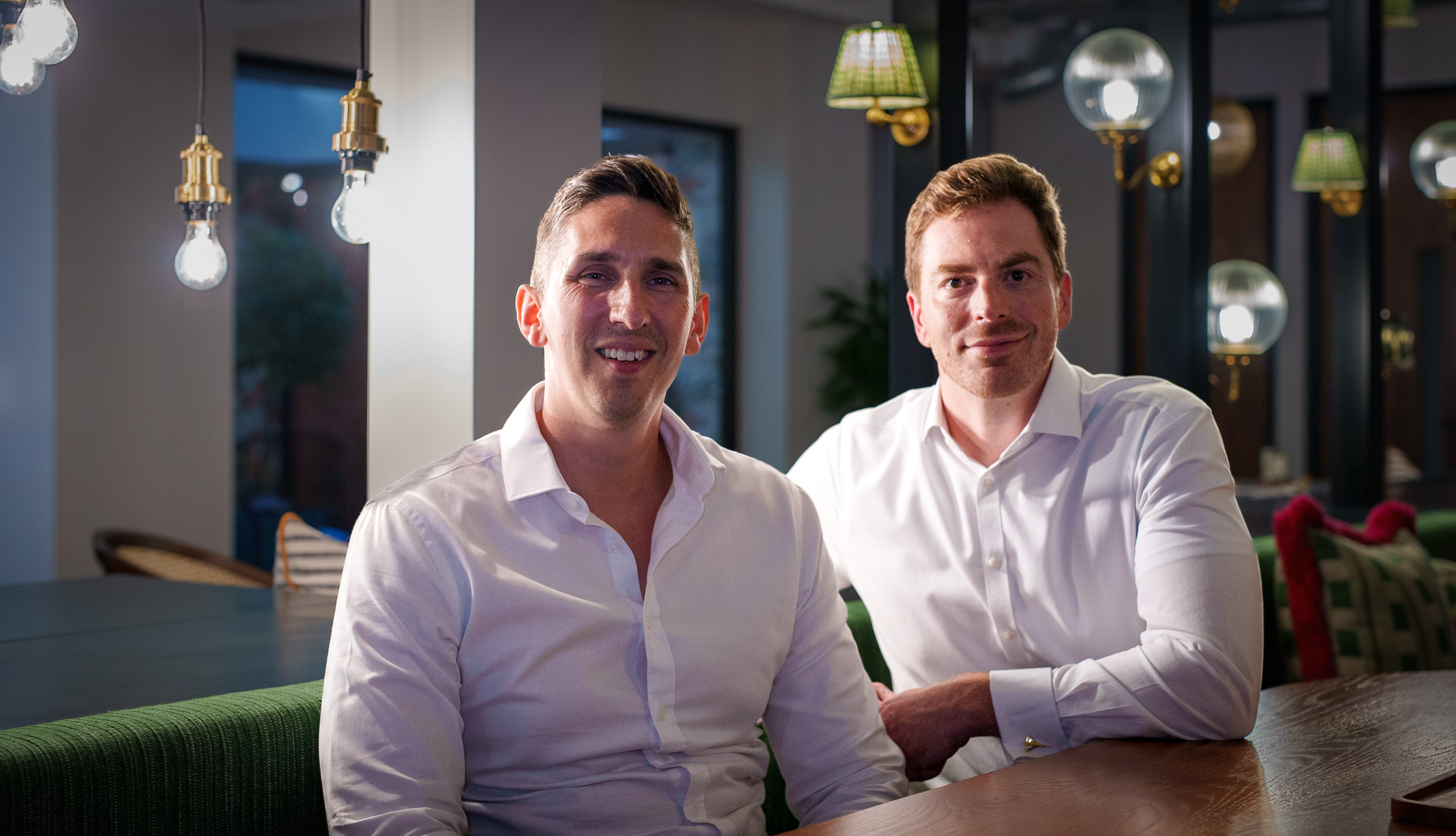
Two founders, one familiar headache
Ranson’s explanation of the founding is unusually economical: “Andrew and I had both lived this problem first-hand.” Their aim was to apply automated technology to transaction-reporting complexity. For Hedley, that meant moving from responsibility for risk within an institution to responsibility for a business selling other institutions a way to manage it.
Novatus developed both advisory work and software. By July 2022, when Maven announced a £4 million investment commitment, the business already had a technology division. Its flagship was called the Transaction Reporting Analysis tool. The capital was intended for technical advisers, sales and marketing, and product development. Even the spending plan contained both halves of the proposition: people who understood the problem and technology that could do the checking.
That combination makes sense of Hedley’s background. A software check needs a definition of correct. A reporting specialist needs enough reach to examine what is actually being sent. Novatus puts those capabilities together. Regulations supply the requirements; the work lies in making those requirements operate against the data a financial institution really holds.
There is little glamour in reconciliation, the process of checking that records agree. It does, however, have a useful social advantage: two sets of numbers can disagree without either becoming offended. Getting to the reason for their disagreement is where the human expertise earns its keep.
- 01Source recordsWhat the institution holds
- 02Reporting checksReconcile and examine
- 03Issues to resolveInvestigate discrepancies
The money followed the checking
Maven returned with follow-on investment in December 2023. It described annual recurring revenue growth of 263% since its initial investment and a workforce that had more than doubled. The next phase included building the business internationally. Australia became an early focus as firms prepared for changes to reporting requirements.
Hedley was explicit about that connection. In discussing the funding, he tied the Australian expansion to helping firms with major regulatory changes in 2024. Geography followed a customer problem. By March 2025, he was promoting a Sydney breakfast seminar scheduled for 1 April, bringing regulators and financial-services practitioners together to discuss trade reporting and data assurance across Asia-Pacific.
The larger funding announcement arrived on 12 September 2024. Silversmith’s $40 million investment was intended to support further technology development and international expansion, particularly in North America. Todd MacLean and Ned Kingsley joined the board. Maven retained an interest as it partially realised its investment.
The figures reward careful reading, appropriately enough. Maven reported a 13-fold increase in annual recurring revenue during its investment period. Its approximately 4.7-times total return included the value of a retained minority stake. Those measures describe different things: the growth of recurring business and an investor’s return. Neither number is Hedley’s personal wealth.
For the founder, the stated purpose of the new capital was to keep developing products and expand the business’s reach. The funding enlarged the means available for a task he already knew. A larger cheque could pay for engineering, customer work and new markets; the underlying test remained whether the reporting could be trusted.
and Ranson
announced Sep 2024
in June 2026
A score needs some company
In January 2026, Novatus introduced benchmarking within En>ACT. The feature lets firms compare their reporting performance with peers and the broader market, including at individual field level. It helps identify outliers and decide where remedial work deserves attention.
This is an interesting extension of the original problem. A firm can know its own error rate and still struggle to judge its significance. Comparison adds context. It can turn a general anxiety about data quality into a more specific conversation about which discrepancies to investigate first. The number acquires neighbours, and its behaviour becomes easier to assess.
In May, Novatus refreshed its identity around builders, coders and problem solvers. Hedley described continuity beneath the new presentation: “we build, we solve, and we deliver with purpose.” The business had expanded from specialist consulting into technology and consulting across regulatory, operational and data challenges.
The consulting practice now spans strategy and operations, data and AI, risk and resilience, compliance, ESG and transaction reporting. Those areas help explain why the business retains an advisory arm alongside its platform. A reporting discrepancy may need a technical correction, but the surrounding operating process also matters. Novatus presents its work as addressing the underlying causes of problems across data, systems and operations. The scope is broader than inspecting a file at the end of its journey.
The breadth brings its own management question. A founder with a background in risk must now help run an organisation whose expertise includes engineering, data, consulting and customer delivery. The product still needs precision; the company needs coordination. Each new capability adds another group of people who must be able to explain their work to the others.
“we build, we solve, and we deliver with purpose.”
Andrew Hedley / May 2026
The award, and the people behind it
The King’s Award for Enterprise in Innovation arrived on 6 May 2026. At that point, Novatus reported more than 100 staff across London, the United States, Australia and India. Hedley described the distance travelled from a business of two people. He also placed the recognition with the team, calling it “a celebration of our people”.
In a later public reflection on representing Novatus at St James’s Palace, he returned to the colleagues, leaders and mentors who had helped him. He singled out his time at Vanguard for lessons in leadership, client focus and doing the right thing, and remembered the investment Gerry O’Reilly made in other people.
It is a revealing choice of emphasis for a founder marking an award. The story he told included the people who had challenged and supported him before there was a Novatus to celebrate. Experience appears here as something passed between colleagues, as well as something accumulated through job titles.
By June 2026, the company’s appointment announcement for Andrew Pinnington put the team above 120 people. Pinnington joined from DTCC as Chief Customer Officer, taking responsibility for global sales, client success and managed services. Hedley linked the hire to sustaining the company’s growth through stronger commercial and customer leadership. A company can outgrow the arrangements that first made it work. Hiring becomes part of the product’s promise.
The next report still has to be right
In July 2026, Northern Trust selected LSEG and Novatus as a preferred partner for OTC trade repository reporting services for its middle office clients. The service combines LSEG’s G20 submission engine with En>ACT, using data supplied by Northern Trust. The selection followed a market review.
Hedley’s response stressed the combination of technology, specialist knowledge and partnerships. This is the same argument expressed at a larger institutional scale: a useful reporting service depends on several parts working together. Data must reach the right place, and the checks around it must mean something.
The milestones now include outside capital, international teams, a national innovation award and a role in a service selected by Northern Trust. Yet the attraction of Hedley’s story lies in how specific its central problem remains. He has moved across risk roles and into entrepreneurship without needing to exchange that problem for a more fashionable one.
Financial reporting offers plenty of opportunities for impressive presentation. Hedley and Ranson have built their company around inspecting what sits beneath it. After the funding announcement, the award ceremony and the new appointment, another set of records will arrive. Somebody will need to establish whether they agree. It is exacting work, and it is never quite finished.