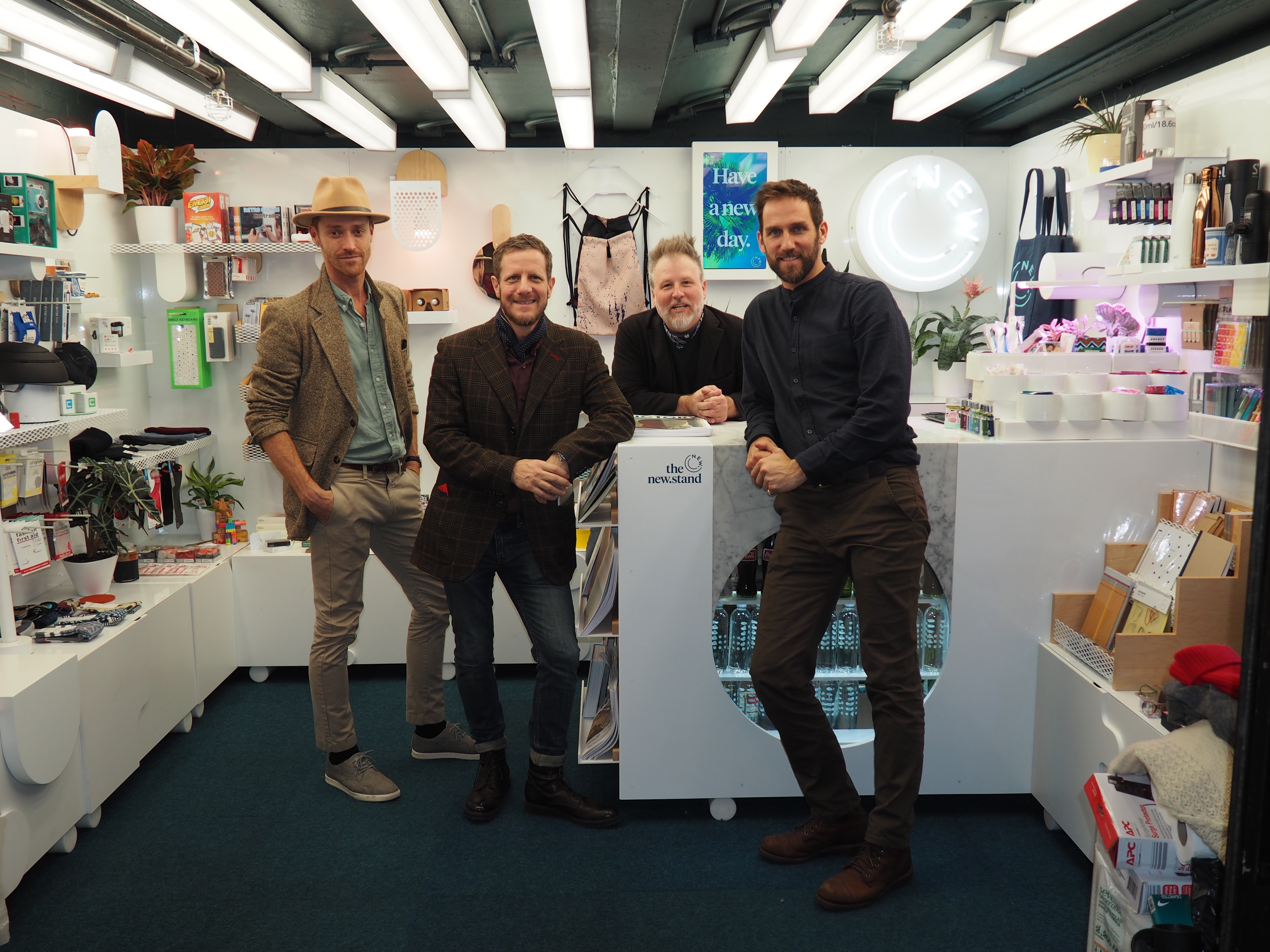
A commuter who has forgotten a gift is an unusually demanding audience. There is a train to catch. There may be an apology to prepare. The gift must be available here, now, preferably without looking like something bought in a subway station. In 2015, Andrew Deitchman helped open a shop at Union Square that proposed to accommodate this person. Among the everyday supplies were cookies, playing cards and objects with more personality than the average last-minute purchase.
Deitchman had just left Mother New York, the advertising agency he co-founded in 2003. Moving from brands to a small shop might look like a change of subject. Look at the customer, though, and the connection becomes easier to see. Someone is moving through the day. You have a brief opportunity to offer something useful, interesting or amusing. They decide whether it deserves their attention. A subway platform simply makes the deadline more obvious.
He called New Stand a day improvement company
. That description was roomy enough to contain a store, an app, a playlist and, eventually, an office offering. It also supplied a demanding test. An improvement has to be felt by somebody. The phrase becomes less comfortable when it meets a queue, a price tag or a perfectly ordinary Tuesday.
A creative agency with things to sell
At Mother, Deitchman helped build an agency whose client list included Coca-Cola, Virgin Mobile, Cheerios and NBC Universal. By the time he spoke at DesignThinkers in 2014, the New York operation had more than 100 employees. A business that had begun without clients or revenue had become an employer with the machinery of a substantial creative agency.
The machinery also produced things the agency could own. There was Dogmatic, a gourmet hot dog business, and White Pike, a clear whiskey brand. They make an entertaining pair of entries on a résumé. They also suggest an impatience with stopping at the advertisement. A hot dog has to be made and served. A bottle has to contain something people want to drink. The idea acquires obligations beyond looking good in a presentation.
At the 2014 conference, an attendee remembered Deitchman beginning by praising his partners and making fun of his drawing ability. She described a calm, low-key speaker. The combination is useful in a room full of designers: respect the work, credit the people who make it, and do not insist that your own sketch belongs in a museum. His talk concerned well-designed ideas, a subject that allowed room for both the concept and the craft.
Employees at Mother New York by its 2014 DesignThinkers biography.A creative business had become a substantial employer.
The commuter gets a vote
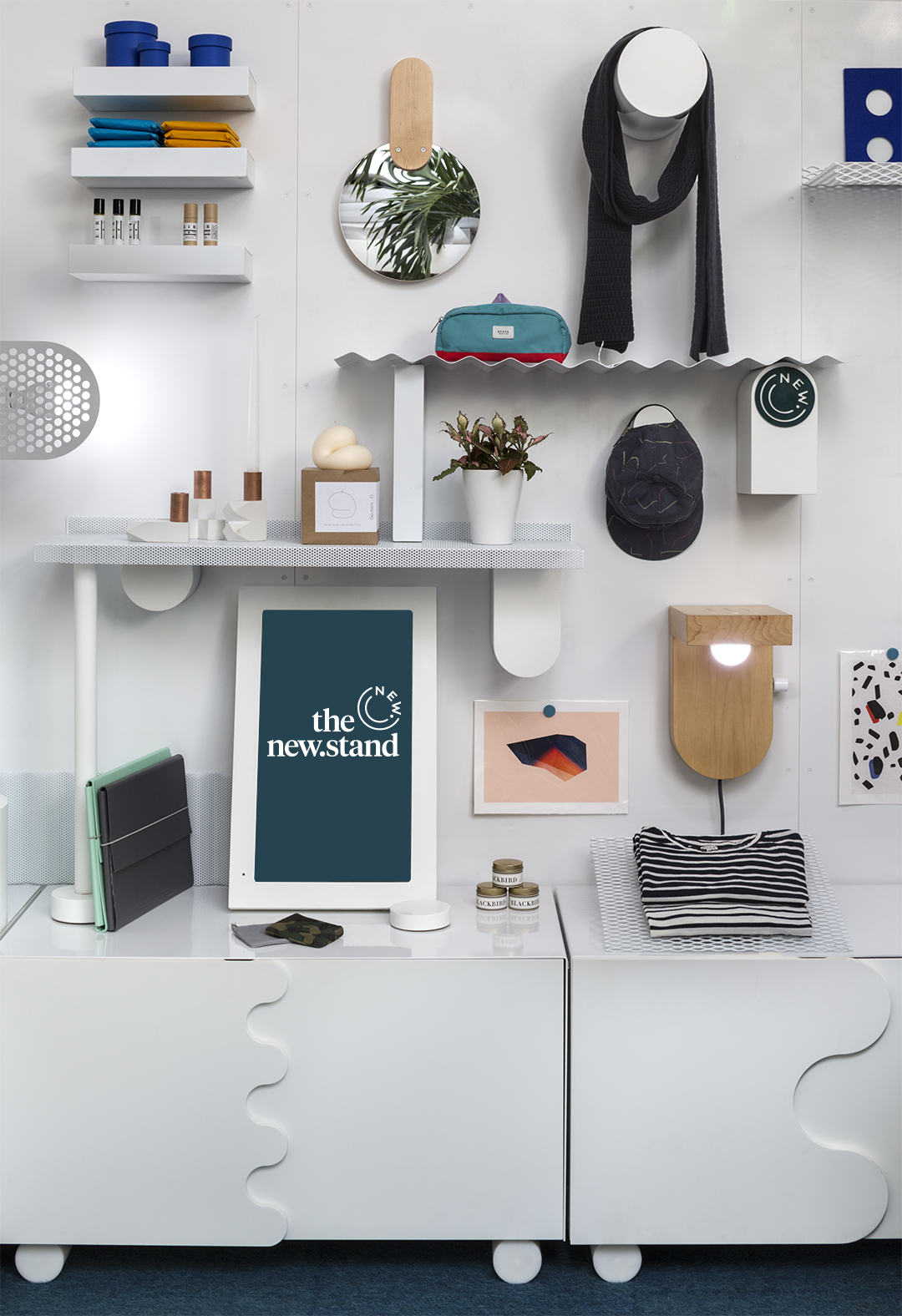
New Stand brought Deitchman together with George Alan, Lex Kendall and David Carson. Their shop connected the physical and digital portions of a routine. A customer could buy a useful object, encounter an unfamiliar brand and use an app that offered reading, music and payment. The assortment gave the business a tangible presence; the content offered a reason to keep paying attention after leaving.
There was an advertising proposition inside the retail proposition. Brands could pay to participate, and merchandise could generate sales. In a conventional shop, a shelf is chiefly a place to hold stock. Here it could also be a place to stage an introduction. That suited a founder accustomed to thinking about how a business presents itself, but it placed the introduction somewhere people already had a reason to go.
By 2017, New Stand’s partnerships included brands such as Baggu and Urban Decay. The company also rewarded activities beyond purchases through its app, including reading and listening. Deitchman described the stores as an API for physical retail
. Translated from the language of software, the promise was that a brand could plug into an existing encounter with customers rather than build the whole encounter itself.
A commuter, naturally, is under no obligation to admire the architecture of the business model. They may want a drink and a quick transaction. This gave New Stand a useful tension: make room for discovery without getting in the way of convenience. Surprise is welcome until it causes you to miss the train. After that, it becomes an experience you describe in less affectionate terms.
Upstairs was always part of the idea
The workplace chapter was visible early. In January 2016, Deitchman was already describing the possibility of serving office tenants, taking carts through buildings and responding to requests through the app. The thought experiment was specific: what might the business do for the people coming into a building every day? The subway shop was one expression of service to a routine, with others waiting upstairs.
The locations and formats developed. New Stand took its retail concept onto New York City ferries. A 2018 partnership with Convene proposed self-checkout shops in workplaces, stocked according to the people using each location. An office population has different needs from a boat full of passengers. A modular system could adapt the assortment and the way the business appeared.
- 2015The commuteUnion Square shop
- 2018The workplaceConvene partnership
- 2026The workdayDaycast introduced
In June 2021, New Stand raised a $40 million Series B led by Brookfield Property Group. The shift toward workplaces gave the original premise another customer: an organization interested in the daily experience of the people inside it. A company or landlord could buy an amenity and a means of engagement together. Convenience now had a budget holder beyond the person purchasing a snack.
That changes the job. A consumer can judge a single purchase in a moment. An employer is buying something expected to keep working across many days and many people. The attractive object still matters. So do replenishment, delivery and whether the promise survives repetition. A pleasant surprise is an event. A dependable service has to be there again tomorrow.
The difficult paragraph
Founder biographies are often edited as though every decision knew where the story was going. Deitchman’s account of New Stand leaves in a less convenient paragraph. In May 2026, he acknowledged mistakes alongside the business’s ambition and successes, and described how it had helped form a new venture, Daycast. The reflection thanks the people who supported the undertaking rather than arranging the whole experience into an uninterrupted ascent.
That candor matters to the portrait. New Stand required several kinds of expertise to cooperate: retail, technology, media, partnerships and operations. Their combination made the proposition interesting. It also meant that a clever idea on one side could create work on another. The founder who spent years making the combination function is entitled to remember more than the launch photograph.
There is a recognizable temptation to treat the next company as a clean page. Daycast has a more useful relationship with the earlier work. It carries forward a question that New Stand had been asking since the beginning: how can a business make the ordinary experience of a place more rewarding? The setting, purchaser and delivery model can all change while that question remains worth pursuing.
The creative brief comes to work
Daycast calls itself a work experience agency. Its offering brings together planning, creative work and the practical delivery of hospitality and programming. The vocabulary includes experience audits, internal campaigns, office events, feedback and coffee. Coffee is a reassuring entry on a list like this. It gives a large idea something one can actually hold.
The proposition makes Deitchman’s advertising background relevant in a new setting. Consumer brands devote substantial attention to how people meet them: the message, design, timing and feeling of an interaction. Employees meet their own organization repeatedly, often for hours at a stretch. Their experience gives a company’s statements about culture a daily examination.
The difficult part is joining the concept to execution. An event needs a purpose and someone to make it happen. Hospitality needs a plan and someone to deliver it consistently. Feedback needs to change a decision somewhere. Daycast’s stated approach puts those activities together, asking leadership, HR and facilities teams to consider the workday with the attention usually reserved for an external audience.
“Pay attention to this every single day. Incrementalize every single day.”
Andrew Deitchman, on building a business, 2016
A business made of introductions
His work extends beyond the office. Deitchman co-founded Oceans, a recruiting and staffing company drawing on talent in Sri Lanka, with Ian Myers and Katie Scarpa. He has publicly emphasized the team and the culture Myers helped build. It is another business in which the experience of employees and the experience of clients are closely connected. The product arrives through people.
He is also a partner and advisor at Overeasy. Its account of his work names Away, The Infatuation, Chillhouse, MSCHF and Sir Kensington’s among the companies he has invested in and advised. That collection resists a narrow industry label. Luggage, restaurants, beauty, creative projects and condiments have different operating demands. Each still has to persuade someone that its particular way of doing things deserves a place in their life.
Deitchman’s career can look restless when compressed into company names. Follow the daily encounters instead and it becomes more continuous. A campaign asks for attention. A shop asks for a stop. A staffing business makes an introduction. A workplace service has to justify itself through use. Across those settings, people get to decide whether the idea has improved anything.
There is something appealingly modest about Tuesday as a creative brief. It lacks the glamour of a launch and the forgiveness of a special occasion. You cannot count on novelty doing the work forever. The coffee has to arrive. The shop has to open. The people have to be considered. Deitchman keeps returning to that ordinary day, with another business proposed for making it better.