He hunted exoplanets at NASA before he could legally rent a car. Now he is teaching an AI to run the least glamorous job in tech: enterprise software rollouts.
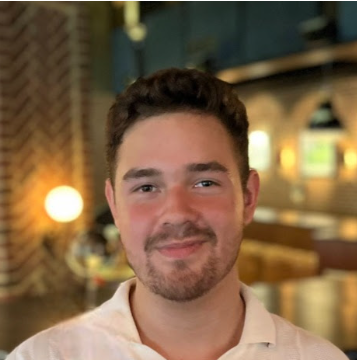
Walk into any large company mid-SAP-implementation and you will find the same scene: a room full of consultants, a wall of half-documented requirements, and a budget quietly catching fire. Andres Carranza decided that room was a software problem. So he named his answer David, after the small thing built to fight the big one.
Carranza is the co-founder and CEO of Luzid, a San Francisco company building an agentic AI copilot for the messy, expensive world of enterprise software implementation. David sits inside SAP and Salesforce projects, listening in workshops, watching the scope, and writing the test scripts and documentation that humans usually grind out by hand. The promise is blunt: up to 90% less manual documentation, test creation cut by up to 70%, deliverables produced as much as 10x faster.
The bigger idea underneath is more interesting than the metrics. Carranza thinks enterprise software fails for the same reason early AI agents do - nobody wrote down how the business actually works. Fix the context, he argues, and both problems dissolve at once.
Software implementations should stop feeling like 'projects' and start feeling like simple software updates - something you can do in minutes.
- Andres Carranza, on what success looks like
Most founders pad their origin story. Carranza's reads like it needs editing down. While still in high school, he was at NASA applying deep learning to the search for exoplanets - distant worlds detected by the faint dimming of a star. That early taste of pattern-finding at scale set the template for everything after.
At Stanford he landed in the STAIR trustworthy-AI lab, working on mechanistic interpretability - the science of prying open a model to see how it actually thinks - alongside time-series forecasting and the question of why models break when you move them across domains. His work reached the field's top stages, ICML and ICLR. He was also a finalist at the International Olympiad in Informatics, the world championship of competitive programming.
Then came Two Sigma, the quant fund where mathematics meets money. Carranza became, by the firm's own reckoning, the youngest quantitative trader in its history. He could have stayed. The problem with a comfortable seat, it turns out, is that it is comfortable.
At Stanford he met Matheus Dias - formerly of Meta AI, a founding engineer at Orby AI. Two researchers with the same itch. They kept circling the same observation: the hardest part of any AI deployment, and any software rollout, is the same boring thing.
"The hardest part is getting the right context from key business users and making sure this is well documented."
Without clearly defined business processes, even a brilliant AI agent is stranded. That insight became the company. Carranza left Stanford to build it.
Deep learning to spot distant worlds. A teenager's first brush with machine learning at scale.
Mechanistic interpretability and time-series forecasting, with stops at Harvard and MIT. Work presented at ICML and ICLR. IOI finalist.
Time-series forecasting where it pays - the markets. Then he walked away from it.
Two Stanford researchers turn a shared frustration into a company (first as Luzidos, then Luzid).
The copilot ships to SAP and Salesforce integrators. Luzid joins SAP's open ecosystem.
David is not a chatbot bolted onto a project plan. It is built to absorb context at every step, hold cross-project memory, and turn organizational knowledge into something reusable - so the AI works across an entire implementation, not one ticket at a time. Carranza frames it across three layers.
Captures requirements in real time as business users talk, so context stops leaking out of meetings.
Watches scope and best practices continuously, flagging drift and risk before it compounds into overruns.
Auto-generates test scripts and evidence, collapsing the slowest, most thankless phase of any rollout.
"David comes at a perfect time to address the needs of SAP and Salesforce integrators by using agentic AI to streamline and automate testing, provide continuous scope control and streamline document generation."
- ANDRES CARRANZA
It is already running inside heavyweight SAP integrators - Delaware, NTT Data, Seidor, VIVO, Numen and others - with case studies citing up to 70% time reductions in testing and up to 80% automation of test creation in early pilots.
Off the clock he dances salsa and travels. The same person tuning interpretability models likes a dance floor with a clear downbeat.
He thinks often about technology's role in developing countries' advancement - global adoption, not just Silicon Valley adoption.
An AI named after the underdog who beats the giant. The branding is the thesis: small, smart, and pointed at something enormous.
NASA, Harvard, MIT, Stanford - he stacked research institutions before most people finish a degree.
Youngest quant trader at Two Sigma is a job you keep. He traded it for a blank slate and a co-founder.
From IOI competitive-programming finals to the decidedly un-flashy world of ERP. He goes where the hard problems are.
He was the youngest quantitative trader in Two Sigma's history.
He did NASA AI research on exoplanet discovery while still in high school.
He was a finalist at the International Olympiad in Informatics.
His Stanford research spans mechanistic interpretability and time-series forecasting, presented at ICML and ICLR.
He named Luzid's flagship AI agent "David" - the small thing built to take on a Goliath.
A universal implementation copilot - so adopting new software stops being a project, and starts being a Tuesday.
- Where Carranza wants Luzid to go next
Sources: ERP News, Yahoo Finance, Stanford STAIR Lab, Luzid, LinkedIn.