Andres Blank had already started businesses when his father suggested that he visit a tree plantation. He was finishing university in Venezuela and wanted to build another company. His father had invested in the plantation; perhaps there was something worth investigating. Blank expected a short project. He came away with a lumber business. It is an unexpected opening chapter for someone who would eventually spend years trying to improve the way a recruiter finds an engineer.
There were customers who needed timber, suppliers who had it, and practical gaps between the two. Blank found work in those gaps. The company was called Lumber Teak, an English name chosen with exports in mind. Before the software, the funding rounds and the recruiting conferences, there was the business of getting a material from one place to another. A shipment has a useful way of making an abstract business plan rather specific.
A business education in timber
Entrepreneurship had started earlier. At 18, Blank launched a website for college students, with used books, tutoring advertisements and university events among its uses. The audience was close at hand. The needs were ordinary. A student who wants to sell a textbook rarely needs a grand theory of the internet; a buyer will do.
By his own later account, he started three companies in Venezuela before moving to Boston. He studied industrial engineering and then went to MIT Sloan for an MBA, completing it in 2009. His professional life was already crossing between the physical business of supply and the digital business of connecting people. The conventional division between a technology founder and someone running a trading company looks less tidy when both appear on the same résumé.
The progression also matters because Fetcher would eventually be sold to employers. Blank knew the problem of assembling a team from the employer’s side. He had customers to satisfy and colleagues to hire before he had a recruiting product to demonstrate. Years later, when he discussed sourcing, he could point to time he had spent doing it himself.
Too many photographs, too few engineers
At MIT, another everyday inconvenience became a business. Blank and Inaki Berenguer had travelled with classmates, whose photographs were scattered across different online services. Gathering the pictures was harder than taking them. The pair developed software to collect them, and Pixable took shape with fellow co-founder Alberto Sheinfeld. The company began in an MIT dorm before moving to New York.
Pixable gathered photographs from a person’s social accounts and used algorithms to surface relevant images. The timing helped: smartphones and social networks were producing a growing stream of pictures. The problem was abundance. A useful product could help someone find the photographs they actually wanted to see without making a second occupation of looking for them.
Blank handled product and operations. In September 2012, Singtel acquired Pixable for $26.5 million. That figure belongs to the company’s sale, rather than to any calculation of his personal wealth. It was a substantial transaction for a business that had started while its founders were students. It also put a firm date beside a project that had begun with a fairly familiar complaint about holiday photographs.
Acquisition price paid by Singtel
Inside Pixable, however, another search was consuming his time. The company needed engineering talent in New York. Blank described a choice between expensive agencies and hours spent identifying candidates and persuading them to join. Neither route felt economical. Success in getting people interested did little to make the process itself efficient.
That frustration gave his later work a concrete starting point. A founder could have a product people used, an ambitious plan and funding conversations underway, while still spending an extraordinary amount of time trying to find the next colleague. Hiring was a recurring operating task with consequences for everything else. It was difficult to leave it for a quieter week.
The network finds a different job
Before the recruiting company settled into its familiar form, Blank and his colleagues worked on Caliber, a professional-networking app. It offered a way to make work-related connections. Recruiters began using the app to connect with candidates. Their behavior suggested a more specific business: employers wanted help finding people and beginning a conversation.
The venture changed direction toward recruiting. Scout became its public recruiting identity, then Fetcher in 2018. Chris Calmeyn, Javier Castiarena and Santi Aimetta were part of the founding group alongside Blank. There is a temptation to read a sequence of company names as evidence that the destination was obvious all along. The customer behavior is more interesting: people had found a use for the network that deserved attention.
Fetcher combined automated candidate sourcing and outreach with human expertise. Its work addressed the early stages of recruiting, before the interviews and the hiring decision. Finding possible candidates, checking fit and sending messages were tasks a hiring team had to repeat across roles. Blank’s proposal was to take much of that repetitive work off the team’s hands.
“Fetcher is my fifth company”
Andres Blank, 2019
His lack of a traditional HR background was something he discussed openly. He approached the industry as a customer who had repeatedly experienced a frustrating process. That perspective helps explain the emphasis on time. A useful recruiting system had to produce room in the calendar for conversations, alongside a list of people to contact.
The person outside the filter
One hiring story Blank told concerned an engineering team accustomed to candidates from leading engineering schools. Fetcher helped the employer widen its search. The eventual hire had a high-school degree and a record of progression at another automotive company. There had been hesitation about interviewing and hiring someone outside the familiar academic pattern. Blank said the decision proved worthwhile.
The anecdote captures a difficulty inside any effort to make recruiting efficient. Search criteria allow an employer to narrow a vast field. Those same criteria can remove someone whose ability would become apparent in a conversation. An academic credential is easy to specify. The relationship between a credential and a particular job is harder to establish.
Blank’s stated ambition was to free recruiters for the work that involves other people: understanding colleagues’ needs, speaking with candidates and building teams. In 2020, he also described a practical desire to reduce the number of tools recruiters needed. Anyone who has lost an afternoon moving information between browser tabs can appreciate that ambition without requiring a product demonstration.
A company grows; a habit resists
In May 2022, Fetcher announced a $27 million Series B financing package led by Tola Capital, alongside existing investors G20 Ventures, KFund and Accomplice. The package brought total capital raised to $40 million. The company planned further integrations, customer-relationship functionality and international expansion. Blank described revenue having tripled during the preceding year.
Those plans extended the product beyond the first approach to a candidate. Someone who is interested in a company today may be ready for a different position later. Keeping track of that relationship makes recruiting a continuing activity. It also introduces a less dramatic kind of software work: storing useful information, sharing it between systems and remembering to follow up.
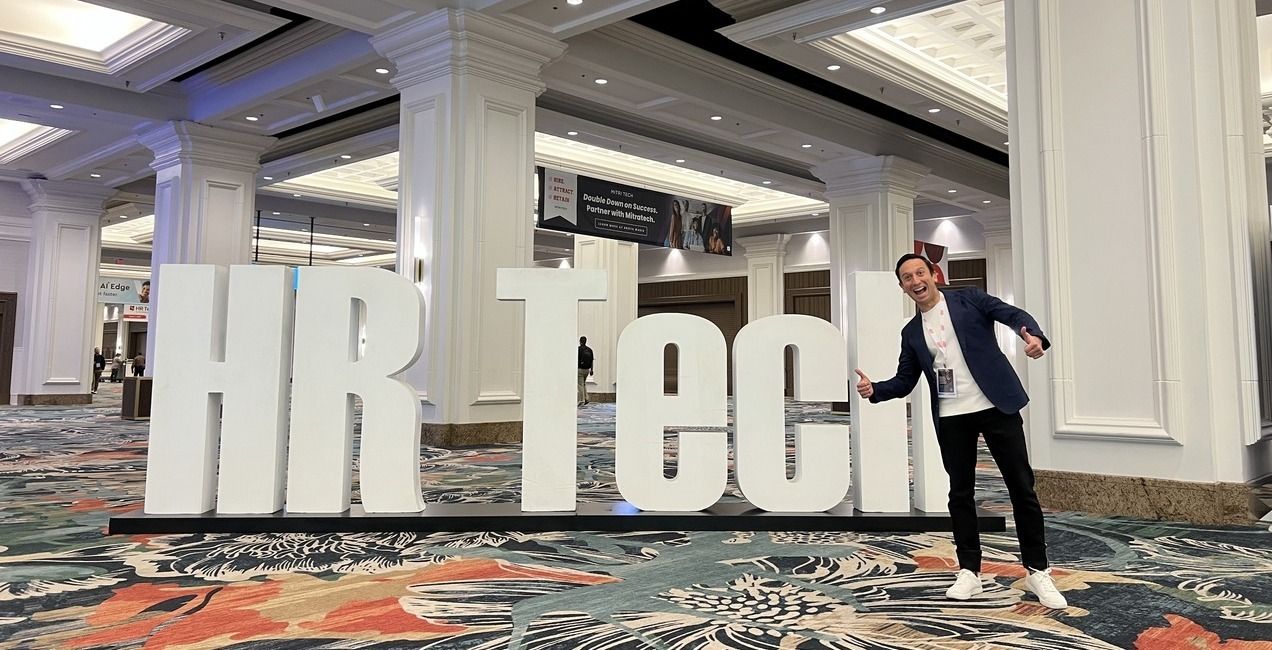
Growth does not automatically answer the question of how much control a user will hand over. After attending RecFest and HR Tech, Blank wrote about recruiters’ reluctance to automate their initial outreach fully. He reported that only about a fifth of Fetcher’s users let sourcing proceed without manually vetting each candidate. Even a strong proposed match could leave someone wanting a last look before an email went out.
His observation brings the career back to people. An automation feature can exist while a customer remains reluctant to use it. The hesitation is part of the product problem. Blank explored different ways of arranging the first contact so recruiters could concentrate on interested candidates. These were proposals about changing a workflow, with trust and personal responsibility sitting inside it.
The names in the farewell
In July 2026, Blank announced that he had stepped away as Fetcher’s CEO a few months earlier, after more than a decade. His message thanked co-founders, employees and investors, and pointed to Chris and Santi continuing the company’s work. He recalled starting without funding while changing direction. The account gave the uncertain beginning a place beside the established business.
“But what I’m most thankful for is the people.”
Andres Blank, on leaving the CEO role
He also thanked his wife, Sarah, whom he met at business school. She had been a founder herself. The detail places the company’s long working life inside a personal one: years of decisions and changing circumstances shared with someone who understood the demands. His farewell devoted considerable space to naming the colleagues who had helped carry the work.
By then, the career had taken him from a college website to lumber, from photographs to professional networks and recruiting. The industries provide the surprises. The recurring task is easier to recognize: find the people who need something, understand what they need, and assemble a team capable of providing it. At the end of his CEO chapter, Blank chose to remember that team by name.