Asked about a particularly satisfying purchase, Jean Fallacara chose the website he had registered before coming up with the business plan. It is a small answer with a whole entrepreneurial temperament folded inside it. Claim the address. Give the idea somewhere to live. Work out the furniture later. Anyone who has spent three meetings debating a project name may feel a little envious.
There is a quieter instruction elsewhere in his advice: give yourself a night before making a consequential decision. Put those habits together and the founder of Lifespanning becomes more interesting than his collection of job titles. He likes to begin. He has also had reasons to learn when to pause.
His career has carried him from Dijon to Montreal to Miami, through company ownership, an acquisition, corporate employment, authorship, and publishing. One recurring question follows him through those changes: how much freedom does he need to do work he wants to keep doing?
His advice to other entrepreneurs also gets quite small and practical: begin the morning with one mission to accomplish. A single task gives the day a direction. It is an appealingly manageable instruction from someone whose public biography seems to be running several projects at once. The ambition can be broad; the next action still has to fit into a day.
The business before the biography
Fallacara’s early fascination was with making things work. He recalls teenage projects involving machines, electricity, and chemistry, with siblings recruited as makeshift employees. Family businesses apparently begin well before anyone has thought about payroll.
He grew up in Dijon, France, and later trained in biotechnology. His account of moving to Canada is an account of wanting to build something of his own. Montreal became the setting for a long working chapter, including Cleanearth Scientific and, in 2004, Z-Sciences.
That chapter also contained a failure he has continued to discuss in public. His first company went bankrupt. In telling the story, he describes the danger of becoming so attached to a business that judgment starts serving loyalty. The founder keeps supplying effort because effort is the thing he still controls. The company needs a different decision.
He credits his wife, Helene, with helping him through that period. The acknowledgment gives the story a second person, and a little more weight. Bankruptcy is easy to compress into a line in a successful founder’s biography. Living through it requires help that rarely fits on a timeline.
“Fall seven times, stand up eight.”
A favorite saying Fallacara has shared
Seventeen years in Montreal
Z-Sciences made laboratory equipment, including refrigeration and ultra-cold storage systems. It was a business of physical products, technical customers, and specifications. A machine had to do its job after the sales conversation was over. That is a useful starting point for understanding a founder whose later work would become much more public.
His operating career extended beyond one company. He served as CEO and co-president of DAIHAN Labtech between 2008 and 2012, then as president and CEO of Z-SC1 Biomedical between 2012 and 2021. The names can blur together on a résumé. The years matter: he spent a substantial stretch of his career running equipment businesses before taking on the roles of publisher and podcast host.
One story he tells about distribution catches his approach in miniature. After a distribution arrangement ended, he contacted independent representatives who had also recently lost a business relationship. He brought them together on a conference call and offered a new partnership. In his telling, the people displaced by someone else’s decision became a route forward.
It is a practical anecdote about looking around after a setback. The useful assets were people with experience and relationships. His response was to call them.
- 2004Founds Z-Sciences
Montreal - 2021inTEST announces
asset acquisition - 2023Lifespanning Media
Florida corporate filing
Selected business milestones. The media work overlaps the equipment chapter.
The exit came with another decision
On October 7, 2021, inTEST announced that it had acquired substantially all of Z-Sciences’ assets. The announcement identified Fallacara as its founder and said that he and his staff would join the buyer, with the business integrated into inTEST’s Thermal segment.
There was continuity built into the arrangement. Equipment, staff, and expertise would move into a larger organization. For the buyer, the transaction added technology and access to another market. For Fallacara, it meant trying a different place within the business he had spent years building.
He later described corporate employment as an awkward fit. His account emphasizes the difference between the autonomy he was accustomed to and the structure he encountered. Less than two years into that chapter, he chose to leave. His conclusion was blunt: “Freedom is indeed priceless.”
That choice gives the acquisition its place in the larger story. A sale can be a business achievement while the job that follows raises an entirely separate question. Fallacara had spent years choosing the direction. He discovered how much he wanted to continue choosing it.
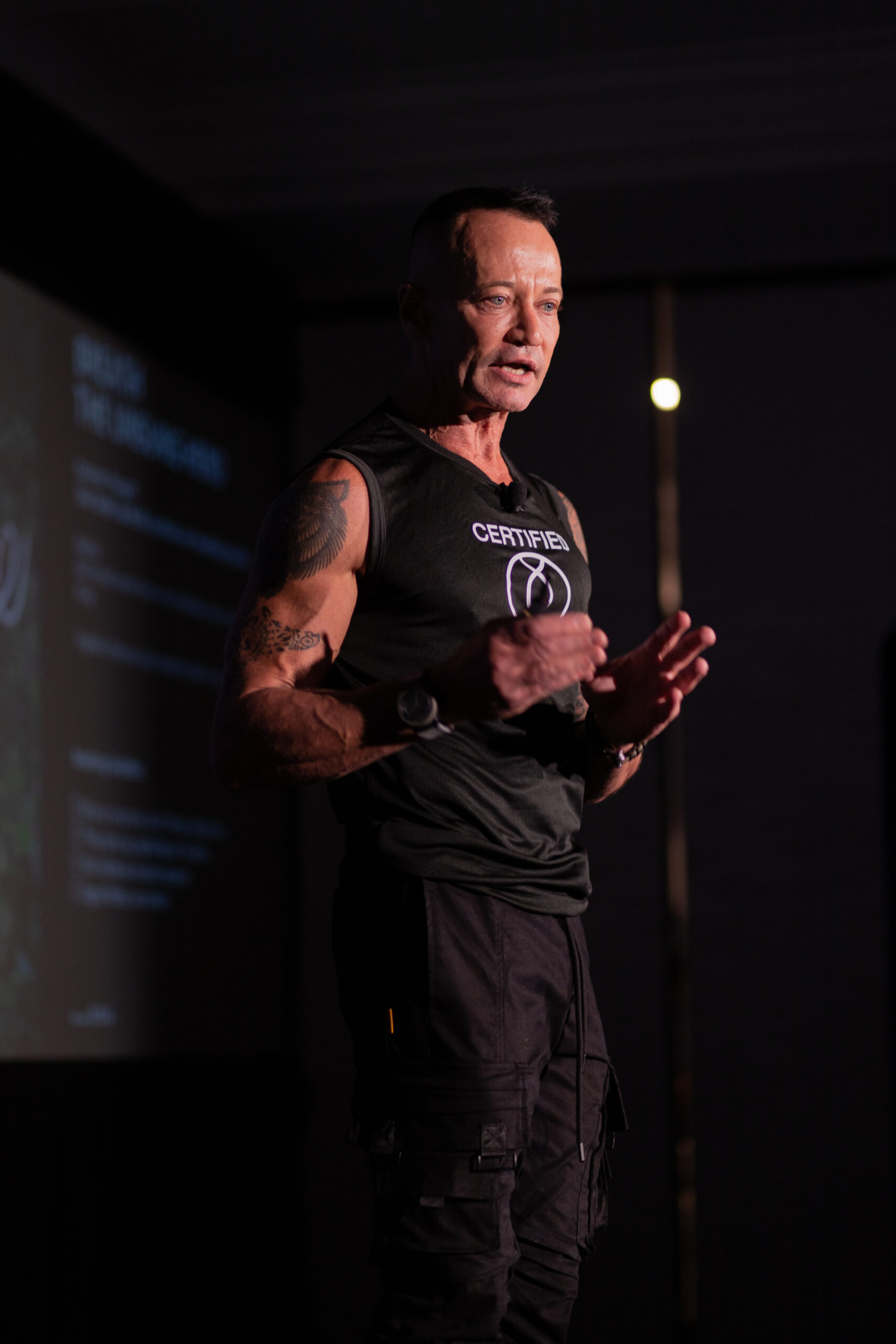
A company made of conversations
The move into media had already begun before his corporate chapter ended. His personal business history lists CyborgMedia’s founding in 2021, and he became involved in magazine ownership around the same period. The equipment work and the publishing work overlapped. Reinvention was happening while the earlier business was still on the page.
Today he leads Lifespanning, with publishing and conversation prominent in its public identity. Biohackers Magazine is part of that history. So is his podcast, promoted through his website as No Plan B and through the Lifespanning YouTube channel.
A manufacturer has a product to ship. A publisher has to make someone want the next issue, interview, or episode. Fallacara’s new work puts him in the position of convening people and deciding which conversations deserve space. The form changes the relationship with the audience: readers and listeners can return, disagree, ask questions, and bring someone else along.
He has publicly thanked Dallas McClain and Arjun Chauhan, his magazine colleagues, for trusting him during the ownership transition. Those names belong beside the corporate milestones. Buying into an existing publication means entering a project other people have already cared about.
He also presents an Expert Series on his personal website, extending the format beyond the magazine and podcast. Talks, interviews, and live sessions offer different ways to put an idea in front of people. For a founder who once depended on distributors to reach customers, these formats place more of the conversation within his own projects. He can publish the interview, host the discussion, and invite the audience back.
The collector behind the operator
There is an art collector in this business story. Fallacara lists urban and contemporary art among his interests, alongside watches. He has recommended Austin Kleon’s Steal Like an Artist. He also has a book of his own, Neuroscience Calisthenics: Hijack Your Body Clock, published in 2020.
Writing a book, collecting art, and hosting a podcast place him in different relationships with other people’s attention. An object can invite a second look. A book asks for time. A conversation depends on what the other person contributes. None guarantees that the audience will stay merely because its creator has an impressive business history.
His public language can be expansive, but these interests supply something more particular than a founder’s mission statement. There are things he likes looking at, reading, discussing, and making. The media chapter gives those inclinations room in the working day.
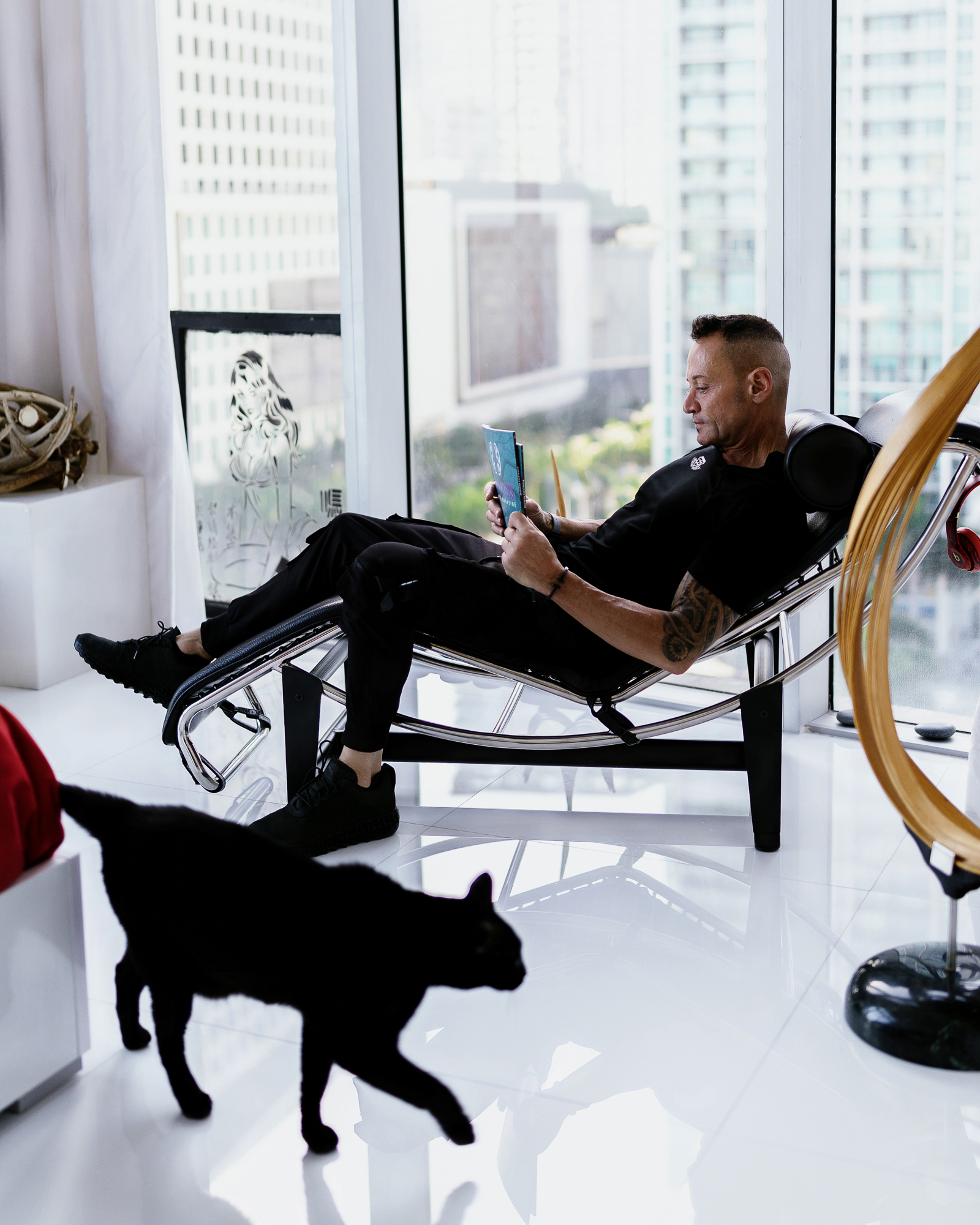
Miami, with time for a walk
Fallacara is now based in Miami. Asked to sketch a visit for a friend, he proposed sunrise at Crandon Beach, coffee in Brickell, and a walk around Brickell Key. The itinerary also left room for dinner at Momi Market. It was an answer about showing someone a good day, with the city supplying much of the entertainment.
There is a pleasant specificity to that picture after all the company names. A beach at the beginning of the day. A waterfront walk later. An entrepreneur’s life contains unbillable hours, and sometimes those are the details that make the person easier to imagine.
Miami is also the current setting for the business. Lifespanning Media’s Florida corporate record gives a July 2023 filing date. A February 2026 annual report lists Fallacara as director and president. The paperwork supplies a modest, concrete counterpoint to the podcast microphone: there is still a company to run.
In a 2020 description of his working day, he put concentrated business operations into roughly four hours, then left time for family. That was his account of a particular period. It also gives the later argument for independence a practical dimension: freedom includes having a say in the shape of an ordinary afternoon.
Room to revise
No Plan B makes a good title. Fallacara’s actual working life contains plenty of changes: a failed venture, another company, new partners, an acquisition, a corporate role, and another beginning. His account leaves room for both stubbornness and revision. He has needed each at different moments.
The distinction matters to the next chapter. Running Lifespanning gives him decisions to make about people, publishing, and the company’s direction. Autonomy brings the responsibility back with it. He gets to choose the work, then has to make that choice work.
Somewhere between registering an address before writing the plan and waiting a night before a large decision sits a recognizable founder. Eager to start. More experienced about the consequences. Still interested in what he might build next.