A second front door is an unusually good explanation of a business idea. In a Lennar Next Gen house, it leads to a private suite: a kitchenette, a living area, a bathroom, somewhere to sleep. The person behind that door might be an aging parent or a young adult. The arrangement acknowledges something an ordinary floorplan can miss. A family can want to live together without wanting to share every minute.
- Lennar sells new homes with selected features already bundled into the price.
- Next Gen makes room for several generations under one roof.
- Land options and buyer incentives keep its production strategy moving, with real costs attached.
That little adjustment captures a larger habit. Lennar takes a complicated transaction and tries to remove a source of friction. Sometimes the friction is a bewildering selection of upgrades. Sometimes it is a mortgage payment. Increasingly, it is the capital trapped in land before a buyer ever walks through the door.
The upgrade that stopped being an upgrade
The company began in Miami in 1954 as F&R Builders, founded by Gene Fisher and Arnold Rosen. Leonard Miller became a co-owner two years later. In 1971, Leonard and Arnold lent pieces of their first names to Lennar. It is a surprisingly personal name for a business now associated with entire subdivisions.
Everything’s Included arrived in 1989. The proposition was easy to understand: selected features that buyers might otherwise purchase as upgrades came with the house. Today the package encompasses modern finishes, connected-home technology and energy-conscious features. The qualification matters: products and specifications vary by community and homesite.
For buyers, the appeal is fewer additions to a price they are already struggling to absorb. For a builder, the logic is repetition. A more predictable package makes purchasing and construction easier to coordinate. That is an interpretation of the model, rather than a promise that every house costs less than every competing house. The kitchen still needs a careful look.
One house. More than one household.
Next Gen, introduced in 2011, applies the same practical thinking to family life. Its suite has a separate entrance while remaining part of the larger home. It can accommodate relatives or become space for work, learning or wellness. Privacy becomes something drawn into the plan, rather than negotiated every evening.
This is useful differentiation in a market where square footage can make competing listings look interchangeable. Lennar serves first-time buyers, people moving to another home, luxury buyers and active adults. Next Gen adds a particular reason to choose a floorplan: it anticipates a household changing shape. Availability still depends on the local community.
The factory has a land problem
To understand Lennar’s next move, consider the unbuilt house. Long before it produces a sale, somebody must finance the homesite and its development. Owning that land ties up money. Building homes and waiting for land to become buildable are connected activities, but they operate on different clocks.
In February 2025, Lennar spun off Millrose Properties. Its subsequent quarterly report recorded a contribution of $5.6 billion in land assets and $1 billion in cash, including option deposits. Those figures describe transferred assets and cash, rather than a construction budget or an operating loss. Millrose became an independent listed company supplying homesites through option arrangements.
The strategic destination is a builder that takes finished homesites as needed and concentrates on construction. Lennar says its financial transformation has been deliberate since 2019. Its March 2026 explanation framed the ambition as operating more like a manufacturer. Land partners supply the ground; the builder works on the speed and cost of the house.
Control the site. Release the capital.
Controlled homesites as a share of owned and controlled sites. First two observations are year-end; the third follows the Millrose spinoff.
The bill arrives in the margin
There is another clock in housing: the buyer’s monthly payment. When borrowing becomes expensive, an attractive house can remain unaffordable. Lennar has used incentives and mortgage rate buydowns to sustain sales. In March 2026, the company called them a “shock absorber.” The shock travels into the builder’s margin.
“We used incentives and interest rate buydowns as a shock absorber”Lennar corporate statement · March 2026
The September results put numbers on the tradeoff. In fiscal Q3 2026, Lennar delivered 20,840 homes at an average selling price of $372,000. Management reported incentives of approximately 12%. Home-sales gross margin was 15.8%, down from 17.5% a year earlier, although it improved from the preceding quarter. Construction cost savings only partly offset lower revenue per square foot and higher land costs.
The pressure appeared in what Lennar earned on each dollar of sales. It also lowered its full-year delivery target to approximately 80,000-81,000 homes. Meanwhile, management reported a 116-day construction cycle. Faster production and a harder selling environment can exist at the same time. An efficient operation still needs a willing buyer.
A printer joins the neighborhood
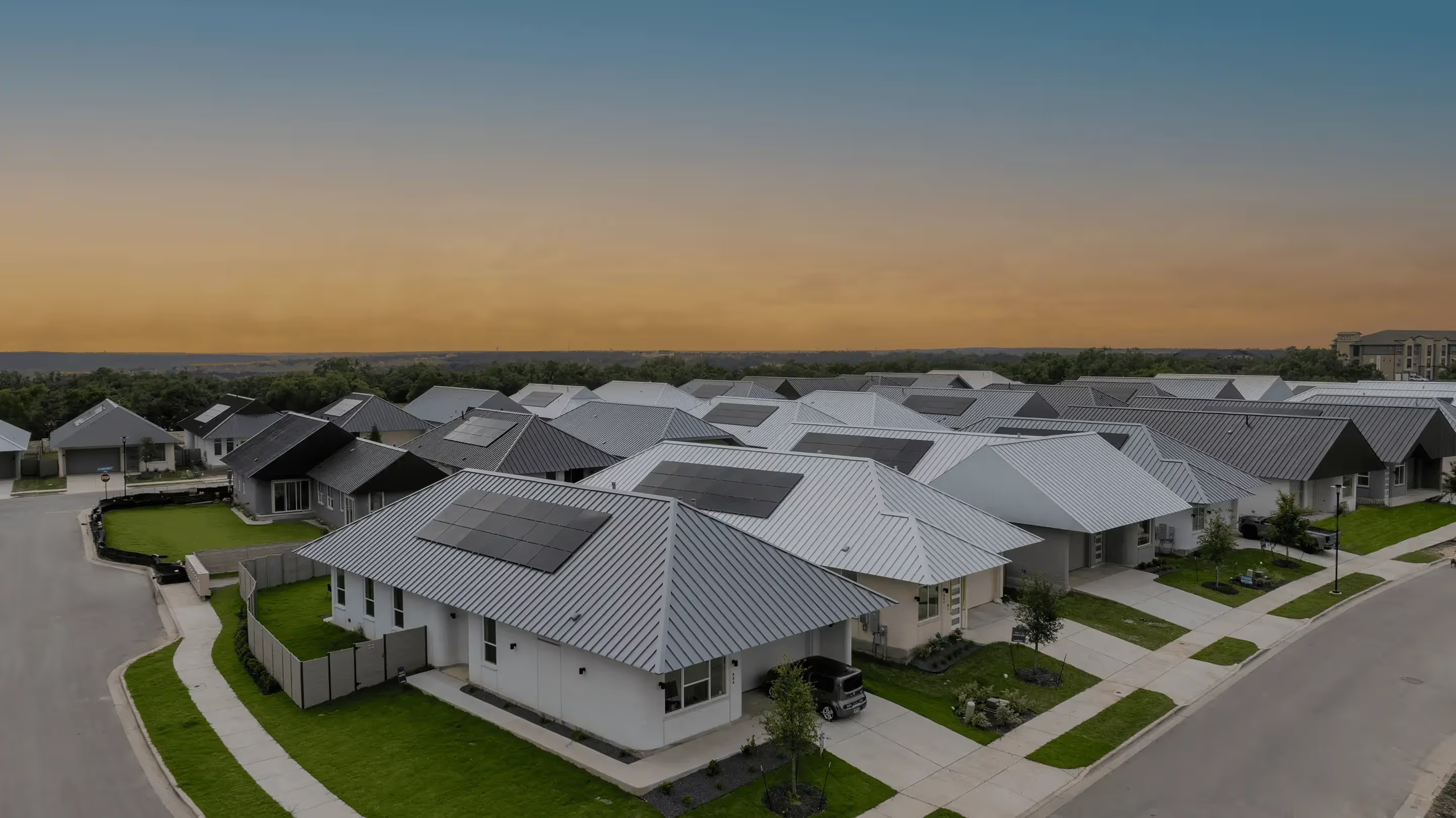
At Wolf Ranch in Georgetown, Texas, Lennar worked with ICON and architecture firm BIG on the 100-home Genesis Collection. ICON’s system prints walls; the finished homes combine those walls with the other systems a house requires. Sales began in June 2023. Rooftop solar panels are part of the project.
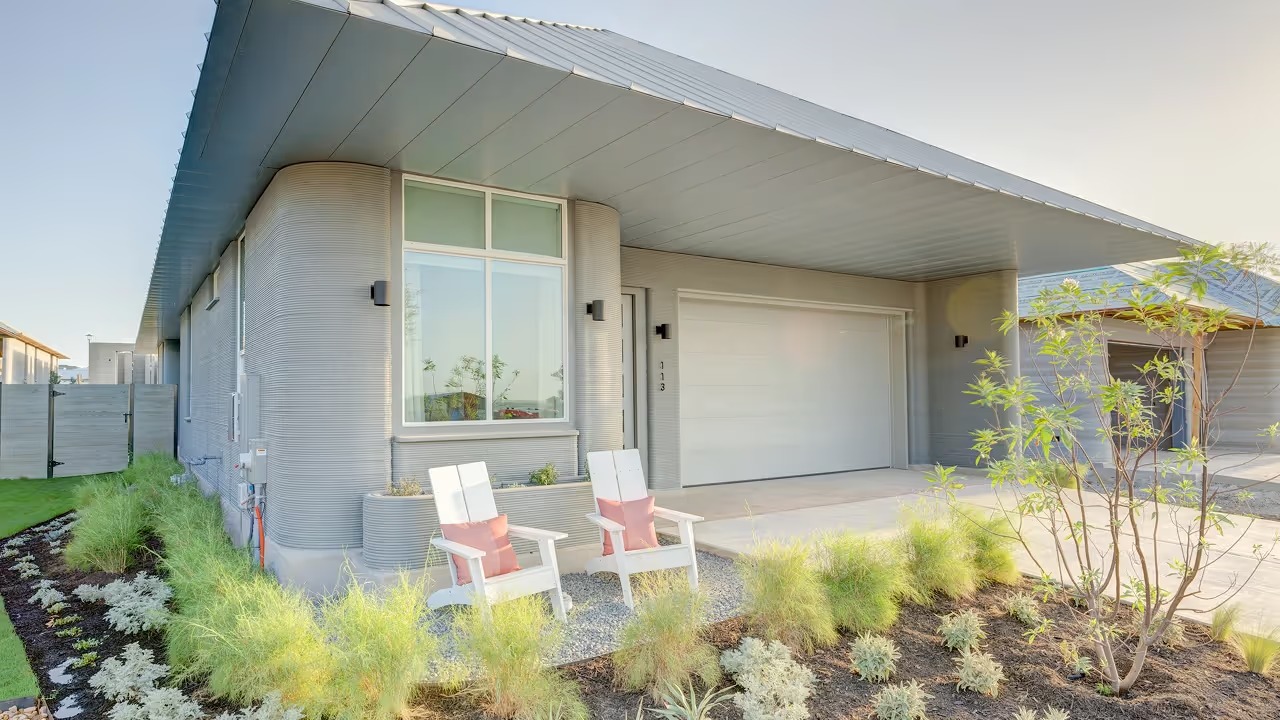
It is a specific experiment in production, not evidence that all Lennar homes are printed. It fits a company interested in making construction more repeatable. Its careers materials even include a value called Review, Do, Review: plan, act, examine the result. Here, the thing being examined is an actual neighborhood.
Start with the package. Read the details.
Lennar’s affiliated mortgage and title businesses extend the offer beyond construction. A buyer can search communities, compare plans and pursue financing within the same corporate family. Competing national builders, local builders and existing homes remain alternatives. Lennar’s pitch brings a standardized house and several purchase steps closer together.
The transferable lesson is to remove decisions that create work without creating enough value. It depends on repeatable demand and dependable partners. Someone seeking a highly customized house, or construction on land they already own, needs a different arrangement. Lennar’s FAQ says it does not build to contract on personal property. The model works by narrowing the assignment.