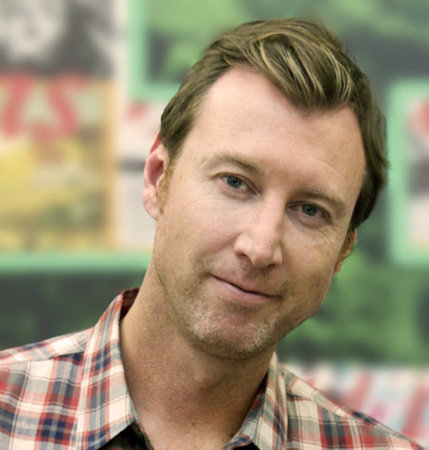
Walk into the mindbodygreen office and the first thing you notice is the foliage - more than a hundred plants crowding the desks and windowsills, a newsroom that breathes. The man responsible runs the place with his wife, publishes to millions of readers a month, and will tell you, without irony, that the most valuable thing he owns cannot be wired to a bank account.
Jason Wachob founded mindbodygreen in 2009 and still serves as its founder and co-CEO. The company is a digital wellness platform, and in a category crowded with quick fixes and louder claims, it has lasted by doing something unfashionable: taking its readers seriously. Wachob hosts The mindbodygreen Podcast, where he sits across from researchers, physicians, chefs, and founders and asks them, at length, what actually works.
What makes the operation interesting is the route its founder took to get there. He did not come up through media. He came up through a trading desk, a basketball court, and, of all things, a cookie company.
Columbia, and a height advantage
Wachob graduated from Columbia University in 1998 with a degree in history. He is six feet seven inches tall and played varsity basketball there for four years. The sport mattered to him in a way that outlasted his eligibility. When he later made money, one of the first things he did was send some of it back: a $25,000 gift to the Columbia basketball program. The school responded by creating the Jason Wachob Award, given to the player who never gives up on his teammates or himself. It is a small detail, but a telling one. Most people endow their names onto buildings. He attached his to grit.
The trading floor, and a quiet problem
After college he went to Wall Street and became a long/short proprietary equity trader at Heartland Securities. By the conventional scoreboard he was winning. He was in his twenties, making real money, doing what ambitious graduates were supposed to do. And yet the conventional scoreboard, he has said many times since, kept reading "full" while he felt something closer to empty. "I like money," he wrote later. "But there's more to life." It is the kind of line that sounds like a bumper sticker until you remember that the person saying it had actually tried the alternative and found it wanting.
He paid off his student debt, then went looking for work that connected to something he could believe in. The search led somewhere unexpected.
Cookies, of all things
Before mindbodygreen, there was sugar - the organic kind. Wachob founded Luscious Living Cheesecake in 2004 and co-founded Crummy Brothers Organic Cookies in 2006. Running a food business turned out to be an education in ingredients, sourcing, and what actually goes into the things people put in their bodies. He started reading labels the way he had once read order books. The cookie company was not the destination, but it was the doorway. It taught him to care about what nature does and does not put on the shelf.
2009: the pivot that stuck
In 2009 he launched mindbodygreen, betting that a wide audience wanted credible, connected information about living well - and that nobody was serving it with both rigor and warmth. The name itself is the thesis: mind, body, and green, stitched together because Wachob does not think they come apart. The company grew from a one-person idea into a newsroom of more than a hundred people reaching millions of readers every month.
Then came the books. In 2016 he published Wellth: How I Learned to Build a Life, Not a Resume, where he made the case for his invented currency. In 2023 he and his wife and business partner, Colleen Wachob, co-authored The Joy of Well-Being. Two married co-CEOs writing a book together about joy is either a wonderful idea or a terrible one. By all accounts it was the former.
What "wellth" actually means
The word is doing real work, not just decorating a cover. Wachob defines wellth as a blend of mental, physical, spiritual, emotional, and environmental well-being - five categories he refuses to rank against each other, because the whole point is that they are connected. He traces it to the Middle English welthe, an older sense of the word that meant well-being and happiness before it narrowed to mean a pile of money. In other words, he did not invent a concept so much as recover one that the language had quietly lost. The book's argument is that the good life is "no longer just about the material," and that a lifestyle "devoted to mental, physical, and emotional health" is the upgrade most people are actually after.
The interview habit
The podcast is where the company's curiosity is most visible. Each week, Wachob sits down with a leader in the health space and runs a long, unhurried conversation - the format is built for depth rather than soundbites. It is a natural extension of how mindbodygreen publishes: he is less interested in being the loudest voice in wellness than in being the one that asks the next good question. His own media coverage has run through the The New York Times, Entrepreneur, Fast Company, Vogue, Politico, and The Business of Fashion, which is a strange constellation of outlets to share until you realize it maps the breadth of what mindbodygreen tries to be - serious, stylish, and broadly read.