A sheet of paper is a surprisingly demanding colleague. It curls, shifts, and refuses to sit exactly where a machine would prefer. In 1989, Andreas Bibl was named on a patent for a system that transported and stabilized paper inside a multicolor electrostatic plotter. Decades later, he is working on robotic hands. The objects have changed. The awkwardness of persuading physical things to behave has kept its position on the agenda.
That early patent offers a useful entrance into Bibl's career. A vacuum belt held paper in place as it passed through a printing process. The invention involved Bibl, John Higginson, and Deane Gardner, and belonged to Rastergraphics. It addressed a practical problem with machinery, pressure, and materials. There is something pleasingly literal about starting a technology story with the need to keep a page still.
Bibl is now co-founder and executive chairman of Tacta Systems, the Palo Alto robotics company. Before that came LuxVue Technology, which Apple acquired in 2014, and a senior role in advanced hardware technology at Apple. Earlier came Dimatix and industrial inkjet technology. Read those names as a succession of jobs and the career looks varied. Read them as problems involving precise physical control and a pattern begins to emerge.
The page had to stay put
The Rastergraphics patent was granted on October 31, 1989. Its title, “Paper transport and paper stabilizing system for a multicolor electrostatic plotter,” could hardly be accused of courting glamour. Yet the plain language makes the engineering problem visible. A printer must put marks where they belong, repeatedly, while moving a material that is quite capable of disappointing it.
The connection to Bibl's later work is an interpretation of his technical record, rather than a claim about what he was thinking at the time. Across that record, accuracy depends on how a machine meets the material in front of it. Software can specify an outcome. Belts, actuators, surfaces, and fluids have to deliver it. They retain a considerable vote.
Patents also make this a story of collaborators. Higginson's name appears alongside Bibl's in the early paper-handling work and again in later printhead and microLED inventions. Gardner appears in the printer patent and the Dimatix printhead patent. The continuity is concrete: names on technical documents, attached to different generations of hardware. A career in invention can leave a more revealing trail than a succession of company logos.
A career measured in droplets
At Dimatix, Bibl served as chief technology officer. A company announcement in January 2007 kept him in that post during an executive reorganization, reporting to president and CEO John Batterton. The business brought together printing and materials deposition, a combination that helps explain why an inkjet engineer might eventually find himself working on displays.
Printing can be a manufacturing method as well as a way to put words on a sheet. Dimatix's work included dispensing functional materials onto surfaces. By the 2008 introduction of SAMBA technology, its applications extended to printable electronics, photovoltaic arrays, and LCD displays. The ambition involved controlling small amounts of fluid with enough consistency to build something useful from them.
The hardware mattered at a minute scale. A Dimatix patent granted in May 2006 names Bibl among seven inventors of a printhead with a thin, pre-fired piezoelectric layer. Piezoelectric material deforms in response to electrical excitation; in this kind of printhead, that behavior helps drive the ejection of fluid. The document concerns the construction of the device, including an actuator and the path through which fluid moves.
Fujifilm agreed to acquire Dimatix in 2006. Its businesses included a printing division in New Hampshire and a materials-deposition division with a MEMS fabrication facility in Santa Clara. Bibl's work sat inside a company whose technology had to function across industrial applications. The setting puts some weight behind the word “hardware”: these were components and production processes, with customers expecting them to keep working.
- 1989Paper transport
Rastergraphics patent - 2006Piezoelectric printhead
Dimatix patent grant - 2014LuxVue joins Apple
MicroLED technology - 2026Sensing gloves
Tacta patent grant
The Apple chapter began with light
Bibl went on to co-found and lead LuxVue Technology, a company working on microLED displays. Apple acquired it in 2014. That transaction is the recognizable landmark in his career, but the inventions behind it give the landmark some texture. The company was working on tiny light-emitting devices and the problem of assembling them into useful structures.
One patent, granted in October 2013, is titled “Light emitting diode structure.” It lists Bibl, John Higginson, Hung-Fai Stephen Law, and Hsin-Hua Hu as inventors. Another, granted in January 2015, describes a method and structure for receiving a micro device. Its original assignee was LuxVue; a later assignment transferred it to Apple. Tiny components require somewhere accurate to land.
An IEEE analysis published in 2024 examined patents that moved from LuxVue to Apple, including inventions credited to Bibl. It connected this display work to earlier published engineering research. The acquisition therefore sits within a larger chain of technical work, co-invention, and accumulated knowledge. A purchase announcement occupies a day. The work that makes a company worth buying occupies rather more.
Bibl subsequently held the title Senior Director, Advanced Hardware Technology at Apple. In the arc of this profile, that chapter connects the startup building specialized display technology with one of the companies that could carry advanced hardware research further. It also helps explain why his return to a new company belongs in a story about manufacturing, rather than simply another tale of a founder changing industries.
Touch enters the picture
In June 2025, Tacta announced $75 million in funding: an $11 million seed round and a $64 million Series A. Matter Venture Partners led the seed; America's Frontier Fund and SBVA led the Series A. Bibl was identified as co-founder and CEO at that announcement. The current leadership arrangement places him as executive chairman and fellow co-founder Vik Pavate as CEO.
Bibl described the difficulty in a phrase that cuts through the financial figures: “much of the physical world remains incomprehensible to them.” He was talking about AI models, whose facility with text and video leaves a further problem when a machine has to act on an object. Tacta's aim was to give robots tactile skills and spatial awareness for physical work.
His earlier inventions make that choice of problem interesting. Paper transport, fluid ejection, and the placement of micro devices each concern controlling a physical process. A robotic hand adds another demand: responding to what happens during contact. The comparison does not mean those technologies are interchangeable. It shows why Tacta belongs alongside the rest of Bibl's work without requiring a dramatic reinvention of his biography.
“much of the physical world remains incomprehensible to them.”Andreas Bibl on AI models · June 2025
A glove becomes a record of skill
Tacta's July 2026 white paper describes the company’s approach to learning manipulation. A worker wears a sensor-equipped glove while performing a task. The system gathers a record of movement and contact, alongside video. Similar sensing in the robotic hand is intended to help connect the human demonstration to the machine's execution.
The human contribution here is worth lingering over. Skilled work contains adjustments that are easy to perform and awkward to explain. Someone assembling a part can change pressure in response to resistance without composing a sentence about it. Capturing that adjustment gives the learning system another kind of information. The worker's knowledge is present in the movement, even when no instruction is spoken.
Bibl is also a named co-inventor on a Tacta sensing-glove patent granted in April 2026. The other inventors include Dariusz Golda, Vikram Pavate, Nahid Harjee, and David Bibl. Its claim describes fingertip force sensing, finger-motion sensing, and a processor that generates feedback by comparing a task measurement with one from a primary glove. It provides a specific technical connection between Bibl and the new company's work.
The design puts measurement close to the action. Rather than treating the hand merely as something to watch, the glove records what happens where the fingers meet the object. For a founder whose record includes mechanisms for keeping paper aligned and handling tiny devices, the emphasis is familiar. The important information arrives at the point where the machine's plan encounters a material's response.
The next chapter has a shipping date
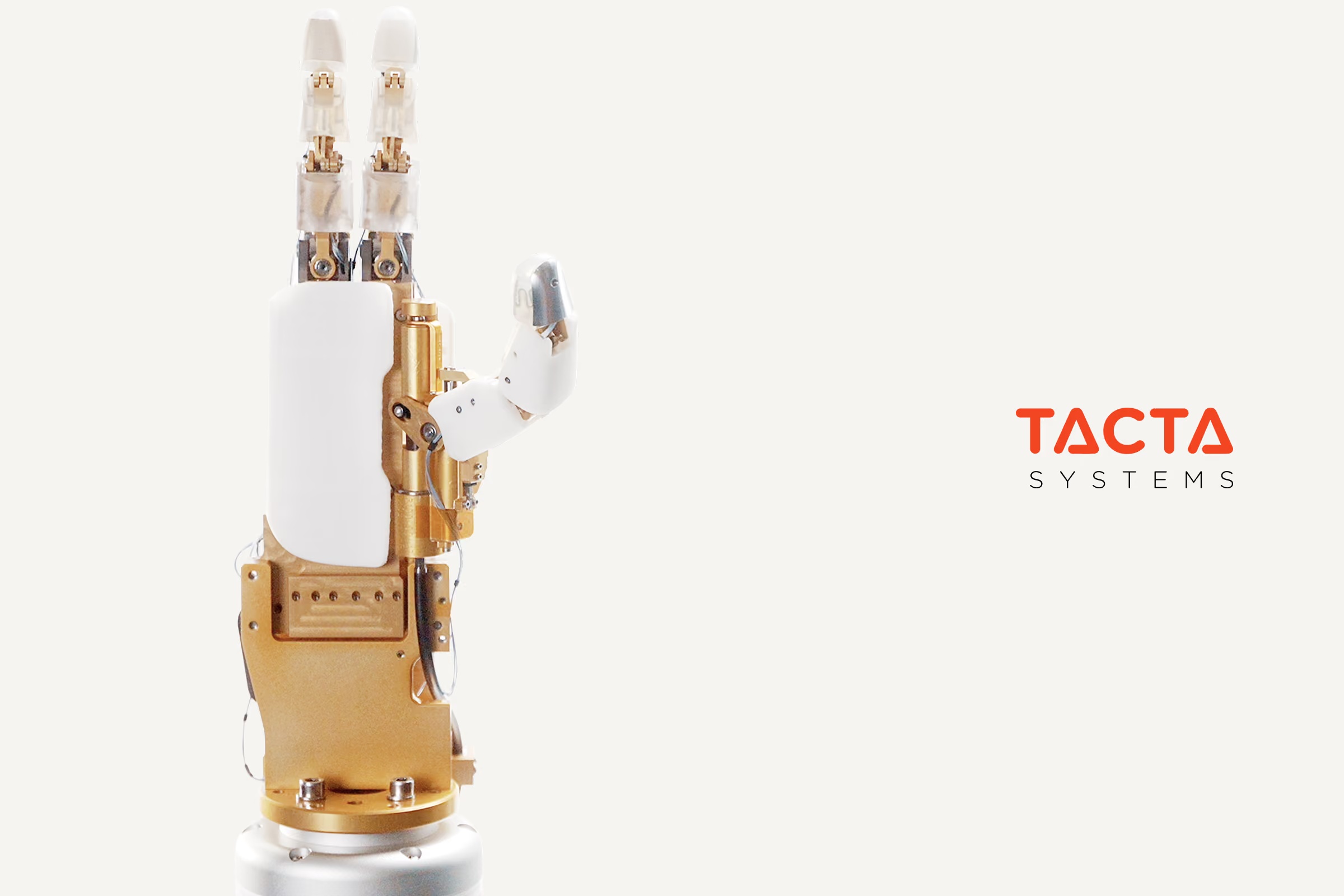
Tacta unveiled TactaBot in July 2026, bringing together a robotic hand, Skill Capture, and its Dexterous Intelligence AI engine. The company says the hand has 15 independently actuated joints and uses its Fluidic Tendon actuation technology. Initial customer deployments across electronics, AI infrastructure, and automotive manufacturing are scheduled for early 2027. Those are the company's plans, with the work of deployment still ahead.
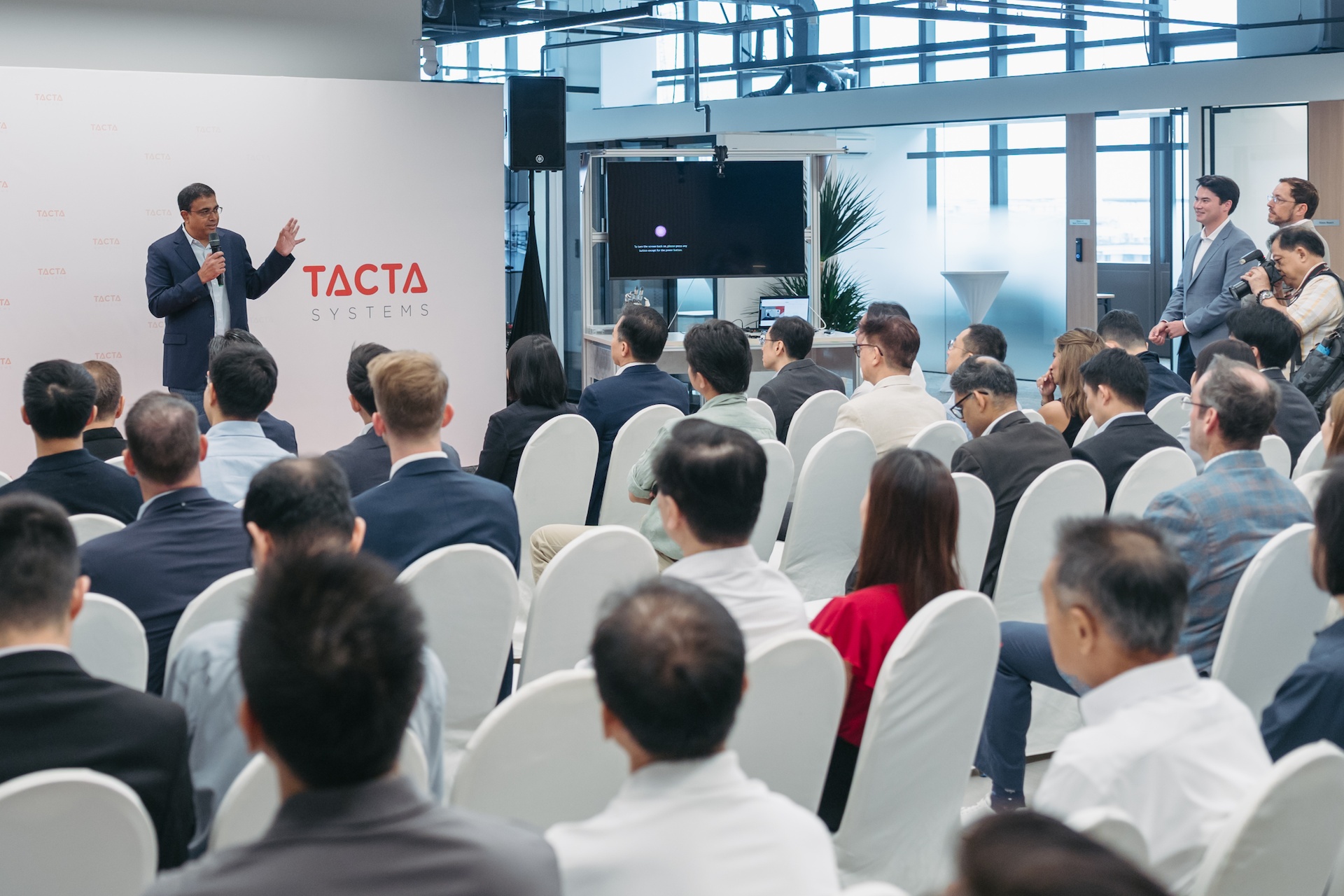
September brought a more tangible step toward production: an office and manufacturing facility in Woodlands, Singapore. It will initially concentrate on the Tacta Glove. Tacta is also working with A*STAR's Institute of Microelectronics to scale production of its tactile sensors. The expansion makes a useful closing image for Bibl's story: a new physical capability needs a place where its components can be made.
His career offers a sequence of such requirements. A sheet must hold its position. A droplet must go where it is intended. A micro device must arrive on the right structure. A hand must respond to contact. The connecting theme is visible in the work, without turning it into a tidy legend about destiny or a childhood fascination conveniently remembered at the right moment.
At Tacta, Bibl and his colleagues are asking machines to learn from the hands that already know the job. The hoped-for result is automation that can take on more variable, delicate manufacturing work. For now, the next chapter has the familiar obligations of a hardware company: build the components, make them consistently, and put them to work. Even an intelligent machine has to get a grip.