She put a number on the thing advertising swore could never be measured. The result is a company the world's biggest brands now run their creative through.
Every brand on earth measures its media. They know the cost per click, the reach, the frequency, the conversion. What they could never measure was the ad itself - the image, the video, the actual creative that does the persuading. Anastasia Leng found that gap maddening, and then she built a business on closing it.
CreativeX, the New York company she founded and runs, uses AI and computer vision to read the visual assets brands publish and grade them. Is the logo on screen long enough? Is the product shown the way the playbook says it should be? Does the creative match what actually performs? The platform turns gut feel into a score, and Fortune 500 marketers at Unilever, Heineken, Mondelez, Nestle, Mars, and Google have wired it into how they decide what to ship.
The pitch is deceptively plain: advance creative expression through the clarity of data. The work underneath it is not. Reading a million-plus ads at scale, across languages and formats and brand rulebooks, is a hard machine-learning problem dressed up as a marketing one. Leng has spent the better part of a decade on it.
Not from a whiteboard. From a frustration. Before CreativeX she co-founded Hatch, an ecommerce startup selling customizable lifestyle products, and there she ran straight into the wall. Competing for attention against tech giants with a fraction of the budget, she realized she understood every lever of her marketing except the creative assets themselves - which happened to be the most important lever of all.
That itch became the company. She started building technology to analyze creative content, and the tool outgrew the store. CreativeX (it began life as Picasso Labs) was the answer to a question Hatch couldn't answer for itself.
The origin is almost too on the nose. As a Penn student she sold advertising space at the Daily Pennsylvanian, the campus newspaper, and ran departments there. She was good enough at it that Google recruiters came calling. So began five-plus years inside the company that defined modern advertising.
At Google from 2007 to 2012 she worked across the ad tech and analytics stack, handled early partnerships for Google Voice, Chrome, and Wallet, and led entrepreneurship efforts in EMEA. She credits the years there with three habits that still run through CreativeX: put users first, kill the jargon, and measure everything.
Then she left to build. Hatch landed on Time Magazine's list of top New York startups, made TimeOut NY's best new shopping sites, and was named one of the four most innovative retail companies by the National Retail Federation. It also handed her a hard lesson about money.
Data is only as powerful as its ability to provide clarity on something topical to your organization.- Anastasia Leng
Recruited into Google off her ad-sales run at the Daily Pennsylvanian.
Ad tech and analytics products; early partnerships for Voice, Chrome and Wallet; entrepreneurship lead, EMEA.
Leaves Google to co-found Hatch, a customizable ecommerce startup.
Hatch hits Time's top NY startups; named #2 most important woman in tech, 30 Under 30.
Founds CreativeX (as Picasso Labs) to bring data to creative decisions.
$25M Series B led by Guggenheim, with Beringea, Conviction and the Brandtech Group.
Launches Datalink; integrates with Pinterest; scores Gen AI ads at scale.
Marketers today have more creative data than ever before, but it's trapped in silos, disconnected, and deeply inactionable.- Anastasia Leng, on launching Datalink, December 2025
The Hatch chapter taught her that a good product without capital is a hobby. After a string of fundraising rejections, she stopped pitching on charm and started pitching on numbers - a more analytical approach to getting investors to yes. It is a fitting backstory for someone who would go on to sell the value of data for a living.
By the time CreativeX needed scale, the approach had paid off. The 2022 Series B brought in $25 million led by Guggenheim Investments, with Beringea and Conviction - both earlier backers - returning, alongside the Brandtech Group. Total funding sits near $30 million.
The round wasn't just cash. It was a bet that chief marketing officers were finally ready to treat creative as a discipline with metrics, not a mystery handled by taste. Leng had spent years arguing exactly that.
Figures from public funding announcements and reported totals. Earlier-round figure is the approximate balance of total funding outside the Series B.
Analyzing thousands of consumer ads, CreativeX found men were more likely shown in professional roles while women appeared more often in domestic ones - a pattern invisible until someone counted.
"We've had a front-row seat to how companies like Unilever, Heineken, Mars, even Facebook and Amazon are making creative decisions to scale their creative content."
As brands flood channels with generative-AI creative, CreativeX built automated scoring for Gen AI ads at scale - quality control for content made faster than humans can review it.
Creative assets were the most important part of our marketing yet the part we understood the least.
Data is only as powerful as its ability to provide clarity on something topical to your organization.
Marketers today have more creative data than ever before, but it's trapped in silos, disconnected, and deeply inactionable.
One-size-fits-all computer vision may be tough for marketers to use off the shelf.
Some founders have a hometown. Leng has a flight log. She grew up a nomad - Bahrain, Vietnam, Hungary, Russia, France, the UK, the US - a childhood spent reading new rooms full of people who didn't share her language. It's hard to think of better training for a career spent decoding how humans respond to images.
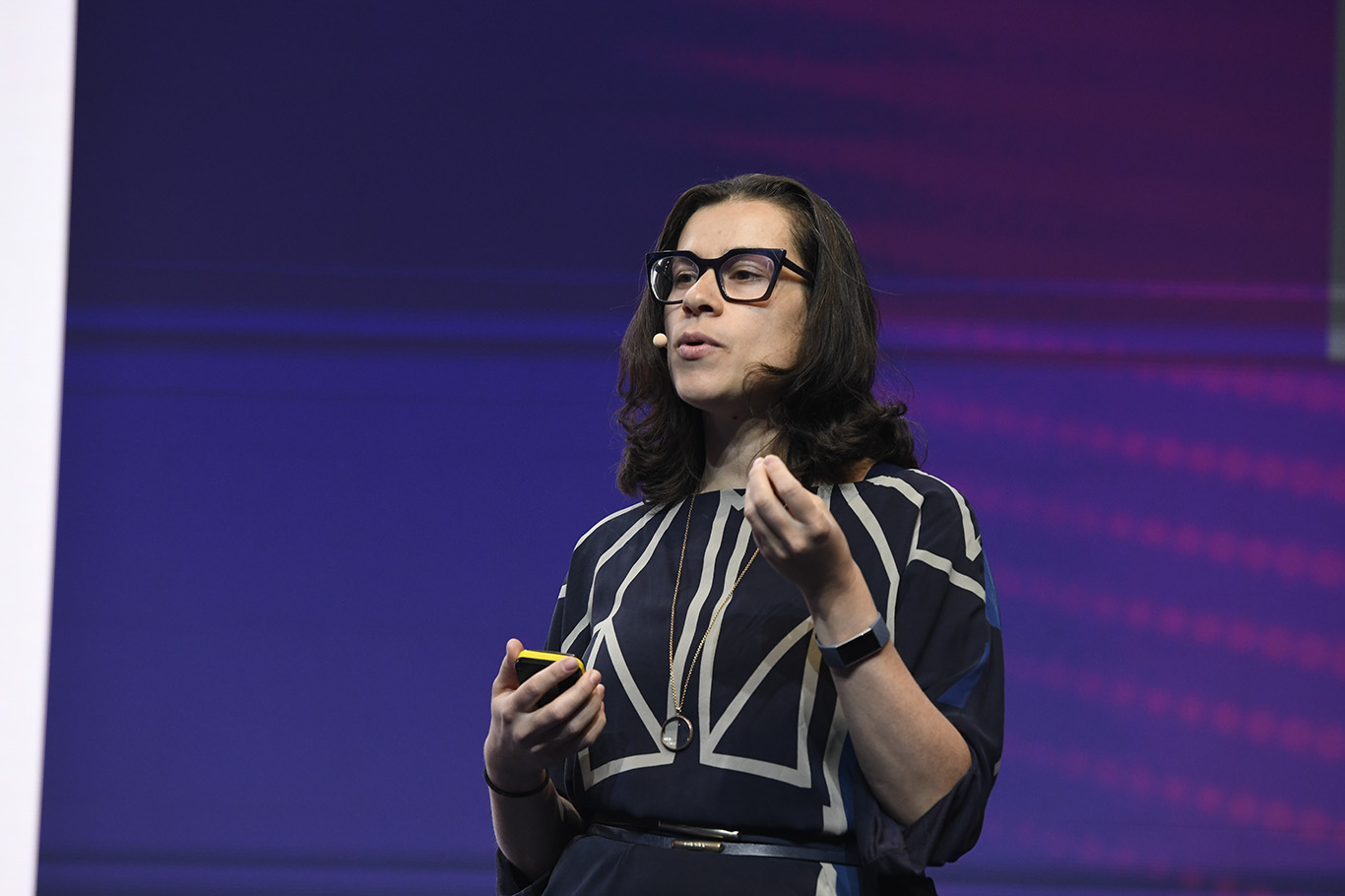
Her degree fits the pattern: a triple major in psychology, sociology, and French. Three different lenses on the same question - what moves people - now pointed at advertising. She is a regular on the conference circuit, speaking at Cannes Lions, Advertising Week, and DMWF, and she has been recognized among the most important women in technology.
Profile compiled from public interviews, funding announcements, and company materials. Facts current as of mid-2026; figures and roles may have changed.