Amy Randall’s route to fashion begins, improbably enough, with a basketball league, a football league and a very long detour through American popular culture. Before she became chief marketing officer of Kellwood Company’s Democracy Clothing division, she learned audiences in arenas, cinemas and living rooms. She then spent years asking brands to use their cultural muscle with more honesty. The wardrobe changed. The central question did not: once people are paying attention, what happens next?
It is tempting to read Randall’s résumé as a tour of glamorous nouns. The NBA. The NFL. NBCUniversal. John Legend. Denim. But the more useful reading lives in the verbs: connect, persuade, include, act. Her career has repeatedly placed her between a large institution and the people it hopes to reach, translating an organizational ambition into something an audience might actually care about.
Randall attended Princeton University from 1990 to 1994. Her early career brought her to team marketing at the NBA and then consumer marketing at the NFL, where the object was bigger than a game. Leagues sell belonging, ritual and the happy irrationality of choosing colors for life. Randall worked on advertising, communications and creative execution for consumer-facing broadcast and digital campaigns. In sports, every marketing idea receives an immediate verdict from the crowd.
The audience is the assignment
Next came cinema. As vice president of marketing at National CineMedia, Randall led sales marketing, trade campaigns and partnership projects as the exhibition-media company pursued advertising growth and launched an initial public offering. A movie theater is an unusual classroom for a marketer. The audience is captive, yet expectation is ferocious. They have bought an experience, not requested an interruption. Any commercial message must understand the mood of the room.
In 2007 she moved to NBCUniversal. As a vice president in Creative Partnerships and Innovation, she helped develop programs that connected advertisers with brands, shows and talent across broadcast and cable. This was the high-wire work of adjacency: finding a meeting point where a sponsor, a television property and an audience could share the frame without any one of them looking embarrassed to be there.
The through line is audience empathy, but empathy here is not misty sentiment. It is an operating discipline. What did people arrive wanting? What has the institution earned permission to say? What contradiction will the public notice before the campaign team does? Those questions became more explicit in Randall’s next major chapter.
Attention needs somewhere to go
By 2018, Randall was co-head of the Social Impact Practice and executive vice president of marketing and communications at Propper Daley. Her work moved closer to causes, coalitions and public behavior. She described an approach that began with the desired outcome, mapped gaps in the field, identified what a client could credibly contribute, and carried the logic through strategy, creative work and execution.
“It is all about building a really good foundation and strategy for them, evaluating what their vision for the world is, what are the gaps in the field, and then what they can bring to the work.”Amy Randall on building for an outcome
Her critique of conventional purpose marketing was pointed. Brands had once treated impact as a choice among donation, promotion or a worthy product. Consumers increasingly looked deeper, she argued, weighing environmental conduct, workforce diversity, equitable pay and the values revealed by the business itself. A glossy declaration could no longer hide a shabby back room.
Randall’s phrase for credible brand courage was plain: “walking the walk.” Her proposed audit ranged across business practices, employee policies, community programs and consumer insight. The marketing claim came after the inspection. This is less romantic than a brainstorm and more useful. A brand’s values are experienced as a chain of small proofs, most of them created far from the copywriter’s keyboard.
Give attention a destination
That sequence, from awareness to attitude to behavior, offers the clearest map of Randall’s philosophy. Marketing loves the first stage because it produces visible numbers. The second is slower. The third requires people to rearrange something: a purchase, a hiring decision, a habit, a vote of confidence. Randall’s work kept pushing down the funnel.
For the Call of Duty Endowment, a campaign placed children in the role of hiring managers interviewing veterans. The playful reversal exposed the oddity of overlooking skills acquired in service. The credited campaign reported five million views, a 96.1 percent average completion rate and 94,500 clicks. The numbers mattered because the creative idea gave them a destination: reconsidering how veterans are perceived in the workforce.
Kids + Vets
completion rate
clicks
Randall also received public credit for campaigns recognized in 2019 by the Vetty Awards, Fast Company’s World Changing Ideas program and the Cynopsis Social Good Awards. Her profile lists a 2020 World Changing Ideas win in politics and policy. The award names are less revealing than the pattern: employment, public participation, perception and the careful use of culture as a lever.
The documentary and the door it tried to open
The pattern became cinematic in Home/Free, a 32-minute documentary short narrated by John Legend. Randall was one of its producers, working with collaborators from Propper Daley, Slack for Good and other partner organizations. The film follows people returning from incarceration and examines the obstacles between being home and being fully free, including access to secure work.
The film won its Shorty Awards category for documentary short and received a bronze honor in social justice. Its campaign reported 139.3 million impressions across Google and social media, plus 17.9 million impressions through Amazon’s advertising network during the initial release period. Yet the more interesting measure sat beyond the screen. The film was paired with a private gathering of technology executives and public conversations about creating employment pathways.
Reach is a beginning. Randall’s work keeps asking whether the audience finds a door, and whether somebody remembered to unlock it.The recurring test across three decades
In her own celebration of the project, Randall put the featured participants first, thanking those who shared their experiences in hopes of changing perceptions and opening opportunities. It is a small ordering choice with editorial meaning. The producer names came after the people whose lives supplied the story.
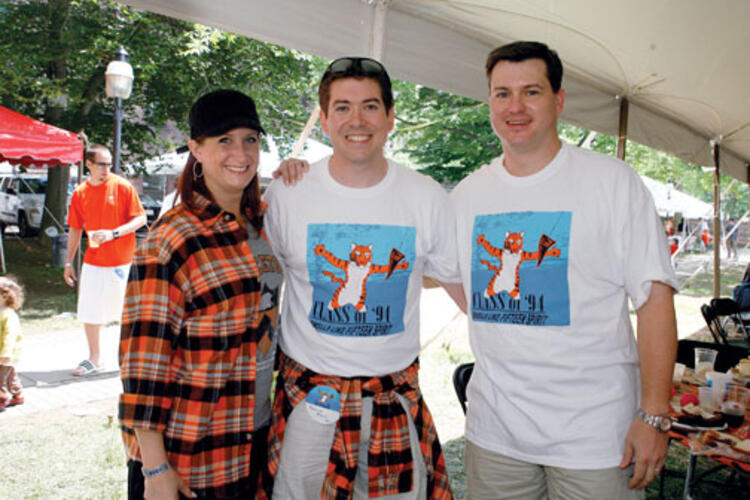
There is another bridge between Randall’s alma mater and this work. At Princeton Reunions in 2019, she moderated a discussion on education during incarceration, featuring people working across teaching, reentry and justice. She also moderated a session on free speech and false information. Reunion weekends usually trade in memory; Randall used part of hers to convene difficult present-tense questions.
Then came the horses
In 2023 Randall announced a different kind of executive post: running the Unstoppable Potential Leadership Institute in Dallas. Its two-day program combined leadership development, team building and direct interaction with horses. Horsemanship ran through the experience, accompanied, in Randall’s jaunty description, by cowboy hats and boots.
The chapter looks eccentric until you notice how neatly it fits the rest of her career. A horse is an audience that cannot be flattered by a positioning statement. The response is physical and immediate. Participants learn about communication, confidence and collaboration through feedback that does not wait for a quarterly brand tracker. For an executive steeped in the distance between message and behavior, the appeal is almost comically exact.
Change the setting, keep the question: how do people connect, decide and act?
A pair of jeans makes the first pitch
In March 2024, Randall announced that she had become CMO of the Democracy Clothing division at Kellwood Company. Democracy was founded by Caren Lettiere on the principle of Curve Equality, an insistence that style and fit should not assign value to a woman’s size. The brand’s signature “Ab”solution construction combines denim with fit technology designed for comfort and shape.
Randall’s announcement included one detail no recruiter could manufacture: “I wore the jeans before I even met her.” The product had already made its case. She joined with the stated aim of creating campaigns that resonate with Democracy’s audience and extend the brand’s positive influence.
Fashion might appear distant from social-impact consulting, but Democracy’s proposition makes the handoff legible. A fitting room is a tiny theater of belief. A customer arrives carrying years of messages about which bodies deserve style, ease or attention. Product design answers those messages in cloth. Marketing names the answer and invites a larger audience to try it on.
As of 2025, Randall was publicly listed as CMO of Democracy Clothing and Kellwood Company in an industry conference roster. Her public activity in 2026 continued to amplify the brand’s collections and founder perspective. After three decades, she is still working at the seam between promise and proof.
There is no tidy grand finale to a career built this way, only a useful accumulation. Sports taught the force of shared identity. Cinema and television taught the choreography of attention. Social-impact work demanded a destination beyond awareness. Horses supplied honest feedback. Denim made a value proposition tactile.
The stealable idea is wonderfully unspectacular: begin with the outcome. Inspect the institution. Respect the audience. Make the product carry its share of the argument. Randall’s résumé may roam, but her compass has been unusually steady. People notice many things. The work is to give them a reason to move.