Company Profile / AV Integration / California
The Invisible Engineers Behind the Loudest Rooms in California
For more than three decades, AMT Systems has wired the sound, light, and video that make megachurches and concert halls actually work - and stayed off the stage the whole time.
Walk into a 2,700-seat sanctuary on a Sunday morning. The pastor speaks at a conversational volume and every word lands crisp in the last row. A choir swells and the room seems to breathe with it. A camera cuts to a 26-foot LED wall, then the whole service streams to a few thousand people at home. Nobody in the pews is thinking about the equipment. That is the point. And it is exactly the work that a small company in Santa Clarita, California, has been doing, quietly, for more than three decades.
That company is AMT Systems Inc. - a full-service audiovisual engineering and integration firm. It does not make a hit product you can buy on a shelf. It does not have a viral app. What it has is a specialty most people never think about until it fails: turning a raw room into a working instrument for sound, video, and light. AMT describes its mission simply, as making "audiovisual technology made accessible." In practice that means designing systems, installing them, and keeping them running long after the ribbon is cut.
What they actually doEngineering a room, not selling a box
The AV integration business is easy to misread from the outside. It looks like buying speakers and screens and bolting them to a wall. AMT's version is closer to engineering. Its design team, which includes CTS-D certified staff (the industry's designer credential from AVIXA), works in AutoCAD for documentation and EASE for acoustic modeling. Before a single speaker is hung, the room exists as a model: single-line drawings, rack elevations, power draw, and HVAC load. The physics get solved on paper first.
That upfront rigor is the difference between a system that sounds fine in an empty room and one that holds up when 2,000 bodies, which absorb sound, fill the seats. It is also why AMT leans on the phrase "practical, user-friendly systems." A gorgeous rack of gear that a volunteer cannot operate on a Sunday is a failed install, no matter how expensive the parts.
Who calls themFrom subsidized parishes to theme parks
AMT's client list runs the full range of a single craft. On one end, small subsidized parishes with tight budgets. On the other, per the company, professional sporting venues and theme parks. In between sits the heart of the business: houses of worship, many of them large and production-minded.
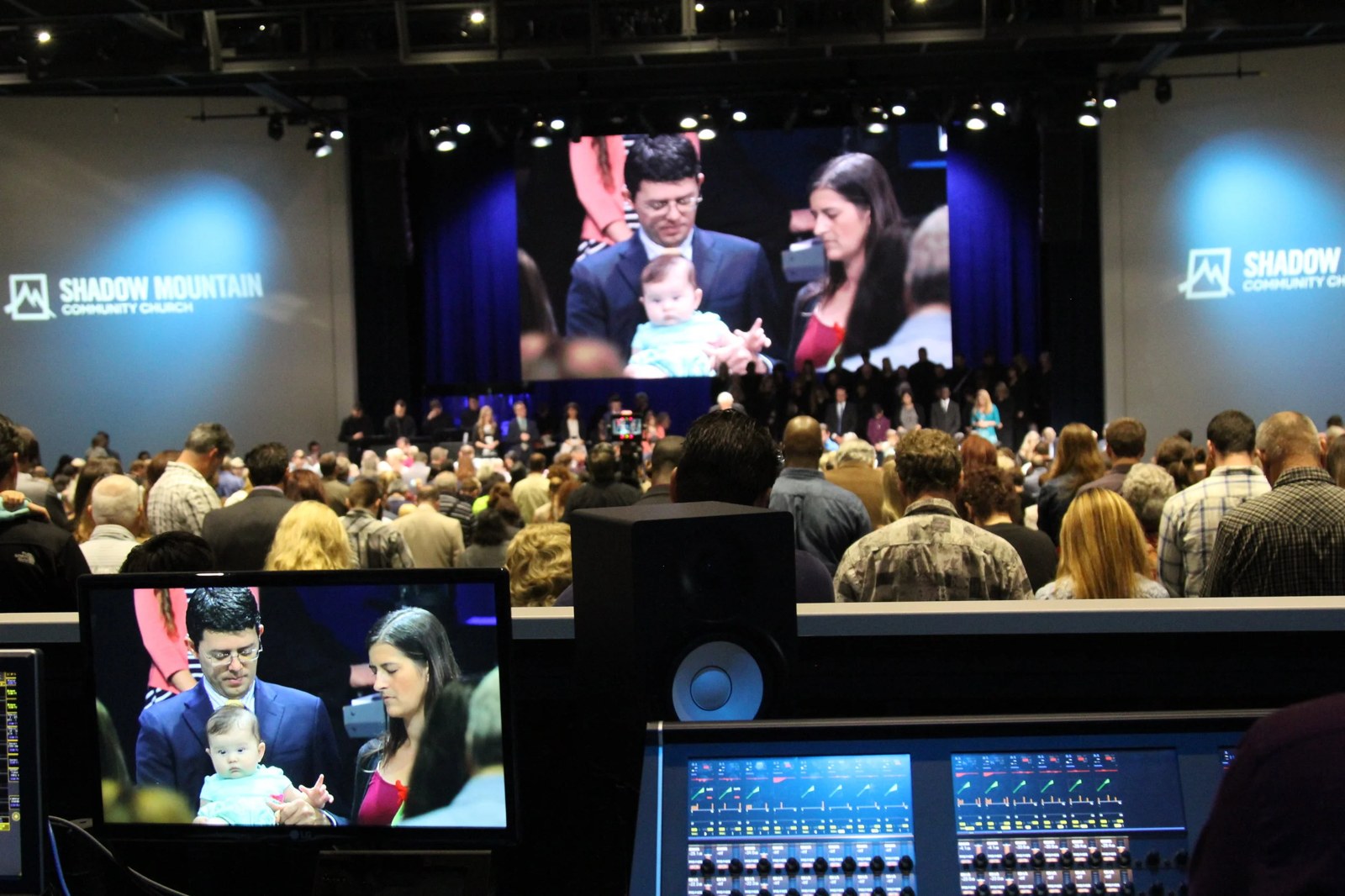
The named projects tell the story. At Eastside Christian Church in Anaheim, AMT built out an 1,800-seat worship center (expandable to 2,700) with a video wall, a stereo line array, an artificial reverb system, and a multi-camera broadcast setup for image magnification (IMAG) and web streaming - plus 70-inch displays in breakout rooms and digital signage in the lobby. At Shadow Mountain Community Church in El Cajon, the spec sheet reads like a broadcast facility: a Soundcraft Vi7000 128-input digital console, a d&b Y-Series line array, 16 wireless mic channels, in-ear monitoring, a Ross Carbonite production switcher, and a 26-foot-wide LED screen at 3.91mm pixel pitch.
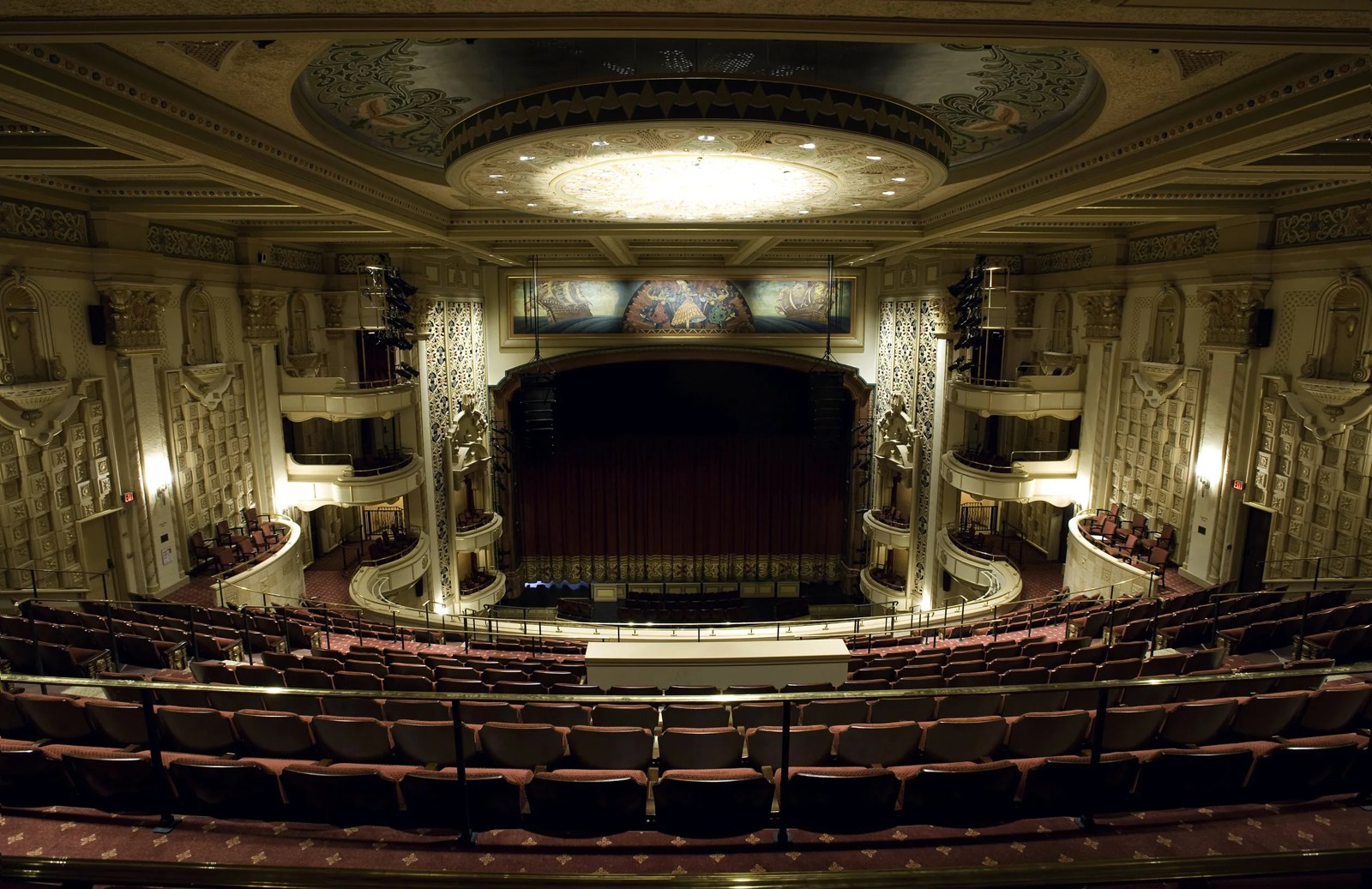
The work is not confined to churches. At the Granada Theater in Santa Barbara, a landmark rebuilt as a performing arts venue, AMT's scope included a large-format digital mixing console, Dolby Lake signal processors, a concert-level line array, a proscenium speech reinforcement system, and an LCS electronic acoustic enhancement system, with cinema surround added later. The portfolio also lists The Father's House, River of Life, the USC Catholic Center, and Christ Cathedral.
The problem they solveWorship went pro, and someone had to build it
There is a bigger trend underneath AMT's order book. Over the last two decades, a modern church service quietly turned into a live production. Multi-camera video, IMAG, LED walls, streaming, in-ear monitoring, and lighting cues are now standard at mid-to-large congregations. A Sunday morning can look and sound like a television broadcast. That shift created steady demand for firms that can engineer the whole stack and, just as important, teach a rotating cast of volunteers to run it.
AMT sits squarely in that lane. Its leadership carries the resumes to match. President Tim Carlson (CTS) brings more than 20 years of hands-on systems experience in performance and worship spaces. Director of Engineering John Glancy has 25-plus years across audio and video design, control systems, and streaming. Director of Production Trey Reynolds, with the company since 2004, spent over 20 years as a technical director for major churches before coordinating installs. It is a team that has sat in the operator's chair, not just drawn the schematic.
The edgeRepping everybody beats repping one
Here is the strategic detail worth stealing. AMT represents, in its own words, "virtually all leading audiovisual manufacturers." That sounds like a throwaway line. It is actually the whole positioning. A firm locked into one brand has to make that brand fit every room, whether it belongs there or not. A manufacturer-agnostic integrator can spec the console, the speakers, and the LED wall that the space and budget genuinely call for. The advice is only as trustworthy as the incentive behind it - and AMT's incentive is to get the room right, then keep the service contract.
That maintenance piece is the quiet engine of the business. Beyond the headline installs, AMT offers preventative maintenance contracts with scheduled visits and emergency response, plus upgrades, equipment sales, and operator training. Installs are lumpy and competitive. Service is recurring and sticky. It is the unglamorous half of the model that keeps a 16-person shop durable across decades and economic cycles.

Where it fitsA regional specialist in a national market
The AV integration market has giants - national firms like AVI-SPL and Diversified that chase corporate, higher-ed, and enterprise contracts across the country. AMT is not trying to be one of them. It is a Southern California specialist with deep roots in worship and performance work, competing on engineering depth, tenure, and relationships rather than footprint. In a field where trust is earned one on-schedule project at a time, being the firm a church calls back for its next campus is a defensible position.
Third-party estimates put AMT's annual revenue in the neighborhood of $20 million, which is substantial for a team of roughly 16. That ratio is the tell: this is a high-skill, project-heavy business where a small number of experienced engineers and crews move a lot of value. It has been listed in the Blue Book construction directory since 1997 and holds California contractor license #558162 - the kind of credential that matters when you are bidding institutional work.

The takeawayBoring, repeatable, and hard to copy
There is a version of the AMT story that reads as unremarkable: a mid-size regional contractor that installs sound and video. But look closer and it is a clean case study in durable services. Pick a specialty where the work is technical enough to keep out amateurs. Stay manufacturer-agnostic so your advice is trusted. Do the engineering upfront so projects land on schedule. Then wrap it in maintenance contracts that pay you between the big jobs. None of that is flashy. All of it compounds.
The best measure of AMT's work is the one it will never get credit for. When the microphone is clear, the wall is bright, the stream does not buffer, and the volunteer running the board on Sunday is not sweating - the company has done its job and disappeared. For a business built on being invisible, three-plus decades of getting called back is the loudest signal there is.