Amitabh Roy’s early office measured 435 square feet. He bought it with savings and family support while building Codelogicx in Kolkata. There was room for a young software business and a formidable collection of jobs: founder, developer, recruiter, accountant, and whoever dealt with the legal paperwork. Entrepreneurship had supplied him with several occupations before it supplied him with much of an organization.
That modest space makes a useful starting point for understanding Roy. His career has repeatedly brought him close to a practical inconvenience, then given him a reason to build around it. First came the business of engineering software for other people. Later came products for managing residential communities and coordinating work. The problems were often nearby. They did not require an expedition to discover.
435 square feet, several job titles
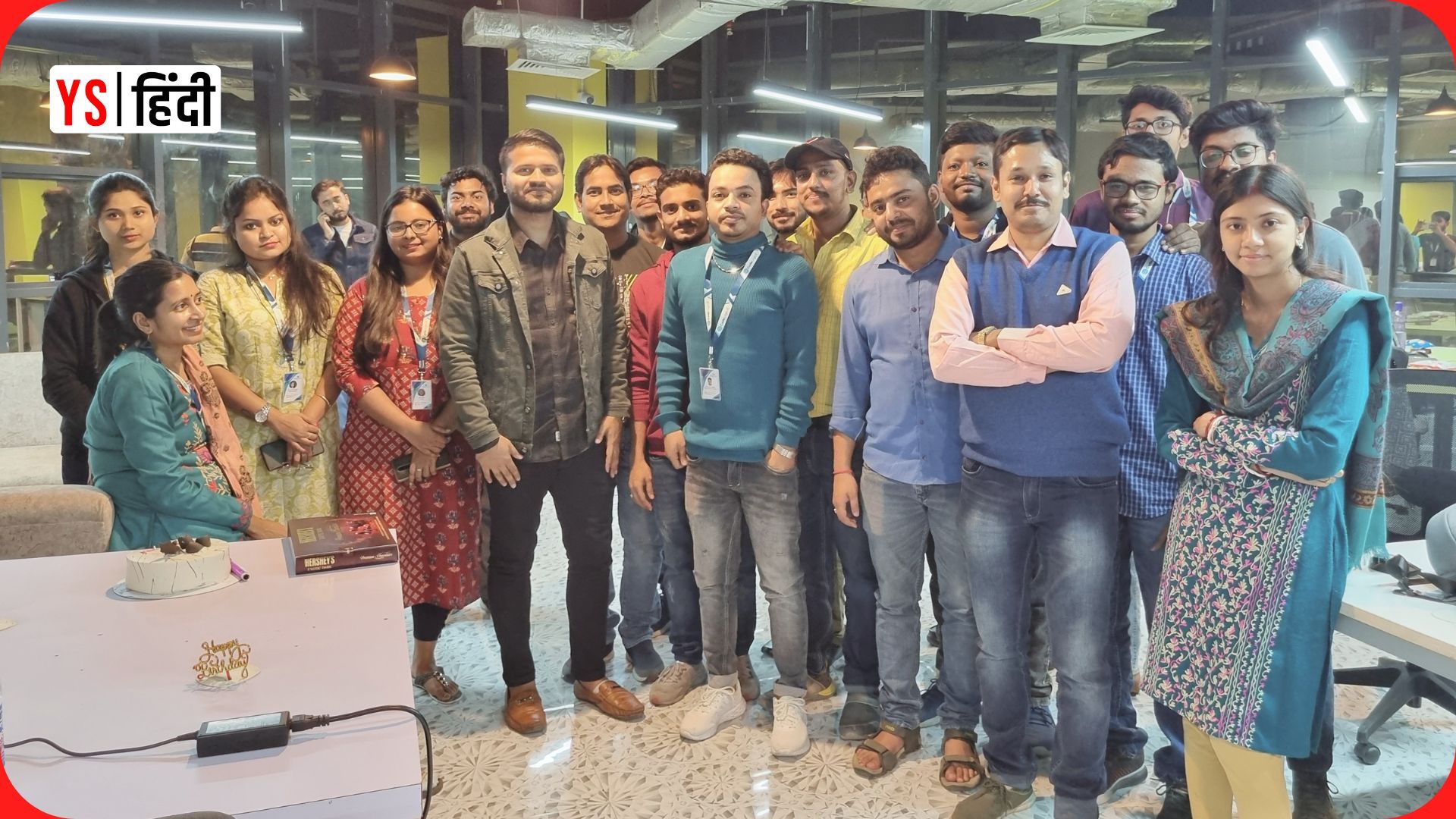
The early Codelogicx story has very little spare furniture. Roy handled accounts, compliance, legal matters and human resources himself. Hiring meant persuading capable developers to join a small company in Kolkata’s old quarter. His parents had hoped for a stable technology career. He was assembling something with considerably more moving parts.
“Those early days were a crash course in everything,” he recalled. The phrase has the advantage of making no attempt to sound glamorous. A software developer can finish a task and inspect the result. A founder can finish a task and discover that it has produced three more tasks, two of them requiring forms.
The little office also gives the story a physical scale. Before there could be separate functions, there had to be someone willing to do them. Roy’s early responsibilities help explain why his later products concern coordination: the administrative side of work had already occupied a substantial part of his own working life.
The education between jobs
Roy’s studies took him through physics and then computer applications. He completed his MCA in 2005 and worked as a full-stack developer. His professional profile also records a Sun Certified Java Programmer qualification from 2007. Before he was managing a technology business, he was acquiring the technical vocabulary of the work it would sell.
He moved into freelancing in 2009. Independent assignments gave him experience with clients before he established Codelogicx as a company. That sequence matters. A freelancer must understand what someone wants, agree on work and deliver it. The future company already had a human starting point: relationships formed through doing the job.
Codelogicx was incorporated in March 2013. Roy’s route into ownership therefore included a period in which the work and the customer relationship were directly his responsibility. The later organization added people and capabilities to that experience. Becoming a chief executive enlarged the assignment; it did not erase the original obligation to make something useful.
His public professional profile now places him in the Greater Toronto Area, while the history of Codelogicx remains closely connected to Kolkata. It also lists five languages, with different levels of proficiency: Bengali, English, Hindi, Manipuri and Assamese. That is a more individual detail than a corporate title supplies. The founder behind these management tools has a professional life extending across places and languages, even as his products concentrate on the daily business of making work understandable.
The work becomes a company
- 2009Independent work
Freelancing begins - 2013Codelogicx
Company incorporated - 2018The360
Product launches - 2023TeamTrace
Product launches
The customer inside the company
TeamTrace brought Roy’s attention back to his own organization. Managing a growing software team meant understanding assignments, time and available people. Existing tools left information divided between systems. A task could have a place on a board while the practical account of the work remained elsewhere.
The product began development in 2023 and launched that October. Its scope combines project management, time tracking and workforce management, with monitoring capabilities alongside them. For Roy, the founder who had once performed several company functions himself, the subject had become how those functions connected when many people were involved.
The attraction of that combination is easy to understand. A project manager wants to know what needs doing. A team leader wants to know who can do it. Someone responsible for the budget wants to know what it costs. When the answers live separately, even a simple question can acquire an impressive travel itinerary.
TeamTrace’s own account emphasizes a common view of operations, with more detailed information available underneath. That places the product in the everyday territory of capacity, schedules and progress. It also means Roy’s experience as an operator is part of the product’s premise: he had been responsible for finding these answers before offering others a way to find them.
A dashboard needs a conversation
Roy speaks directly about the contested part of his product: employee monitoring. In a public post, he argued that measurement should be disclosed and employees should have access to their own information. His position makes transparency a condition of how the system ought to be used, as well as something the software promises to provide.
“Announce what is measured, show people their own data”
Amitabh Roy, on workplace monitoring
That is a management position with consequences. A dashboard can collect information, but the person interpreting it still chooses what deserves attention. Making the record visible to employees allows them to participate in that interpretation. Roy’s argument places a responsibility on the employer alongside the demand for accountability from the team.
Elsewhere, he has written about focus, context switching and the difference between activity and useful output. Read together, these positions reveal the question his product must keep addressing: how much does a record of work explain about the work itself? The answer shapes the conversation between managers and employees long after installation.
Software has to wait for people
The360 offered an earlier lesson in the distance between a working idea and a usable product. Roy initially considered an application involving security guards and mobile check-ins. The intended users’ access to smartphones was a practical obstacle. An application cannot negotiate with a phone that its customer does not possess.
The idea later developed into a broader residential community management product, launched in November 2018. The360 covers matters such as visitor records, community operations and accounting. The change in scope brought together several recurring needs around the same setting, a pattern that would appear again in his work on TeamTrace.
These products concern rather ordinary human arrangements: a visitor arrives, a task changes hands, someone needs a record. Their interest lies in the number of small decisions required to make those arrangements work smoothly. Roy’s product history repeatedly returns to that level of detail, where the difference between an idea and a service people use becomes visible.
Different settings. Recurring coordination.
The360
Visitors, records and residential community operations.
TeamTrace
Projects, time, people and the account of work.
A client’s cargo, a familiar problem
The same interest in bringing information together appears in Roy’s discussion of logistics. After a visit to the Kolkata office by Marco Del Giudice, CEO of MdG Omnia, he described an impromptu conversation about the industry. Codelogicx had built an Omnia platform to bring shipment telemetry into a common view.
Roy described data arriving from active and passive loggers made by different manufacturers. Combining those streams was the practical task. His interest in future uses of machine learning and blockchain followed that account of the work already being done. There was a shipment, there was information about it, and there was a need to make the information usable together.
It is a useful client example because it gives substance to a broad phrase such as product engineering. The work involves understanding how information is generated, where it fragments and who needs to act on it. Those questions connect the client project to Roy’s own products without making the businesses identical.
AI gives judgment more work
By June 2026, Roy was discussing how coding agents could alter software development. His account placed developers in a more supervisory role, directing tools and checking their output. The emphasis shifts toward decisions about systems, alongside the production of code. Faster implementation leaves plenty of room for difficult choices.
He also pointed to distribution and selling as important challenges for startups when initial software becomes easier to create. A product still needs people who understand its purpose and choose to use it. For a founder developing his own software brands, that observation has a commercial application.
Roy’s discussion of scaling included architecture, database performance, infrastructure and customer relationships. Together, these concerns describe a longer assignment than getting a first version to run. A demonstration can be brief. The responsibility for the system continues as customers arrive, requirements change and the product becomes part of someone else’s working day.
The next business has to earn its place
Codelogicx reported ₹14.5 crore in revenue for FY2025 and described itself as profitable every year since inception. Roy has said he deliberately chose to grow without external funding, reinvesting earnings. That approach ties the next investment closely to the work already paying its way.
Annual revenue at Codelogicx.
His August 2026 plans placed TeamTrace and FieldTrace, a field workforce product, within a larger SaaS ambition. The company targeted ₹12-15 crore in SaaS annual recurring revenue by December 2027. That figure describes a destination. Building the customer relationships and repeated use required to reach it remains the assignment.
The connection with the early office is pleasingly practical. Roy began by taking responsibility for many jobs. He built a company that could share the work, then products intended to make the sharing clearer. The next chapter asks those products to earn a larger place in the business. There is considerably more room now. The job description continues to grow.
 Watch the conversation ↗