A T-shirt is a modest place to begin a career in retail infrastructure. It has no lease to negotiate, no shop window to dress, and generally requires fewer meetings than a five-year property commitment. Amish Tolia began with T-shirts anyway. At Indiana University, he and Jared Golden built Campus Threadz, selling custom apparel to the people around them. They would eventually find themselves dealing with the considerably less portable business of buildings.
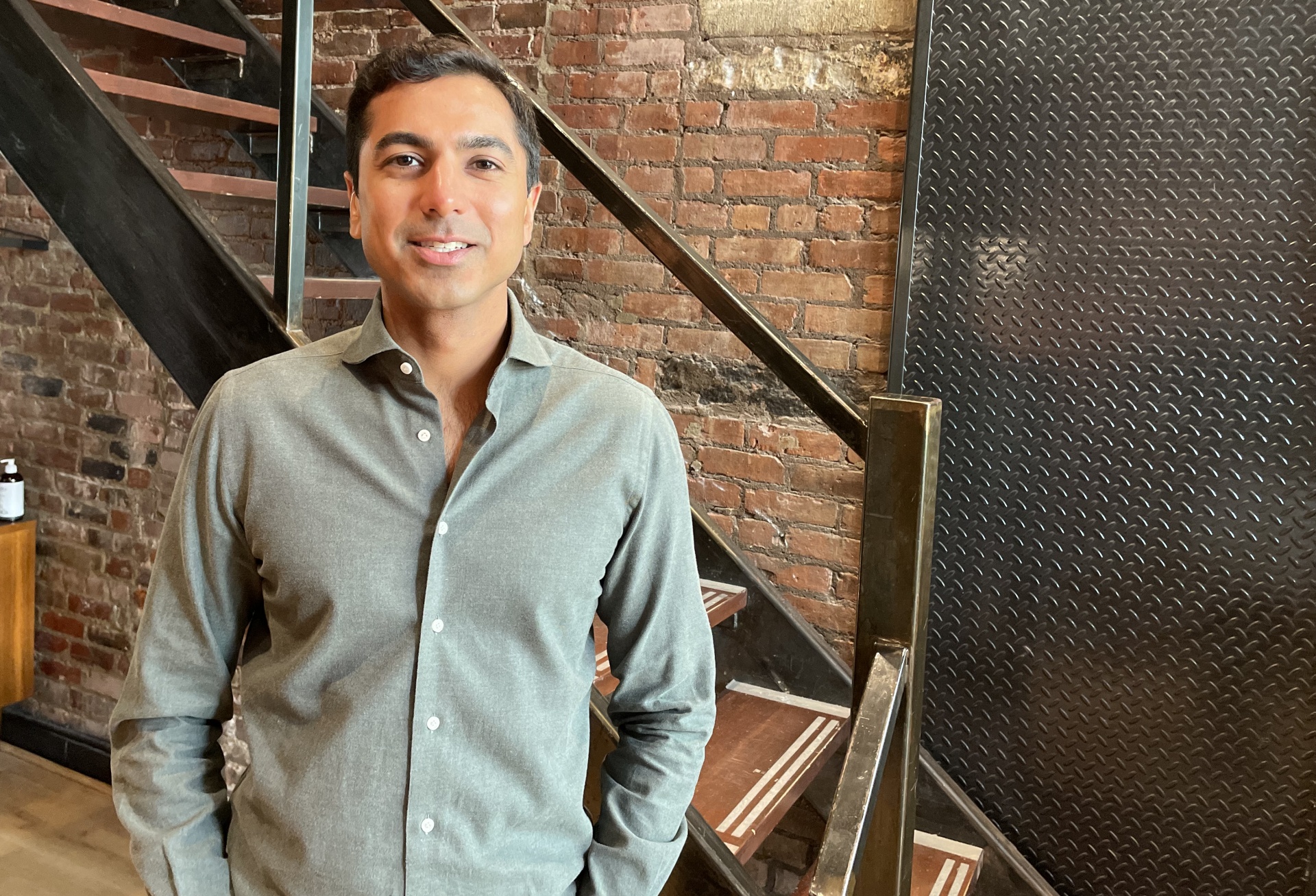
Today, Tolia is the co-founder and CEO of Leap, which launches and operates physical stores for consumer brands. The connection between those two chapters is more interesting than a tidy ascent from student entrepreneur to executive. Across successive businesses, Tolia has kept returning to a particular problem: a brand can be very good at making something people want, and still need help reaching them.
Two students, one continuing conversation
Tolia grew up outside Detroit. Golden came from Columbus, Ohio. They met at Indiana University, where their first business grew beyond its immediate campus. By graduation, the T-shirt operation had reached roughly 46 college campuses, and they sold it. A brief period working on Wall Street followed, beginning in the distinctly unpromising financial climate of 2008.
The partnership outlasted that detour. They built Pear, formerly Apparel Media Group, in Chicago; Custom Ink acquired it. Work inside the larger ecommerce company gave them a new question to wrestle with: how should an online business enter physical retail? Stores offered another route to customers, but opening them demanded unfamiliar capabilities and long commitments.
For a founder, that is an awkward discovery. Success in one channel supplies money, customers and confidence. It does not automatically supply a real-estate department. The skills that made the original business work may be quite different from the ones required to choose a street, hire a manager and keep a shop running on a wet Tuesday.
The customer was there. The machinery wasn’t.
The experience of trying to enter retail became the starting point for Leap. Tolia and Golden had encountered the barriers themselves. When they founded the company in 2018, they brought that experience to a proposition with an unusually physical consequence: assemble the capabilities that brands repeatedly need, then make those capabilities available across a network of stores.
Years later, Indiana University's venture arm would invest in Leap's 2023 financing. The relationship had come full circle, from two students selling apparel to alumni building the operating apparatus behind other companies' shops. The university was now backing a business born from problems its former students had met after leaving campus.
There is a useful restraint in this origin. Leap's starting question concerned work that already existed. Someone had to negotiate the lease. Someone had to recruit the sales team. Someone had to connect the systems. Tolia and Golden's opportunity lay in deciding which of those jobs a brand should really have to learn from scratch.
A sneaker store makes the argument
Leap's launch in November 2018 came with a concrete example: a Chicago store for sneaker brand Koio. The company said the location opened in a matter of weeks. Koio could expand without individually assembling the lease, build-out, staffing, technology and daily management required for that location.
At launch, Tolia argued for a retail presence as part of a modern growth strategy. The proposition could fit on a shop sign. Delivering it involves rather more paperwork. The Koio opening gave the proposition an address and a shop floor, putting an operating example behind the language of a platform.
A customer's encounter with a store begins at the front door. The operator's work begins much earlier. That gap is where Tolia has chosen to build. The branded experience remains visible; the shared systems supporting it are designed to recede. Ideally, shoppers remember the shoes rather than the arrangements that made trying them on possible.
“A modern growth strategy has to include a smart retail presence.”Amish Tolia, at Leap's 2018 launch
The quiet appeal of the unglamorous job
In explaining Leap, Tolia separates the distinctive parts of a store from the repeatable ones. A brand's product assortment, identity and presentation need their own treatment. The infrastructure underneath can be shared: real estate, operational systems, technology, development and a pool of retail employees.
His comparison is with ecommerce infrastructure. Brands using established online platforms no longer need to build every payment or product-management function themselves. He wants physical retail to benefit from a similar division of labour, while allowing each shop to retain its own appearance and feel.
The argument extends to the people selling the products. Tolia has described how a multi-brand employer can offer employees experience across categories and a broader path for development. Jewellery, apparel and home products require different conversations with shoppers. A network creates room for staff to learn those differences.
This is a revealing choice of emphasis. The romance of retail tends to settle on the window display. Tolia spends time discussing staffing and systems. A beautiful shop is an invitation; a capable team gives the visitor a reason to stay. The less photogenic work has a habit of determining how the photograph turns out.
Somebody still signs the lease
There is a hard edge beneath the promise of flexibility. In 2024, Tolia described Leap signing landlord leases often lasting five to ten years, while offering brands shorter operating commitments. If a brand failed to perform, Leap could replace it with another from its network. The risk remains real; the company manages it across locations and brands.
That same year, the offering included full-term stores, seasonal pop-ups and operations agreements. Under an operations agreement, Leap could supply staffing, systems and operating expertise without holding the property's lease. The different arrangements recognised that brands arrive with different resources and different appetites for commitment.
Different commitments. Shared premises. Leap manages the operating gap. Bars are schematic.
The distinction matters when reading Tolia's ambition. Making entry easier for a brand requires an operator willing to shoulder complexity. The promise must survive after the opening party, through changing demand and the ordinary expense of keeping the lights on. Flexibility has an operator behind it.
Growth measured in doors
In January 2022, Leap announced a $50 million capital raise led by BAM Elevate. Its reported footprint then stood at 50 stores across eight markets, serving more than 30 brands. Store count and total system sales had quadrupled during 2021. These were company-level milestones, a way to see the scale of the undertaking as the early model expanded.
By May 2022, Leap was announcing entry into Boston, Columbus, Greenwich, Philadelphia and Washington, D.C. Its approach also involved density: placing stores near one another on streets such as New York's Bleecker Street and Venice's Abbot Kinney Boulevard. Neighbouring locations could share efficiencies while giving brands access to local shoppers.
In June 2023, another $15 million financing supported the platform's development. Tolia's emphasis was on what accumulated as the network grew: information from stores and efficiencies in running them. Public Rec's founder described using Leap to operate its retail fleet while continuing to grow ecommerce. For Tolia, each additional door was also another test of whether the shared apparatus worked.
- 2018Launch with Koio's Chicago store
- 202250 stores in eight markets, reported in January
- 2025$20 million investment announced in January
A retail veteran joins the table
In January 2025, Leap announced $20 million in investment involving Tribeca Venture Partners, DNX Ventures and existing investors. It also announced that former Neiman Marcus CEO Karen Katz had joined its board. The company also reported demonstrating profitability, a milestone best understood with its announcement date attached.
Katz brought experience from a business where physical retail was the centre of the operation. Her arrival put another kind of knowledge alongside Tolia's background in entrepreneurship and digital commerce. A company helping brands enter shops now had a former department-store leader helping consider what came next.
Tolia's own public response was exuberant. He thanked employees, brand partners and investors, and welcomed Katz. The vocabulary of his interviews can be operational and precise; the tone of that announcement was openly celebratory. Years of leases and staffing plans had produced a moment he wanted to share with the people doing the work.
The next store is a joint effort
During 2025, the partnerships became more explicit. Leap, Simon and Shopify worked together on physical expansion for brands including Ring Concierge. The division of capabilities connected retail operations, shopping-centre locations and commerce technology. Tolia was building relationships around the same practical problem that had prompted Leap in the first place.
In November, the collaboration extended to Bombas's third retail store, in Austin, following openings in South Florida and New York. A brand familiar through digital channels was acquiring places where customers could walk in. The progression made Tolia's argument tangible again, seven years after the first Koio opening.
By March 2026, he was discussing the clicks-to-bricks journey with Ring Concierge and Shopify at Shoptalk. An October Playbook appearance returned to physical stores, brand experience and the relationship between ecommerce and shopping in person. His continuing subject is the distance between knowing a customer online and serving that customer across a counter.
Tolia's career has travelled from campus apparel to the infrastructure beneath branded shops, with Golden remaining part of that history. The questions have become larger, and the contracts longer. Yet the work still comes down to helping a business meet people who might want what it sells. At the end of all those systems, somebody opens a door.