A shoe store is an unlikely place to look for a software idea. There are shelves to build, people to hire, a lease to negotiate and an opening day that refuses to move simply because the point-of-sale system is having an artistic disagreement with the inventory. In 2018, Jared Golden and his co-founder, Amish Tolia, chose precisely this sort of problem. Their new company, Leap, opened its first store for the footwear brand Koio in Chicago.
The proposition was practical: a brand could have its own shop without assembling an entire retail organization. Leap would handle the work behind the sign. Koio’s name would face the street; a different company would manage the machinery that made the place function. At launch, Leap said it had helped get the Chicago location open in a matter of weeks. It announced $3 million in seed funding alongside that first opening.
Golden’s career gives that arrangement a longer backstory. Before he helped brands find a physical address, he helped groups find sponsors. Before that, there was a college apparel business. Across those ventures runs a recurring interest: getting two parties who need each other through the awkward business of actually working together.
A partnership with a campus address
Golden grew up in Ohio and graduated from Indiana University’s Kelley School of Business in 2007 with a finance concentration. He and Tolia met at Kelley, where their first venture together was Campus Threadz. It is a useful place to begin because it puts their partnership ahead of the later funding rounds and shop openings. Leap was another undertaking by people who had already learned to build businesses together.
Golden subsequently worked in Deutsche Bank’s global investment bank in New York, in leveraged finance and the real estate, gaming, lodging and leisure client groups. The résumé brings together two quite different kinds of commercial experience: a student venture dealing in apparel and a banking job dealing with capital-intensive businesses. Both belong in his story; neither needs a retrospective claim that it made Leap inevitable.
The pair’s next chapter included Apparel Media Group, later known as Pear. Its business connected community groups seeking support with companies seeking an audience. The exchange gave an advertising budget a local destination and a group a way to obtain apparel, donations or other help. By May 2016, Golden was explaining Pear on the interview program Bootstrapping in America.
CustomInk’s own corporate timeline records its acquisition of Pear in 2014. For Golden and Tolia, that meant an earlier venture had already reached an exit before Leap arrived. The two continued working together. The continuity matters more than a collection of job titles: the founders who took on storefront operations had spent years on the less visible systems connecting brands and people.
What does a brand need to reach people - and which parts of that work could someone else make easier?
The sponsorship before the storefront
Pear becomes easier to understand through one specific offer. In 2014, a U.S. Cellular program invited high school groups near Portland, Maine, to earn up to $1,000 in cash funding or custom apparel. A group created a sponsorship page, invited supporters and had ten days to complete its campaign. Supporters could do things such as visit a website, answer a survey or engage with the sponsor online.
The mechanics were modest. They were also the point. The group needed resources; the sponsor wanted engagement; Pear arranged the transaction. Golden described the service as a way to bring those two organizations together. A school club could turn its existing network into something it could use, while a national company gained a route into a community.
There is a human detail in Pear’s employment history, too. In December 2013, it ranked seventh on Brill Street’s list of Gen Y employers in the Chicago area. Golden credited younger employees with informing the company’s approach to problems. Community manager Jaymie Wahlen described starting as an intern, expressing an interest in community management and having a role created for her.
That episode puts some texture on Golden’s operating years. A sponsorship platform needed people who understood how groups behaved, and its leadership publicly valued that perspective. The work was about relationships with rules and interfaces attached. Years later, a retail platform would require its own combination of systems and people who could make them useful.
Getting the keys was only the beginning
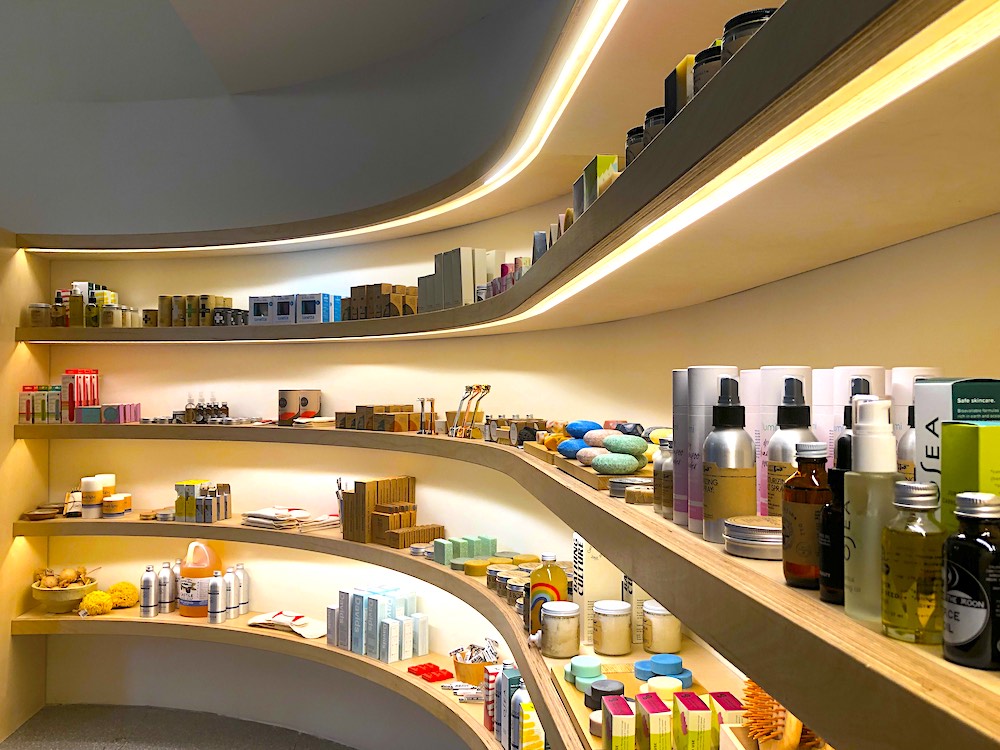
With Leap, the problem became physical. A digitally native brand might know its customers and its products while having little appetite for lease negotiations or store staffing. The company Golden and Tolia built offered those capabilities together. Its early Koio opening gave the proposition a front door, rather than leaving it as a diagram in a presentation.
By January 2022, Golden was discussing a much broader operation with Omni Talk’s Chris Walton and Anne Mezzenga. Leap had deployed nearly 50 stores with more than 30 brands. The conversation ranged across point-of-sale management, leases, staffing and retail technology, with customers including Mack Weldon and Ashley Stewart. The list of chores helps explain the appeal. Opening a store contains quite a few businesses disguised as one business.
That scope also made execution central to the promise. A shopper entering a branded store experiences the service, the merchandise and the room together. A shared operator has to deliver all of that while preserving the particular brand on the door. Scale, in this setting, brings a demanding requirement: repeat the underlying work without making every shop feel interchangeable.
Golden started counting in neighborhoods
One of Golden’s more revealing explanations concerned where stores went in relation to one another. In a 2022 interview, he described concentrating locations into clusters and considering how the brands within them might complement each other. A useful question followed: “Is there synergy or overlap within the target segments?”
It is the language of someone thinking beyond an individual shop. A street can contain several distinct businesses and still offer opportunities for shared operations or cross-promotion. Golden compared the thinking to that of a department store or mall owner. Leap could help facilitate marketing between receptive brands and even arrange for products to appear in another brand’s store.
In November 2022, Leap’s partnership with Simon Property Group extended that logic into malls. The initial plan included four stores across California and Florida, for True Classic Tees, ThirdLove, Sugarfina and Goodlife. Simon was also an investor. Golden’s neighborhood reasoning had a counterpart in a landlord’s portfolio: put an emerging brand where a relevant audience already shops.
Separate identities above the door. Connected operations behind it.
There is something pleasantly old-fashioned about this part of his thinking. The neighboring shop matters. So does the mix of people arriving nearby. The technology gives the operator another way to organize those relationships, but the unit of attention remains recognizable to anyone who has ever chosen which side of a shopping street to walk down.
When a company outgrows its first chapter
Leap began 2021 with 11 stores. In a February 2022 message, Golden and Tolia described a network of 50 locations. Their ambition reached beyond opening individual shops to making the platform a repeatable way for brands to expand. They also wrote about the kind of places they wanted to help create: “We want city streets and shopping centers to be more vibrant”.
By July 2023, IU Ventures was backing a $15 million financing and describing a network of 100 stores across 11 markets. It was an institutional return to the place where Golden and Tolia had first met. The investment connected their student beginnings with a business serving dozens of brands. Campus Threadz and a national store network belong to very different scales of work.
Store counts reported at each date. These snapshots do not show revenue or profitability.
Golden’s own role changed. By a March 2024 founder event at the University of Chicago’s Polsky Center, he was described as a Leap board member who had spent five years focused on founding and building the company. His work also included advising technology businesses, particularly in ecommerce enablement. The operating chapter had become a board and advisory chapter.
Leap continued under Tolia as CEO. In January 2025, the company announced $20 million in financing and reported more than 100 stores in 12 major U.S. markets. Later that year, it worked with Shopify and Simon on Bombas’ move into physical retail, including an Austin store following openings in South Florida and New York. Those developments belong to the company Golden helped establish, with Tolia leading its next phase.
A different kind of production
For all the leases, dashboards and funding announcements, Golden has left a rather different ambition in his personal bio: “Someday, I will produce electronic music.” It is a small sentence with room around it. There is no release date attached, no catalogue to inspect, just a wish expressed in the future tense.

It gives a lighter ending to a career spent arranging complicated collaborations. A founder can occupy a board seat and still keep an entirely different project somewhere beyond the calendar. In Golden’s public story, the completed work is concrete: a long partnership, an acquired business and a company that gave other brands a route from a website to a set of keys.