In October 1999, Amir Haleem won a Quake III Arena tournament in Dallas and collected $10,000. He played as Hakeem. It was an early version of a career that would become familiar to parents much later: a person could be very good at a computer game, travel somewhere to prove it, and come home with money. The telephone companies had little reason to pay attention.
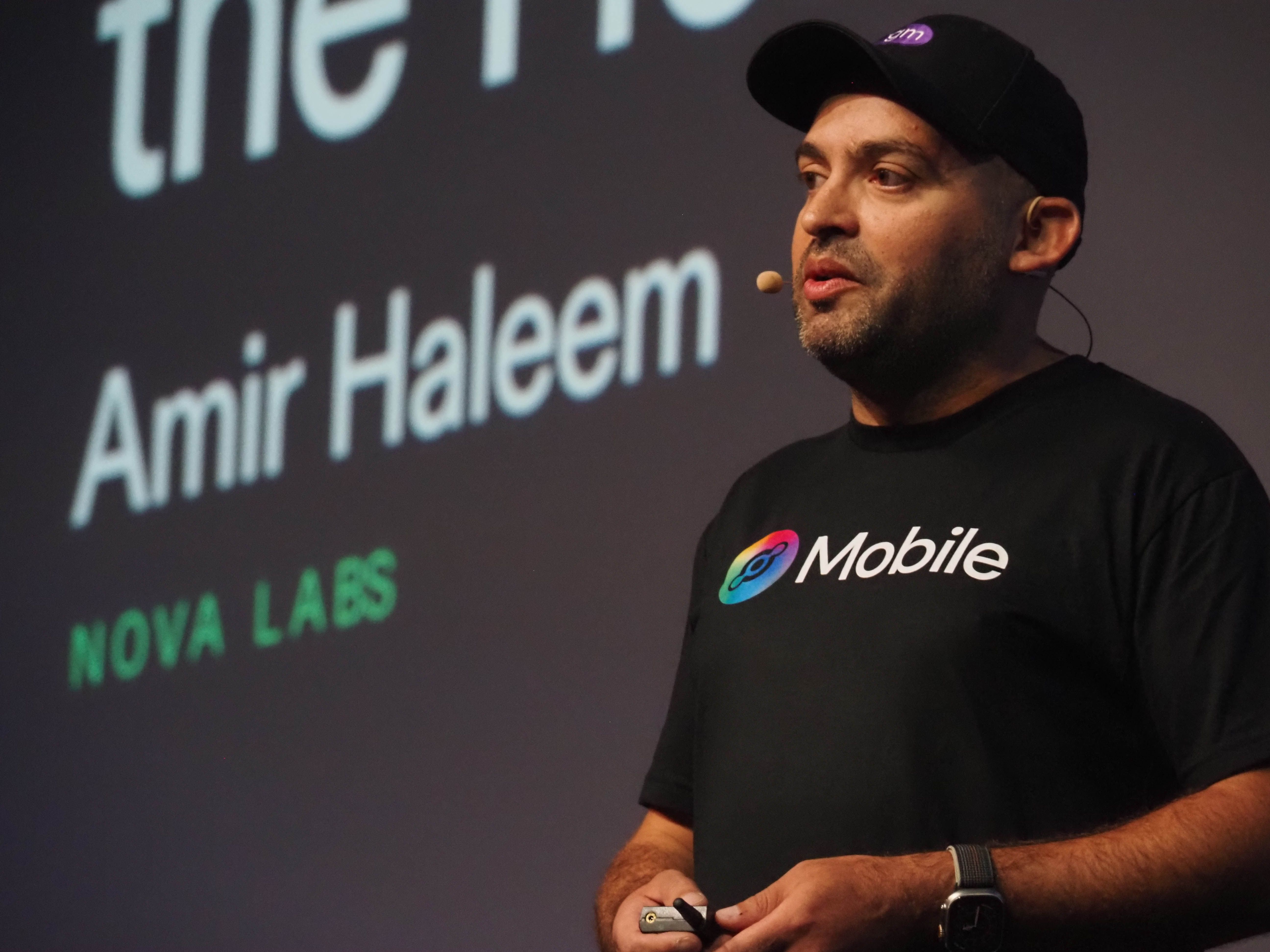
Twenty-seven years later, those companies are the audience for the business he helped create. Helium invites people and businesses to provide wireless coverage, then rewards them for participating. It has passed through sensors, cryptocurrency, phone plans and carrier partnerships. Haleem, its co-founder, moved from chief executive to chairman of Nova Labs in June 2026. The interesting distance in his career lies between the tournament and the boardroom: years spent discovering what makes strangers join a network.
The player behind the handle
Haleem was born in Scotland and grew up outside London. His first job was testing video games. He later worked in game design, including on the original Battlefield 1942 team in Stockholm, and became chief technology officer at gaming startup Diversion. Competitive play and professional work overlapped; the game was both something to master and something to make.
The late-1990s gaming scene required a little more commitment than downloading an app. Haleem remembers having to assemble a computer and find a fast internet connection. Access itself narrowed the field. For people who could get online, multiplayer games supplied introductions that geography might otherwise have prevented. A good connection was already doing more than carrying packets.
One of those connections was Shawn Fanning, the Napster co-founder, who also played games. They stayed in touch. Haleem also co-founded ESReality, an esports community site. Before he asked people to operate wireless infrastructure, he had participated in a world where people gathered around shared software, recognizable handles and the conviction that a match mattered.
It would be too tidy to say Quake taught him how to run a telecommunications company. He has described a winding route, and the route deserves to keep its bends. Still, the continuity is appealing: communities were part of his working life well before anyone offered him a vocabulary of decentralized infrastructure.
Six years before the little box
In 2013, Haleem founded Helium with Fanning and Sean Carey. The original concern was connecting small devices. A sensor might need to send a modest reading, work away from a socket and stay inexpensive. Giving every such device the connectivity of a smartphone was an awkward answer to a much smaller question.
Helium initially tried different technical and commercial approaches. Early hardware was complicated. The company explored focused applications rather than a general network. Restaurants, hotels and other individual locations offered problems a small team could actually address. But Haleem wanted broadly usable infrastructure, and each narrower application pulled the business toward a different kind of company.
The obstacle was wonderfully plain. Someone had to build coverage before device makers could rely on it. Someone also had to want that coverage enough to justify building it. Each side had a perfectly sensible reason to wait for the other. Telecommunications had acquired a waiting room.
Crypto incentives offered a possible way through. By 2017, the team was exploring how tokens might encourage independent participants to supply coverage. A 2018 whitepaper, co-authored by Haleem, set out a wireless network in which providers could earn tokens. The argument joined radio engineering to a question about human behavior: what would make people install equipment for a network that was still becoming useful?
“The original goal was always very naive.”
Amir Haleem · on Helium’s early plans
That admission gives the origin story some texture. Founders often improve their early reasoning in the retelling. Haleem has been willing to describe how incomplete this reasoning was. The ambition survived, while the mechanism for achieving it kept changing. Six years separated the founding of the company from the public network’s 2019 launch.
A reward for showing up
The original consumer proposition made the idea tangible: buy a $495 hotspot, connect it to broadband and contribute wireless coverage. Participants could earn HNT, Helium’s token. The first HNT was emitted on July 29, 2019. Suddenly, the person with a suitable location and an internet connection had a reason to take part.
The economic arrangement was more intricate than the box suggested. Coverage had to be checked. Rewards had to be allocated. Customers needed a usable way to pay for data. Helium’s Data Credits, created by burning HNT, separated the cost of using the network from the token’s changing market price. The apparatus was designed to coordinate people who had never met.
By March 2022, Haleem’s company announced a $200 million Series D led by Tiger Global and Andreessen Horowitz. It also adopted the Nova Labs name, distinguishing the company from the wider Helium Network. The distinction matters. A founder can run a company; a network also involves independent operators, developers, governance and people with their own ideas about what should happen next.
Money and equipment counts could demonstrate enthusiasm. Commercial demand would require another kind of evidence. A hotspot on a map could establish that somebody had joined. It could not, by itself, establish how much another person would pay to use the coverage.
The map meets the invoice
The difficult chapter belongs in the portrait. In 2022, questions about low network usage and the distribution of early token rewards challenged the promise of a people-built network. Haleem defended the time required for new applications to arrive. For a participant who had bought hardware, however, patience had a price.
There was also a problem with how customers were represented. In April 2025, Nova Labs consented to a judgment carrying a $200,000 civil penalty over alleged misrepresentations to equity investors concerning companies using its network. The company neither admitted nor denied the allegations. Other claims were dismissed. The settlement concerned Nova Labs, and should be understood with that precision.
The episode exposes a distinction that follows Haleem’s project through every version: the idea of a network, the coverage deployed and the customers actually using it are separate things. Keeping those measures separate makes the achievement easier to assess. It also makes disappointment harder to obscure with an attractive map.
Haleem’s technical choices could change too. Helium originally operated its own blockchain, then migrated to Solana on April 18, 2023. Maintaining the supporting machinery had become a question in its own right. The network could pursue its wireless purpose while using another system underneath. A project founded on a particular ambition did not have to preserve every piece of its first implementation.
The ambition to become boring
Mobile phones supplied a different kind of potential customer. Instead of waiting for a new generation of sensors, Helium could help carry traffic from phones already in people’s pockets. Carrier offload moves traffic onto Wi-Fi where suitable coverage exists. A shop, airport or other venue might have useful capacity in exactly the place a mobile subscriber needs it.
In April 2025, Helium announced a collaboration bringing its Wi-Fi network to AT&T subscribers, with Passpoint authentication supporting the connection. The intended experience was unobtrusive. People should be able to keep using their phones without attending a seminar about the network beneath them.
Haleem has made a similar argument about crypto. He has compared blockchains to cloud providers: customers do not ordinarily choose Instagram according to which computing company runs its backend. He wants applications that justify themselves through usefulness, with the crypto machinery receding into the background.
There is a pleasing occupational reversal here. A competitive player needs the scoreboard to recognize his performance. A communications network can do its job so quietly that the user never learns its name. Haleem’s expressed ambition allows for that anonymity. A reliable connection should not need applause each time a message arrives.
A different seat, the same unfinished question
On June 2, 2026, Noble Mobile, founded by Andrew Yang, acquired the Helium Mobile consumer carrier business. Nova Labs and the underlying Helium Network remained separate from that sale. Two days later, Mario Di Dio became chief executive and Haleem moved to chairman. The retail phone service and the infrastructure supporting it now had different owners.
The next phase has its own setbacks. In August, Di Dio announced that an integrator-led US carrier pilot would disconnect and daily user counts would fall. In September, the company introduced HeliumOS, software for operating connectivity businesses. These developments belong to the organization Haleem now chairs; they are no longer announcements from his desk as chief executive.
- 1999Wins CPL FRAG 3
- 2013Co-founds Helium
- 2019Public network launches
- 2026Moves to chairman
Outside work, Haleem builds and races 1990s Japanese sports cars. He has also talked about returning to golf and starting Hugh Howey’s Wool, after enjoying its television adaptation, Silo. These are useful interruptions to a life otherwise explained through networks. Even the person trying to reorganize wireless economics has a reading pile.
The chairman’s chapter remains open. What makes Haleem worth watching is the specificity of the problem he has kept returning to: how to persuade independent people to supply something useful together. Quake offered a match, rules and a result. Wireless adds landlords, equipment, carriers, customers and invoices. The game has become considerably longer. The connection still has to work.
Follow the connections
Haleem’s profiles & writing
Watch, listen & explore