Amir Gilad had a way of explaining the future that began with dinner. His partner made Bolognese, slowly and carefully, for a small gathering. Now imagine 4,000 hungry guests arriving just as the sauce began to boil. The kitchen had not grown. Neither had the stove. The cook could be very good at cooking and still have a rather serious problem.
Gilad offered that thought experiment while writing about AI agents in 2025. He was interested in the debris they would leave behind: requests, searches, decisions, logs. Each useful action would create more work for the systems underneath it. The dinner guests were imaginary; the capacity problem was the point. It was an unusually domestic way for a chip designer to explain why he had become a startup chief executive.
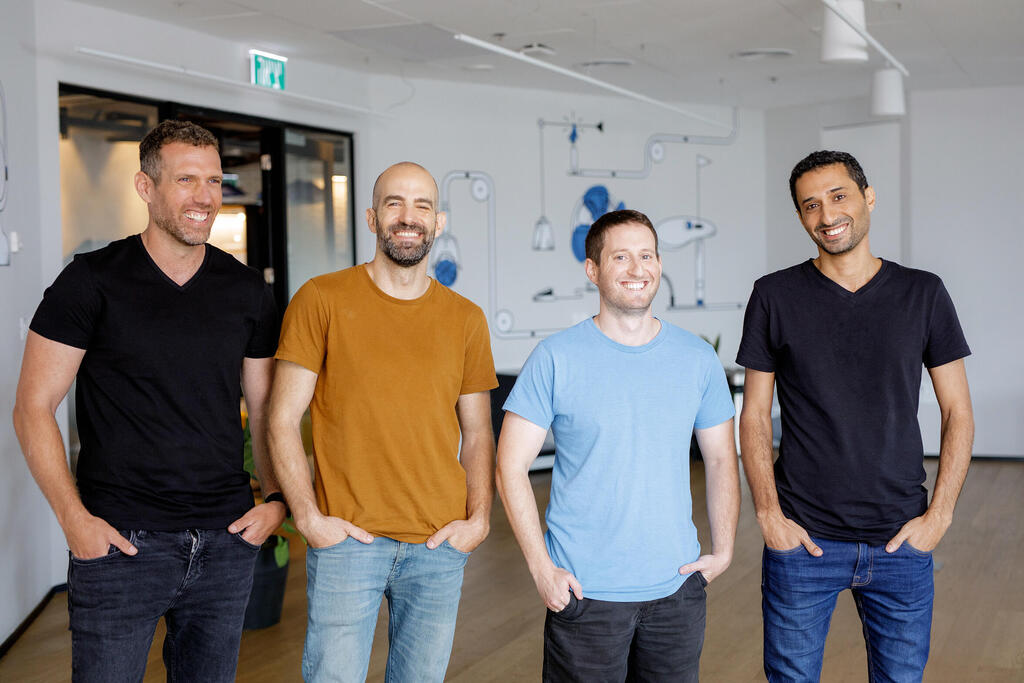
At DualBird, the company he co-founded with Gilad Tal, Ehud Eliaz and Ohad Gamliel, he was working on that mismatch. The ambition was to make cloud data processing faster by bringing hardware and software closer together. His explanation fitted on a dinner table. Delivering it required a team that could think about both circuits and cloud systems.
A circuit designer takes the long route
Gilad studied electrical engineering at the Technion from 2007 to 2011, graduating magna cum laude. His subjects included VLSI, image processing and signal processing. His student projects ranged from optimizing routes over three-dimensional surfaces to combining stereo and depth information for higher-resolution 3D images. There was football too: he listed the university team among his activities.
The combination is pleasingly ordinary. A demanding engineering degree can occupy a life without explaining the whole person. Football belongs beside the technical work because Gilad put it there himself. It keeps the student in view before the job titles take over.
His career included circuit design and integration work at Intel, then chip design at Amazon. He also co-founded TextLab, where he served as chief technology officer. That earlier venture applied artificial intelligence to personalized marketing messages. DualBird was therefore his second startup, rather than his first encounter with the awkward distance between an engineering idea and a business.
Those jobs put several kinds of computation within one career. A circuit designer works close to the physical machinery; a software venture has to care about what customers can actually use. Gilad's later company asked the same person to hold both views at once. The attraction of its proposition lay in that distance: sophisticated acceleration underneath, a manageable change for the customer above.
Outside his paid work, he volunteered to teach mathematics to students in grades ten and eleven in Harduf. A few hours a week is a modest line on a professional profile. It also describes a practical commitment: returning to a subject one knows well and helping someone else get through it.
The engineers behind the invitation
An early recruiting post in 2022 showed how broadly Gilad expected the new company to build. He was looking for software developers working on algorithms, compilers, databases and operating systems, alongside hardware designers and verification engineers. He told prospective recruits they would encounter a wide range of work. The breadth was explicit before the company had a public launch story.
That list makes the proposition easier to understand. A system crossing the boundary between hardware and software needs people who can follow a problem through several layers. A quick fix in one layer may merely hand the difficulty to the next. Gilad was recruiting for the whole journey.
By 2025, his hiring language had become more playful. Junior and senior. Hardware and software. Scale and speed. Chaos and order. DualBird was hiring in Tel Aviv and Haifa, and Gilad invited applicants into what he called the monster squad. A semiconductor recruitment pitch with a small creature attached to it is a welcome departure from another solemn promise to change everything.
The joke did useful work. It made a demanding project sound like something people were building together. There was room in the invitation for experience and inexperience, provided the applicant brought curiosity. Gilad's technical vocabulary could be exact; his welcome did not have to be stiff.
A plug-in with a large job underneath
The idea at DualBird was to accelerate data workloads using programmable hardware in the cloud. Its architecture uses FPGAs, chips whose logic can be reconfigured, and connects that acceleration to existing Spark workflows. The company describes deployment through a plug-in, with no application-code or infrastructure changes required. Customers would keep working with familiar systems while a different engine handled the processing underneath.
That simplicity was the commercial argument. Asking an enterprise to replace its working arrangements is an expensive request even before the purchase order arrives. Gilad's pitch placed the difficult engineering on DualBird's side of the relationship. The customer would get the benefit without taking ownership of the whole technical adventure.
“It deserves purpose-built processors just like AI has GPUs.”
Amir Gilad, on data processing
The comparison explains the question he wanted customers to ask. If a workload is large enough and persistent enough, why keep treating it as generic? DualBird's answer was to give data processing a more specialized engine, while keeping delivery compatible with the cloud. The product's usefulness would depend on how well that proposition held up in customers' actual workloads.
At the November 2025 announcement, DualBird reported performance gains ranging from ten to one hundred times and cost reductions of fifty to ninety percent. These were the company's claims, tied to its acceleration approach and early customer work. They should be read as the promise being offered, with results dependent on the workload, rather than a personal scorecard for its CEO.
Lightspeed led the Series A, with Bessemer Venture Partners, Uncork Capital and Angular Ventures participating. The financing gave the company resources to expand enterprise adoption and support larger, mission-critical workloads. Gilad's launch post was visibly pleased with the team and grateful to his fellow founders and backers. After a long period of building, he could finally describe the project in public.
The unusual visitor at the security conference
Earlier that year, Gilad went to RSA, a cybersecurity conference. People kept asking why he was there. His explanation was direct: AI was widening the security problem, and defenses depended on processing the growing volume of data. He said he had spoken with dozens of security chiefs and cybersecurity founders to test that idea.
There is a useful distinction between believing an argument and taking it into a room where people may question it. At RSA, Gilad was doing the latter. The conference was a place to ask whether the infrastructure problem he saw mattered to another set of practitioners. He also found time to celebrate Uncork's new fund with Andy McLoughlin and the team.
He joked about being the special snowflake in the room. The phrase works because the underlying question was practical. Why would someone building a data engine attend a security event? Because the event contained people whose work depended on that engine's proposed benefit. The outsider's role gave him a reason to ask questions.
What the first believers were buying
Angular Ventures' Gil Dibner later described the early proposal as an attempt to deliver silicon-level performance through a software-only cloud service. His account emphasized the founding team's ability to understand both semiconductor engineering and cloud databases. He said Angular committed before other investors had agreed to join.
The investment thesis also contained an unfinished task: proving the business model at scale. That qualification matters. A persuasive architecture, early customer results and financing all belong to a company's development; none makes the next stage automatic. Gilad was leading a business whose premise had attracted backing and whose commercial work still had to earn its place.
It is tempting to tell an engineering founder's story as a sequence of technical achievements. Here the more interesting question is how expertise becomes an invitation. Gilad had to bring colleagues into a difficult project, persuade investors to back it and give customers a reason to consider it. Each audience needed a different explanation of the same machine.
The hour someone remembered
When DualBird announced Gilad's death in April 2026, its tribute described a leader who cared about people, encouraged larger thinking and insisted on honesty. The company's phrase “quiet determination” sits comfortably beside the ambition of the work. It suggests a manner of pursuing a difficult goal, rather than a claim that the goal had already been reached.
Guy Korland recalled meeting him during a hectic conference in San Francisco. With meetings competing for his attention, Gilad still set aside an hour to talk through the difficulties of being a founder. Korland remembered the conversation as grounding. It is a small incident with a useful unit of measurement: an hour someone could have spent elsewhere.
Other colleagues and collaborators remembered generosity, calm and a willingness to help. Such recollections make leadership tangible. A title tells us who was responsible. A remembered conversation tells us something about how he carried that responsibility when there was no announcement to make.
The company said his influence would continue in its thinking and work. That is a commitment for the people carrying DualBird forward. Gilad's own writing leaves something more immediate: an engineer willing to explain a capacity crisis through sauce, a recruiter with a sense of humor, and a founder who made time for another founder. The dinner guests still need feeding. He helped people see why the kitchen needed attention.