Consider the FPGA engineer. In a financial firm, this is an unexpectedly revealing person to meet. FPGA stands for field-programmable gate array: hardware whose logic can be configured for particular tasks. At Istra Research, the job includes designing systems for ultra-low-latency applications. Before asking which stock an algorithm might trade, it is worth asking why the firm needs someone who understands silicon.
- Istra develops and deploys its own automated trading algorithms.
- Its edge depends on research, software, hardware and operations working together.
- The accessible opportunity is joining the team and its technical conversation.
The answer leads away from the familiar image of finance: a person, a screen, an opinion. Istra’s business is organized around a different sequence. Find a statistical phenomenon. Turn it into a strategy. Build the machinery that can act on it. Keep that machinery working. A good idea has several chances to become a bad trade before it reaches the market.
01 The distance between knowing and doing
Istra’s own description calls it an automated proprietary trading firm. It develops algorithms and deploys them in financial markets. That makes its trading operation the immediate user of its technology. The commercial transaction at the heart of the business is a trade; the economic ambition is a profitable strategy.
Market microstructure is the territory it studies. Think of it as the mechanics beneath the quoted price: how orders meet, how information arrives, and how an opportunity changes while participants respond. A model can recognize something useful and still be too slow to exploit it. In that setting, timing becomes part of the idea’s value.
This is why describing Istra simply as a fintech company loses something. The label covers businesses selling software, moving payments and helping consumers invest. Istra occupies the quantitative proprietary trading corner of that map. Its technology is part of the production process, and its production process ends in the market.
“Technology is the driving force of our business.”
Istra / What We Do
02 Six disciplines, one demanding customer
The published team structure names data science, software and technology, algorithm development, hardware engineering, DevOps and infrastructure. It is a useful antidote to the idea that automated trading consists of a clever formula left running in a corner.
Researchers investigate market phenomena. Algorithm developers turn predictions into trading logic. Software specialists handle communication and the research environment. Hardware engineers build FPGA solutions. DevOps monitors the trading systems in real time. Infrastructure supports high-performance computing, an on-premise backtesting grid and a cloud-based distributed computing cluster with petabyte-scale storage.
- 01ObserveMarket data + statistics
- 02BuildAlgorithms + software + FPGA
- 03OperateTrading systems + monitoring
Read that list as a set of dependencies. The hardware cannot rescue a useless prediction. An insightful researcher cannot wish away a production fault. The organization suggests an advantage built through coordination: several kinds of expertise taking responsibility for different parts of the same result.
03 Follow the job description
The quantitative data scientist role offers a more intimate view. Researchers analyze large datasets, develop strategies and improve existing algorithms. Machine learning sits alongside signal processing, data mining and statistics. Quantitative finance experience is listed as an advantage. The intellectual starting point is broader than a conventional finance apprenticeship.
Then read the hardware vacancy. It asks for responsibility across architecture, design, implementation and testing of FPGA-based systems and accelerators. Production debugging may require finding the root cause in hardware or software. The interesting detail is the crossing of that boundary. The job follows the problem wherever it happens to live.
For a prospective employee, these descriptions are practical. A mathematician can investigate the research route; a programmer can examine software and algorithms; an electrical engineer can consider hardware. Istra’s usefulness to those readers is concrete: a place to apply technical skills to a commercial system that supplies rapid feedback.
04 Capital buys the workshop
Founded in 2008, Istra attracted venture backing. January 2010 reporting described approximately $10 million raised from Battery Ventures; Startup Nation Finder records a $10 million round with Battery and Chalkstream Capital Group. Battery’s portfolio page separately lists its investment year as 2008. The dates describe the public record rather than a neat, invented funding chronology.
Capital raised is a different measure from the cost of building a trading operation.
The distinction matters. A financing number tells us that investors backed the enterprise. It does not tell us what the research infrastructure cost, what a strategy returned, or how efficiently the firm converted spending into profits. Those are different questions. Treating fundraising as a performance score would flatter the arithmetic.
05 Even the puzzles have a job
Istra’s careers page says recruitment includes riddles, mathematics problems and algorithm questions tailored to the position. It also says that “ideas matter more than position or seniority.” Taken together, the message is straightforward: applicants should expect their reasoning to be examined, and contributions are meant to carry weight.
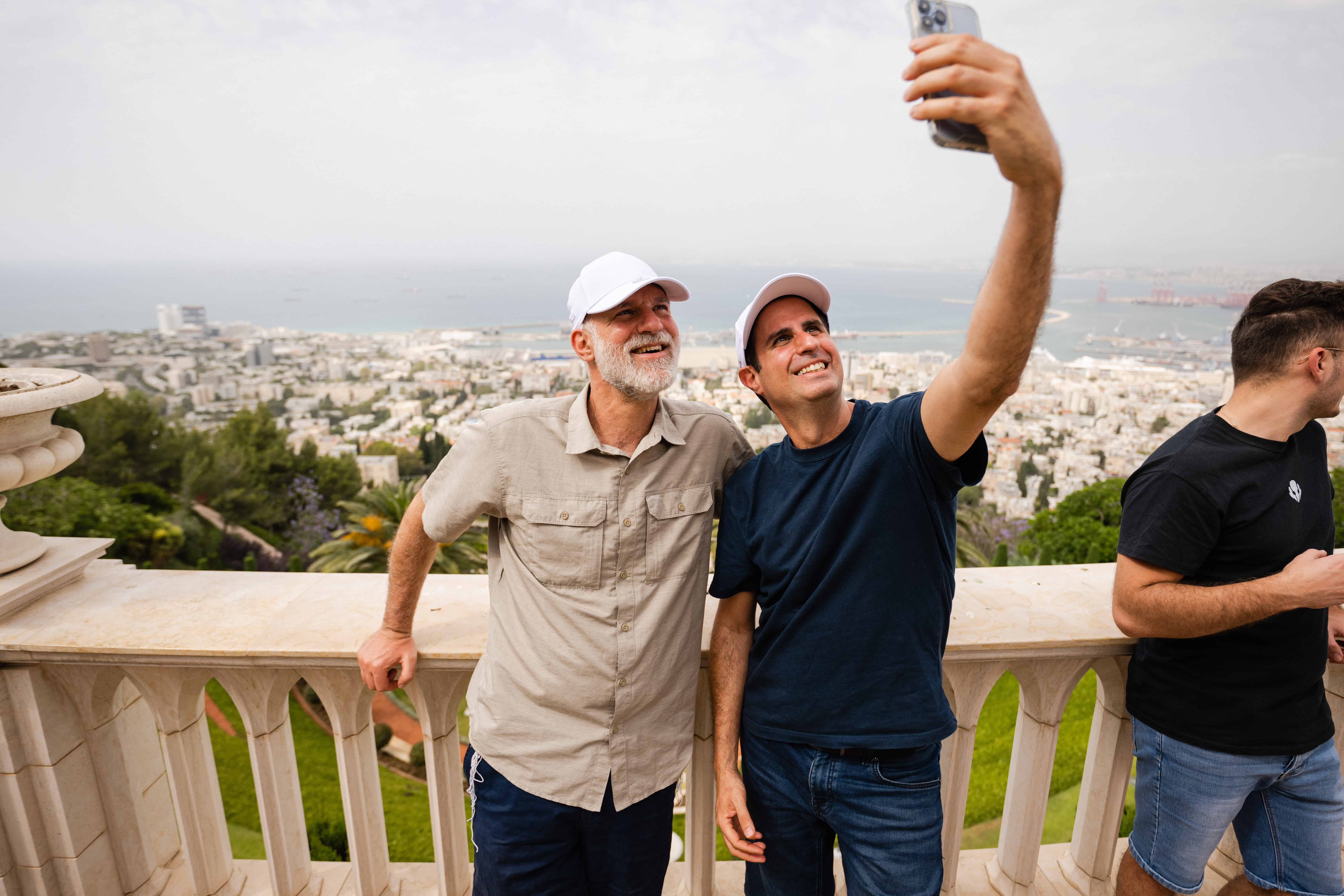
The public news stream adds texture. There are riddles, technical lectures and a Core C++ conference entry. A February 2025 post describes a Transformers Guts Workshop with One Shot Learning, including paired exploration of model internals. This is evidence of organized learning, rather than a basis for assuming every fashionable technique powers a live strategy.
06 The lesson travels farther than the algorithm
My reading of Istra’s organization is that other technical businesses can copy its insistence on connecting discovery with delivery. Put the person who finds a pattern in conversation with the person who must make it work under real conditions. Hire for the difficult handoffs. Give operational expertise a place in the story.
For trading, the condition is especially unforgiving: an apparent advantage must survive execution delays and transaction costs. If it disappears on the way to implementation, a faster machine merely delivers the disappointment sooner. Istra’s public structure makes that journey visible. The FPGA engineer belongs beside the statistician because, in this business, knowing and doing share the same bill.