The problem began with a name. In March 2023, the company then called Vue Storefront announced support for React. A developer platform named after one JavaScript framework now worked with its rival. CTO and co-founder Filip Rakowski supplied the obvious punch line in the company's account of its rebrand: “They can't seriously be running React projects with Vue literally in the name!” A year later, Vue Storefront became Alokai. The joke was a useful warning: the product had grown beyond the words printed on the box.
- Alokai builds the customer-facing layer of an online store, plus the connections, hosting and monitoring behind it.
- Its enterprise customer can keep a commerce backend such as SAP, BigCommerce or commercetools while changing the storefront.
- The business moved from a public Magento and Vue starter toward a custom-priced enterprise platform. Some core tools remain open source.
First, a frontend that fought back
Go back to 2017, before there was an Alokai to name. Rakowski and fellow developers were working on Magento projects inside a software house. Magento could run the commerce engine, but the team found its frontend awkward to customize and slow to improve. They built a reusable storefront using Vue.js and published it as an open-source project. The company came later, spun out after the tool found an audience. Patrick Friday took the commercial lead as CEO; Rakowski became CTO.
This origin matters because it defines the problem Alokai still sells against. The merchant's inventory, prices, orders and business rules may work well enough. The page a customer sees can still be slow, hard to change, or duplicated across markets. Replacing the entire commerce system to fix that page can be a very expensive cure. Alokai's argument is that the storefront should have room to move without taking the back office with it.

The store is the visible part
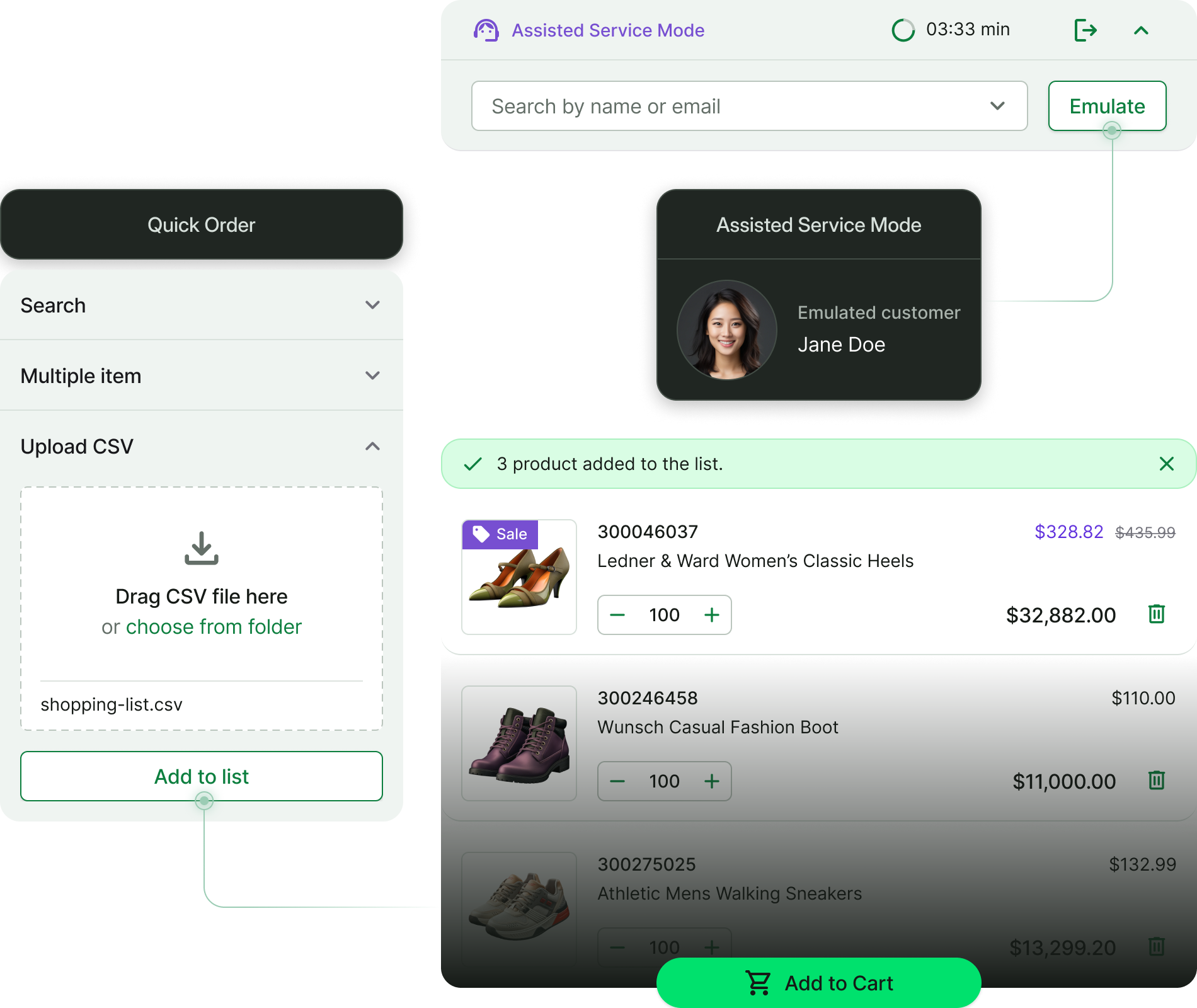
Today the offer has several pieces. Alokai Storefront provides ready-made shopping journeys on Next.js or Nuxt: product pages, search, cart, checkout and account flows. Storefront UI supplies customizable components. Connect sits between the storefront and commerce, content and search systems, normalizing their different APIs. Cloud hosts the application; Console handles deployment and monitoring. The newer Compass and Studio products add AI to shopping assistance and storefront changes. The point is less the number of names than the number of seams they are meant to cover.
This is where Alokai sits in the market: between a commerce platform and a custom frontend built from scratch. A retailer could assemble a Next.js site, middleware, hosting and a component system with its own team. It could also use the storefront accelerator offered by its backend vendor, or hire another headless specialist. Alokai's case is that a common data model and packaged operations reduce the work of joining those parts while leaving room for a distinctive design. That is a claim about project cost and speed, not a promise that integration disappears.
Eleven countries, one stubborn bicycle
Brompton Bikes gives the abstraction wheels. Its old site struggled under traffic, according to Alokai's published case study. The replacement was more than a fresh coat of CSS: Brompton coordinated storefronts with regional warehouses, payments and business entities. It kept the old site live while launching the US store first, then Singapore, the UK and Europe. In ten months it had 11 active storefronts. Alokai says one codebase now supports those stores and has handled 10,000 concurrent sessions.
Brompton figures are reported in Alokai's customer case study; they describe that deployment, not a typical result.
That qualifier is useful. A shop with one market, a simple catalog and a fast existing site may have little use for a platform designed to coordinate many systems. A business with eleven regions and a creaking frontend faces a different calculation. The transferable move is to map which systems are actually failing before approving a full replatform. Brompton's staged launch also offers a plain operational lesson: move one market, learn, then repeat.
“It wasn't just a website change, it was an entire process of running the business.”David Tidy, Brompton digital product manager
The price of growing up
Alokai publishes no fixed price for its enterprise platform. Its pricing page says the bill depends on traffic and deployment needs, and packages the storefront with Connect, Console, Cloud, support and newer analytics and AI tools. Some projects go live in weeks, it says; others take months. So the honest cost comparison is a project budget: license, integrations, agency work, migration, hosting, and the team's time keeping all of it running. A quote alone cannot answer whether the platform pays for itself.
The business has also drawn a sharper line around what is free. Storefront UI remains open source, as do parts of the middleware and SDK. In 2024 Alokai said its Next.js and Nuxt storefront boilerplates would no longer be publicly available, reserving them for enterprise customers and certain integration maintainers. The company said those starters had begun to overlap with its paid offer. For developers who met Vue Storefront as a public project, the change was a real shift, even if the component library and core tools stayed visible.
Separate the customer-facing experience from the systems of record. Normalize backend data before tying it to page components. Roll out one market before eleven. Measure page speed, release cadence and integration hours together, because a prettier storefront can still be an expensive way to move complexity around.
An enterprise company in developer clothing
The financing followed the same arc. Vue Storefront joined Y Combinator in 2021; Rakowski later described a $17.4 million Series A. In March 2023 the company announced another $20 million equity round led by Felix Capital, naming retailers such as Berlin Brands Group, Zenith Watches and Zadig & Voltaire among recent customers. Its site now lists B2B and B2C cases, including builders' merchant MKM, whose published results include a 75% improvement in average page load speed and a 78% increase in revenue during the reported period. Those numbers are customer stories, useful as examples but never a general forecast.
Alokai's latest language stretches from storefront performance into AI-assisted building and shopping. The old insight is still underneath it: customers see the front of the store; companies live with the systems behind it. The company became more interesting when it stopped pretending those were the same thing. Its name had to change because its scope had changed. The harder test is whether its packaged connections save a merchant more work than they add. For the right retailer, that is a much better question than whether the frontend is written in Vue or React.