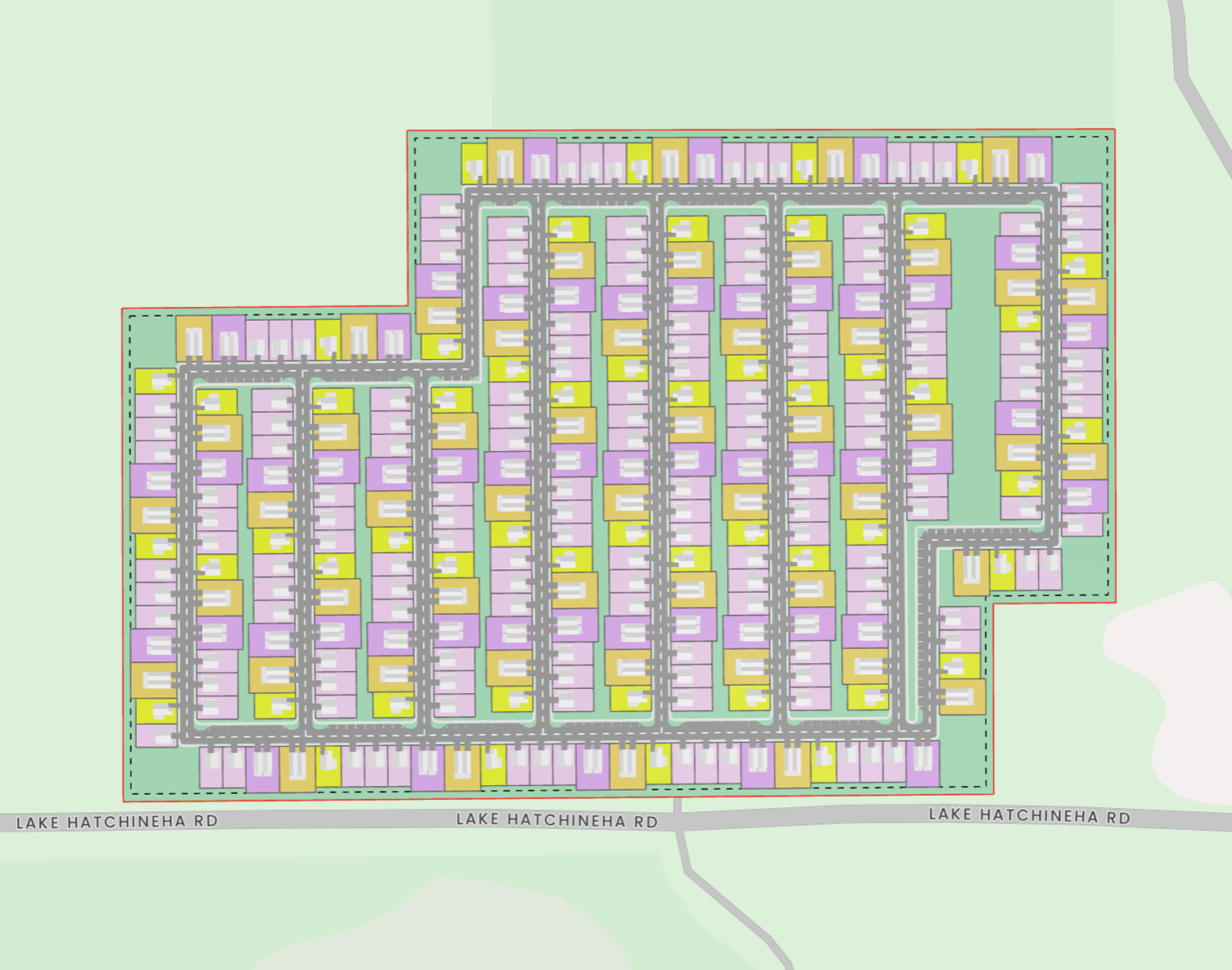
In Englewood, Florida, the interesting number was 47. A developer called Everhome Living already had a site plan from an architect. Algoma says its analysis found room for 47 additional units on the same parcel. Nobody had acquired more land. The opportunity, according to the company’s case study, was hiding inside the arrangement.
- Algoma helps developers assess land before committing to a project.
- It joins zoning, site capacity and market intelligence in one workflow.
- Subscriptions sit alongside paid planning, design and development services.
The company puts the associated additional revenue at $27.7 million. Read that as a development scenario, rather than money already collected. Still, the case poses a useful question: how often does a developer stop at the first plausible answer because finding another answer takes too long?

The expensive part happens before the building
Algoma operates in the awkward interval between spotting a property and knowing whether to pursue it. Its customers are developers, particularly small and midsize firms. They need to connect what a municipality allows, what a parcel can accommodate, what construction might cost and what the local market will support.
In its May 2025 funding announcement, the company described that work as fragmented among consultants, documents and spreadsheets. Each specialist can answer an important question. The developer needs the answers to agree. A layout with an attractive unit count is less useful if the rent assumptions or development costs make it unfinanceable.
This is where Algoma puts its software. The proposition is to bring those separate investigations forward and together, so a developer can make a go/no-go decision sooner. The important product is the decision that follows the report.
Editorial schematic of the workflow, not a performance benchmark.
First, they wanted to change the building
The company’s starting point was more physical. Harvard Innovation Labs described Algoma as designing net-zero multifamily homes using mass timber and offsite manufacturing. Cofounder Seyfihan Usarer explained that the founders wanted to address construction inefficiency, environmental impact and the housing shortage together.
In that early account, the difficulty was adoption. Usarer described entrenched construction habits, reluctance among developers and rising interest rates. These were obstacles to introducing a different building approach. His account puts the friction at the customer’s willingness and ability to change.
“We use automation to accelerate the design and delivery of buildings, and we use mass timber to create sustainable buildings.”Seyfihan Usarer / Harvard Innovation Labs
The current pitch begins earlier, with evaluating land. That change in emphasis is visible across the company’s public descriptions. The underlying concern persists: make development more repeatable, and reduce the expensive work of starting from scratch.
A builder’s problem, approached from three directions
Founded in 2023, Algoma has three cofounders with different routes into that problem. CEO Josef Bromovsky is a civil engineer with an AI and machine-learning background, a Harvard MBA and a CFA charter. Chief product officer Kyle MertensMeyer brings architectural and construction experience and a Harvard Master of Design Studies.
Usarer, the chief operating officer, has a Harvard MBA and experience at McKinsey and TikTok. The combination helps explain the company’s position between software and professional design work. It needs to translate planning constraints into geometry, and geometry into something a developer can use.

The physical-building work also reached a public program. In March 2024, New York City’s Economic Development Corporation named Algoma and Neighbor on The Grafted Home team in Crown Heights. The project explored adaptive reuse versus ground-up mass timber construction. Later, the agency described Algoma’s “The Prospect” as a repeatable housing prototype for Brooklyn.
The subscription buys another look
Algoma’s commercial model makes repeated investigation the unit of business. Its published pricing offers a free Basic tier for exploring parcel information. Standard includes zoning analysis, capacity studies and CRM. Pro adds renderings, exports and market intelligence; Enterprise adds organizational features and support.
On annual billing, Standard is listed at $99 per seat per month, or $1,188 a year. Pro is $199 per seat per month, or $2,388 annually. Enterprise pricing is custom. Those are software prices. Algoma also advertises professional planning, design and development packages, extending the relationship beyond an initial screen.
Published pricing checked October 23, 2026. Services priced separately.
In May 2025, Algoma announced $2.3 million in seed funding led by Zacua Ventures, with SOSV, Iron Prairie Ventures, DOMiNO Ventures and Compose VC participating. The stated uses included engineering hires and product expansion. Investor DOMiNO describes its target as the smaller developers who need a connected workflow without assembling an entire research operation.
The useful habit is testing the second answer
Algoma competes in an existing market. TestFit also offers generative site planning, financial evaluation and exports into design workflows. Speed alone offers little separation. Algoma’s proposition combines development intelligence with a professional team that can continue into planning and design assignments.
For a reader evaluating the product, the practical experiment is straightforward: bring a familiar parcel. Compare its output with known constraints, change an assumption and examine what moves. Ask whether a different unit mix or layout changes the economics enough to justify further work.
That experiment has limits. Algoma’s terms acknowledge that AI output may be incomplete or inaccurate, and that usefulness depends on customer data. A hypothetical capacity does not confer permission to build. Unchecked inputs can simply produce a more polished mistake.
The habit worth borrowing is to examine alternatives before the first drawing becomes the favorite. In Englewood, Algoma says the second look found 47 units. On another parcel, its value might be discovering, early enough, that the sensible number is zero.
Website ↗ Pricing ↗ Insights ↗ Team ↗ LinkedIn ↗ X ↗ Instagram ↗ Book a live demo ↗