Alfonso de los Ríos planned to take two or three years off. He had spent his early adulthood helping build Nowports, the freight business that reached a $1.1 billion valuation in 2022. In 2025, he handed over the chief executive’s job. There would be travel. There would be time. There would, apparently, be another company.
The attempted sabbatical is a useful place to begin. Most accounts of de los Ríos have started with how young he was when he founded Nowports. The more interesting question now is what persuaded him to start again. His new business, Handle, works on the administrative machinery of insurance. He has moved from shipping containers to insurer portals, carrying an old irritation into a new industry: why must people spend so much of their working lives moving information between systems?
A childhood within earshot of the cargo
De los Ríos grew up in Monterrey, Mexico, around a family freight-forwarding business. He knew the industry before he had a startup idea. Its vocabulary was familiar; so were the paperwork and calls required to get something from one place to another. A container could cross an ocean while the information about it struggled to cross an office.
At 11, he began teaching himself programming through YouTube tutorials. Learning was something he could start at home, following an interest until he could make something work. That habit matters to the rest of his story. Technology offered him a practical way to interfere with processes that other people had learned to endure.
He began computer-science studies at Tecnológico de Monterrey, then pursued work in California. He applied for internships at more than 40 startups. An encounter with educator Esther Wojcicki in Palo Alto became part of his account of choosing a less conventional education. There is a temptation to turn such meetings into destiny. The applications offer a more useful detail: he had already been knocking on a considerable number of doors.
His early work included web development at Blooders and software engineering at Yewno. Before he became a public face of Mexican entrepreneurship, he was a developer learning how other people built things. The later fundraising photographs tend to obscure that apprenticeship. Software was his trade before leadership became his occupation.
Two programmers and a very physical problem
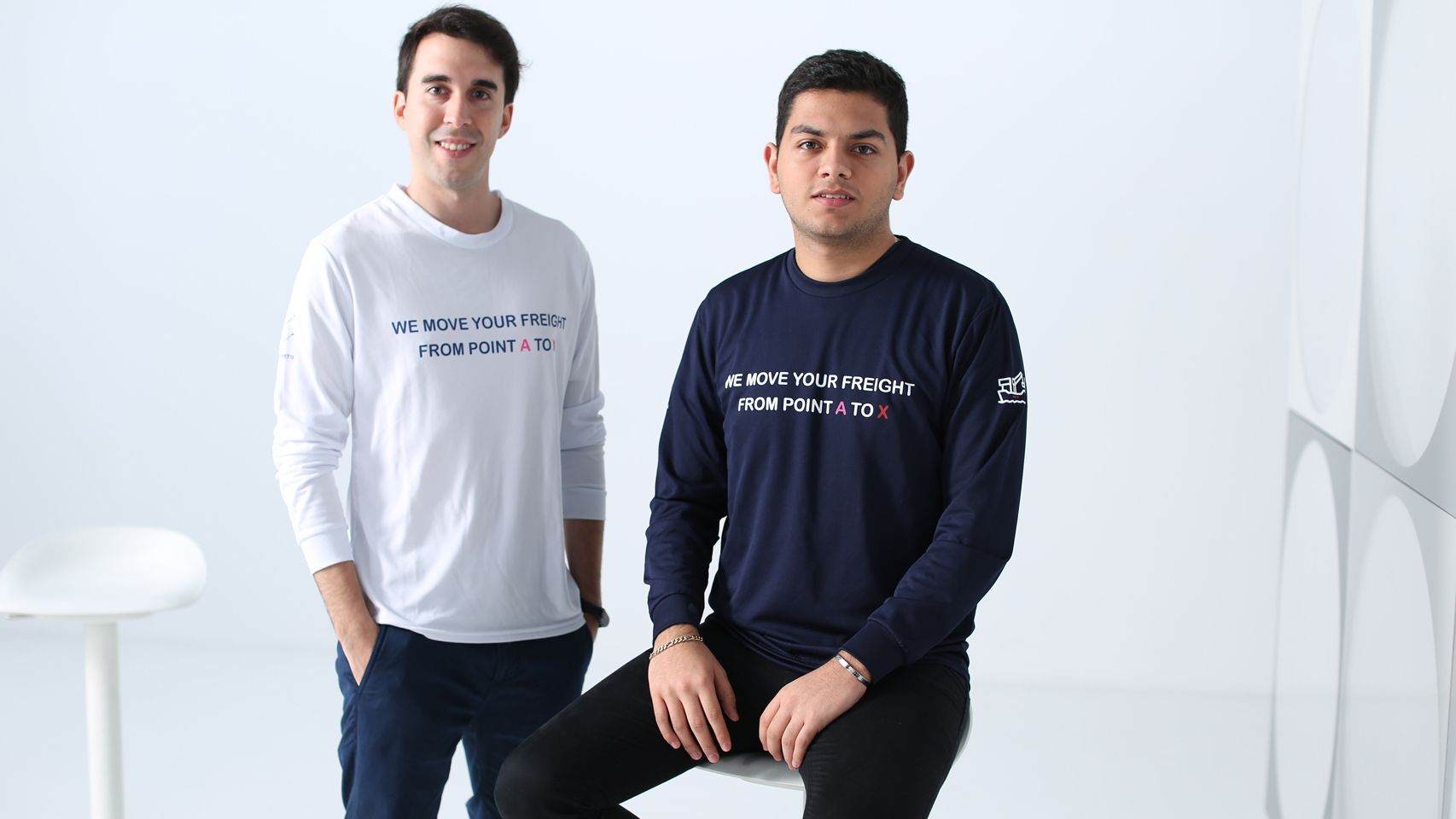
He met his future cofounder, Maximiliano Casal, at a Stanford summer bootcamp in 2017. They worked together in a competition. Casal subsequently worked in freight forwarding in Kansas City; de los Ríos brought his own family’s experience of the business. They had both logistics knowledge and the ability to write software, a combination rather more useful than an elegant complaint about an inefficient industry.
Nowports took shape in late 2018 and entered Y Combinator’s Winter 2019 batch. The early routine was straightforward and demanding: sell during the day, code at night. Customers needed help moving actual goods, so the founders had to do work that could not immediately be automated. Each shipment was also an opportunity to learn what their software had missed.
An early test came from scooter company Grin, which asked them to move 70 containers across four countries. They completed the assignment. It is an appealingly concrete episode in a career often described through abstract valuations. Seventy containers require coordination, documents and delivery. An impressive slide has never cleared customs.
A bootcamp introduces the future Nowports cofounders.
Nowports joins Y Combinator’s winter batch.
A $150 million round values Nowports at $1.1 billion.
Handle announces a $6 million seed round.
The paperwork had a business model
Freight forwarding involves arranging the movement of goods, with all the coordination that sits between a booking and an arrival. Nowports set out to make that process visible through digital tracking, documents and reporting. The appeal was easy to understand: a customer wanted to know where the cargo was, what it would cost and what still needed doing.
In May 2022, a $150 million Series C led by SoftBank’s Latin America Fund put Nowports’ valuation at $1.1 billion. Currency uncertainty was among the problems de los Ríos described at the time. Moving a load internationally meant dealing with costs across currencies as well as borders. Better information could make planning less dependent on an anxious succession of calls.
The business also taught him the limits of trying to serve everybody. By 2023, he described a shift toward medium and large enterprises, particularly retail, automotive and manufacturing customers. It had taken about three years to understand who needed the service most. Greater focus helped standardize documents and processes. Financing, using cargo as collateral, extended the relationship beyond arranging transport.
That admission gives the growth story some texture. A founder can know an industry well and still take years to understand his best customer. The software, the sales pitch and the target market all need revising. A valuation supplies a tidy headline; discovering whom to stop selling to is quieter work.
“Our role at the end of the day is to be the source of truth.”
Alfonso de los Ríos, 2023
Expansion also gave the programmer an education in making an industrial service visible. In 2023, Nowports opened in Miami’s Wynwood neighborhood, adding a US presence to its Latin American offices. Back home, the company sponsored the Rayados de Monterrey, the football team de los Ríos had followed since childhood. Its marketing efforts also included a startup padel league in Chile. Freight might be a business of schedules and documents, but the people buying it still had interests beyond their spreadsheets. For a founder accustomed to explaining software, a football shirt offered a rather different way to begin the conversation.
Learning to leave the keyboard alone
In a January 2022 conversation about running Nowports, de los Ríos described delegation as one of his hardest challenges. A growing company needed specialists who understood finance, operations or sales better than he did. His role became connecting them. He used the image of a router, an appropriately technical description for a programmer discovering management.
His advice was specific: agree on measurable deliverables. Trust becomes easier to build when two people understand what completion means. The picture is less theatrical than the usual portrait of the founder making every important decision. It involves managers, conversations and a willingness to accept that another person knows more.
At Monterrey’s INCmty festival later that year, he urged aspiring founders to solve an industry problem before becoming attached to a technology. He recalled considering autonomous ships, then realizing the more pressing opportunities lay in digitization and financing. He also encouraged people to ask for help. Access to experience begins, rather inconveniently for the shy, with a question.
His interests outside the office have their own element of deliberate discomfort. In a 2024 account of himself, he said he tried to do something frightening or exciting each week, mentioning marathons and parachuting. In the same account, his business concern was how to grow more frugally and sustainably. The parachute was recreational. The spending discipline was work.
A company outgrows its first job description
The transition at Nowports followed conversations with its board and investors. Fernando Poitevin, previously chief operating officer, became CEO; de los Ríos remained president, involved in strategy. His explanation was that the company’s next stage demanded more standardized processes and operational consistency, while his own interests increasingly pointed toward technology and AI.
There is something revealing about that division of responsibilities. Founding a company creates a job whose requirements keep changing. Success can move the work away from the activity that attracted the founder in the first place. Recognizing that change gives both the business and its creator room to develop.
De los Ríos had already expressed an ambition broader than holding a particular title. In 2025, he spoke about helping a new generation of Mexican and Latin American entrepreneurs create value locally. He wanted to become a business reference point through transparency and inclusive enterprise. Those aspirations set a demanding standard for a second act: the quality of the work must eventually support the example.
The next container is a browser tab
Handle, cofounded with Antonio Nacoud, applies AI agents to work inside disconnected business systems. Insurance became its initial focus. Nazca, one of its investors, describes the tasks as quoting, collections and reconciliation. These are activities with names that seldom grace conference banners and consequences that customers notice immediately when they go wrong.
The company announced its $6 million seed round, led by Andreessen Horowitz, in March 2026. Its premise shares something with early Nowports: valuable information is scattered across places that do not communicate well. A person fills the gaps, copying, checking and following up. Handle wants software to perform more of that connective work.
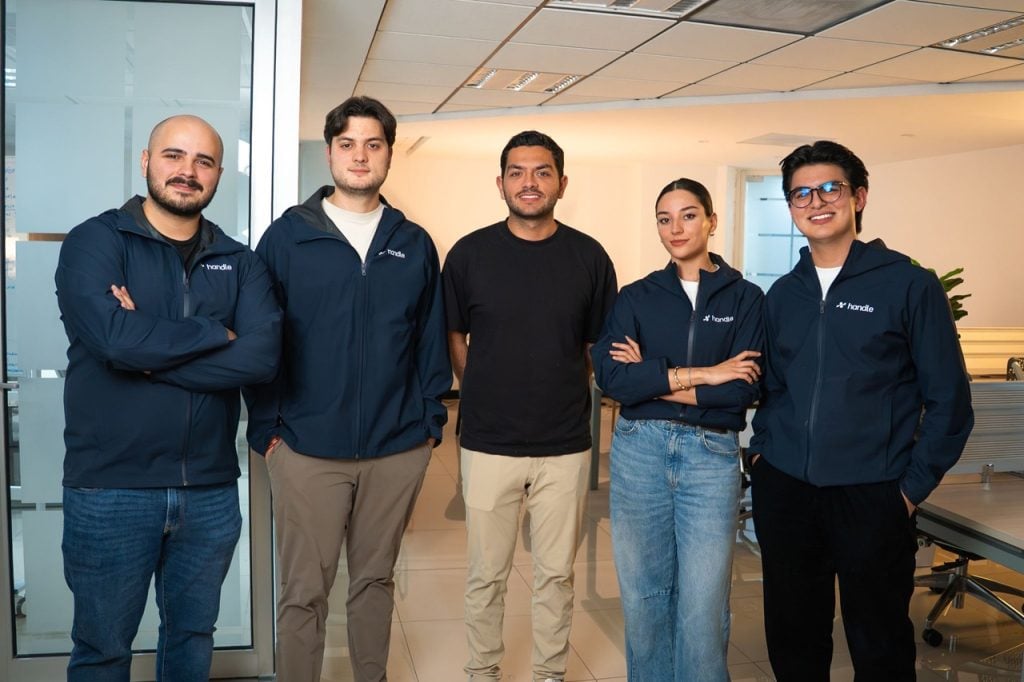
Handle’s published strategy begins with gathering and reconciling records, then adds conversational tools and agents. Greater autonomy is an eventual objective. The sequence is telling. An agent acting on unreliable records merely gives the old confusion a faster pair of hands. Before a system can do useful work, it needs a dependable account of what is happening.
Records→02
Copilots→03
Agents→04
Autonomy
September 2026 product updates show the detail behind that ambition: configurable collection rules, quoting comparisons and workflows with human confirmation. In a later public post, de los Ríos said Handle was live in the United States, Brazil, Mexico and Argentina. He emphasized the difficulty of connecting portals and creating reliable data. The geography had widened; the daily task still involved chasing down information.
For all the change in his career, that preoccupation has remained remarkably steady. He grew up seeing people compensate for cumbersome processes. He learned to write code, built a freight business, learned to delegate and returned to building. The boy watching the paperwork is now designing another way through it. His sabbatical never stood much of a chance.