Alex Zhou’s grocery problem had a speed limit. As a Chinese student at Kansas State University, he could buy the food he missed, provided he was willing to drive roughly two hours to Kansas City. Soy sauce and instant noodles came with an unusual surcharge: a stretch of Interstate 70. His friends made similar trips. An ordinary errand had become a weekend expedition, with considerably less romance than the word expedition usually promises.
Zhou had grown up in Dalian, a port city in northeastern China. He arrived at Kansas State in 2007 and earned his industrial engineering degree in 2011. His parents had discouraged Los Angeles and New York because they worried about big-city safety. Kansas offered a different introduction to America. Distance made familiar things unexpectedly precious. A country with enormous supermarkets could still leave a student searching for a particular packet of noodles.
The business that followed would eventually connect Asian brands with millions of registered shoppers. But the original observation was intimate: other people were missing the same things he missed. Zhou had no need to invent a customer. He had already spent time being one, behind the wheel.
The useful shock of Los Angeles
After college, Zhou moved to Los Angeles. Asian restaurants and supermarkets were suddenly abundant. The contrast supplied the idea for an online store. Products that were ordinary on one side of the country were troublesome to obtain elsewhere. He could connect the places that had them with the people who wanted them.
He spent months preparing, learning how to set up a website and looking for vendors. Yami would be his first company. There was no previous retail career to fall back on, so the education continued in supermarket aisles. He studied shoppers and wrote down brand names. Packaging became a directory of potential suppliers. The mundane work of looking closely came before the pleasure of having anything to announce.
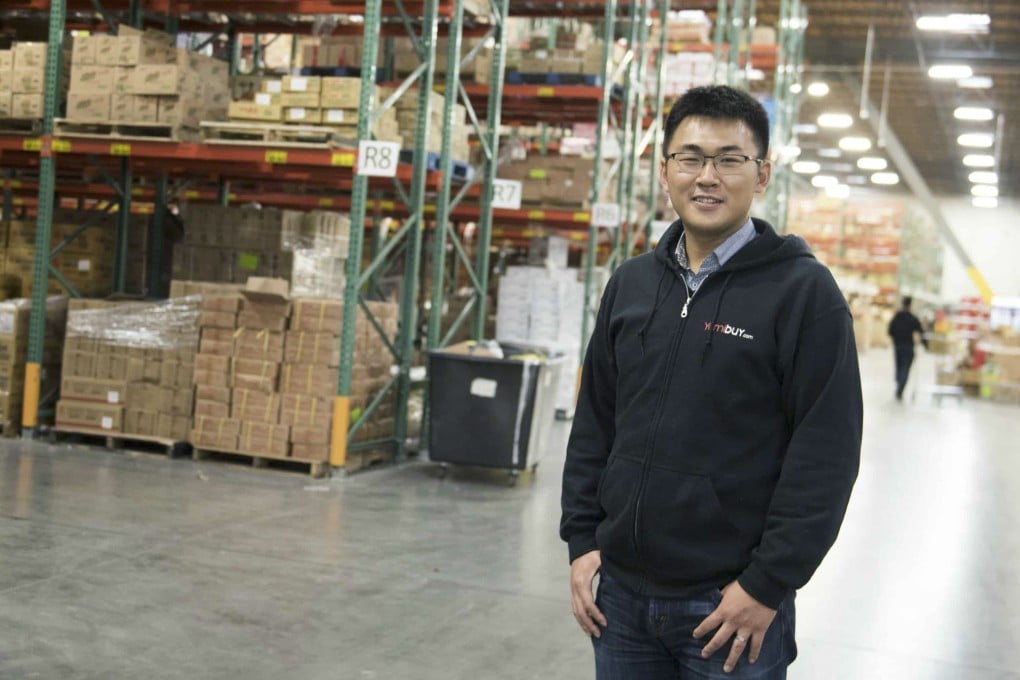
In March 2013, he launched Yamibuy, later shortened to Yami. Savings and family money supported an opening selection of about 200 snacks. Zhou was the entire staff: purchasing department, packing department, customer service. Each impressive title led back to the same person. Before he could lead an organization, he had to get an order out of the door.
A shop small enough to hang up on
Finding customers was only part of the difficulty. Suppliers sometimes ended his calls. An unfamiliar online shop, seeking small quantities, was an awkward prospect for distributors accustomed to bulk orders. Zhou kept calling. Eventually, a supplier agreed to sell him quantities he could manage. Persistence had a very practical meaning: obtaining something to put on the website.
He also collected inventory himself when suppliers would not deliver to the young business. Early working days could run from six in the morning until midnight. That detail gives the founding story its proper proportions. The idea was easy to explain. The hours required to make it function were rather less convenient.
His first customers also corrected his assumptions. Early sales clustered in cities including New York, Chicago, and Los Angeles. People with access to Asian shops still wanted the convenience and selection of shopping online. The Kansas experience had revealed a need, but the market was larger and less geographically tidy than the original problem suggested.
Customers then asked for more than snacks. The assortment widened to include other food, beauty products, kitchen tools, and appliances. A shopper buying noodles might also want the products used at home by a parent or a friend. Zhou’s opportunity grew through those requests. The next aisle could begin as a question in customer service.
The numbers arrive. So does the work.
By 2016, Yamibuy was generating $50 million in annual online sales. In July 2017, it announced its first institutional financing: $10 million led by GGV Capital, with New Oriental and K2VC participating. Zhou had spent four years building the company before that round. The funding brought investors into an operation that already had customers, inventory, and the complications of moving both at scale.
Recognition arrived in the same period. Yamibuy placed No. 170 on the 2017 Inc. 5000, with reported three-year growth of 2,457 percent. Zhou received an EY Entrepreneur Of The Year award in Greater Los Angeles. For a Kansas State engineering graduate who had started by packing snacks, these were conspicuous milestones. Yet an award could not purchase inventory, answer a customer, or replace a late parcel.
Growth also changed the job. A founder who once performed every task now had to build a company in which other people could do them well. Zhou’s later hiring philosophy stresses empathy for customers, teamwork, and the willingness to solve unfamiliar problems. Experience matters, but tomorrow’s question may not resemble yesterday’s assignment. He looks for people who can think through a problem from several directions.
“You never solve the problem if you just think about it.”
Alex Zhou
Nostalgia needs a delivery date
In March 2022, Yami raised a $50 million Series B co-led by Altos Ventures and Balsam Bay Partners, with participation from J.P. Morgan and GGV Capital. Plans included another New Jersey warehouse and investment in supply-chain technology. For Zhou, the growing selection made the physical operation more consequential. A good online shop needs goods that arrive when customers expect them.
By early 2023, he described average shipping of 2.6 days as the East Coast operation expanded. That figure belongs to that stage of Yami’s development, rather than a promise attached to every order today. It shows what occupied the founder as the company grew: shortening the distance between a click and a parcel.
Yami developed a hybrid business. It buys and warehouses products for its own retail operation, while outside sellers can also list goods and handle their fulfillment. Those are different ways of putting an item into a customer’s hands. Behind the approachable storefront are decisions about stock, sellers, demand, and delivery. The engineering graduate’s business has plenty of moving parts.
Two routes through the store. The same expectation at the door.
A taste of home travels well
The audience was changing too. Zhou began with students and immigrants who already knew what they wanted. Over time, Asian beauty, food, and popular culture drew shoppers from other backgrounds. Television and music could create curiosity about a product; an online store could make the curiosity actionable. Yami’s challenge expanded from helping people find a familiar item to helping others discover it.
He has described customers’ needs changing with their lives: students buying instant noodles become families shopping for ingredients to cook at home. That is a different view of customer retention from a discount code. A useful store can grow alongside its shoppers. The category that first brings someone in may be only the beginning of the relationship.
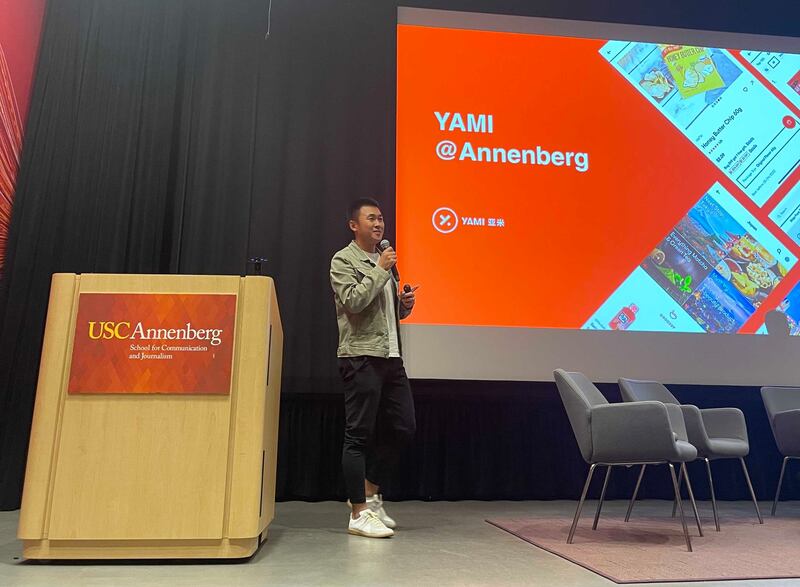
Zhou has also returned to university audiences to discuss that relationship. USC Annenberg scheduled a bilingual seminar with him in September 2023 on Asian culture, consumer businesses, and hiring. In February 2025, NYU published a recap of his entrepreneurship workshop, emphasizing customer understanding and product-market fit. The student who once struggled to shop in America now had a business worth explaining to other students.
Japan, by way of the shopping basket
In April 2026, Yami announced an operating alliance with Mitsubishi Corporation, backed by a Series C strategic investment. The arrangement connects Yami’s online platform with Mitsubishi Shokuhin’s supplier network. Japanese brands seeking North American customers would gain another route into the market, with plans to expand Yami’s Japanese assortment and explore products under Yami’s own brand.
The change in Zhou’s position is striking. In the beginning, he needed a supplier to take a small order seriously. Thirteen years later, a major trading company wanted access to the shopping platform he had built. His usefulness now ran in both directions: customers wanted Asian products, and Asian manufacturers wanted customers overseas.
By the announcement, Yami reported more than four million registered users. Accounts are a measure of reach, rather than a count of people shopping on any particular day. Still, the scale explains why the company can be interesting to a supplier as well as a shopper. Zhou’s original grocery frustration had become a distribution business across borders.
The first order, once more
In July 2026, Yami launched its Canadian operation. The company marked the occasion with Zhou personally packing the first order. It was a fitting task for someone whose first job at Yami had included every job at Yami. Expansion introduced another market; the gesture returned him to the modest unit on which the whole enterprise depends.
He still describes a morning habit of checking social media for customer feedback. Comments about making college life easier or bringing the feeling of home matter to him. He has spoken about wanting Yami to serve wider communities beyond the United States while improving what it offers Asian brands. The ambition keeps widening, but his means of checking its value remains close to the customer.
A box is an undramatic object around which to build a career. It has none of the charm of a restaurant table, and the ribbon is usually packing tape. Zhou has made it useful enough to carry a considerable idea: people should be able to obtain the ordinary things that matter to them, even far from where those things began. The student’s two-hour errand has become somebody else’s knock at the door.