At thirteen, Alex Melen was offering strangers a place on the internet. This was an ambitious extracurricular activity. A school assignment could wait until morning; somebody else’s website was rather less accommodating. In 1997, he founded T35 Hosting, a free hosting service that eventually reached more than a million users. Long before he had an agency to run, he had people relying on something he had built.
The number makes a convenient opening to a founder’s biography. The more revealing part is what followed. Melen tried other professions, worked inside a large advertising organization, started SmartSites with his younger brother Michael, and discovered that making a company bigger requires more than repeating whatever made it small. His story has plenty of internet in it. It also has prices that were too low, responsibilities that needed handing over, and the occasional necessity of correcting an earlier prediction.
A boy, a modem, and a very short address
Melen was born in Kyiv. His family moved to New York in 1992, when he was eight, eventually settling in New Jersey. His father worked in computer science, and a household computer gave Alex an early opportunity to explore. The route from curiosity to business was unusually short. By middle school, he was building for the web.
Free hosting offered a useful proposition: someone with an idea could publish it without first becoming an expert in infrastructure. T35 belonged to that early wave of services making personal websites accessible. The internet was acquiring residents, and a teenager was helping with the accommodation.
Even the name had a practical history. T35.com had been a directory of the top 35 websites. Melen reused the domain for hosting because it was short. A customer could have a compact address under it, rather than a long procession of folders. It was a small design decision with the user’s inconvenience firmly in view. There are less useful ways to choose a company name than having already paid for a suitable one.
The project also gave him experience that ordinary homework could scarcely supply. Keeping a service available meant dealing with real users and real consequences. Business was something to operate, with all the interruptions that implied. The hosting company preceded the polished descriptions of entrepreneurship that would later surround it.
Make publishing accessible.
Help businesses get found.
Put the dealership playbook on paper.
The Fortune 500 detour
Melen attended Babson College from 2002 to 2006. The year he finished brought recognition from both the college, with its Student Business of the Year award, and BusinessWeek’s Top 25 Entrepreneurs Under 25. A business started at school had become a business noticed beyond it.
He did not, however, proceed along a perfectly straight line from teenage founder to agency executive. He tried corporate finance, actuarial work and investment banking. He has described those experiments as short spells, an effort to find where his work would have the most impact. A curriculum vitae can conceal a great deal of trial and error once somebody has arranged it neatly.
At Publicis’s MediaVest, he worked on digital marketing for Samsung and then Walmart. Here were organizations able to pay for sophisticated advertising and the people needed to manage it. He enjoyed the work. He also saw a market on the other side of the budget divide: smaller companies that could benefit from the same capabilities but could not hire an enterprise agency.
In 2011, he and Michael founded SmartSites. Their existing activities came together around hosting, website design, search engine optimization and paid advertising. The ambition had an understandable customer: a business owner who needed to compete online without becoming a marketing department in person. The brothers’ early familiarity with websites had become a proposition for people whose own expertise lay elsewhere.
The trouble with a bargain
There is a pleasing complication in Melen’s passage from free hosting to agency work. Giving something away had helped his first business reach people. Selling services too cheaply proved troublesome in the next one.
He has recalled early SmartSites websites priced around $1,000 that lost money and left both customers and employees dissatisfied. The appealing number on the proposal had consequences once the work began. A project still required time, attention and judgment, however modest its invoice. The discount had to be paid for somewhere.
That experience makes his concern with reputation easier to understand. An agency sells a promise before it delivers the work, and the customer must trust the people making it. A disappointed client remembers the delivery more vividly than the bargain. It is difficult to buy back that memory with another attractive offer.
When asked about his accomplishments, Melen has pointed to growth in clients’ businesses alongside growth in his own. His advice to founders includes hiring people to handle operations when the business can support it, leaving room to think about direction. He also treats reputation as something a business cannot afford to squander. These are fairly sober conclusions for a career that began with such an eye-catching age.
“Organization - I think it’s key to increasing productivity and being able to accomplish more with less time.”
Alex Melen, 2019
An agency cannot fit inside one head
Melen has described the early company as a place where everyone did a bit of everything. He could speak to each person and keep track of the work himself. That level of involvement has an obvious attraction for a founder: very little happens without your knowing about it.
Growth gradually withdraws that privilege. A larger team needs managers, defined jobs and training that works without a founder present in every conversation. Melen has spoken openly about the discomfort of losing direct visibility, including the unsettling discovery that he could no longer personally know every client.
His partnership with Michael gave the company two owners who naturally gravitated toward different responsibilities. He has described their ownership as equal. That arrangement did not remove the need for deliberate organization as the agency expanded. The informal habits of a small group could only carry it so far.
In a separate discussion of delegation, he credited an example set by his brother: spend time working on the company itself. He admitted, with useful candor, “I often struggle to delegate and think of the bigger picture.” There is more character in that admission than in another immaculate management maxim. Knowing what to do and becoming comfortable doing it are separate appointments.
A car dealer has no use for a vanity metric
Automotive marketing became a particular focus. It gives the general problem of being found online a specific commercial setting: someone wants information about a vehicle, a repair or a dealership, and a business wants to be useful at that moment.
Melen has described a resource center built for a local Lexus dealership, with material helping owners service, diagnose and troubleshoot their cars. He said the pages began ranking within months, reaching beyond the dealership’s immediate area and appearing in featured snippets and voice results. The idea was refreshingly literal. Answer the questions people actually have about the product.
His book, Automotive Search Marketing, first appeared through Leaders Press in 2023. A second edition in 2026 expands its scope to Google and AI search. Its five parts cover SEO, paid advertising, AI search, measurement and practical resources. George Nenni wrote the foreword.
The contents reveal an author occupied with execution: choosing an agency, understanding campaigns, measuring results and turning traffic into car sales. A dealership cannot deposit a ranking in its bank account. The book’s repeated return to measurement keeps the discussion attached to the business paying for it. The addition of AI search also gives a familiar publishing ritual, the revised edition, a rather demanding assignment.
Back to being a student
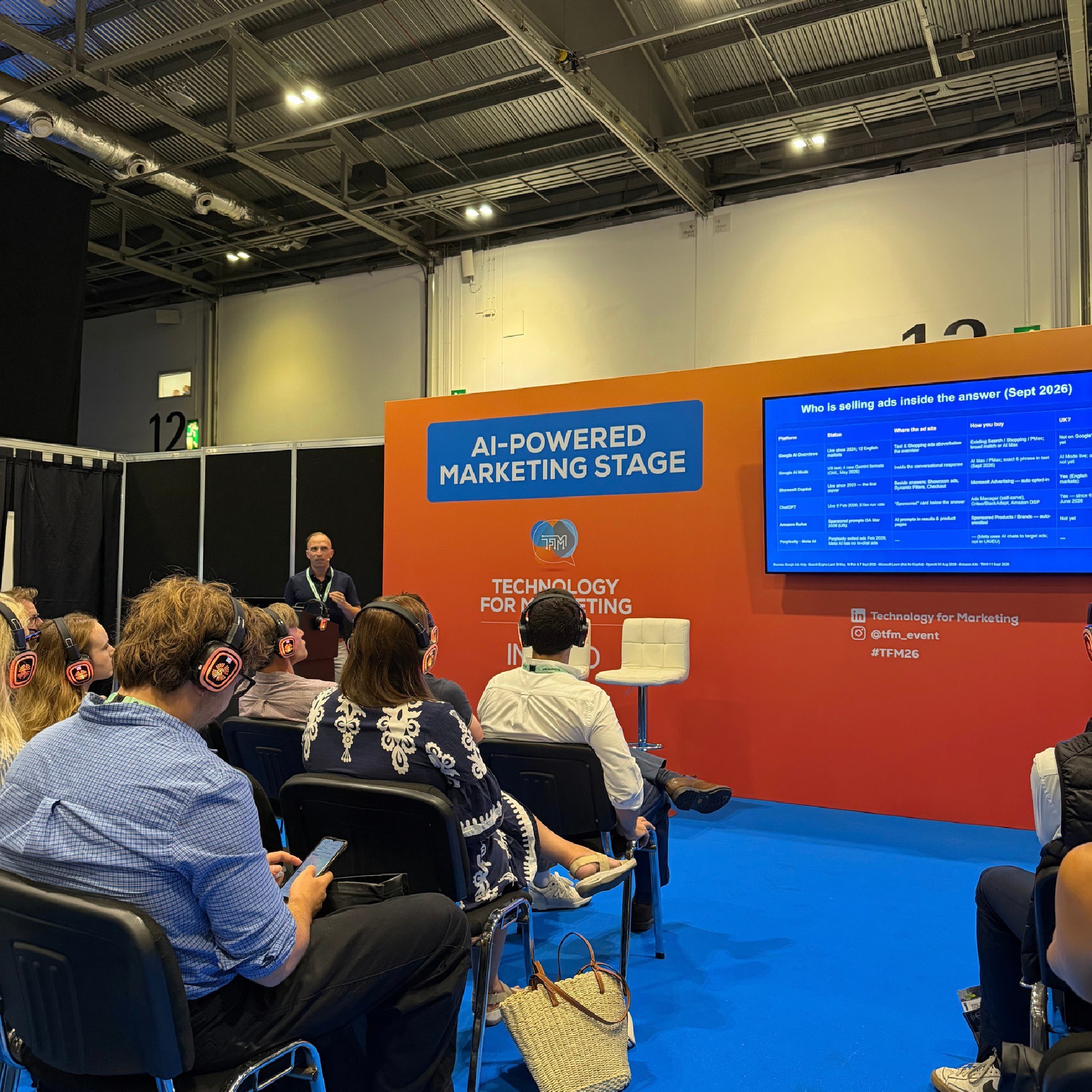
Melen’s public work now includes conference sessions, podcasts and talks about how AI changes discovery and advertising. In September 2026, his London session was called Advertising Inside the Answer. In October, he joined The FODcast to discuss AI shopping and ecommerce. The subjects extend his old concern with helping businesses reach customers into a changing set of interfaces.
Public speaking has required its own adjustment. Melen has said he is more comfortable building than presenting, and that preparing talks forces him to sharpen his thinking. There is a useful reciprocity in that admission: the audience gets an explanation, while the speaker has to decide precisely what he means. He also connects his appetite for work to watching his parents rebuild their lives after immigration. The company began with an enthusiasm for computers, but his account of persistence reaches back to the family that made room for that enthusiasm in the first place.
He has also had to revise expectations. In early 2023, he anticipated that Google would distinguish AI-generated material from human writing and that manually written content would retain an advantage. By his 2024 Marketing Movers appearance, he acknowledged that the clear identification he had expected had not happened. He described using generative AI for research and outlines, while reporting less improvement in content production speed than he had hoped.
That willingness to revisit an opinion matters in a field so fond of announcing the future. Experience offers context, but it does not grant immunity from surprise. A forecast should be allowed to meet what happened next.
The continuity in Melen’s career is more durable than any particular search interface. T35 helped people establish a place online. SmartSites took on the problem of helping businesses attract customers there. His book and talks try to explain how to keep doing that as the tools change. The next lesson may arrive on a conference stage or in a client’s results. Having once run a hosting service while still at school, he is well acquainted with an education that refuses to observe office hours.
More from Alex
- Personal website and current talks ↗
- Automotive Search Marketing and free chapters ↗
- Watch: Advertising Inside the Answer, London 2026 ↗
- Watch: AI shopping on The FODcast ↗
- The 2019 interview on work, risk and organization ↗
- A conversation about building the agency ↗
- The Lexus resource center and delegation, in his words ↗
- On clients, growth and reputation ↗
- The Marketing Movers conversation ↗
- The Jake Dunlap Show: the early years ↗
- SmartSites: the company and team ↗