Electricity was included. For a Stanford student experimenting with bitcoin in late 2012, this was a rather attractive price. Alex Liegl and some friends put mining machines to work in a dorm room. The arrangement offered an early lesson in how a financial opportunity can begin with something as ordinary as who pays the utility bill.
Years later, the equipment would get bigger, the electricity would acquire a price, and the questions would spread from computing to cars. Liegl co-founded Layer1, a bitcoin-mining business with operations in West Texas, then Tenet, a company built around financing electric vehicles. Read the job titles alone and the career takes several turns. Follow the electricity and the route becomes easier to understand.
His businesses repeatedly bring a machine into contact with a financial system. Somewhere between the two, a price has to work. A miner needs affordable power. A driver needs a payment that fits. The technology can be impressive; the bill retains the right to be unimpressed.
A dorm room with a useful electricity tariff
Liegl was born and grew up in Munich, then moved to the United States to study at Stanford. His subjects were applied mathematics and philosophy, a combination that allows a person to calculate an answer and then spend the afternoon questioning the premise. His subsequent career would provide opportunities for both.
While still at university, he founded Bessel Capital, a quantitative hedge fund focused on volatility products. He also worked on the special investments desk at Stanford Management Company, the organization responsible for the university’s endowment. These were early encounters with professional capital allocation, alongside the less formal experiment in dorm-room computing.
His next ventures and jobs kept crossing the boundary between software and money. He worked as an artificial-intelligence strategy analyst at Protégé Partners. He founded Apex Labs, a fraud-detection platform intended for government tax agencies. An investor, a tax authority and a bitcoin miner have different daily concerns, but each has reasons to care about what large quantities of data can reveal.
There was another possible career. Liegl used to DJ, especially during college, and later said he nearly left university to pursue music at a label in New York. He stayed. The alternative is a pleasing complication in a résumé heavy with finance: somewhere among the models and investment work was a person considering a very different sort of label.
“We strongly believe that whatever we create needs to be established from first principles.”
Alex Liegl, 2019
Texas adds a thermostat
At Layer1, the electricity question became an industrial undertaking. In February 2020, the company announced that it had brought multiple mining containers online in West Texas. Each had a capacity of 2.5 megawatts. The student experiment had acquired a scale at which the power supply becomes a central part of the business.
Layer1 used liquid cooling to deal with the region’s heat. This mattered to its geographical argument: access to inexpensive power is useful only if the equipment can operate where that power is available. The company’s proposition joined energy procurement, computing infrastructure and the physical work of keeping machines cool.
Another part of the model involved flexibility. Layer1 could shut down mining equipment when the grid needed electricity elsewhere. A computer that can pause has an economic property quite different from a household that needs its lights on. Liegl’s mining chapter made the timing of electricity consumption part of the commercial discussion.
His work earned recognition on the Forbes 2021 30 Under 30 Energy list, announced in December 2020. The recognition captured a particular moment in his career, when bitcoin mining and energy infrastructure were becoming closely entangled. It also put a young entrepreneur who had begun with student experiments into a much larger debate about computing’s demand for power.
The chapter ended with a leadership change. In December 2020, Layer1 announced a settlement of disagreements among its founders. Liegl agreed to resign as CEO and from the board, and co-founder Jakov Dolic returned as chief executive and chairman. The departure belongs in the story alongside the engineering and the recognition. Building a company includes negotiating relationships as well as building equipment.
- 2012The dormExperiment with bitcoin mining
- 2020The mineWest Texas operations begin
- 2021The loanTenet is founded
The car comes with a second price
In 2021, Liegl co-founded Tenet with Andreas Wallendahl and Paul Sebexen. Their subject was a different machine with a substantial relationship to the grid. An electric car might promise a new way to drive, but buying one still required a familiar conversation about income, credit and a monthly payment.
Tenet launched publicly in June 2022 and announced an $18 million seed round led by Human Capital and Giant Ventures. Its pitch treated the EV as an asset that deserved its own financing model. Battery technology, charging, incentives and the vehicle’s eventual resale value all belonged in the calculation.
The move gave Liegl a consumer-facing version of a recurring problem. A technology’s economics depend on the arrangements around it. In mining, that included electricity supply and cooling. In car ownership, the arrangement might be a loan spread across years. The buyer sees a car; the lender also sees collateral, future payments and risk.
Tenet’s early product included an option to defer part of the principal until the end of the loan. That changed when a borrower paid. The deferred amount remained an obligation. For a company promoting a lower monthly payment, that distinction was essential to understanding the offer. Affordability has a calendar as well as a price tag.
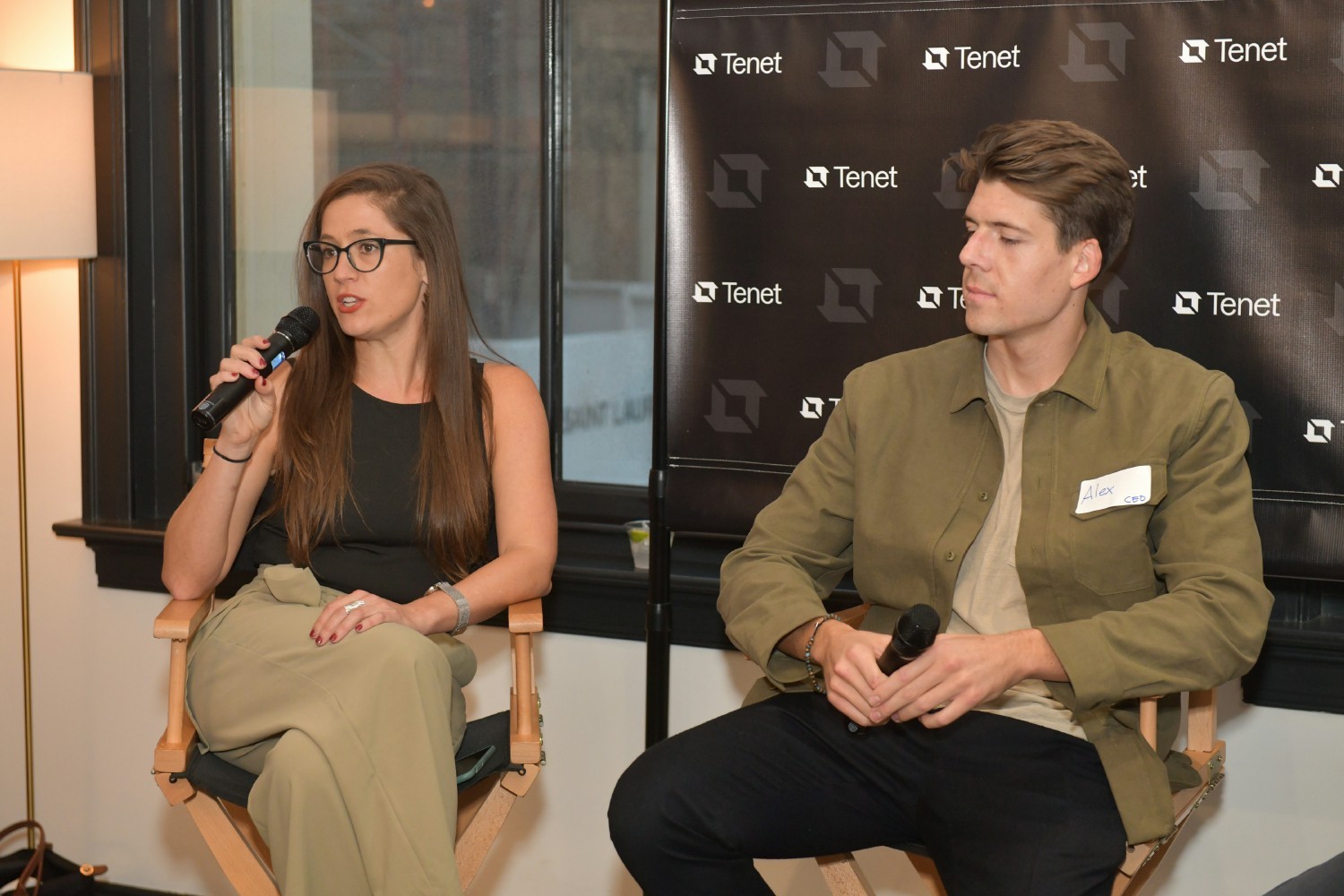
During his CEO tenure, Tenet also connected the vehicle purchase to the practicalities of charging it. In December 2022, it introduced financing that bundled a charger and installation with the car purchase. A driveway upgrade could become part of the same financial conversation, rather than a separate expense arriving after the keys.
Money needs plumbing
For Tenet to make loans, somebody had to supply the lending capital. On November 10, 2022, NY Green Bank closed a $10 million revolving credit facility with the company, with a further $15 million expansion feature. The facility supported loans for electric passenger vehicles in New York State.
The revolving structure mattered. It enabled Tenet to finance loans, monetize them through loan sales or private securitizations, and continue building its portfolio. Behind the relatively simple customer experience sat a system for moving capital. The application screen was the visible end of a longer financial process.
Announced together; different purposes. These figures describe the 2023 financing, rather than today’s balances.
Tenet’s November 2023 announcement made that division visible again: more than $10 million in Series A investment led by Nyca Partners, alongside a $20 million warehouse debt facility from Silicon Valley Bank. One supported the business and platform; the other supported its capacity to lend. Adding the numbers produces a headline. Understanding their purposes produces a business model.
By then, the company’s ambitions had spread beyond the purchase itself. TenetConnect, its smart-charging platform, was designed to reduce charging costs on customers’ utility bills. The car could lead to a loan, the loan to a charger, and the charger to another question about when electricity was cheapest to use.
Distribution expanded, too. In May 2023, Tenet entered commercial fleet financing through a partnership with Getaround. That brought it into the world of people renting vehicles to other drivers. The economics now included the relationship between financing costs and a vehicle’s use as a source of business income.
A partnership with Solera Auto Finance took Tenet into dealership financing. Its underwriting requirements could sit inside another platform, while Tenet continued servicing the loans. This was a way to reach buyers through an existing sales process. A lender does not have to own the showroom to become part of the transaction.
A wider circuit
In June 2024, Tenet announced a partnership with KeySavvy for private-party EV transactions. Buying a used car from another individual brings questions about payment, ownership and title transfer. Embedding financing in that process gave Tenet another route to customers, this time outside the conventional dealership visit.
The following month, Tenet and Service Credit Union reported results from their lending partnership: more than 700 new members and approximately $34.8 million in loan volume sold. Those were partnership figures reported in July 2024, with a customer base described as largely having high credit scores and owning homes. They showed a specific channel at work.
The credit-union relationship also illustrated how Liegl’s original proposition could travel. Tenet supplied a digital EV lending process; a member-owned institution could participate without developing all of that infrastructure itself. Growth meant joining other institutions’ capabilities to the system Tenet had built.
“Build the financial fabric of the American energy transition.”
Liegl’s stated Tenet goal, 2024
His public roles have since changed. Tenet’s conference biography now identifies him as a co-founder and board member. His LinkedIn profile lists American Advanced Materials, whose stated work includes domestic production of titanium and zirconium materials for industrial applications. The visible affiliations extend the story into another part of the physical economy.
Across these chapters, the interesting continuity is the attention paid to arrangements that sit around technology. A power contract, a cooling system, a lending facility or a distribution partnership can determine what happens next. None makes a particularly glamorous accessory. Each can alter whether the machine gets built, switched on or bought.
The dorm-room tariff was a modest beginning. It contained a question large enough to occupy several companies: under what conditions does a machine become economically useful? Liegl has kept changing the machine. The bill keeps providing material.
Continue the circuit
Profiles, conversations and the businesses in the story.