An air conditioner, a microwave and a computer: Alex Groyzburg’s childhood introduction to business success arrived as three useful presents. An uncle brought them to his family in 1994. The air conditioner was a particular favorite. Ambition has many elegant explanations; a cooler apartment is refreshingly persuasive.
Groyzburg had come from Russia to the United States in 1992. In Brooklyn, seven family members eventually shared a one-bedroom apartment. He remembers collecting furniture with his father on alternate Wednesdays, when other households put unwanted pieces outside. The prospect of financial independence had a very concrete setting.
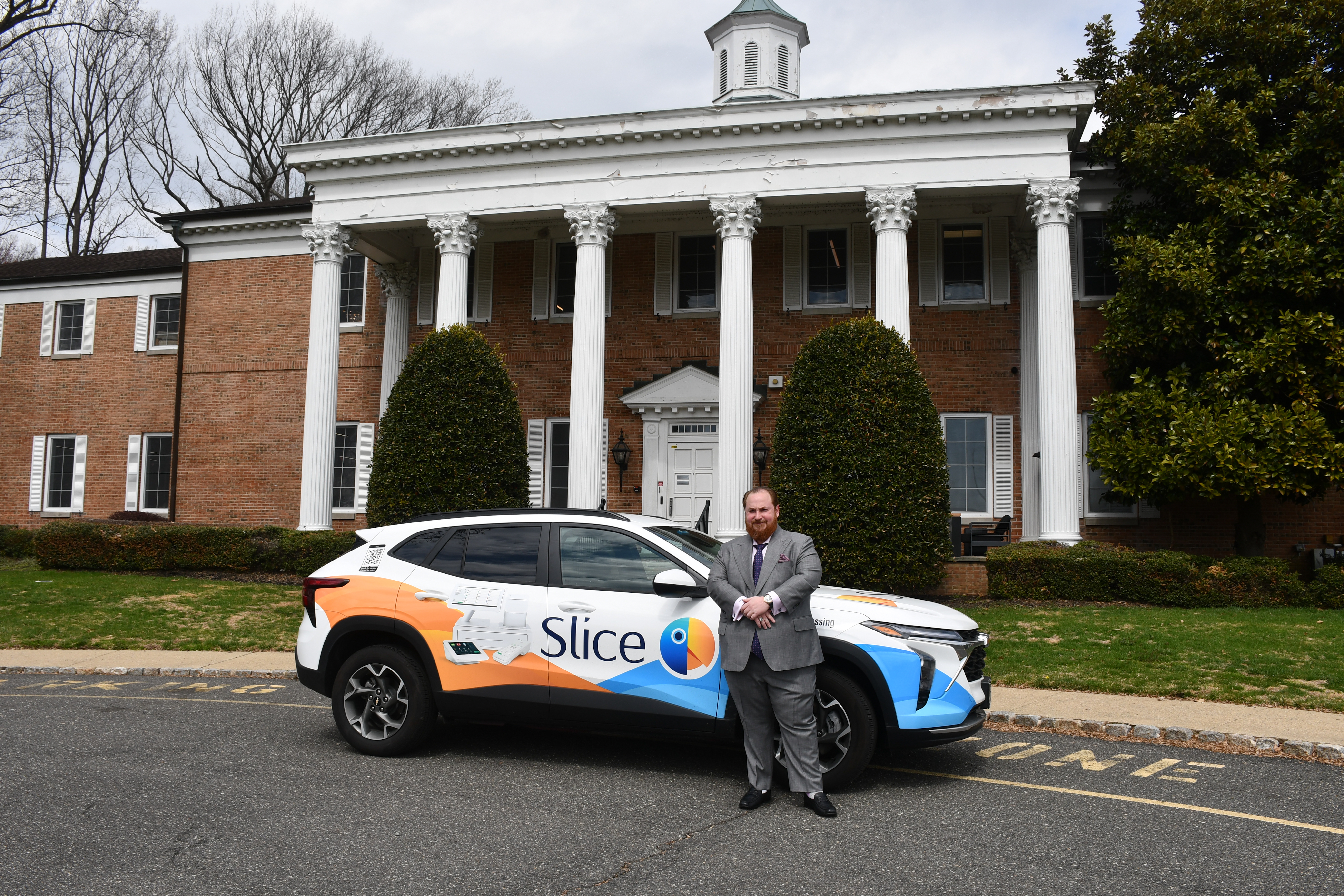
Today, he is the founder and CEO of Slice Merchant Services, a payments business based in Holmdel, New Jersey. Its work puts him close to another kind of household calculation: what an owner can afford, what a business needs, and what might remain when the bills have been paid. The subject has acquired more sophisticated equipment. Its human stakes are familiar.
An uncle’s three gifts
There is a pleasing lack of ceremony in the gifts he remembers. None required an explanation about entrepreneurial purpose. They improved the home. The computer supplied entertainment, including Doom, and helped open another possibility: his father subsequently trained as a programmer.
That memory gives his story an appealing scale. A single purchase can become a tool; a tool can make a new skill possible. Business success, viewed from a crowded apartment, can mean the ability to help somebody else change direction. The distance between a balance sheet and a family’s choices becomes rather short.
A career with room to move
His early working life included customer service at a Manhattan bank. He recalls wanting to exceed targets and finding that his enthusiasm was unwelcome. That is his account of the experience, with all the frustration such a memory carries. The enduring question is what an organization does when an employee wants to go further.
His payments career also includes Red Payments, where he has served as president. Slice Merchant Services was established in 2018. He now leads it as founder and CEO, with a business serving merchants across the United States. The chronology places Slice within a longer working life in financial services. It is a useful reminder that founding a company can follow years of getting to know an industry, its customers and the problems they bring to the conversation.
A career in this business brings an executive into contact with an unusually broad cast. A restaurant owner needs a functioning checkout at dinner. A retailer needs the day’s transactions to make sense. A salon operator needs the appointment and the payment to belong to the same uncomplicated working day. The technology must accommodate the business people already have.
The sequence is worth reading with care. His professional identity did not begin with a company appearing on a growth list. It developed through work in financial services and payments, where selling a service also means explaining how it will fit into somebody else’s livelihood. A business owner buying a system is making a commitment of time as well as money. That makes clarity part of the product, even when it has no button on the screen.
That helps explain the particular appeal of merchant services as a subject for a founder. It sits at the point where a business’s ambitions become daily transactions. Every new feature eventually has to survive contact with an employee, a customer and a busy counter. The counter is a rather strict editorial board.
The work after the handshake
Slice offers card processing, point-of-sale systems and access to business funding. Its company materials describe dual pricing and Clover-powered equipment among its offerings. Inc.’s description also includes online ordering and gift cards. Together, these services reach into several parts of a merchant’s working routine.
A terminal is the visible object. Around it sit decisions about prices, equipment, reporting and support. That makes the sale only one moment in a relationship. A founder may be pleased to acquire a customer; the customer still has a business to run the following morning.
Groyzburg’s stated ambition is to make Slice useful across that longer relationship. He talks about understanding where merchants lose time and what prevents them from growing. He wants technology to return time and money to owners, while keeping the tools manageable. These are goals he sets for the company, and they establish a practical standard against which its work can be judged.
“I’ve learned that trust takes much longer to build than revenue.”
Alex Groyzburg
The word trust can become very comfortable in a company’s vocabulary. It asks little of a presentation slide. In everyday service, it asks considerably more: clear answers, understandable arrangements and somebody prepared to take responsibility. A merchant’s opinion forms through repeated encounters, especially the inconvenient ones.
That is why his emphasis on the period after the contract matters. It moves attention toward work that recurs. The renewal, the support request and the next decision about equipment all belong to the same relationship. A useful promise has to remain useful after everyone has stopped celebrating the signature.
A company needs somewhere for ambition to go
Groyzburg says he wants employees to have opportunities to advance and favors promotion from within. Slice’s public team directory places operations, technology, marketing, sales and support alongside one another. Nataly Chayka is listed as COO, Roman Altshuler as CTO and Rebecca Welsher Kaplan as CMO. The range of roles makes clear how many kinds of work sit behind a payment.
There are individual examples of progression. Slice describes Freddi Rolbin beginning as a field sales representative before moving into sales leadership, launching a telesales division and helping expand its work in Puerto Rico. The company has also publicly celebrated Amy Rivera’s promotion into office management. Its current directory lists her as Business Operations Manager.
For an employee, advancement becomes more credible when somebody nearby has already made the journey. An organizational chart can look like a collection of boxes. It can also be read as a set of destinations. The difference depends on whether people can move between them.
Slice’s recognition extends beyond senior titles. Its February 2026 employee announcement celebrated sales representative Rasaki Are and retention specialist Robert Mulcare. Sales and retention are useful neighbors in that announcement: one brings a relationship into the company, while the other helps sustain it. Growth requires attention to both ends.

Leave room for an experiment
He also advocates giving people room to learn through unsuccessful attempts. In his July 2026 Breaking Barriers conversation, experimentation includes setting aside a budget to try technologies such as AI. The idea is to allow testing without requiring every attempt to justify itself as an immediate triumph.
That approach poses a useful management question. If a team is expected to explore, how does it know what it may risk? A budget gives the experiment boundaries. Reviewing the result gives it a purpose. Without either, enthusiasm can become an expensive hobby with meeting invitations.
For a merchant, the eventual test is straightforward: does the new tool make the working day better? That question gives experimentation a destination. It also keeps the owner in the picture. The person paying for software deserves something more practical than an invitation to admire it.
A larger account of opportunity
Slice’s 2026 Inc. 5000 entry supplies a measurable milestone: No. 2,254, with 150% three-year growth. Its Inc. Regionals Northeast entry places it at No. 104, with 46% two-year growth. The periods differ, so the two percentages describe separate measures rather than successive steps on a single growth chart.
Inc. 5000 · No. 2,254
A company milestone under Groyzburg’s leadership. Revenue growth is one measure of the business; it does not measure every customer’s experience.
His public activity has also included a community visit beyond the office. Slice reported his participation in an August 18 familiarization visit to Joint Base McGuire-Dix-Lakehurst with civic and business leaders, including Mike Ferraro. The visit concerned understanding military service and the connection between civilian workplaces and Guard and Reserve members.
As he describes his hopes for Slice, Groyzburg returns to opportunity: business owners able to compete, employees able to become leaders, and people with ideas able to build something for their families. The language circles back to the appeal of those early gifts. Something useful arrives, and someone gains another choice.
There is also a useful restraint in keeping the ambition at that scale. A business cannot promise an entrepreneur a particular future. It can work on the conditions within its reach: the service it provides, the people it develops and the usefulness of its equipment. The larger hope depends on getting those smaller decisions right, repeatedly.
That is a demanding ambition for a company to keep. It must be translated into ordinary work: a tool that functions, a colleague who advances, an owner with a little more room to act. Groyzburg began with his own calculation of independence. The next account includes other people.