The most interesting object in Slice Merchant Services’ sales pitch may be the sign beside the register. A terminal takes the payment. The sign explains why paying with cash costs less. In that small patch of counter space sits a question every shop owner understands: when a customer buys something with a card, who should pay for the convenience?
- The offer: offset card processing costs through dual pricing.
- The package: terminals, POS software, digital menus, support, and financing.
- The decision: compare the whole agreement and the customer experience.
Slice builds its proposition around changing that arrangement. Its customers include restaurants, retailers, salons, repair shops, and professional practices. These businesses can accept cards already. The attraction is keeping more of the proceeds while getting equipment and help with the everyday business of collecting money.
A small percentage gets big
Consider an illustrative business taking $500,000 a year in card payments. At an assumed processing cost of 3%, the annual expense is $15,000. That is the arithmetic behind Slice’s online savings calculator. It is a useful opening calculation, though it cannot establish what a particular merchant will save after equipment, software, and other account costs.
Assumed annual cost before any change. This is arithmetic, not a Slice quote or a savings guarantee.
Slice’s processing page describes a 3.99% discount for cash customers. The economic idea is to build acceptance costs into the card price and give cash buyers a lower price. The expense still exists. The pricing arrangement changes how it is recovered. “Zero cost” describes the merchant-facing ambition.
That distinction deserves attention before anyone signs. A percentage advertised for a cash discount is not automatically a permissible credit card surcharge. They are different arrangements, with different requirements. Treating the labels as interchangeable would make a simple sales pitch an unreliable operating instruction.
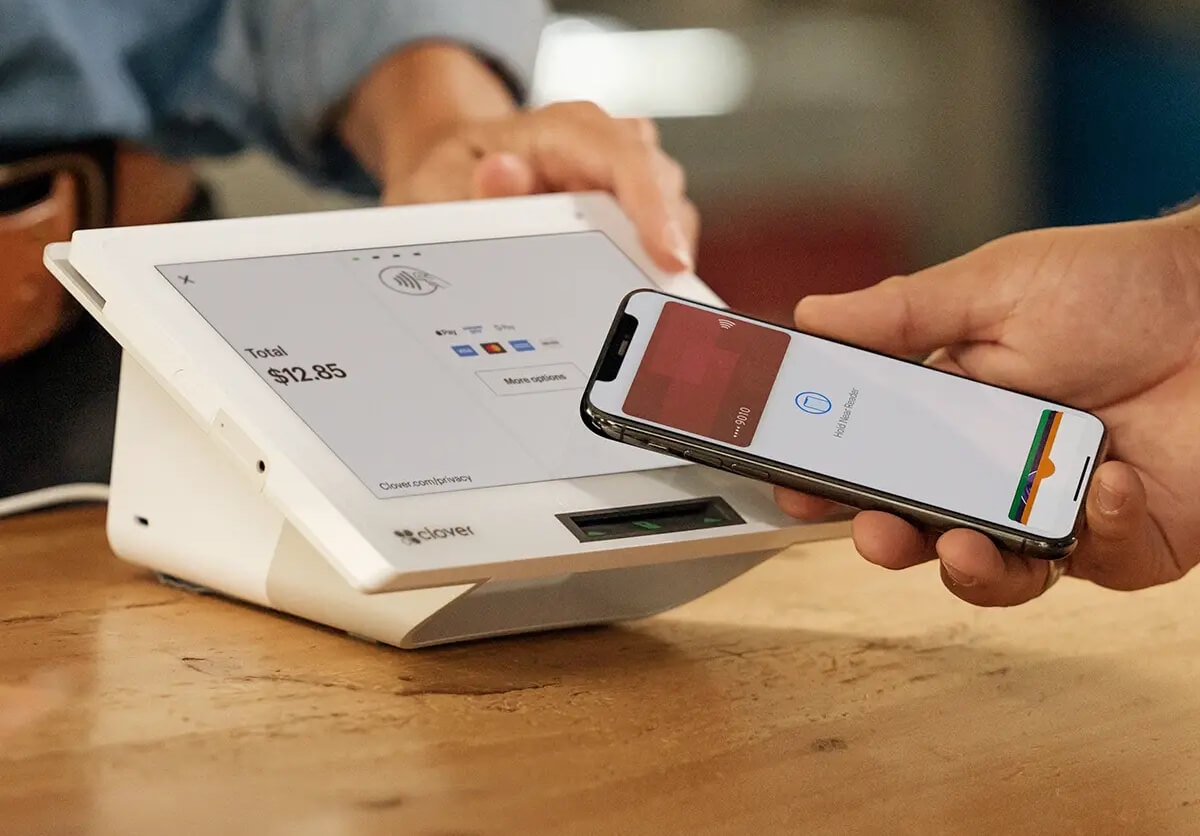
The sign is part of the product
Slice’s onboarding package makes that point unusually tangible. Its dual pricing FAQ promises a terminal, signs for the front door and payment area, and training for the owner’s sales staff. The explanation travels with the equipment. A cashier should not have to improvise the meaning of two prices while a queue forms.
Price presentation also has consequences beyond customer relations. New York’s guidance gives examples of displaying cash and credit prices together. Visa’s guidance distinguishes cash discounts from added surcharges and prohibits surcharging Visa debit and prepaid cards. A merchant needs an implementation appropriate to its location and payment types.
There is a practical test here: can customers understand the full price before choosing how to pay? If the answer depends on reading an unexpected receipt line, the explanation has arrived too late. If customers resist the arrangement, Slice says it can switch merchants back to traditional interchange pricing. That promise concerns the pricing program; separate contract obligations still deserve their own reading.
The machine has familiar company
Slice does not ask every merchant to adopt an unfamiliar piece of hardware. Its Clover catalog includes Station Duo, Station Solo, Flex, and Mini. Alongside those devices, it markets Startslice POS and standalone terminals. A handheld payment device and a two-screen counter system solve different problems, even when both accept the same card.
Its Startslice offering extends into inventory, employees, reporting, promotions, and customer records. For restaurants, the advertised tools include order modifiers and online orders. The wider purpose is to reduce the number of separate tasks surrounding a transaction. Taking the payment is only one job at a busy counter.
Square is an obvious alternative to consider for integrated payments and business tools; other Clover sellers offer another route to familiar equipment. Slice’s case rests on the combination of fee treatment, setup, support, and services. Comparing the machines alone misses much of what the merchant is buying.
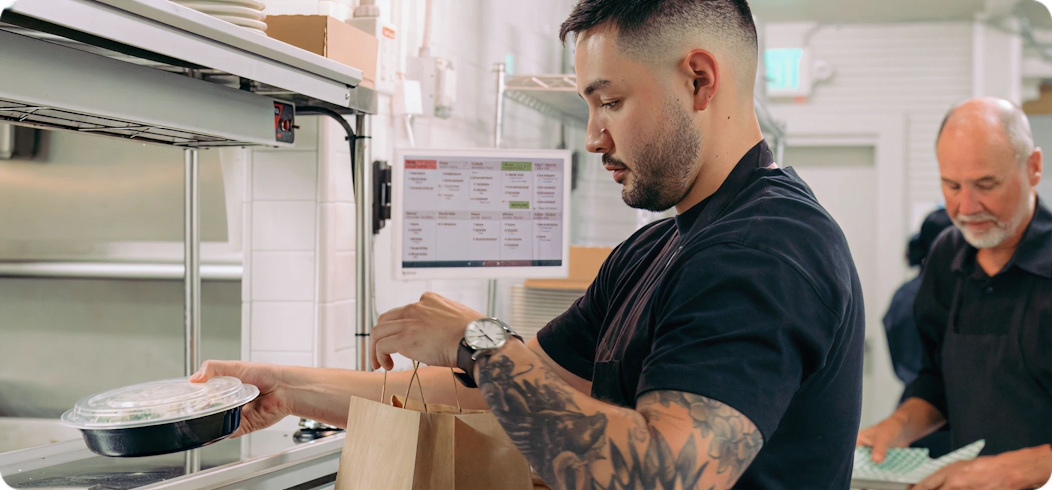
Service matters after installation, too. Slice advertises round-the-clock support through SliceCare and next-day hardware replacements. Its general FAQ says deposits for Visa, Mastercard, and Discover can arrive the next business day, depending on business type. These are operational questions worth asking alongside the rate: when does money become available, and who helps if the terminal stops working during service? A lower processing expense offers little comfort while a line of customers waits to pay.
A menu that explains the bill
EZ-QR shows how far upstream the payment decision can move. Slice’s digital menu service displays two prices for a dish and connects with Clover. It accepts an existing menu as a photo, PDF, or Excel file, then advertises a 48-hour turnaround. The customer encounters the choice while deciding what to eat.
This is a useful design lesson for businesses well beyond restaurants. Explain a consequential choice at the moment it becomes relevant. A price policy becomes easier to understand when the menu, employee explanation, terminal, and receipt tell the same story.
Buying time, selling tomorrow
Slice also offers financing. Its capital page advertises amounts up to $500,000, subject to approval, through advances and business loans. A merchant cash advance purchases future receivables at a discount. The deposit-based advance described on the site uses fixed weekday withdrawals. Money arrives sooner; future cash flow carries the repayment.
That can address a timing problem, but an amount approved is only half the calculation. The merchant needs the total repayment and withdrawal schedule alongside expected receipts. Financing and processing may share a provider while remaining separate economic decisions.
What the counter teaches

Founder and CEO Alex Groyzburg describes a broader ambition in an INLOVE interview: making useful technology accessible to smaller operators. The appeal is easy to understand when the owner is also the buyer, manager, and emergency troubleshooter.
“Technology also shouldn’t make running a small business feel like you need an IT department.”Alex Groyzburg / INLOVE, September 2026
Inc. lists Slice at No. 2,254 on its 2026 Inc. 5000, with 150% three-year growth. That measures momentum, not the outcome for an individual customer. The transferable lesson is more modest: make a recurring expense visible, explain an alternative clearly, and judge it against the full cost of changing. The sign earns its place beside the terminal.