Alex Gay began with textbooks, which is a useful place to start if your eventual business is teaching machines to listen. Long before the title Chief Marketing Officer appeared beside his name, he was marketing educational products across Europe, the Middle East, Africa, and the United States. The objects were familiar: courses, books, learning platforms, tools for teachers. The underlying puzzle was not. Somebody knows something. Somebody else needs it. What must happen in between?
That question has followed Gay for two decades while the container changed shape. At Pearson and McGraw-Hill Education, knowledge arrived in curricula and classroom software. At Adobe, it moved through images, documents, and eventually a PDF that could answer back. At Grammarly, later renamed Superhuman, it lived in the blinking space between an idea and a sentence. Now, at Otter.ai, it is floating through conference rooms, sales calls, and video meetings, waiting to become more useful than a transcript nobody reopens.
Gay joined Otter.ai as CMO on August 11, 2026. His remit covers global brand, product marketing, demand generation, and communications. The job comes with a category problem worthy of an editor: many people know Otter as the thing that takes notes. Otter wants companies to see a conversational knowledge engine. Gay must make that larger phrase feel less like software dialect and more like an obvious description of work.
A seller learns that words have receipts
Gay describes himself as “a seller by origin.” It is a modest detail with explanatory power. Sales makes language accountable. A claim either earns the next question or encourages a polite goodbye. Product marketing puts better clothes on the same discipline: understand the customer, isolate the useful truth in the product, and shorten the distance between the two.
His Pearson years moved between regional marketing, senior marketing, and district sales management. At McGraw-Hill, he rose through senior marketing roles and worked on enterprise solutions meant to support a student’s journey from preparation to employment. He also spent a year consulting under the cheerful name Hello Unicorn Marketing. In 2016, Adobe recruited him into product marketing for education and government.
Education gave Gay a patient view of technology. A feature matters only when it changes what a student can make, understand, or show. At an Adobe Creative Jam, 120 higher-education students split into teams and raced through design challenges. Gay liked to tell the story of one participant whose degree had little to do with design. Curiosity about Adobe XD led that student toward a product-management career at Ford. Software did not choose the path. It gave the student something concrete enough to discover one.
Then the classroom walls disappeared. When campuses shut in 2020, Gay’s Adobe team helped enable at-home Creative Cloud access for 52 million students. He later placed that sprint beside the launch of Acrobat AI Assistant as one of the defining projects of his eight-year Adobe run. The pair makes an illuminating bookend: first get the tool to people stranded away from the lab, then help the tool make sense of the documents piling up around them.
The PDF begins to speak
By 2022, Gay was leading product marketing for Adobe’s Document Cloud business. The humble PDF had accumulated a familiar modern problem: it contained too much worth knowing and demanded too much time to extract it. Acrobat AI Assistant promised summaries, cited answers, and drafts fashioned from the document itself. Gay’s pitch stayed close to the workday. A manager could interrogate a contract, invoice, purchase order, or meeting record, then use the result in an email or presentation.
The important word was cited. Generative AI could save time, but a person still needed a path back to the evidence. Gay told business audiences that early projections put the potential saving anywhere from two to 30 hours a week, depending on the document task. The range was broad because office work is broad. The principle was tidy: reduce the hunt, keep the human able to check the answer.
When he closed his Adobe laptop for the final time in November 2024, Gay thanked colleagues for making him a better product marketer, manager, and person. Then he crossed into Grammarly to lead product marketing. The move looked natural. Adobe had taught a document to converse. Grammarly lived inside the act of expression itself.
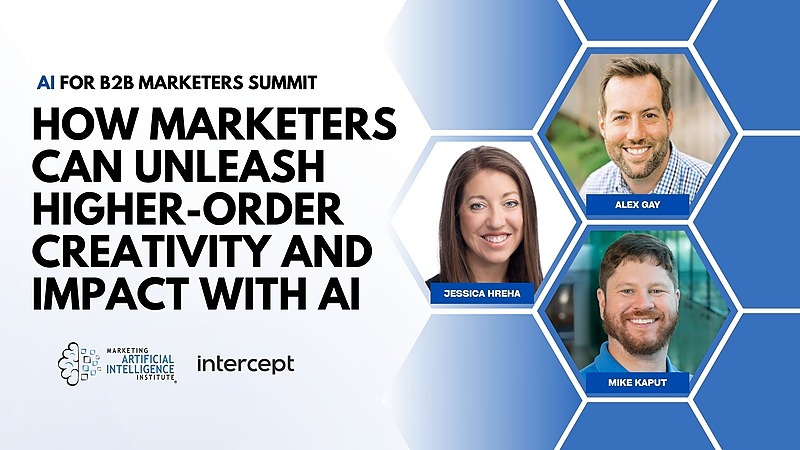
Efficiency is the cheap ticket
At Grammarly, Gay argued that efficiency was merely the opening act. Competitors can copy faster output. The harder advantages come from judgment, originality, and trust. His public writing on AI for marketers starts with unglamorous safeguards: secure data, protect intellectual property, preserve brand voice, watch for bias, and respect regulatory limits. A machine that can produce fifty assets from one webinar also creates fifty opportunities to sound identical to everyone else.
The tension suited his background. Educational technology had already taught him that access without standards can create new problems. He promoted Grammarly Authorship as a way for students and faculty to handle generative AI without reducing the question to punishment. In marketing, he made a parallel case: let AI handle planning, analysis, and expansion where it helps, while human creativity, emotion, and intuition remain responsible for the point.
He was equally practical about adoption. If employees must leave their work and “go use the AI tool,” the tool creates another errand. Better intelligence sits inside the workflow, learns the relevant context, and removes steps quietly. Gay compared the ideal to a spam filter: useful precisely because nobody schedules time to visit it.
Grammarly itself then became a lesson in categories refusing to stay put. The company acquired Coda and the email product Superhuman, assembled a broader suite, and adopted Superhuman as its corporate name in late 2025. Gay led product and corporate marketing through that change and the expansion into agentic AI. The grammar checker was now trying to become an operating layer for knowledge work. Familiarity was an asset and a trap. Everybody knew what Grammarly did, even as the company wanted to do more.
At a 2026 event in Austin, Gay watched songwriters discuss how they shaped narrative, removed what did not serve the story, and revised until the emotional point survived. He connected the craft to product launches and brands. The observation was revealing. His version of marketing is not simply broadcasting more. It is cutting until the audience can carry the idea away.
Now the meeting has to remember itself
Otter.ai presents the same category puzzle with a new source material: speech. The company says more than 40 million professionals use its product and more than one billion meetings have been transcribed. That is a great deal of language. It is also a great deal of information that can go stale inside a recording.
Gay calls voice “one of the richest, most underutilized sources of knowledge” in an organization. The appeal is currency. The latest decision often exists in conversation before anyone updates the slide deck, customer database, or project page. If software can capture that decision, connect it to other company systems, and return it when somebody needs to act, the meeting stops being an appointment and becomes infrastructure.
His new task is to make that future legible without losing the simple usefulness that got Otter onto millions of calendars. The company wants to move beyond note-taking, but the note remains the proof that it listened. Gay’s career suggests he understands this kind of bridge. The textbook did not vanish when learning became digital. The PDF did not vanish when it learned to answer questions. Writing did not vanish when Grammarly acquired agents. Each old object became the trustworthy doorway to a larger behavior.
There is a personal symmetry to the appointment. The seller who wanted to help at scale now markets software built from sales calls, planning sessions, interviews, and every other conversation where organizations reveal what they actually know. The education marketer is still moving understanding from one person to another. Only now the classroom is a company, the lesson plan is scattered across meetings, and the textbook keeps interrupting with a better answer.