Alan Meltzer had given American University millions of dollars. He had served on its board. He had helped keep its wrestling team alive. There was, however, one small piece of university business still outstanding: his own homework. In 2021, shortly before his seventieth birthday, the insurance entrepreneur finished the bachelor's degree he had left behind decades earlier.
Among the remaining requirements was algebra. A donor can put his name on a building; an equation remains stubbornly unimpressed. Meltzer's account of the experience was admirably free of ceremony: “At 70, taking algebra is not easy.”
That late diploma gives his career a pleasingly untidy shape. The familiar version of a business biography moves briskly from education to enterprise to generosity. Meltzer kept doubling back. A wrestling scholarship brought him to Washington. A restaurant supplied a livelihood, a wife and the beginnings of another profession. Insurance paid for opportunities at the university he had left. Then the university required him to sit down and learn again.
The dishwasher gets a stake
He arrived at American in 1969 from Massachusetts on a wrestling scholarship. Money was tight, and campus life included paid work from the beginning. In his later telling, even getting to Washington involved hitchhiking from Boston. This was an entrance without much luggage of the financial kind.
By October of his freshman year, he was washing dishes at Mr. Henry's in Tenleytown. What began as a job became a much larger commitment. In 1972, he and two classmates bought the place, and he left college. The restaurant had managed to offer something more immediately absorbing than a syllabus: customers, responsibility and an ownership stake.
Consider the education available across a bar. The customer can leave. The customer can return. The customer can bring six friends or tell six friends to stay away. Service has consequences before the end of the evening. For Meltzer, this was an early classroom in the value of a relationship, with a rather unforgiving marking system.
The business also changed his private life. In 1973, Amy came into Mr. Henry's with a group of women who worked for Massachusetts Mutual Life Insurance Company. Alan noticed her and waited on the table. They dated for five years and married in 1978. Amy's connection to insurance helped open the next door: he studied the business, sold his restaurants and joined the industry that year.
A business with other people's names in it
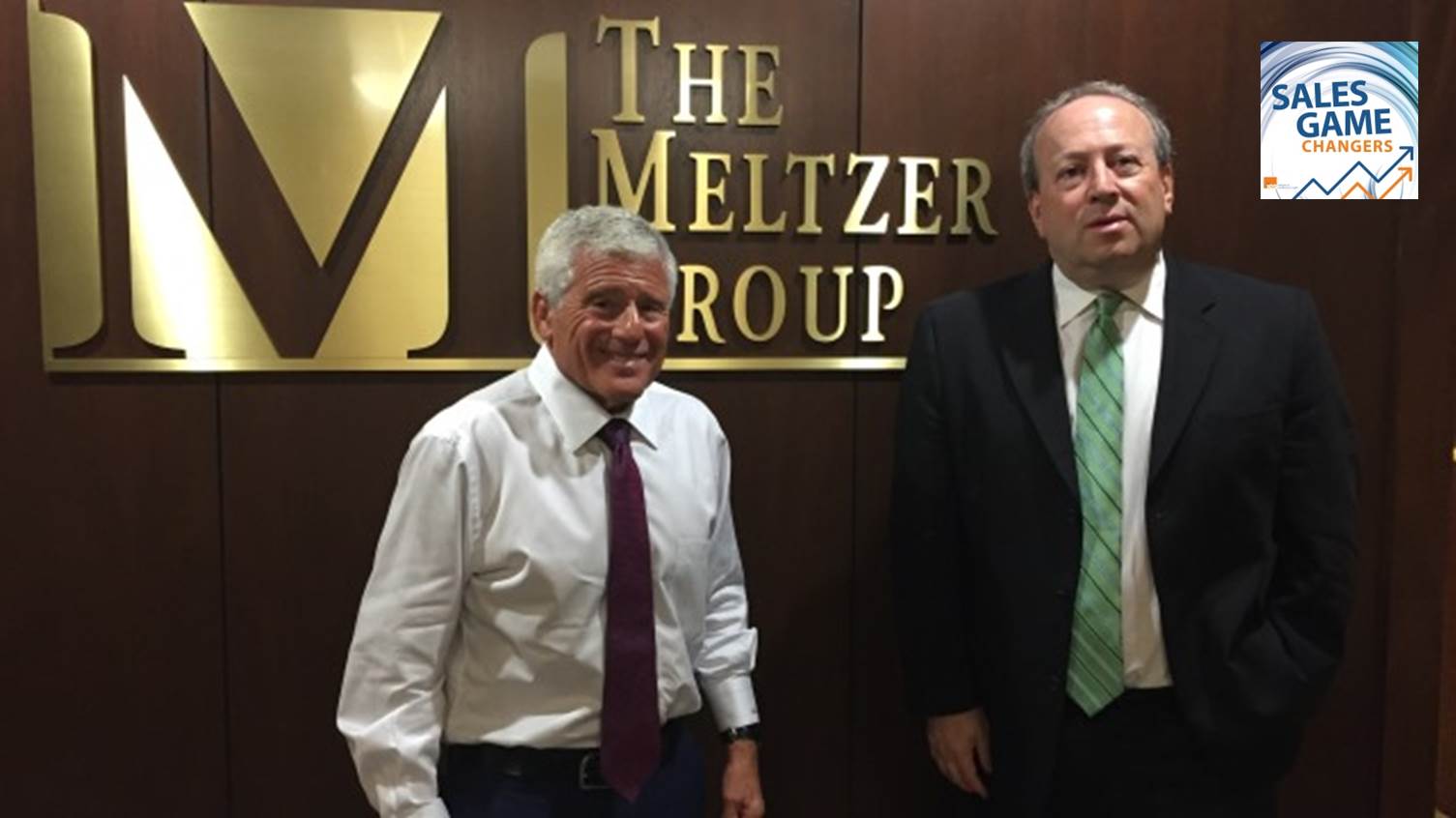
In 1982, he founded The Meltzer Group as a single insurance agent. Over time it became a business with more than 200 employees across five divisions. Life insurance sat alongside employee benefits, financial management and estate planning. His clients eventually ranged from individuals to Fortune 500 companies.
That expansion required a different sort of competence from running a neighborhood restaurant. A founder can remember every regular at a bar. An advisory business spread across specialties needs colleagues who know things the founder does not. The work becomes partly a question of whom to trust, and how much room to give them.
Meltzer's public account of his success leaves plenty of room for those colleagues. He describes himself as a delegator and credits the people around him with the company's accomplishments. That is a useful complication in a story bearing one surname. The brand was Meltzer; the expertise belonged to a group.
The industry supplied its own measures of achievement. He received MassMutual's Agent of the Year honor 18 times. In 2011, he entered the Washington Business Hall of Fame, followed by the Montgomery County Business Hall of Fame in 2016. The repetition matters more than a single trophy: selling insurance was a career sustained across decades.
He sold the company to NFP in 2016 and remained involved in the business. The old firm was rebranded to NFP in 2018. His professional LinkedIn profile connects that history to Bethesda, where the founder's name remains part of the story of a practice now situated inside a much larger organization.
“Management has nothing to say about which organizations get the money.”
Alan Meltzer, on the employee giving fund
The boss signs the match. Employees choose the cause.
For a clearer view of Meltzer's approach to giving, look away from the building names for a moment. In 2005, he and Amy launched the Meltzer Group Employee Giving Fund. Employees could contribute voluntarily, with donations matched by the company's three senior executives. The arrangement put management's money alongside the staff's.
The interesting detail was who decided where it went. A steering committee surveyed employees about the year's focus, researched possible recipients and visited charities on paid time. Employees made the selection. Meltzer described a process in which the decision arrived at his desk as information, rather than a request for permission.
There was also a three-year prohibition on prospecting for insurance business from the chosen charity. That rule deserves a little space. A donation can become an awkward sales appointment if nobody draws a boundary. Here the boundary had an actual duration, long enough to make the recipient something other than next week's prospect.
The fund offered employees practice in judgment: choose a purpose, investigate the organizations and commit resources. Matching gifts multiplied the money. Giving staff control distributed something else a founder usually possesses in abundance: the right to decide. For a businessman known for competitive drive, it was a revealing place to loosen his grip.
First, keep the team
Meltzer's attachment to wrestling extends back to being the student who needed a scholarship. In 1998, he honored his mother by naming American's Marilyn Meltzer Wrestling Room. Four years later, the program faced a more urgent problem. Financial pressure in 2002 had put the team's survival in question.
He brought alumni and donors together to help save it. The achievement was collective, and its value became particularly visible in 2007, when Josh Glenn won a national wrestling championship. American prepared to raise a championship banner for a program that, only a few years earlier, might have disappeared.
A trophy records the winner. A continuing program records the people who will get a chance to compete next season. Meltzer's intervention belongs to that second category of work: less visible than the match itself, essential to the possibility of holding one. It also explains why his later athletic gifts read as a continuation of an old obligation.
His support has also reached beyond his own campus. In February 2022, he joined the board of trustees of Wrestle Like A Girl, which works to expand opportunities for girls and women in wrestling. A former captain helping more people get onto a mat is a straightforward extension of the scholarship story.
Fifteen million, in two installments
The new athletic center began with a $5 million commitment from Alan and Amy in 2019. In July 2022, they added $10 million, bringing their cumulative commitment to the facility to $15 million. Keeping those installments straight is useful: the later announcement built on the earlier gift.
These were family commitments. Amy's name belongs beside Alan's, on the gifts as well as the building. Their support at American also included $2 million in 2019 to establish the Alan L. Meltzer and Amy Meltzer Fellowship for the Center for Israel Studies. Athletics was a large part of their campus involvement, alongside academic work.
$15 million from Alan and Amy Meltzer
The Alan and Amy Meltzer Center for Athletic Performance opened in January 2026. At its first wrestling competition on January 16, American beat LIU 38-7. Whatever a new building's architectural merits, a home team can generally be relied upon to appreciate a winning debut.
Inside are three wrestling mats, a multipurpose court, meeting spaces and an ESPN+ production studio. The wrestling training center spans more than 6,000 square feet, twice the size of the previous room. The gym accommodates 750 spectators. These are concrete changes to an athlete's working day: room to practice, a place to compete and seats for people to watch.
The long way back to class
On January 31, 2026, Meltzer was inducted into American's Stafford H. “Pop” Cassell Hall of Fame as a lifetime contributor. The ceremony followed a ribbon-cutting at the center bearing his and Amy's names. His former wrestling coach, Robert Karch, introduced him. The relationships had lasted long enough for an old coach to present an old student in a new building.
Yet the smaller milestone, the bachelor's degree completed in 2021, remains especially telling. Meltzer had returned to study in 2019. He was already a trustee, having joined the board in 2007. He had the standing to advise the institution and the resources to support it. Finishing required accepting its demands as a student.
His family runs through this history, from Amy's arrival at the restaurant to the couple's joint philanthropy. Their daughter Jennifer also entered the restaurant business, operating All Set in Silver Spring. The family connection to hospitality continued after Alan had long since moved into insurance.
In a November 2025 conversation about his life, Meltzer put family at the center of his definition of success. He also described wanting the Washington community to benefit from the wealth he and Amy might leave. The ambition follows the geography of his life: the city where a scholarship took him, a restaurant employed him and clients helped him build a business.
American gave the young wrestler an opening. More than half a century later, other students are walking into a center with the Meltzers' names above it. Between those two arrivals sit an insurance company, a saved team, years of giving and some unfinished algebra. He eventually got that last item done, too.