A misplaced tool has a talent for becoming the most important object in the building. Production waits. Someone searches. A perfectly ordinary working day acquires a small, expensive mystery. Al Wofford has spent much of his career helping organizations dispense with the mystery. His explanation of the market is pleasingly economical: “Every company loses stuff.”
That observation sits behind CDO Technologies’ Critical Asset Tracking Solution, known as CATS. It also offers a way into Wofford’s working life. Here is a founder interested in the whereabouts of things, the identity of parts and the gap between possessing equipment and being able to put it to work. There is little ceremony in the question. There can be considerable money in answering it.
Wofford founded CDO in 1995. His background includes Air Force service, a BA from the University of South Carolina and an MBA from Golden Gate University. The business he built in Dayton serves federal and commercial customers. Its work stretches from identification technology to communications and managed services, with a recurring concern: getting useful information to the person who needs it.
A second beginning in 1995
By the time he started CDO, Wofford had already worked through one substantial expansion. From 1990 to 1995 he was president and chief operating officer of RCF Information Systems. During his tenure, its workforce grew from 40 to approximately 300. He arrived at entrepreneurship with experience of an organization becoming larger, and of the responsibilities that accompany the extra names on the payroll.
CDO began with a two-person team and a purpose rooted in the military: assisting the Air Force and other Department of Defense customers. Those beginnings put the company close to customers whose equipment, information and logistics have to work together. A serial number may look like clerical detail until someone needs to distinguish one item from thousands of apparently identical companions.
The company developed a niche in unique identifiers, serial-number tracking, parts marking and electronic product codes. These are wonderfully unromantic subjects. They give a physical object an identity that a larger system can recognize. Without that identity, a shelf may be full while the person responsible for it remains remarkably uninformed.
RCF Information Systems
Two-person team
education-focused endowment
Hall of Fame
By 2009, CDO’s products included systems for tracking aircrew equipment, locating and accounting for assets, and managing information systems. That year, it was among five suppliers selected for the Army’s Automatic Identification Technology IV program. The work covered hardware, networking, engineering and software. Wofford connected the program to the complicated task of moving military equipment out of Iraq as forces withdrew.
His business had grown around a problem that does not become simpler merely because the customer becomes larger. More equipment means more possibilities for confusion. The owner wants an account of what exists, where it is and what can happen next. Wofford’s career has repeatedly returned to the systems that make those answers available.
The road that remembers
Consider a repaired road. A contractor opens the surface, performs the work and closes it again. The finished pavement is admirably discreet about who was responsible. If a defect later appears, the relevant history becomes rather more interesting than it was when the asphalt looked immaculate.
CDO’s RoadTag gives that history a physical address. Rugged radio-frequency identification tags carry details such as the contractor’s name and permit number beneath the final pavement layer. An engineer using a handheld reader and RoadTag software can retrieve the information when it is needed. A patch of street acquires something approaching a filing cabinet.
In May 2016, Colorado Springs licensed the system to track street cuts across a road network of nearly 5,700 lane-miles. RoadTag had won AIM’s RFID Case Study Competition the previous year. The appeal is easy to understand: when a problem appears in a particular place, the record of the work belongs close at hand.
This is a revealing example of Wofford’s business judgment. The object being identified is a road repair, and the benefit is a better answer to an engineer’s question. The technology earns its place by making responsibility and history easier to recover. It is a modest-sounding ambition with a very practical customer.
A smaller bill for finding things
There is a further question for an asset-tracking business: who can afford the answer? In 2018, CDO partnered with Brady Worldwide to combine Brady’s CenSys RFID readers with CATS. The effort addressed businesses for which a conventional installation, including readers, infrastructure and software, could be too costly.
The arrangement allowed readers to send identification data into CATS, where a business could record movements, take inventory or follow work in progress. A useful location could be the last place an item was seen. A reader at a carefully chosen point could supply that information without requiring a company to monitor every square foot of its premises.
The distinction matters to a smaller manufacturer. A tool can be worth tracking without justifying an elaborate installation. Wofford’s commercial proposition made room for that arithmetic. By June 2020, CDO was offering CATS in the cloud, with the company maintaining the software and server infrastructure. The customer retained responsibility for connectivity and data archiving.
“Every company loses stuff.”
Al Wofford, on CATS Cloud, 2020
It is difficult to improve on his five-word explanation. It contains a customer, a problem and the reason the customer might care. The surrounding software can be complicated; the motivation is familiar to anyone who has ever bought a replacement for something that later turned up exactly where it ought to have been.
Listening in the New Mexico desert
Other CDO work takes that attention to information into less familiar surroundings. At the Aeroacoustic Research Complex at White Sands Missile Range, an outdoor array captures aircraft sound signatures. The facility’s equipment includes 50 microphones and five miles of buried cable. Its measurements support detailed three-dimensional models of the noise an aircraft makes in its environment.
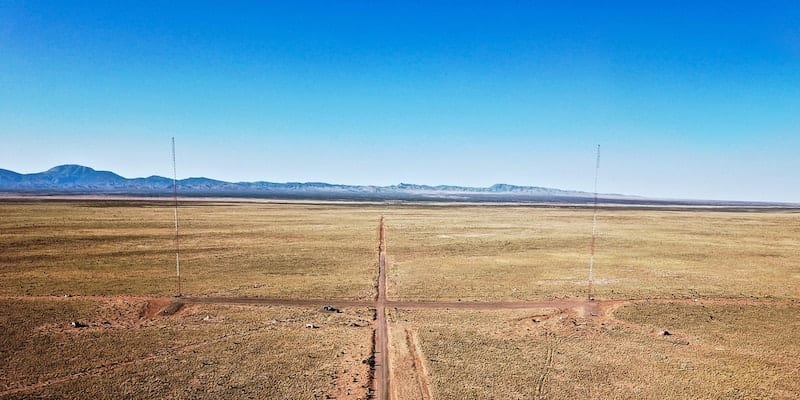
In 2019, CDO and the Air Force Research Laboratory announced a cooperative research agreement that would make the facility available to commercial aerospace companies for a fee. CDO’s responsibilities included maintaining and managing the facility, arranging testing and conducting it. The company had also developed software for processing the measurements and delivering the resulting information.
Wofford described the opportunity as taking established Air Force work into a commercial setting. The attraction was an existing capability with further uses, including designing quieter aircraft. The scene differs considerably from a workshop searching for its tools, but the business question remains recognizable: what information would help this customer do the job?
A familiar face around Dayton
The civic side of Wofford’s career has its own accumulated record. His involvement has included the Dayton Development Coalition, the Ohio Minority Supplier Development Council, the Wright Brothers Institute and Wright State Applied Research Corporation. These connections place him among organizations concerned with the region’s businesses, research and opportunities.
Some of that participation has been quite hands-on. He co-chaired the South Central Ohio Minority Business Council’s 2007 awards gala with Don Becker of Kroger, and appeared as a presenter. In 2021, he joined Katie Ward of P & R Communications and Nicholas Ripplinger of Battle Sight Technologies for a Dayton Chamber entrepreneurship panel moderated by Winsupply’s John McKenzie.
There is a longer horizon to his educational philanthropy. Established in 2014, the Alphonso Wofford Endowment Fund includes interests in institutions supporting African-Americans pursuing entrepreneurial education and development, or science, technology, engineering and mathematics education. The choice connects a technology executive’s own working world with opportunities for other people to enter it.
His military connection extends into employment, too. CDO joined the Department of Defense’s Military Spouse Employment Partnership in October 2018, formalizing a recruiting practice Wofford welcomed. The company described opportunities across the country and included telework. Supporting military operations and employing people from military families became related parts of the business.
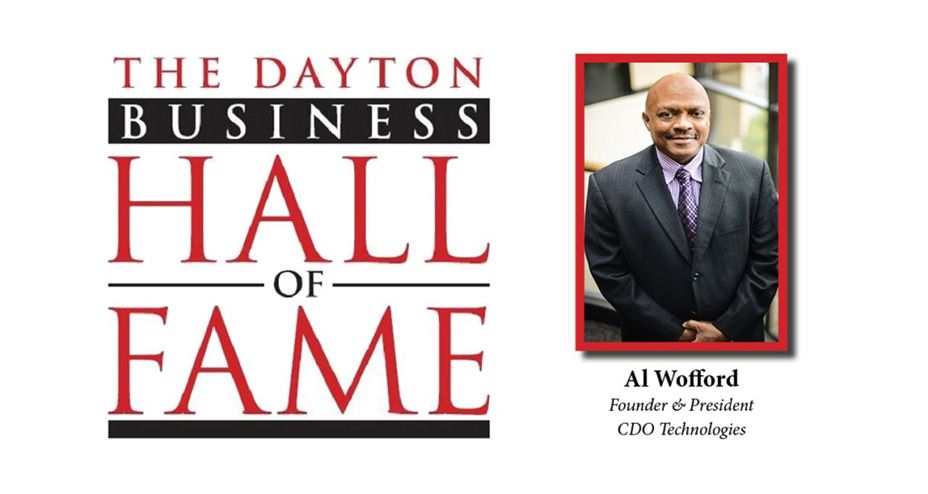
When Wofford entered the Dayton Business Hall of Fame in 2023, colleagues spoke about both determination and his community involvement. Recruiter Subie Certo recalled people recognizing his name through shared board service. It is a distinctly local form of recognition: the company name supplies an introduction, and somebody remembers the founder from another meeting.
The next set of initials
Three decades after CDO’s founding, Wofford was still describing the next opportunities. In January 2026, the company announced its late-2025 selection for three federal contract vehicles: Automatic Identification Technology VII, an Air Force information-technology infrastructure-maintenance agreement, and the Missile Defense Agency’s SHIELD contract.
Such announcements require a little care with the arithmetic. SHIELD’s $151 billion ceiling describes the contract vehicle; it does not establish CDO’s revenue. The company’s place creates opportunities for future work. Wofford’s stated ambitions were to reach more federal customers, extend its solutions and invest in the growth of the team.
Automatic identification is still there among the new initials, connecting the latest announcement with CDO’s early specialty. So is the need to make systems useful to people doing consequential work. Wofford’s career has given that practical concern several settings: a military supply chain, a factory, a repaired street, a research site in the desert.
A business can become difficult to explain as its capabilities multiply. Wofford has kept one part of the explanation mercifully plain. Things go missing. Information gets separated from objects. Someone needs an answer before the work can continue. He has built a working life around helping that person find it.