Thirty-five years is a long time to spend at one company. Long enough for the young finance hire to become part of its institutional memory. Long enough for a business to enter markets that barely figured in its earlier accounts. For Ajay Mehra, it was the interval between joining OSI Systems as controller in 1989 and being chosen, in December 2024, to become its next chief executive.
The appointment took effect on January 1, 2025. The calendar offered a neat beginning; the career behind it was considerably less tidy. There were financial positions, an initial public offering, airport installations, congressional testimony and a growing collection of security technologies. A job title can fit on a business card. This preparation required several decades.
Mehra’s story runs through the unglamorous places where technology earns its living: the baggage belt, the border crossing, the installation schedule. An airport scanner may be an intricate piece of engineering. It also has to get along with an airport. Passengers, famously, are reluctant to miss a flight in admiration of the equipment.
The accounts came first
His professional beginnings were in finance. Before OSI, Mehra held financial positions at Thermador/Waste King, Presto Food Products and United Detector Technology. Appliances, food products and detectors make an eclectic introduction to business. They also put actual products behind the numbers: things that have to be made, sold and delivered.
He earned a Bachelor of Arts from the School of Business at the University of Massachusetts Amherst and an MBA from Pepperdine University. His route into a technology manufacturer came through business education. That distinction matters when looking at the roles he later occupied. The career crossed from accounting responsibilities into the running of an operating business.
After joining OSI in 1989, he became vice president and chief financial officer in November 1992. He remained CFO until November 2002. During those years, he oversaw the company’s initial public offering and helped launch its Security division. The finance job placed him inside a period when the company was changing both its funding and its range of activities.
- 1989Controller
- 1992Chief financial officer
- 2002Executive vice president
- 2025President & CEO
Appointments shown by year. The work between them included finance, cargo scanning and security operations.
In November 2002, he became executive vice president. He served as president of Cargo Scanning Solutions from that point through July 2024. He then became president of the Security division. The sequence is useful: his later appointment followed years spent with products and customers, as well as the earlier years spent with the accounts.
A suitcase has a timetable
On July 24, 2008, Mehra appeared before a House aviation subcommittee as president of Rapiscan Systems. His testimony described a company whose equipment was already installed across airports, seaports, land borders and other secure locations. He told lawmakers that Rapiscan had more than 70,000 inspection systems in over 150 countries. Those were his figures at the time, a snapshot of the business he represented.
The setting put a commercial executive inside a public argument about aviation security. Equipment manufacturers had something concrete to contribute: what could be detected, what could be deployed, and how screening would fit the movement of people and goods. Mehra’s appearance belongs to a career spent where government requirements and industrial capabilities meet.
A particularly revealing chapter unfolded around Manchester Airport. Real Time Tomography, or RTT, grew from work by University of Surrey academic Edward Morton. The technology was patented by the university, taken into Morton’s spinout CXR, and developed into a working system by Rapiscan. It produced three-dimensional images of luggage. The invention had an academic origin and an airport destination.
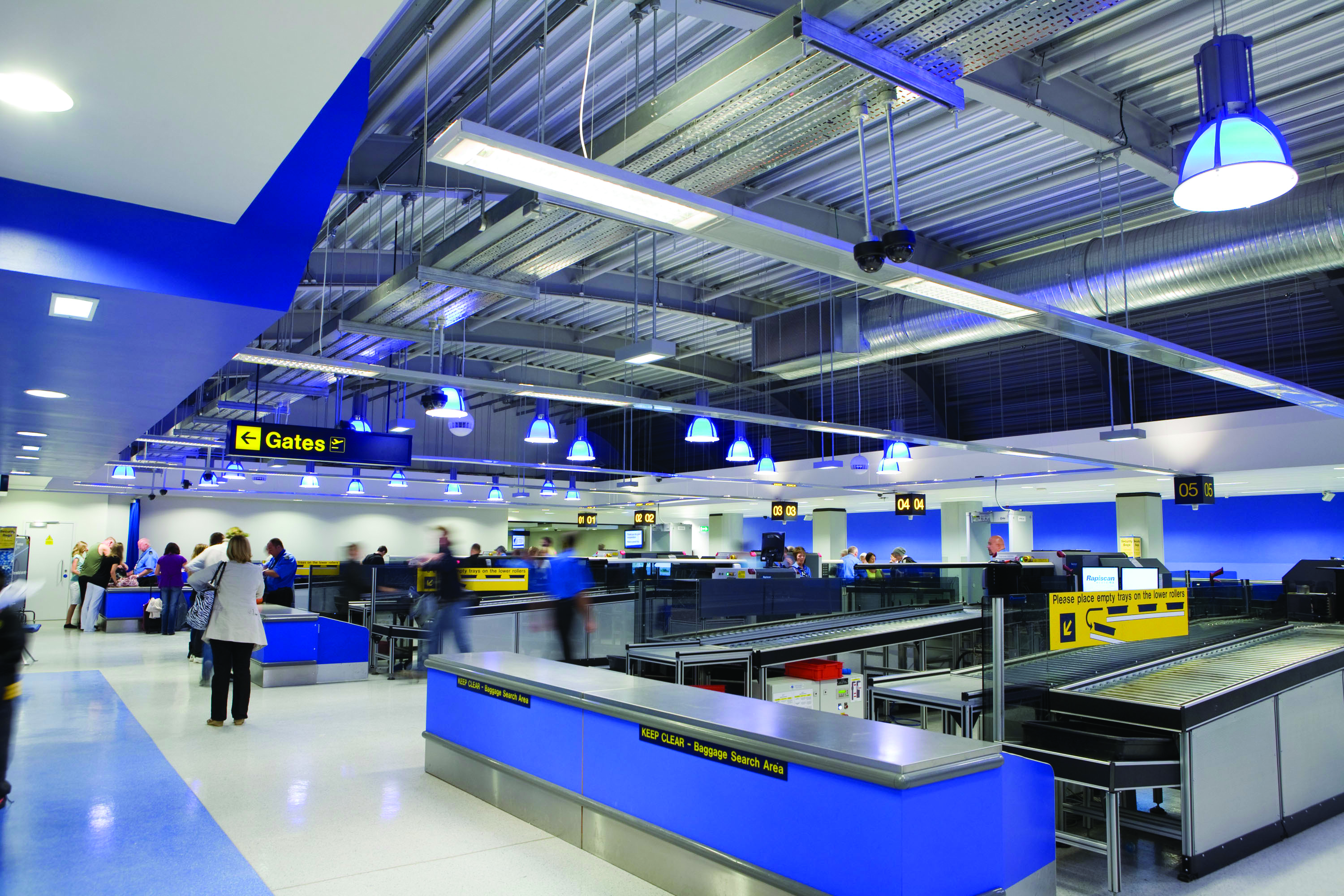
A prototype was trialled at Manchester in 2009, followed by the installation of fully functioning systems in 2012. The project involved twelve years of development. That timescale gives the product story some texture. An idea can acquire a name and a patent well before it acquires a place in the daily workings of a terminal.
In 2011, OSI announced an order worth approximately $20 million from Manchester Airport Group for RTT inspection systems. Mehra’s explanation concentrated on an operational bargain: airports could upgrade screening standards with limited infrastructure changes while preserving throughput. The buyer needed detection capability, certainly. It also needed a workable installation.
The details help explain the kind of business he was running. A working airport contains existing buildings, equipment and habits. Any new system enters that arrangement. The financial case depends partly on how much disruption accompanies it. Mehra’s earlier experience as CFO gives that practical emphasis an interesting backdrop, though the product itself was the work of scientists, engineers and operating teams.
Growth arrives in several forms
Sporting events supplied another setting. Rapiscan provided equipment at the London 2012 Olympic and Paralympic Games and the 2010 FIFA World Cup. In February 2014, it was appointed official security screening equipment provider for the Glasgow Commonwealth Games. Its responsibilities included equipment at competition venues and the Athletes’ Village.
Here, too, Mehra spoke about effective screening and the movement of visitors. An airport and a sporting venue have different purposes, but each must bring people through a controlled entrance. A queue is a rather persuasive critic of an operating plan. It makes its objections visible to everyone.
The security portfolio also expanded through acquisitions. In September 2016, OSI completed its purchase of American Science and Engineering for approximately $269 million, including assumed unvested equity awards. The deal added backscatter inspection products, including the Z Backscatter Van and the portable MINI Z. These were additional tools for a security business in which Mehra already held operating responsibilities.
That October, the acquired business received a Customs and Border Protection contract for Z Portal cargo and vehicle screening systems. The two-year agreement had a ceiling of $64 million; its first delivery order was approximately $35 million. A ceiling and a delivery order are different things. One establishes room for purchases. The other is a concrete step toward supplying equipment.
Following those distinctions makes the growth story more useful. The business accumulated technologies and customers, but the work still had to pass through orders, production and deployment. The acquisition announcement was one event in that process. The customer’s installation belonged to another part of it.
Thirty-five years, seen from home
When OSI announced its succession decision in December 2024, the Security division had grown beyond $1 billion in annual revenue. The board had conducted a search before selecting Mehra. Founder Deepak Chopra would become executive chairman. For the incoming CEO, the change extended his responsibility across the company he had joined in a financial role.
There was a family connection within that company as well: OSI has disclosed that Mehra and Chopra are first cousins. Their professional association stretched across the finance and operating chapters of the business. The succession therefore carried both a long working history and a disclosed family relationship, alongside the board’s selection process.
Mehra’s daughter Rebecca supplied a less formal view of the announcement. “So thrilled for my dad!” she wrote publicly, celebrating his 35 years of work at OSI. The sentence has none of the machinery of an appointment notice. It gives the milestone a human scale: a daughter marking something that had taken a large part of her father’s working life.
“So thrilled for my dad!”
Rebecca Mehra, celebrating the CEO appointment
Mehra himself kept his ambition succinct: “I look forward to continuing OSI’s mission.” He acknowledged the people across its operating divisions. The choice of emphasis was consistent with the circumstances. He was assuming a new office inside a business whose development he had already helped to manage.
The next deadline is closer to home
By August 2026, there was a new destination on the security business’s calendar. Rapiscan announced its appointment as an official provider of physical screening and security technology hardware and software solutions for the LA28 Olympic and Paralympic Games. For a company based in the Los Angeles area, it brought a major event into its own region.
Mehra’s response emphasized the team, its technologies and its experience with major events. The planned work connects screening equipment with software, training and operational support. London and Glasgow were earlier chapters. Los Angeles gives the business another fixed deadline and another occasion on which preparation will become visible in daily operation.
OSI Systems revenue for the year ended June 30, 2026. A company-wide figure, rounded from $1.786 billion.
The wider CEO job also reaches into manufacturing. In June 2026, OSI announced approximately $12 million in electronic sub-assembly orders for a secure-communications customer. Mehra emphasized quality, execution and the flexibility of its global manufacturing operations. It was a reminder that his current responsibilities extend beyond the screening lane.
Fiscal 2026 brought company revenue of approximately $1.79 billion and year-end backlog of about $1.9 billion. Mehra also explained that Middle East conflicts had shifted planned deliveries, affecting quarterly revenue. The order book and the delivery calendar were telling different parts of the same story. Both required attention.
His message to employees in the 2026 ethics code offered a smaller instruction: “read the Code, ask questions”. It is a practical request inside a company dealing with complex products and government customers. Decades of experience do not remove the need for questions. They may simply give those questions a longer history.
Mehra’s appointment arrived after thirty-five years. The work continues in shorter intervals: an order, an installation, the next departure, the next event. His career is unusually easy to date. Its substance is in the things that had to work between the dates.
Follow the work
Company news, professional profile and the milestones in this story.