Consider the problem of explaining carbon conversion at a dinner party. You could describe a catalyst, discuss hydrogen, and watch the room discover an urgent interest in the cheese. Or you could pour a drink. In November 2019, Air Company launched a vodka made with ethanol derived from carbon dioxide. An industrial proposition had acquired a glass, a taste, and a reason to be passed around.
- The chemistry: captured CO₂ and hydrogen become fuels and chemicals through AIRMADE catalytic technology.
- The buyers: defense agencies, aviation partners and industrial operators; consumer products came first.
- The wager: license the process and build systems that make fuel closer to demand.
The bottle was an unusually good explanation
The founders were an improbable but useful pairing. Gregory Constantine had worked in beverage marketing at Diageo. Stafford Sheehan was a chemist with a Yale Ph.D. They met at a Forbes Under 30 Summit in 2017. One understood how a product gets noticed; the other understood how its molecules get made.
There was a catch. In a 2019 Forbes interview, the founders acknowledged difficulty being taken seriously while straddling scientific innovation and a vice product. A vodka bottle explains ethanol beautifully. It explains an industrial technology company less completely.
Fragrance and hand sanitizer extended the demonstration. AIRCO later described these products as ways to engage consumers and help fund research. In February 2025, the company announced its AIRCO identity and a sharper industrial focus. The opportunity it identified was changing entire industries. The bottle had done its introductory work; the fuel tank demanded another conversation.
It is tempting to call this a pivot and imagine a discarded business plan. The public account is more deliberate. Consumer goods gave carbon conversion a recognizable form while the industrial research continued. What changed was the foreground: AIRCO increasingly asked audiences to judge its ability to supply useful fuel, rather than its ability to sell an unusual drink.
The refinery begins with an electricity bill
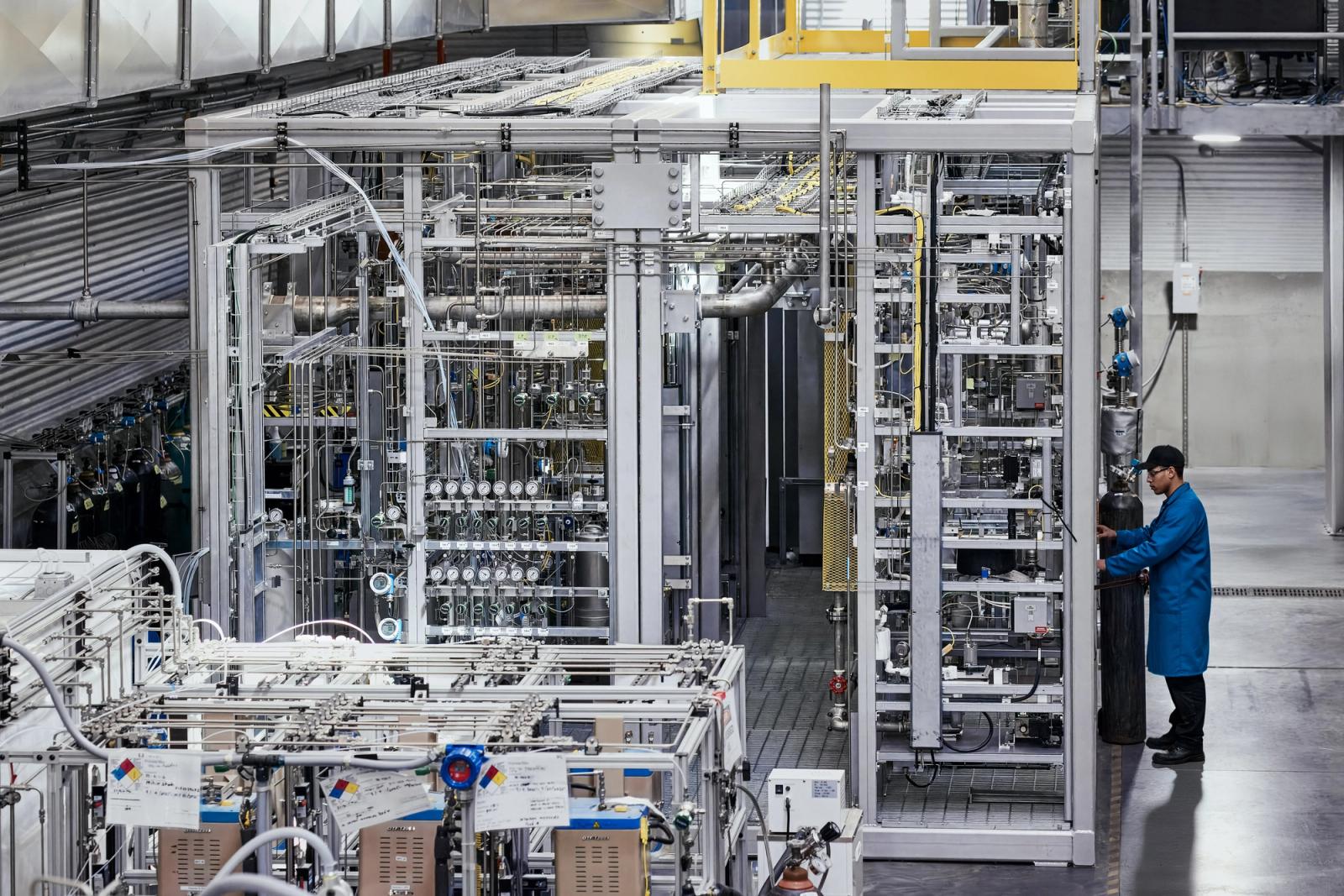
AIRCO converts captured CO₂ and hydrogen into useful molecules with proprietary catalytic processes. Its portfolio covers aviation fuel, diesel, ethanol and methanol, with rocket-fuel research alongside NASA. Carbon supplies the building material. Hydrogen and energy help turn it into something an engine can burn.
CO₂+Hydrogen
H₂+Energy
POWER
Schematic of the platform, not an engineering flowsheet.
That qualification matters. Capturing carbon does not make the electricity free. Burning the resulting fuel releases carbon again; utilization is different from permanent storage. Its climate value depends on the full production pathway, including the power and hydrogen supply.
AIRCO also occupies a competitive field. Twelve and Infinium offer their own CO₂-derived fuel technologies. AIRCO emphasizes catalytic chemistry and deployable production hardware. A buyer must compare the complete system: input availability, fuel specification, output, uptime and delivered cost. A clever reaction cannot negotiate the electricity tariff.
A customer who counts the convoy
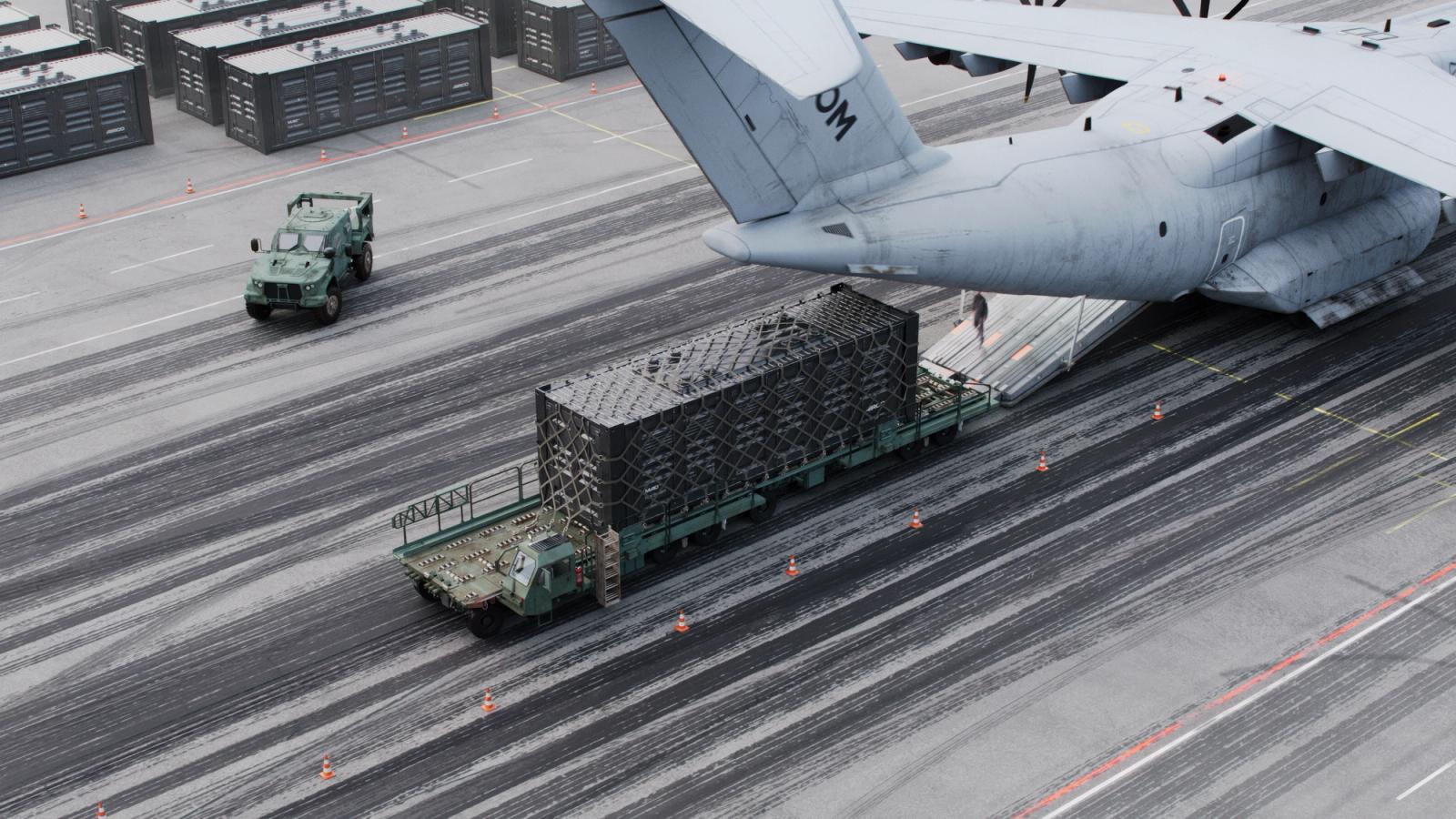
The defense customer introduces a different arithmetic. At a conventional airport, fuel delivery can look routine. In a contested environment, resupply is a vulnerability. The Defense Innovation Unit describes existing transport as costly, slow and exposed to attack. Producing fuel near demand could reduce that exposure.
In 2023, DIU announced a prototype contract with Air Company under Project SynCE. Its ceiling was $65 million. The assignment was to explore synthetic fuels for contested environments, including small, mobile production systems. Here was a customer with a reason to value local manufacturing beyond the price posted at a refinery.
In April 2025, AIRCO reported demonstrations across land, sea and air: a Polaris MRZR tactical vehicle, rigid-hull inflatable boats, and an unmanned flight using 100% CO₂-derived synthetic jet fuel. One SeaFox II boat ran for more than six hours. The company reported comparable performance and less visible smoke in its ground and marine tests.
These are useful observations with boundaries. Smoke is not a lifecycle emissions calculation. An unmanned military flight does not establish approval for every passenger aircraft. The demonstrations answer a necessary question: can the fuel work in existing equipment? Repeatable production at an acceptable cost is a further test.
The money bought a harder test
AIRCO raised a $30 million Series A in 2022. In September 2024, a $69 million Series B brought Avfuel into the lead investor role, alongside investors including Lowercarbon Capital, IQT and Alaska Airlines. Avfuel also became the preferred distribution and logistics provider. Capital arrived with a route toward customers.
September 2024
announced 2023
The distinction between those figures is essential. Equity financing and a government contract ceiling belong in different columns. Neither is a pump price. Airline relationships belong in another column: Virgin Atlantic’s 2024 press kit identifies a fuel MOU, a signal of prospective demand rather than a receipt for delivered gallons.
“Our technology is designed to be modular to facilitate adoption and scalability.”Gregory Constantine / September 2024
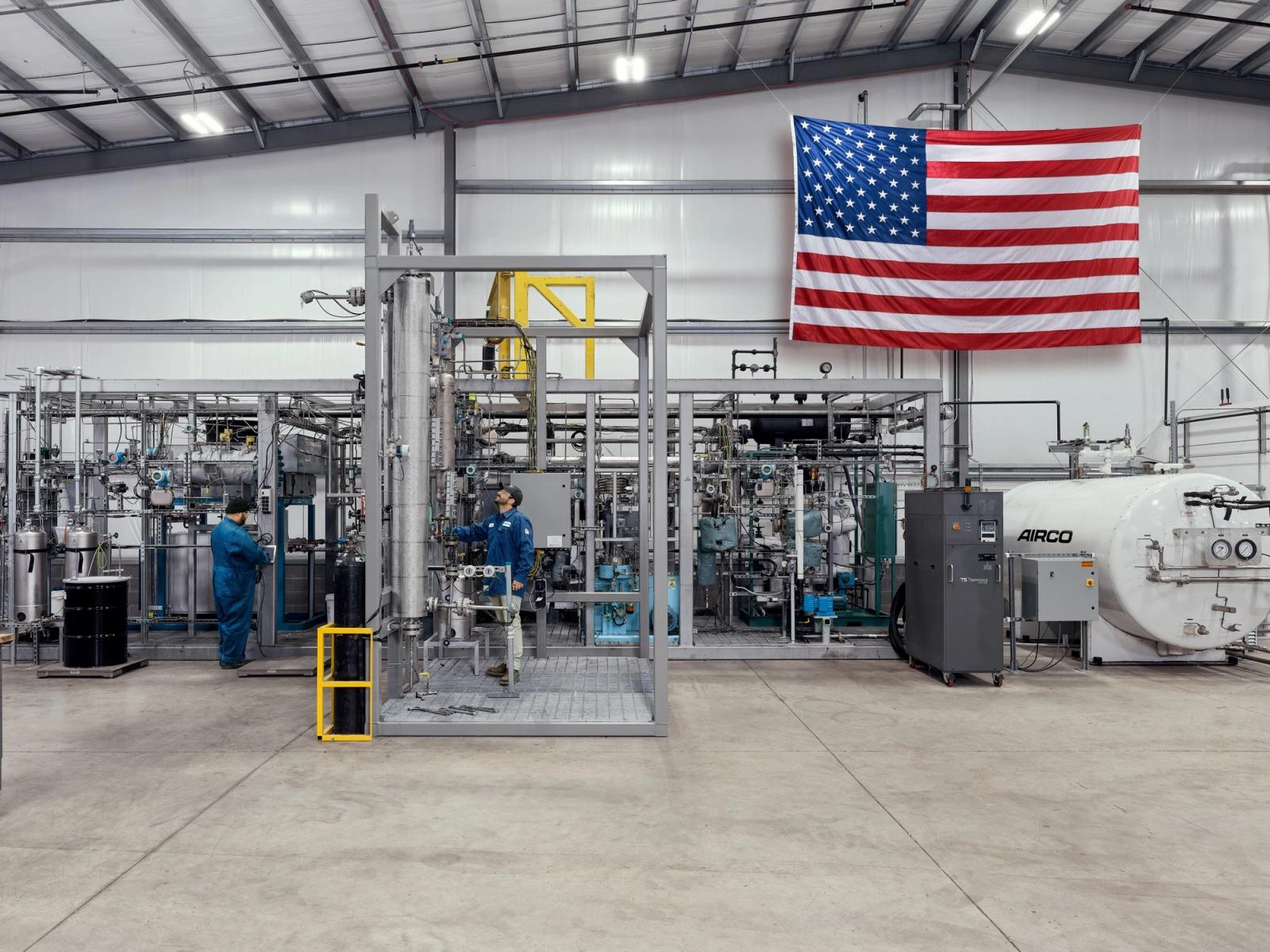
September 2025 brought an integrated Brooklyn fuel demonstration plant. In May 2026, AIRCO announced a manufacturing and integration hub in New Britain, Pennsylvania. Chemistry, engineering and manufacturing now have a more immediate shared assignment: build production systems repeatedly.
Sell the recipe. Build the kitchen.
AIRCO describes two business units. Catalysts & Processes licenses its technologies to partners. Advanced Manufacturing turns those processes into physical production assets, including the containerized MAD Fuel System and a facility-scale SAF Factory offering. An industrial partner can license a pathway; a remote operator can pursue a production system.
The distinction disciplines the product story. AIRCO’s October 2026 diesel explainer says diesel is currently a co-product of SAF production; a dedicated diesel process is future work. NASA collaboration examines rocket-fuel freezing behavior, thermal stability and materials compatibility. A portfolio can share chemistry while its products occupy different stages of readiness.
For prospective partners, that means starting with the intended operation. An airline needs a qualifying fuel supply and distribution arrangements. A remote installation needs equipment, inputs and a plan for reliable operation. A chemical manufacturer needs a process that fits its plant. AIRCO offers different entry points for those conversations, rather than one consumer product available off a shelf.
Choose the buyer before the breakthrough
The transferable lesson is customer selection. Make the science tangible, then find partners whose requirements sharpen it and whose budgets support testing. AIRCO’s AIR&D program describes experiments designed backward from operational constraints, followed by validation with government and aerospace partners.
That approach needs customers who can tolerate early costs and sites with suitable power, water, carbon and hydrogen supplies. Where ordinary fuel arrives cheaply and reliably, local synthesis faces a tougher economic case. AIRCO’s intriguing wager begins where delivery becomes difficult: the journey to the engine might be the problem worth solving.