A diamond’s least visible feature may be its most interesting one. Put an Aether stone beside a mined diamond and the proposition is difficult to see. Both are diamonds. The difference begins before the sparkle, before the cut, before anyone opens a little box: where did the carbon come from?
- Aether converts atmospheric CO2 into feedstock for lab-grown diamonds.
- It sells the provenance alongside fine jewelry and bespoke design.
- Grown Brilliance bought its assets in 2024 after manufacturing margins came under pressure.
Aether chose an answer with considerable conversational appeal: the atmosphere. Here was pollution turned into a proposal. The idea gave engagement-ring buyers another consideration beyond the familiar questions of size, shape and budget. It also gave a carbon-utilization startup a product people might buy for reasons having nothing to do with chemistry.
Then came the awkward part. A remarkable origin does not exempt a diamond from the price of making it.
01 / The invention was in the middle
Ryan Shearman and Daniel Wojno met at David Yurman. They understood jewelry as a designed object and a business, rather than merely a mineral. After founding Aether in 2018, they added chemical engineer Anthony Ippolito and marketing specialist Robert Hagemann to the founding team. The combination put manufacturing expertise beside people who knew how luxury was sold.
Their insight was to connect technologies that already existed. Direct air capture could provide CO2. Chemical vapor deposition could grow diamonds. Aether concentrated on making the carbon between those two stages suitable for gemstone production. Contamination matters here: an unwanted ingredient can spoil the crystal. The romance needed a carefully controlled recipe.
The company’s process converts purified CO2 with green hydrogen into high-purity methane. That gas feeds specialized growing chambers. Carbon becomes diamond material, which is mapped, cut and polished. Aether’s public patent list records protection for atmospheric-carbon production systems and diamond composition. Its expertise sits in the material’s preparation as well as its eventual presentation.
- 01CaptureAtmospheric CO2
- 02ConvertHigh-purity methane
- 03GrowCVD diamond material
- 04PolishA finished gemstone
Process schematic. The hydrogen, energy and finishing work matter too.
The first disruption was prosaic. COVID slowed the work and spoiled plans for a summer 2020 launch. The jewelry brand debuted that December; consumer shipments followed in mid-2021. Even a company selling diamonds from air had to wait for the world on the ground.
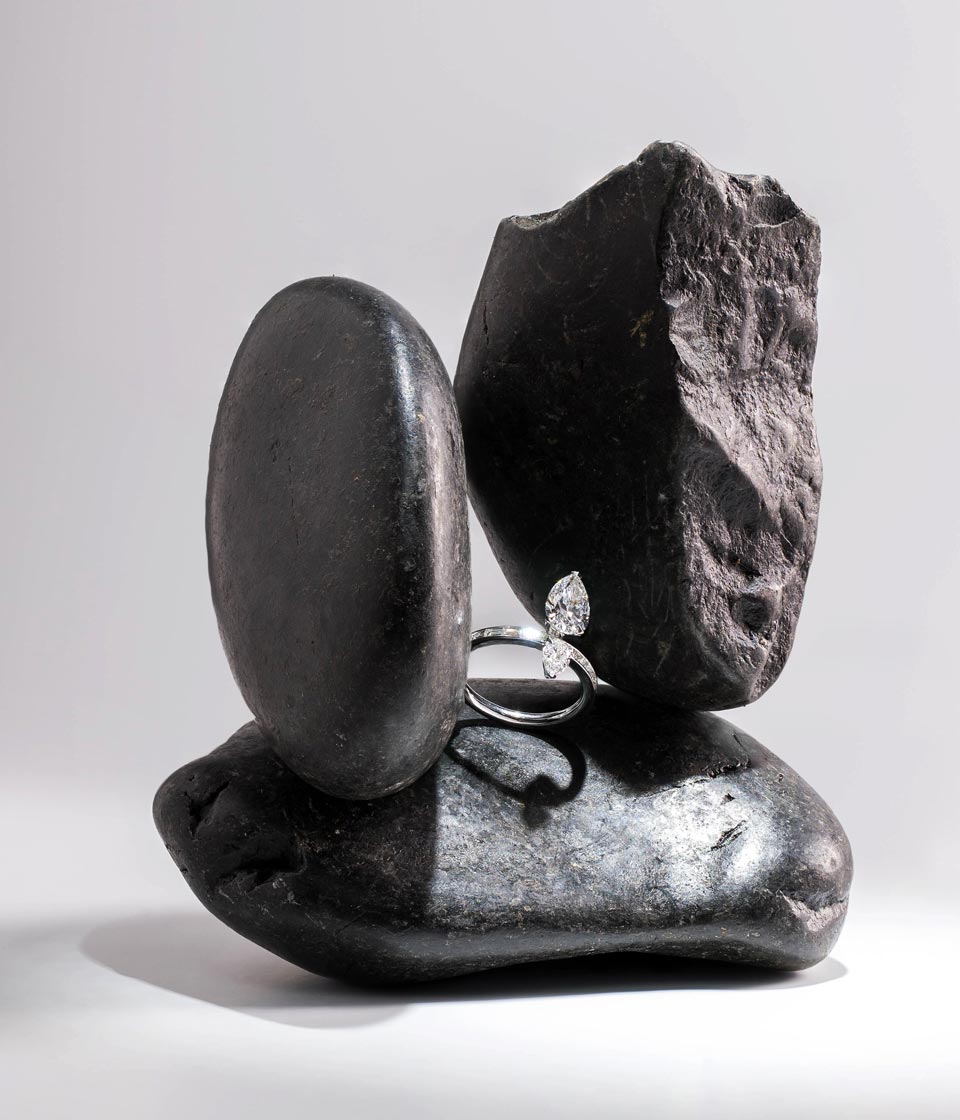
02 / Two very different carbon ledgers
Aether’s environmental proposition has two parts that deserve separate attention. One concerns the origin of the carbon in the stone. The other concerns the wider climate work supported by the business. Confuse them and a tiny jewel starts appearing to possess implausibly capacious storage.
In its 2022 funding announcement, Aether committed to removing 20 metric tonnes of CO2 for every carat sold. That was a removal pledge beyond the carbon locked in the diamond. A carat weighs 0.2 grams. The large number describes a commercial commitment; the small number describes the object.
The mass of a one-carat diamond.
CO2 removal promised per carat sold in 2022.
Its current FAQ explains carbon negativity through clean energy, offsets for remaining impacts and carbon sequestered in the gemstone. Its impact page names Clearloop as a solar-development partner. These are the company’s descriptions of its approach. A buyer should distinguish the carbon source, production emissions and additional removal when assessing the environmental proposition.
03 / The luxury premium meets the factory bill
The products were recognizably jewelry: engagement rings, wedding bands, necklaces, earrings and bracelets, with custom work for people wanting something particular. Early collection names included Commitment, Masculine and Earthly Pleasures. Evidently, saving the atmosphere still left room for enjoying oneself.
For a shopper, the practical questions remain reassuringly ordinary. Choose a cut and a setting, compare the stone’s grading report, and decide whether a custom design is worth the time. Aether’s FAQ says its diamonds receive International Gemological Institute reports. Those reports help describe the gemstone; the brand’s environmental proposition requires a separate assessment. A beautiful stone and a well-supported climate claim each need their own evidence.
The original model was direct to consumer. Selling online let Aether explain an unfamiliar carbon source without waiting for a retailer to become a chemistry tutor. Bridal buyers and customers attentive to sourcing were the natural audience. Later, the website also offered loose stones and invited wholesale inquiries.
The price occupied a delicate middle ground. Historical Engadget coverage illustrated it with an Aether solitaire around $7,000 versus $13,000-$15,000 at a luxury retailer. That was an example, not today’s price list. TIME described Aether’s stones as cheaper than mined diamonds but more expensive than other lab-grown varieties. Buyers were paying for an origin story alongside the stone.
Recognition followed: a February 2022 B Corp announcement with a 96.5 impact score, Fast Company’s consumer-goods innovation list, and TIME’s Best Inventions. The $18 million Series A, led by Helena and co-led by TRIREC, funded expansion. Applause and investment, however, do not set the market price of a competing diamond.
“The margin crunch that producers felt versus retail was real.”
Ryan Shearman, JCK, September 2024
04 / A new owner, a wider use for the chemistry
In August 2024, Grown Brilliance acquired Aether’s assets. The terms were undisclosed. Shearman subsequently said demand exceeded what Aether could make, but U.S. production faced lower-cost Indian growers. In his account, the manufacturing margin was the problem. Customer enthusiasm and factory economics had parted company.
He also discussed Loa Carbon, a new company pursuing other applications of carbon conversion, including methane products and solid carbon materials. Aether’s chemistry had possible customers beyond people shopping for rings. Meanwhile, its current custom-jewelry page names Grown Brilliance’s Truly Custom team as its partner.
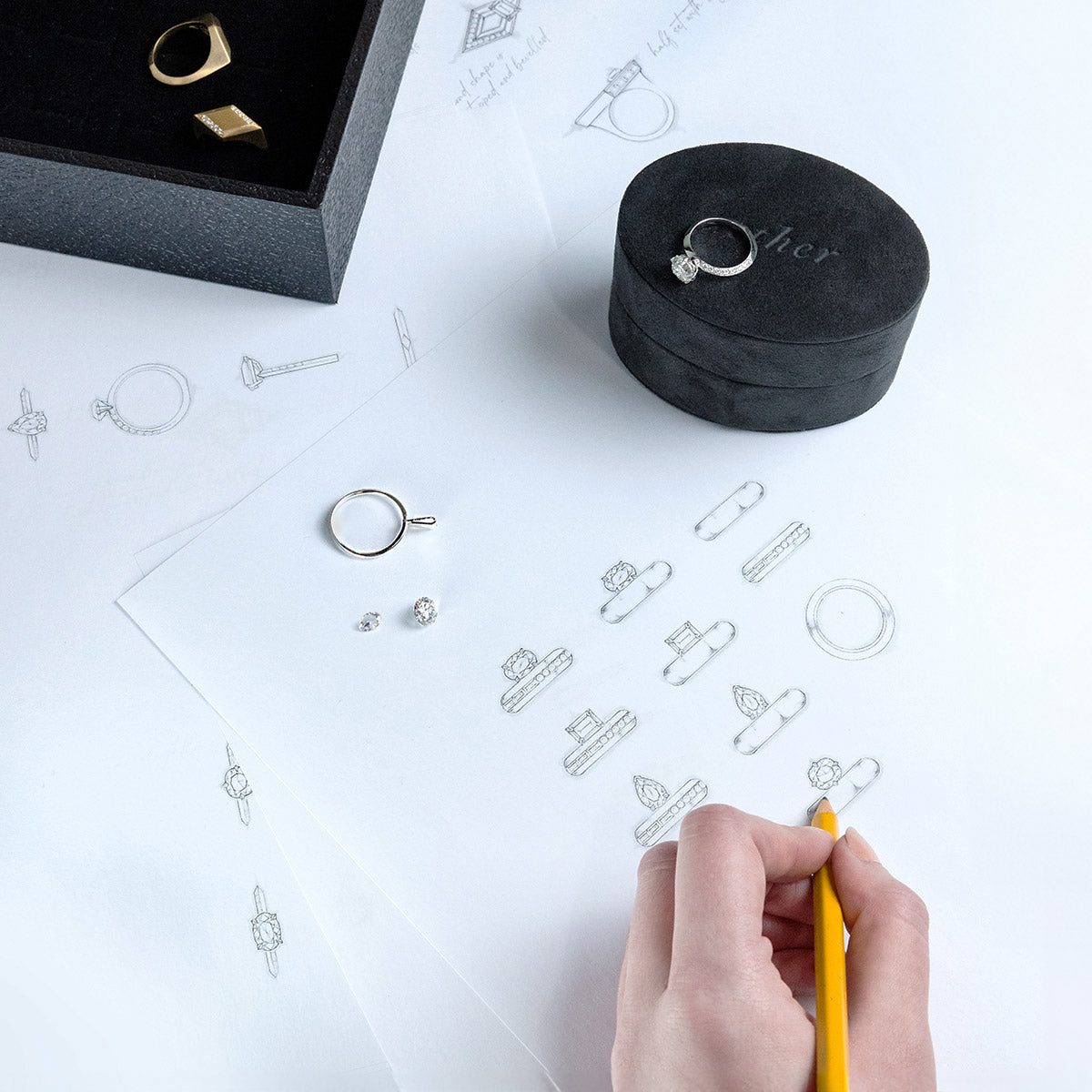
Within the market, Aether therefore occupies an interesting intersection: materials technology supplies the distinction, while jewelry design gives it a reason to be worn. A buyer seeking the lowest-priced lab-grown stone has alternatives. Someone who values atmospheric-carbon provenance has a different comparison to make. The commercial wager is that enough people will care about that distinction, even when another diamond looks equally handsome on a hand.
The useful lesson is specific. Build the missing technical step, find customers who value it, and examine the production margin separately. A provenance premium needs buyers willing to pay it and a supply chain capable of retaining it. When cheaper alternatives satisfy the same purchase, a compelling story may open the conversation without closing the sale.
Aether made the carbon’s journey visible. Its own journey made something else visible: the distance between inventing a cleaner material and building a durable business around it.