A batting cage presents a peculiar invitation: come out with your friends, then stand inside a cage without them. The pitch arrives fast. The helmet belongs to somebody else. Everyone can see you miss. Home Run Dugout began by treating those details as a business problem. Baseball already had admirers. What it lacked, its founders believed, was a comfortable place for ordinary people to take a swing together.
- Real bats and soft-toss balls meet simulated ballparks.
- Bay reservations, meals, drinks, and private events make the night out.
- After building in Katy, the company increasingly licenses its technology to existing venues.
The rainout that found a market
Nick Hermandorfer and Tyler Bambrick played softball together. When rain spoiled a game, the group sometimes ended up at Topgolf. They had gone out to play baseball’s relative and finished the evening playing golf. The attraction was obvious: teammates could compete, eat, drink, and remain teammates. A conventional batting cage separated the hitter from the party.
“A traditional batting cage is anti-social; you’re isolated from your friends.”Nick Hermandorfer / 2022
The childhood friends founded Home Run Dugout in 2015. Its own origin story locates early work in Bambrick’s grandmother’s garage in San Marcos. Later came a Dripping Springs warehouse, where the pair say they lived for six months, sleeping in hammocks and showering at a gym. That is an unusually literal version of living with your prototype.
There was patient design work beneath the romance. Product collaborator M3 Design describes testing full-scale mockups and interfaces with stakeholders. In 2019, the concept opened at Dell Diamond, home of the Round Rock Express, with backing from Nolan Ryan and Ryan Sanders Baseball. A ballpark offered an audience that already understood the pleasure being sold.
The seven-mile-per-hour invitation
The central invention is a ground-up pitching machine. A ball pops into the hitting area as a soft toss rather than hurtling toward the batter from across a cage. The company calls it a seven-mile-per-hour fastball. The joke does useful work: it tells a nervous newcomer that this game has been arranged in their favor.
A real swing sends a real ball toward the screen. Tracking captures exit velocity, launch angle, distance, and direction; the display translates the hit into a simulated ballpark. Adjustable gameplay can boost power and change fence distances. A person who remembers Little League and a person who has never held a bat can enter the same conversation.
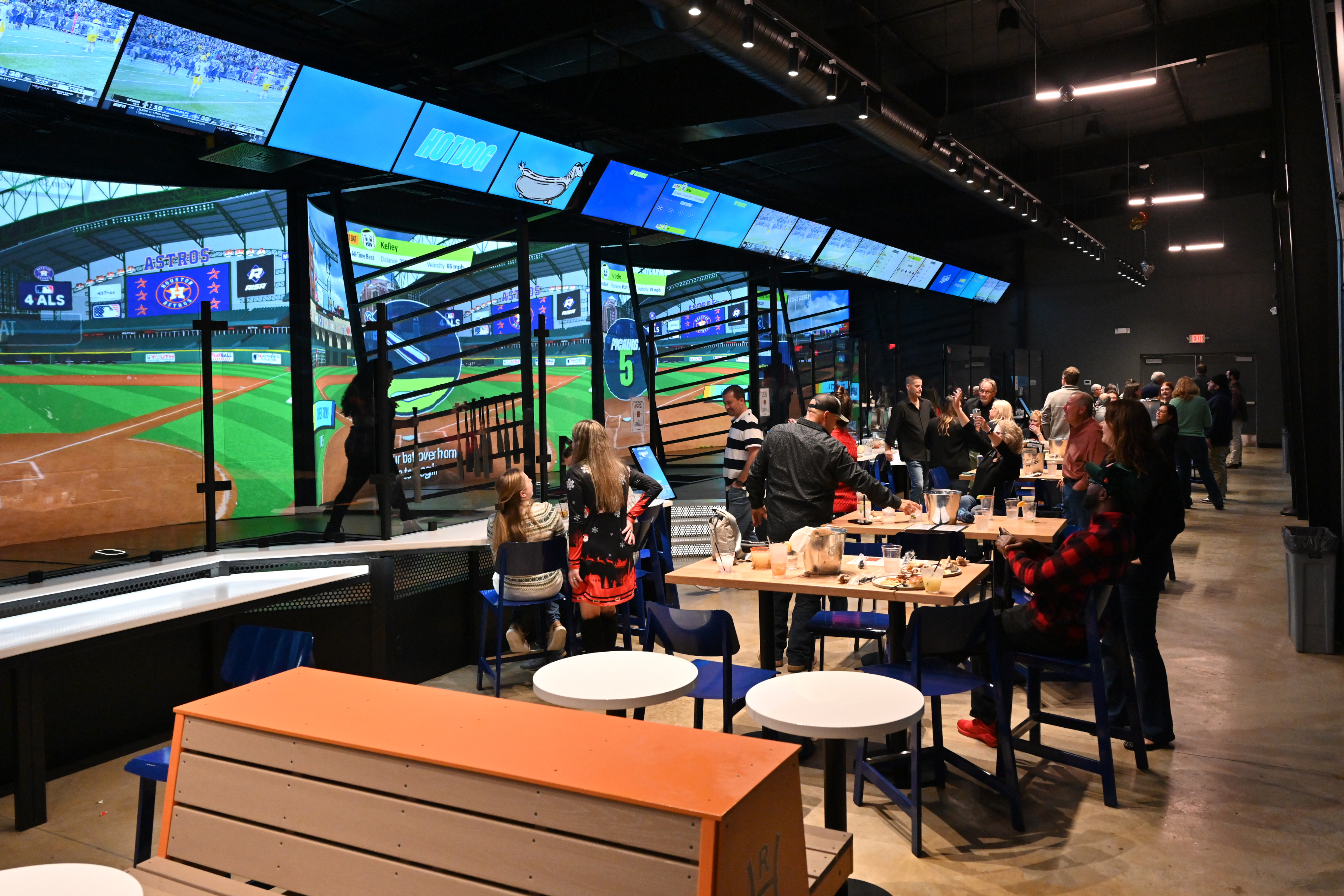
For visitors, the appeal is practical. A birthday organizer can offer competition without assuming everyone plays baseball. Colleagues can take turns without turning the outing into an athletic examination. The Katy reservation page permits twelve players in a bay, with fifteen people total. Food is separate from the batting booking. The published FAQ accommodates hitters aged six and older, with adults accompanying minors.
A restaurant with a reason to stay
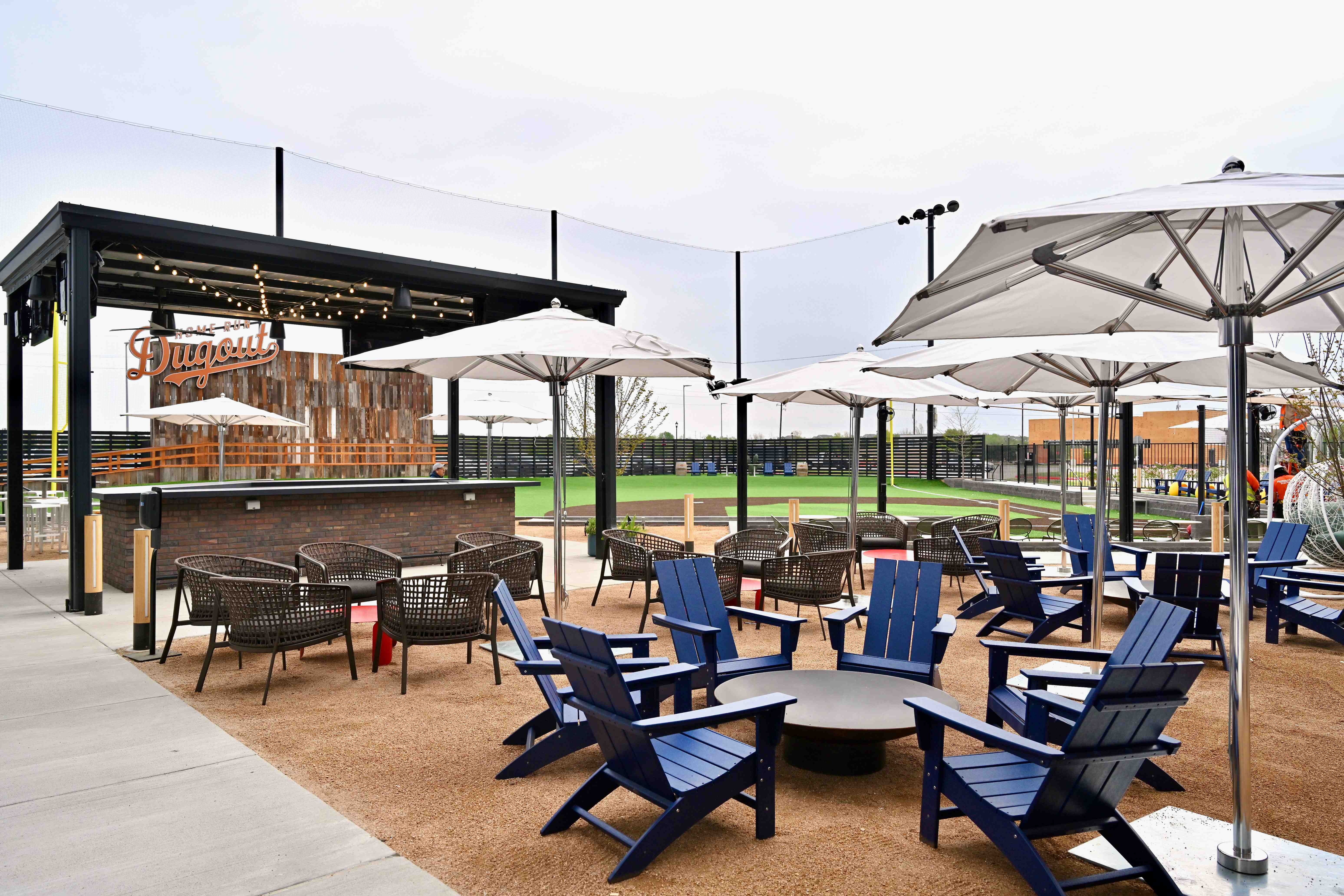
The first standalone venue opened in Katy, outside Houston, in March 2023. It extended the experiment into a full-service restaurant, bars, event spaces, and a backyard mini-field. Live music and televised sports supplied reasons to visit that survived a bad swing. A member of the group could participate by watching, ordering dinner, or joining the conversation.
HFA, the architecture collaborator, describes deliberately broadening the venue’s appeal beyond baseball. That explains the hospitality around the simulator. The surroundings allow people with different appetites for sport to choose the same destination. The machine earns attention; the room gives that attention somewhere to settle.
The business earns from timed batting sessions, food and beverages, and organized gatherings. Its alternatives include baseball-simulator venues such as Batbox, but also golf entertainment, bowling, and the ordinary sports bar. The competitive question is which place wins the group’s evening. Home Run Dugout adds a shared activity to dinner without requiring the group to arrive with shared ability.
The building became the harder pitch
Success exposed a capacity problem. In 2024, Bambrick described the need for more batting bays as a major lesson from the first year. A reported $2.7 million expansion added ten bays and event space. The current website lists twenty-two. The initial twelve-bay configuration needed revision before the concept was repeated elsewhere.
The August 2024 funding round, led by Lagniappe Capital Partners with follow-on investment from BCS Capital, accompanied plans for large venues in San Antonio and Scottsdale. The company reported more than 300,000 Katy guests since opening. Demand was one question; the expense and complexity of reproducing the destination were another.
By March 2025, executives were emphasizing smaller installations and licensing. They pointed to high construction costs and the difficulty of operating a large venue. In December, reporting described a preference for eight-to-twelve-bay installations in existing spaces. San Antonio and Atlanta had letters of intent, a stage well short of welcoming their first guests.
Let somebody else own the walls
The Texas Rangers partnership brought the technology into Globe Life Field. The company’s current portfolio also lists a Louisiana golf-entertainment venue and Oklahoma City’s Curveball Kitchen. In April 2026, Diamond Baseball Holdings and the Wichita Wind Surge announced another installation at Equity Bank Park. These arrangements put the attraction where a host already has visitors and infrastructure.
2019
2023
2025 onward
Mookie Betts joined as an investor, ambassador, and athlete advisory board chair in December 2025. Rodney Muras, previously chief technology officer, was reported as CEO. The company was recruiting baseball credibility while reconsidering how much real estate its growth required.
There is a useful lesson here for anyone designing a group experience: remove the embarrassment that keeps the least confident person from joining. For operators, a second lesson follows. Identify which part of the destination can travel. Licensing suits a host with suitable space, customers, and operational capacity; it still requires integration and service. Serious batting instruction calls for a different experience. Home Run Dugout sells the pleasure of connecting with a ball, with your friends close enough to notice.