A marketer buys an ad. A stranger taps it, downloads an app, and appears on a dashboard as an install. There is a satisfying little victory in that number. There is also a problem: the stranger may never open the app again. For a subscription business, the interesting story starts after the applause.
- Airbridge connects ad sources with web visits, app installs, in-app behavior, and subscription revenue.
- Planfit says it cut customer acquisition cost by 40% after optimizing for free-trial starts instead of installs.
- Its self-serve Core plan is listed at $40 a month for 500,000 data points after a 30-day trial; larger teams negotiate Growth pricing.
- The method works best when a team has clear events, consistent tracking, and enough conversion volume to compare campaigns.
Airbridge is the measurement product of AB180, a company founded in 2015 by Roi Nam and Hunjae Jung. It sits in the category marketers call an MMP, or mobile measurement partner. An MMP gives competing ad channels a common set of attribution rules. It records what happened after the click, including installs, trials, payments, and renewals. Airbridge adds web-to-app tracking, deep links, audience tools, fraud checks, and data exports to that ledger.
The distinction matters because an ad network is an interested witness. Its dashboard is useful for operating its campaigns, but a business advertising across Meta, Google, TikTok, Apple, and creators needs a way to compare them. Airbridge offers one view across those surfaces. It can tell a marketer which campaign receives credit under a chosen rule. That is valuable, even though attribution by itself does not prove the ad caused the purchase.
The free trial was hiding in plain sight
Planfit, an AI fitness app, offers the neatest demonstration of the problem. Its team was testing user-generated creative, messages, and audiences while trying to grow subscriptions in the United States. Installs were plentiful enough to measure; their relationship to revenue was less clear. A person could download the app, finish onboarding, reach a paywall, begin a trial, and perhaps pay. Treating the first step as the verdict made the campaign report look cleaner than the business really was.
Over three months, Planfit compared in-app events including onboarding completion, paywall entry, and free-trial start. It found that trial starts were the strongest signal of later paid conversion. The team then optimized campaigns around cost per free trial, especially on Meta, while testing creative and tracking outcomes with Airbridge. Planfit reported a 40% reduction in customer acquisition cost. This is a customer case study, so it is best read as a reported result from one company, not a promised return for every app.
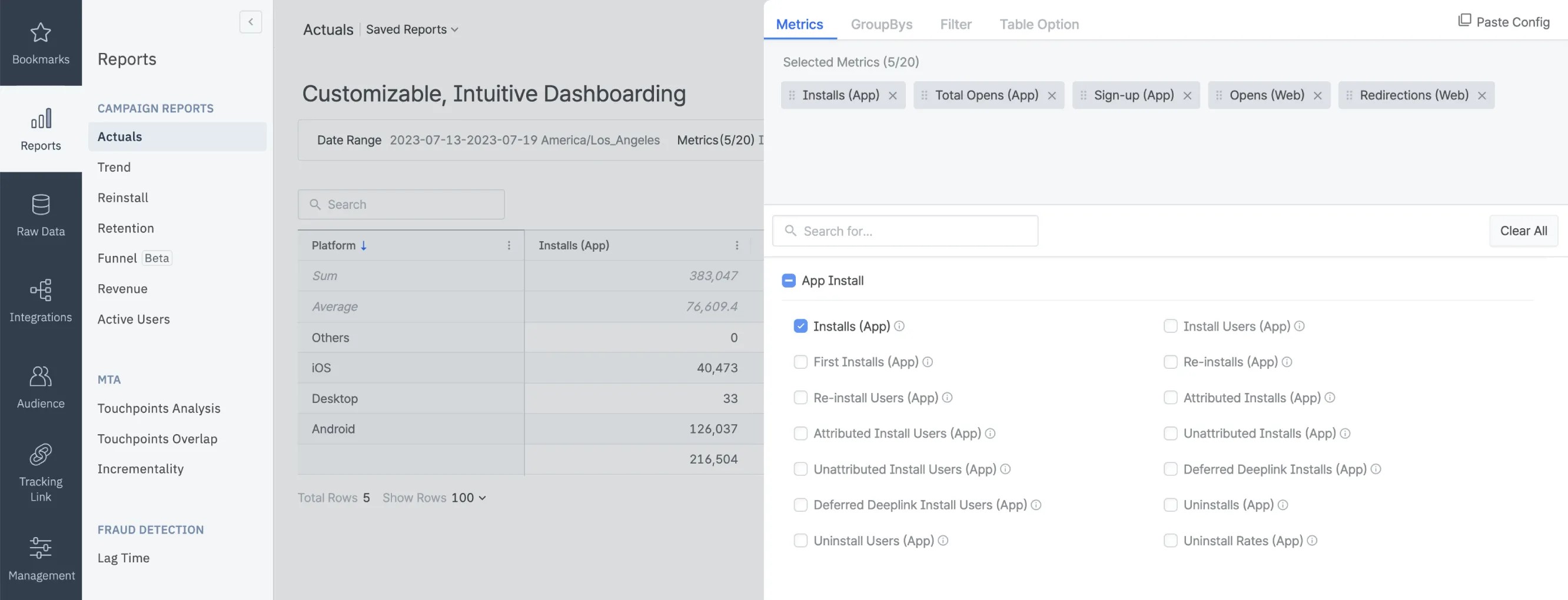
The useful part is the sequence. Planfit did not simply choose a fashionable metric. It instrumented several possible events, compared them against paid conversion, picked the one with the strongest relationship, and changed the target used to judge campaigns. It also connected Airbridge with Amplitude for behavior and RevenueCat for subscriptions, giving acquisition and product teams a shared view of the funnel. The cost of that work - staff time, creative testing, and integration - is not published. The 40% figure describes an outcome, not the price of achieving it.
“Airbridge gave us reliable attribution across the entire funnel, from ad acquisition to in-app events.”Chris Kim, marketing lead at Planfit
The bridge is in the name
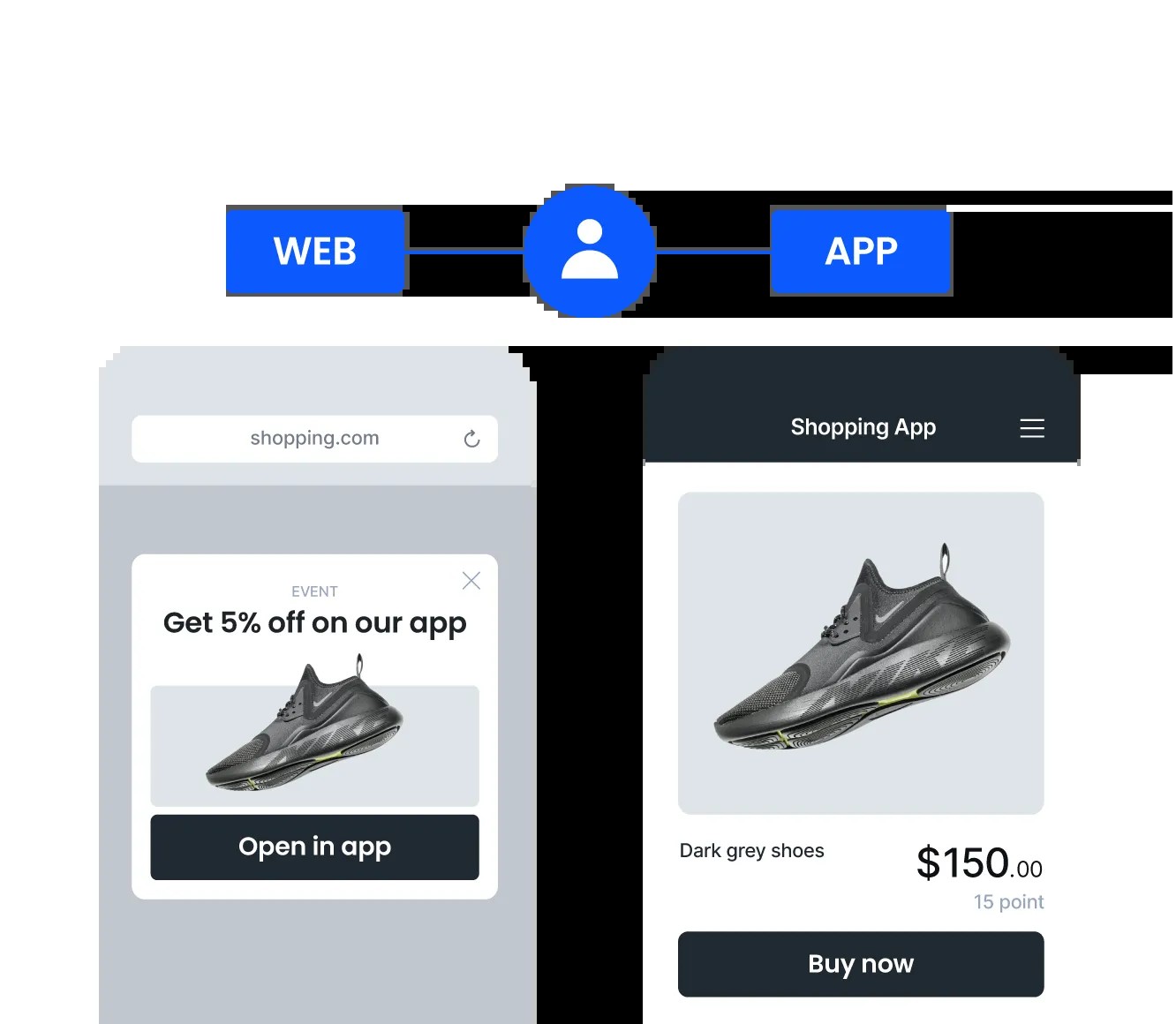
An app campaign is rarely a straight line. A person may encounter a creator on LinkedIn, click through to a website, install later, and subscribe after another reminder. Airbridge’s tracking links and deferred deep links preserve context across that journey and can direct a user to the relevant place inside an app. Its reports then put the click beside subsequent events. For teams with both a website and an app, this is more revealing than looking at either property alone.
Liner, the AI research service, used a link for each influencer and each piece of content as it moved users from web discovery to its app. The tracking showed an unexpected pattern: subscriptions were more likely after the second or third content piece than after the first. Liner responded with a sequence, introducing the product first and making a subscription offer later. Its Airbridge case study reports a 350% increase in app installs and a 155% lift in influencer-driven subscriptions. Those results belong to Liner’s campaign and timing; the reusable move is assigning each creator and content piece its own link, then watching the entire funnel.
A smaller door into an expensive category
There is a practical difference between Airbridge’s two main plans. Core is built for smaller subscription teams running ads on Meta, Google, Apple Ads, and TikTok. Its current plan page lists a 30-day trial, then $40 per month including 500,000 data points, with $0.0001 for each additional point. A data point is an event the app sends. That makes event design a budget decision as well as an analytics one. Core includes the essential attribution and subscription reports, but has narrower channel and integration support.
Growth is the broader contract: more ad networks, custom events, raw data export, fraud protection, and advanced reporting. Airbridge quotes Growth pricing based on usage rather than publishing one universal price. This gives the company a foothold at two ends of the market: a small team asking whether a few paid channels bring subscribers, and a larger team trying to reconcile a sprawl of channels, agencies, and data systems.
One distinction to keep: attribution assigns credit under rules; incrementality asks what would have happened without the ad. A clean attribution report helps a team allocate attention, but it does not replace a controlled test when the causal question matters.
The field is crowded. AppsFlyer, Adjust, Branch, and Singular all offer ways to measure or connect mobile journeys. Airbridge’s pitch is its combined web and app view, deep linking, broad integrations in Growth, and a more accessible Core entry point. That is positioning, not a claim that every competitor lacks those features. The choice still depends on a team’s channels, data access requirements, privacy obligations, and appetite for SDK work.
From answers in a dashboard to questions in plain English
Airbridge has lately moved toward a different interface for the same data. Airbridge Pilot answers questions inside the dashboard. Onboarding Pilot helps with SDK setup. Its MCP connection, currently described as beta, lets compatible AI tools query Airbridge reports. The obvious appeal is speed: a marketer can ask about campaign performance without remembering which report contains the answer. The less glamorous requirement remains the same. If the app sends the wrong event or the team chooses a poor attribution rule, a fluent answer will merely be wrong more quickly.
The parent company is widening its ambition too. AB180 launched Airflux, a separate product that adjusts the timing and frequency of in-game ads, in 2025. In July 2026 it raised a Series C round to develop more AI products and expand internationally. One investor described the shift from a business long dependent on reselling other marketing software toward one led by AB180’s own products. Airbridge remains the measurement base of that story: before an automated system can improve a campaign, it needs to know what the campaign accomplished.
For a reader who has no reason to buy an MMP, there is still a useful lesson here. Pick a result that has some connection to the business, instrument the steps before it, and test which earlier signal predicts it. Give each source a trackable identity. Compare the downstream result, not merely the easiest event to count. Then ask what the report cannot tell you. An install can be the beginning of a customer relationship. It is only a very small biography of one.