Consider the airplane with somebody else’s name on it. An Amazon delivery moves through a network whose aircraft may be leased or flown by a company the recipient has never heard of. Air Transport Services Group, based in Wilmington, Ohio, works in that gap between the brand making the promise and the machinery required to keep it.
The short flight plan
- The offer: freighter aircraft, plus optional flying and technical support.
- The buyers: delivery networks, cargo airlines and government customers.
- The catch: airplanes need capital, maintenance and paying work.
- The turn: private ownership since 2025; an agreed Omni Air sale in 2026.
The interesting question is how much of an airline a customer actually needs to own. ATSG’s answer is negotiable. Lease an aircraft. Add an operating crew. Arrange maintenance. Buy a combination. Its name for this arrangement, Lease+Plus, sounds like a minor upgrade. It describes a consequential division of labor.
01 / An airline is more than an airplane
A plane is the visible object. Behind it sit flight operations, technical records, regulatory permissions, spare parts and people who know what to do when something breaks. For a logistics company, assembling all those pieces creates a second business alongside the one it already understands: finding freight and customers.
ATSG spreads the work among specialist subsidiaries. Cargo Aircraft Management handles leasing. ABX Air and Air Transport International fly. Airborne Maintenance & Engineering Services supplies technical capabilities. LGSTX works closer to the ground, with equipment and gateway services. The customer can buy across those capabilities without assembling every supplier relationship independently.
Customers choose the combination. The bundle is configurable.
The contract vocabulary reveals the choices. ACMI means aircraft, crew, maintenance and insurance. CMI supplies crew, maintenance and insurance around an aircraft provided separately. A dry lease supplies the aircraft without that operating package. These distinctions determine which company carries which responsibilities, rather than merely changing the lettering on the fuselage.
In May 2024, ATSG agreed to operate ten additional Boeing 767 freighters provided by Amazon. The operating agreement was extended through May 2029, with further extension rights. Here was growth through operating someone else’s aircraft: an alternative to buying another plane whenever the flying business expands.
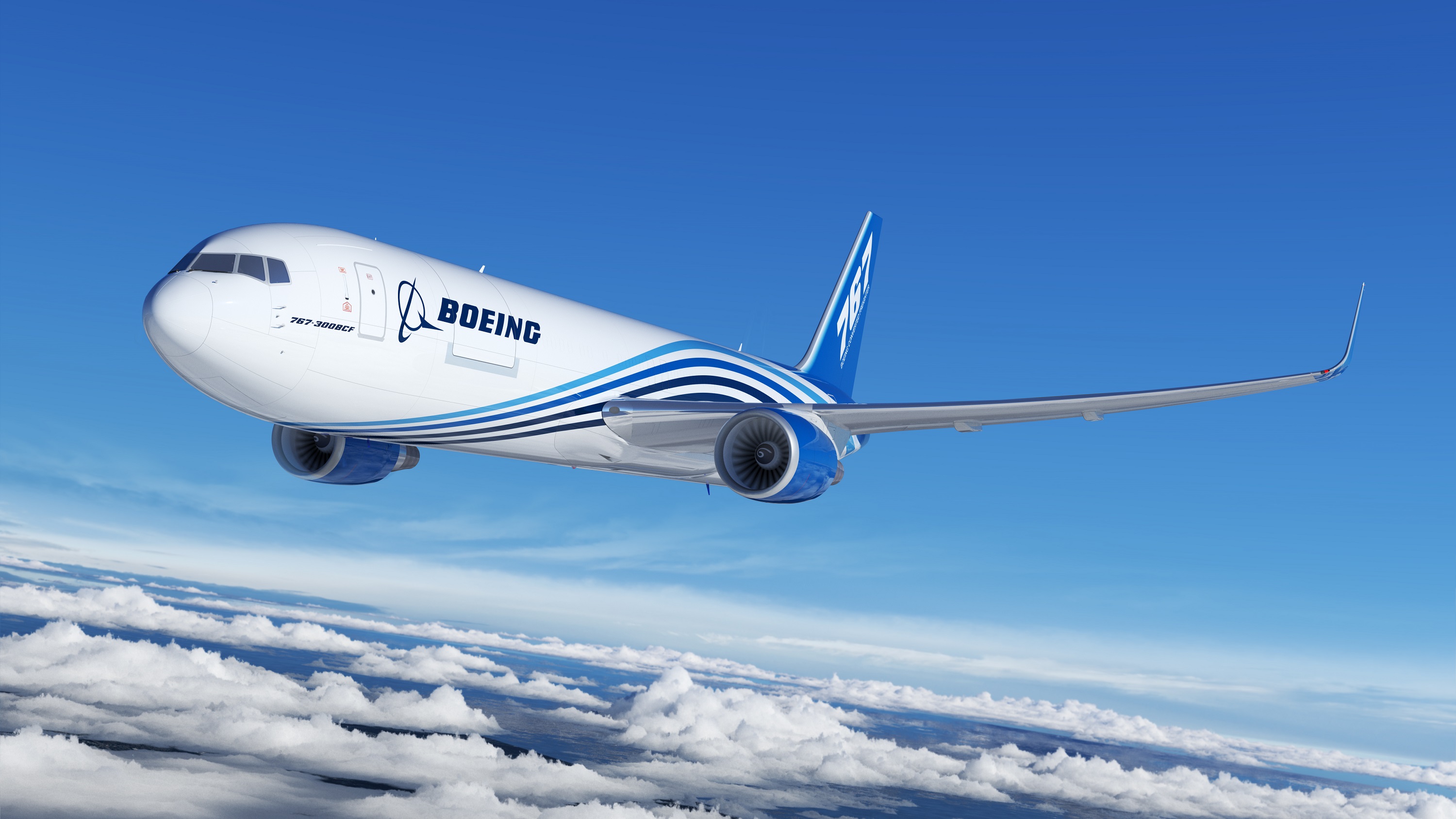
Aircraft themselves can change jobs. ATSG acquires passenger aircraft for freighter conversion, a process involving cargo doors and loading systems. Its offerings span Boeing 767s and Airbus A321s and A330s. In 2026, Air Hong Kong agreed to lease a CAM-owned A330 converted freighter, with service expected in the fourth quarter.
That is a different purchase from the September 2026 Global Aviation Link agreement. There, ABX would supply a 767-300 and ACMI services for the Miami freight specialist. A cargo airline can need the asset; a freight business can need an operation. ATSG can serve either requirement.
02 / The customer that became a warning
The company’s lineage reaches back to ABX in 1980. In 2003, DHL acquired Airborne’s business except for the airline and maintenance operations. ABX became public; the ATSG holding-company reorganization followed in 2007. Its later shape emerged through corporate separation and acquisitions, rather than a single founder’s clean-sheet invention.
Then the cost of customer dependence became painfully concrete. DHL’s U.S. restructuring began in 2008. By September 2009, ABX reported terminating approximately 8,600 employee positions since that restructuring started. The lesson was written in jobs. A supplier could possess useful aircraft and experienced people while its customer changed the network those people served.
ATSG subsequently built a broader offering and customer base. In 2010, it created Airborne Global Solutions to market combinations of group capabilities. Its Amazon relationship began in 2015 and expanded in 2016 to twenty 767 leases with operating agreements. DHL also remained a customer. Diversification meant changing the mix, rather than erasing the past.
03 / The maintenance bill comes due
The integration offers a useful business lesson: sell the supporting work that makes an expensive asset usable. Compared with hiring an airline, a lessor and a maintenance provider separately, the attraction is fewer interfaces for the customer to manage. An integrated supplier still has to make those handoffs work internally.
And there is a bill. ATSG paid $331 million in capital expenditures in 2024. Aircraft purchases and freighter modifications accounted for $218.1 million; required heavy maintenance took another $100.6 million. Those are company totals, not the price of an individual conversion. Outsourcing changes who assembles the resources. It does not make the resources free.
2024 capital spending / $331.0m total
- Aircraft + conversions
- $218.1m
- Heavy maintenance
- $100.6m
- Other equipment
- $12.3m
Cash payments for capital expenditures. Rounded figures.
Technical depth matters here. Airborne’s facilities in Wilmington and Tampa handle heavy and line maintenance, component work and engineering. Its advertised capabilities include replacing a 767’s aft pressure bulkhead. That is the less photogenic side of giving an aircraft another working life, and precisely the sort of expertise a customer cannot conjure by signing a lease.
Nor do multi-year agreements remove demand risk. In 2024, leasing revenue fell as aircraft returns offset new placements, while reduced customer flying hurt operating results. The model needs durable traffic, workable financing and aircraft that enter service on time. An underused freighter still has an owner, and somebody still receives the maintenance invoice.
04 / A private owner, a narrower destination
Stonepeak completed its acquisition in April 2025 at approximately $3.1 billion in enterprise value. Shareholders received $22.50 per share, and ATSG left Nasdaq. Greg Mays became president and CEO on January 1, 2026, succeeding Mike Berger. Private ownership changed the ownership structure; the work remained stubbornly physical.
In September 2026, ATSG agreed to sell passenger charter operator Omni Air International to OAI Holdings. Terms were undisclosed; closing was expected in late 2026 or early 2027, subject to approvals. Mays pointed to opportunities in cargo. It was a stated decision to concentrate resources, with completion still ahead.
“Service is what we sell”
ATSG’s own description of the business
The transferable idea is straightforward: understand what must happen around your product before it becomes useful, then decide which of those jobs you can reliably take on. ATSG applies that idea to aircraft. For its customers, the useful unit is cargo capacity that keeps working after the lease is signed.