An aircraft can be ready in several different ways. Ready on the balance sheet. Ready in the maintenance hangar. Ready according to a crew schedule. Getting those versions of ready to agree is much of the business of aviation. Greg Mays has spent his career moving between them, accumulating jobs that tend to attract attention at precisely the moment something stops working.
His first professional aircraft-related assignment reached considerably higher than a departure board. At Boeing, he worked as a design and test engineer on the International Space Station program. He later moved through engine maintenance, airport operations, cargo and labor relations. In January 2026, he became President and Chief Executive Officer of Air Transport Services Group, based in Wilmington, Ohio.
The route helps explain the appointment. ATSG brings together leasing, airlines, maintenance and support services. Its chief executive needs to understand what happens between those businesses. Mays has held jobs on several sides of those handoffs. His career reads like an extended tour of the places where an elegant plan meets a shift roster.
The engineer at the airport
Mays worked at Boeing from 1992 to 1998 before joining Delta Air Lines. He brought an aerospace engineering education from the University of Alabama; an MBA from Emory University later added a business qualification. The combination would serve a career that kept moving between technical responsibilities and the economics of operating an airline.
He stayed at Delta for 13 years. His assignments included enterprise planning, engine maintenance operations, below-wing operations at Atlanta’s Hartsfield-Jackson airport and global cargo operations. Below the wing is a particularly literal description of where much of an airline’s work happens. Passengers may remember the cabin. The ramp has its own complicated requirements.
That range matters more than any single title. Engine work, an airport operation and a cargo network each put a different problem in front of a manager. Taken together, they offer a practical education in the dependencies that make a flight possible. Mays’s progression crossed those boundaries before he reached Alaska Airlines.
In December 2011, Alaska announced him as managing director of airframe, engine and component maintenance, repair and overhaul. The assignment covered heavy maintenance and its oversight. The following November, the board elected him vice president of maintenance and engineering, succeeding Fred Mohr, who planned to retire in early 2013. A little more than a year separated the two announcements.
- 1992Boeing
Engineering - 1998Delta
Operations - 2011Alaska
Maintenance - 2019Sun Country
COO - 2025ATSG
President
Selected joining dates. Mays became ATSG CEO on January 1, 2026.
A different kind of maintenance
Alaska’s next assignment took him into labor relations. Announced in December 2015 and effective January 15, 2016, it made him responsible for the airline’s labor matters and collective bargaining. Technical experience was now being put to work in a job organized around agreements between people.
Ben Minicucci, then Alaska’s chief operating officer, described Mays as collaborative and people-focused. That was a consequential endorsement for this particular move. Maintenance leadership and labor leadership both depend on understanding how work gets done, but a negotiating table introduces its own demands. The people doing the work have a voice in the terms under which it happens.
In December 2016, Alaska and the Aircraft Mechanics Fraternal Association reached an agreement in principle after negotiating sessions in Bellevue, Washington. Mays participated for the company alongside Minicucci and maintenance executives. Friday’s talks began at ten in the morning and finished at about a quarter past eleven that night. The negotiators returned at nine the next morning, continuing until six in the evening. Labor relations occupies a tidy line on a résumé; the meetings behind it can take rather longer. Agreement still meant further work on the detailed language and a subsequent vote.
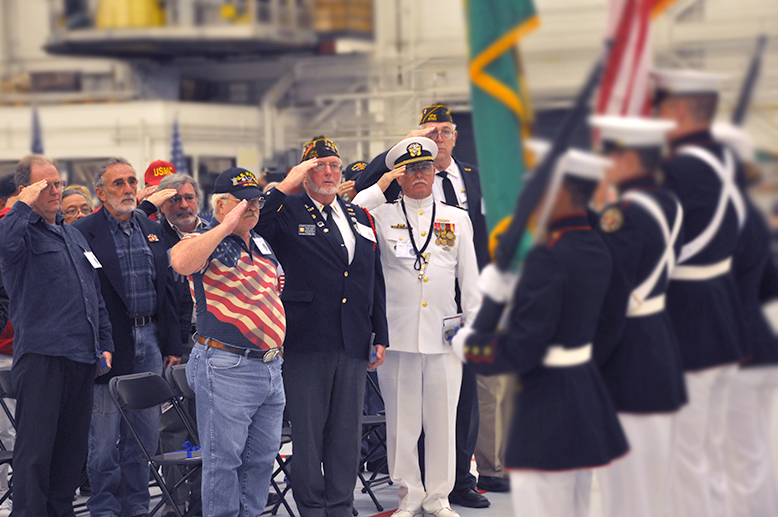
A separate moment from that period puts a face on the institutional language. In fall 2015, Alaska Air Group and USO Northwest held a welcome-home ceremony for Vietnam-era veterans at the Seattle hangar. About 40 veterans entered through cheering relatives, signs and American flags. Mays, still vice president of maintenance and engineering, helped welcome them.
“On behalf of a grateful nation, we want to officially welcome you home.”
Greg Mays, Seattle hangar ceremony, 2015
Hangars usually suggest equipment, inspection and repair. This one became a place for recognition. The event was organized by the company’s Military/Veteran Employee Resource Group. It is a small episode beside the executive appointments, but a revealing setting: the workplace serving the people who had helped make the workplace run.
Eighty-five thousand reasons to get it right
In early 2019, Mays began an advisory role with Boston Consulting Group. That June, he became Sun Country Airlines’ chief operating officer. The airline offered another setting for his accumulated experience, with scheduled passenger flying, charter work and cargo operations sitting within the same business.
His responsibilities spanned safety and security, flight operations, inflight services, ground operations, technical operations and system operations control. Sun Country completed its initial public offering in March 2021 during his tenure. For an operations executive, a growing business brings a familiar practical question: which people and processes will support the additional flying?
By November 2024, Mays was at Minneapolis-St. Paul’s Terminal 2 talking to television reporter Susan Elizabeth Littlefield about the Thanksgiving travel rush. Sun Country expected to serve 85,000 passengers over the weekend. He described growth and the effort going into the customer experience. A large passenger count makes an operating plan suddenly personal.
There were quieter public examples of the work, too. When Brian Roseen became Sun Country’s system chief pilot in January 2024, Mays thanked him for accepting the position and acknowledged Dan Reid’s return to pilot training. In January 2025, the airline and the Teamsters announced an agreement in principle covering nearly 800 flight attendants. An operating organization is full of such appointments and agreements, each with consequences beyond its announcement.
These episodes give substance to the phrase people-focused. They concern experienced pilots, working terms and passengers trying to reach a destination. They also show why an airline executive’s day can involve both a very large number and a very particular person. The schedule eventually has to accommodate both.
A company made of handoffs
ATSG appointed Mays president in September 2025, putting its commercial and operations teams under his leadership. His promotion to chief executive was announced that December and took effect on January 1. He succeeded Mike Berger, who was retiring and would remain an adviser for part of 2026.
He entered a company with a long history of assembling related capabilities. ATSG’s roots reach back to Airborne Express. Its development included aircraft leasing, airline operations and maintenance businesses, and Stonepeak acquired the group in April 2025. Mays therefore arrived after an ownership change, with another set of relationships to coordinate.
One concrete illustration came in September 2026. ABX Air, an ATSG subsidiary, entered a long-term agreement to operate a Boeing 767-300 freighter for Miami-based Global Aviation Link. ABX would supply aircraft, crew, maintenance and insurance, the package known as ACMI. Four letters cover a considerable amount of work.
ABX Air’s September 2026 agreement with Global Aviation Link brings the pieces together.
The following day, ATSG announced three new leaders. Mike Hough became group president for Airlines & Services, Tim Schulze took responsibility for risk and corporate development, and Doug Belding joined to lead enterprise performance and operating systems. Hough’s remit grouped airline and aviation services businesses under a common operating responsibility. The organization chart was beginning to express the strategy.
Then came a decision about the boundaries of the group itself. On September 28, ATSG agreed to sell passenger charter and ACMI operator Omni Air International to OAI Holdings. Mays said the transaction would let ATSG concentrate resources on air cargo and related customers. Closing was expected in late 2026 or early 2027, subject to regulatory approval. The agreement remained a next step, with work still required to complete it.
The next set of departures
For all the attention paid to aircraft, the supply of people remains part of the assignment. In July 2026, Airborne Maintenance & Engineering Services joined the SkillBridge program, offering transitioning service members experience in commercial aircraft maintenance. ATSG also pointed to a possible onward route through its AirborneTech training program.
The program connects two stages of a working life: the expertise developed in military service and the requirements of a commercial maintenance operation. For Mays, who had welcomed veterans in an Alaska hangar a decade earlier, the announcement also returns to a familiar subject. This time the welcome includes a possible route into the workforce.
Earlier that year, Mays addressed students at the Alpha Eta Rho Collegiate Aviation Symposium at Ohio State. His keynote concerned resilient careers in the global aviation market. The audience could have followed several lines through his own working life: engineering into operations, maintenance into labor relations, passenger airlines into a cargo-focused group.
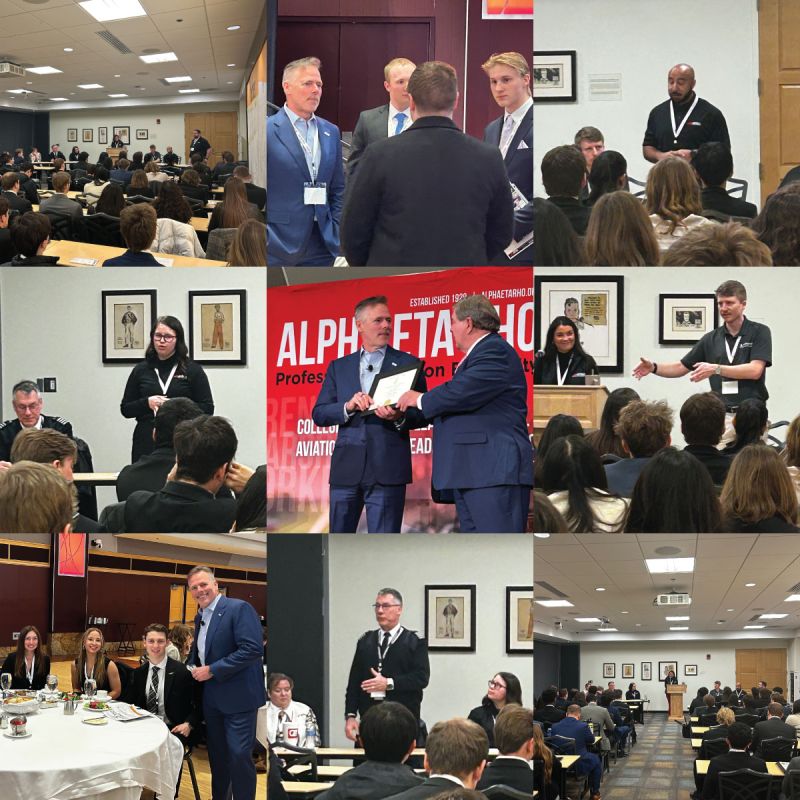
His personal advice has a pleasantly untechnical detail. He writes annual goals down on paper and reviews them. For someone whose early career included a space-station program, it is an economical piece of equipment. It also leaves room for revision. An annual page can be replaced without pretending the previous year never happened.
That is a useful way to approach the ATSG chapter. The appointments, operating agreements and proposed sale are visible decisions; their results will take longer to judge. Mays brings experience across the work that precedes a departure. Now he has responsibility for deciding how much of that work the company should do, how its teams should fit together, and where the next departure should lead.