In 2015, Evan Millan moved to Indianapolis to work in Republic Airways’ operations center. He went through crew scheduling and dispatch, jobs that put him close to flying without putting him at the controls. Then his employer opened a flight school. Millan joined its first class in 2018. By the time LIFT Academy interviewed him for a later company profile, he was a Republic captain. An internal career move had become a change of altitude.
That journey explains something a fleet photograph cannot. An airline needs a dependable way to turn interested people into qualified professionals. Republic had learned what happens when that supply falls short.
- Republic operates regional flights for American, Delta and United.
- A pilot shortage helped push it into Chapter 11 in 2016.
- Its response now spans flight school, experience-building and airline training.
Three brands. One operator.
Look closely at a booking confirmation. American Eagle, Delta Connection or United Express may be the name you recognize. Republic may be the company operating the aircraft. The major airline sells the journey; the regional airline supplies a piece of it. For a passenger connecting through a hub, this division of labor is usually background information. For Republic, it is the business.
Under capacity purchase agreements, partners pay for aircraft availability and flying. They set schedules and fares, retain ticket revenue and procure substantially all the fuel. Republic provides crews and the operation. It therefore spends less time guessing tomorrow’s ticket price and more time ensuring tomorrow’s aircraft can leave. Contractual payments offer protection from some familiar airline risks, while performance requirements create their own discipline.
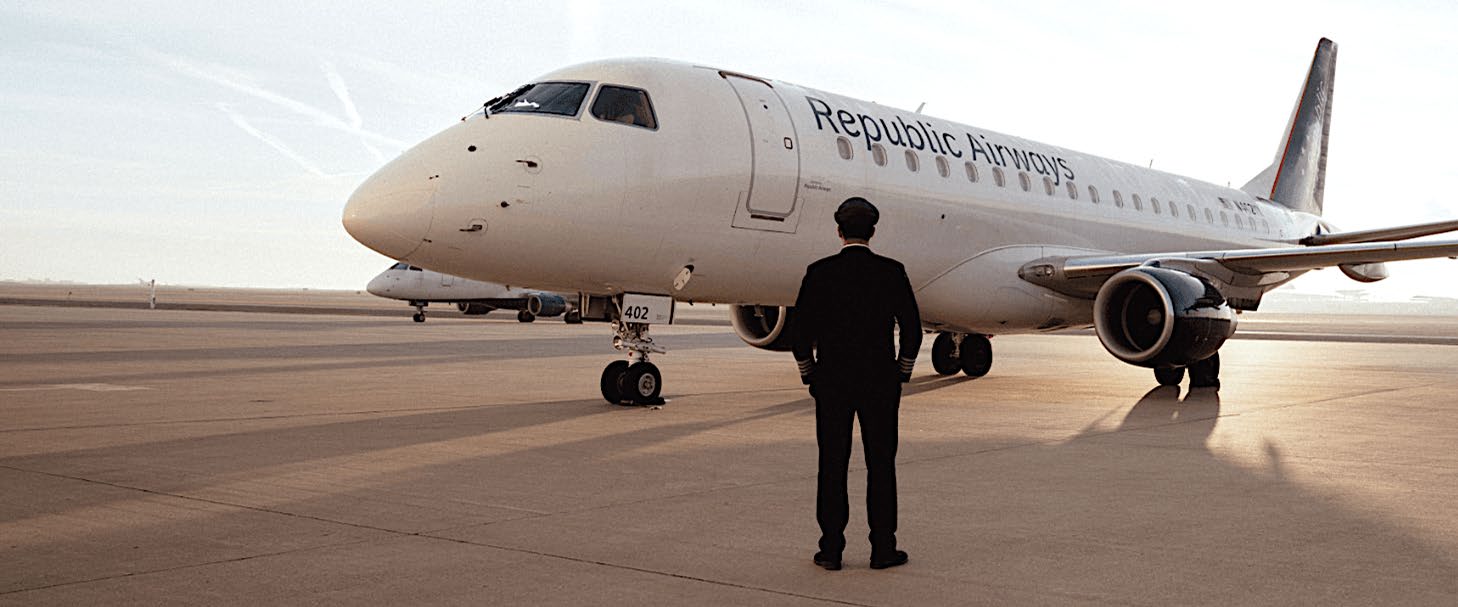
The shortage reached the balance sheet
In February 2016, Republic filed for bankruptcy protection. It did not have enough pilots to fulfill contracted flying for its major-airline partners. Aircraft that could not be staffed could not produce the expected revenue. A shortage in one profession had become a problem for the entire enterprise.
The recovery involved subtraction. Republic renegotiated airline contracts, reduced its fleet and shed smaller 50-seat aircraft. It emerged from Chapter 11 in April 2017 as a private company. Better pilot pay and relationships with aviation schools were also part of the effort. This was a collection of operating changes, rather than evidence that a school alone could rescue an airline.
“Getting out of bankruptcy was critical to our success in being able to retain and attract employees.”
Matt Koscal, speaking in 2017
The comment captures an awkward feedback loop. An airline needs people to improve its prospects. Those people want confidence in the airline before accepting its offer. Republic had to repair both the operation and the proposition it made to recruits.
A school with somewhere to go
LIFT opened in September 2018. Its name expands to Leadership In Flight Training. The idea was specific: teach people to fly with an identifiable airline destination ahead of them. For Millan, already familiar with Republic from the ground, that made the leap into training imaginable.
The timing is revealing. The first eight LIFT pilots were scheduled to start at Republic in June 2021, roughly two and a half years after the school opened. By September 2025, LIFT reported that more than 200 graduates had reached Republic. It also reported 88 graduates at Cape Air, gaining experience on another route toward the airline. A training pipeline has several stages, and finishing school does not fill a captain’s seat overnight.
LIFT provides flight training with a defined pathway toward Republic. Students must complete the required training and certifications.
For aspiring pilots, the appeal is a more legible route through a complicated profession. It also deserves careful reading: Republic’s annual report describes commitments for LIFT graduates to work at the airline for at least five years, or at least two years as captain. A defined pathway brings obligations as well as direction.
The classroom has a hotel next door
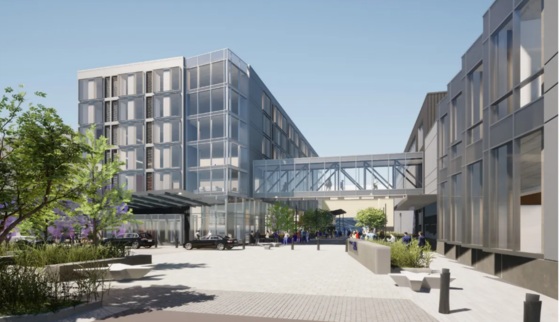
Then comes the infrastructure. Carmel’s description of the Hamilton Crossing development put the first two phases at a $200 million investment, including headquarters, training facilities, lodging and a garage. That is a development budget, not a disclosed price tag for LIFT. The campus brings instruction and accommodations together; Republic’s annual report says the headquarters phase was completed in January 2026.
The training equipment includes eight full-flight simulators. Republic also brings flight and cabin crews together for evacuation exercises, so each can understand the other’s role. Its published BEST principles emphasize stewardship, action, excellence and care for colleagues. Joint practice gives those words a concrete workplace setting.
The software behind the departure
Republic’s less visible tools include CrewPay, a cloud-based pay system, and YXBlue, its flight, maintenance and crew applications project. TechPoint named it the 2025 Mira Tech Company of the Year among employers with more than 500 employees. The award’s explanation pointed to better flight planning and reduced fuel loading. These are practical advantages in a business where a maintenance decision and a crew assignment must fit the same departure.

Bigger takes longer than a signature
Republic completed its Mesa combination in November 2025, returning to Nasdaq as RJET. Legacy Republic shareholders received approximately 88% of the combined company. Mesa brought additional United flying under a new ten-year agreement. In July 2026, however, Republic still expected another 18-24 months of integration. Corporate ownership had changed faster than operating certificates could be consolidated.
Group fleet ownership and contracted flight operations are different counts.
Against SkyWest and major-airline-owned regionals, Republic competes on available people, aircraft, economics and execution. Its approach offers a useful lesson for other employers: identify the qualification that limits growth, then connect training to actual work. It requires patient capital and credible demand. If experienced people leave faster than replacements develop, classrooms cannot make the arithmetic disappear. Republic’s challenge remains wonderfully concrete: get the right people into the right seats, ready for the next departure.
Follow the flight plan
Explore the airline, training pathways and the latest company reporting.