Consider a paper bottle. It sounds like a small victory over plastic, the sort of invention whose usefulness ought to explain itself. Yet a bottle must survive filling lines, delivery trucks and somebody’s shower. It needs buyers who will order it again. In January 2021, Jabil acquired Ecologic Brands, an AiiM Partners portfolio company. Two months later came a $25 million expansion announcement. The invention had opened the door. Machinery and manufacturing capacity would determine how far it could travel.
- AiiM backs technologies moving into commercial use.
- Its portfolio tackles resource waste in physical industries and their data.
- Capital comes with board involvement and help building the business.
That awkward distance between something working and something becoming a business is AiiM’s territory. The Palo Alto venture firm looks for companies with evidence that the technology works and customers might buy it at meaningful scale. Its proposition is practical: find an industrial inefficiency, understand the economics of removing it, then help a company sell the solution.
01 / The bottle needs a factory
Ecologic makes the proposition unusually tangible. Its packaging combines a molded fiber shell with a lightweight liner. Paper supplies structure; the liner contains the product. That detail matters. A reduced-plastic bottle still has to do a bottle’s job. Ecologic’s own account of its development describes repeated prototyping and a hybrid design that could move into production.
At the acquisition, Jabil named L’Oréal and Seventh Generation among brands using Ecologic’s bottles. These were companies with products to ship, packaging requirements and existing supply chains. For a manufacturer, environmental appeal has to coexist with dependable delivery. The customer is buying a container that works inside a much larger operation.
Jabil’s announced 2021 investment in Ecologic capacity in California and Spain.
Manufacturing expansion, not AiiM’s investment cheque.Jabil’s expansion covered equipment, automation and facilities in California and Spain. The strategic buyer brought manufacturing reach to a technology with commercial customers. That is a concrete answer to the question of what scaling costs: in this case, a separate, substantial commitment after acquisition. The attractive object on the shelf was only one piece of the business.
02 / An investor changes the question

Founder Shally Shanker previously directed mission investing at the Schmidt Family Foundation. A March 2018 introduction from BMNT described her departure to establish AiiM around climate and human development. Her background helps explain the emphasis on making an investment case: she came from managing capital, with its obligations to assess risk and produce results.
In a Heading for Change interview, Shanker described choosing climate and gender strategies when they attracted less mainstream investor attention. She also acknowledged the difficulty of establishing credibility while launching a firm in a field increasingly occupied by large institutions. The opportunity she identified was the “missing middle”: companies with early revenue and the potential for large contracts.
AiiM serves two constituencies. Fund investors supply capital; portfolio companies receive investment and assistance. Heading for Change is one disclosed fund investor. Its AiiM profile lists a Fund II target of $150 million, with a $250 million maximum. Those figures describe ambition. A historical SEC filing records a different fact: $3 million sold by January 2019 in an AiiM fund offering.
There is an expertise question underneath the fundraising numbers. Heading for Change describes a team drawn from investing, entrepreneurship, science and operations. Those perspectives have different jobs: interrogate the technical claim, understand the customer’s requirements and decide what capital the company needs next. For entrepreneurs, that combination is worth testing in conversation. Ask who will work on the problem after the financing closes, what they have built before and which commercial decisions they can help you make.
03 / The second product is help
AiiM’s current investment approach spans digital transformation, energy and power, and supply chains and logistics. It leads or co-leads financings, takes board seats and connects companies with operators, customers and strategic partners. The service accompanying the equity is help getting a business through the next commercial obstacle. A research-stage invention without technical proof would sit outside that stated focus.
SupplyShift shows why those obstacles need not involve a factory. By its January 2024 acquisition by Sphera, the software company had assembled a network of more than 100,000 suppliers. Buyers could map suppliers, assess them and collect information across supply-chain tiers. Global retailers and Fortune 500 brands used its portal. Here, the valuable infrastructure was a network that made a complicated purchasing system more visible.
For a founder choosing between investors, the useful comparison is therefore specific. Who understands the buyer? Who can help a production or procurement decision happen? AiiM competes for opportunities within the broader venture and growth-capital market. Its argument rests on sector knowledge and participation in the business. Whether that help fits depends on the company’s actual bottleneck.
04 / Put the promise on a scorecard
There is another practical detail in AiiM’s model. BlueMark’s September 2024 assessment documented company-specific value-creation plans, five portfolio impact indicators and a mechanism linking carried interest to impact. It also identified improvements since 2022 in written procedures and responsibilities. Good intentions had acquired administrative machinery.
Who buys it, and what has to happen before it reaches them?
The commercial question running through the portfolio
The assessment recommended clearer expectations as companies mature and independent studies of community outcomes. Its scope was impact management processes, using evidence through January 2024. That makes AiiM’s Practice Leaderboard listing useful evidence about discipline. It does not establish top-quartile financial returns. An investor still has to examine those separately.
05 / From equipment to an order
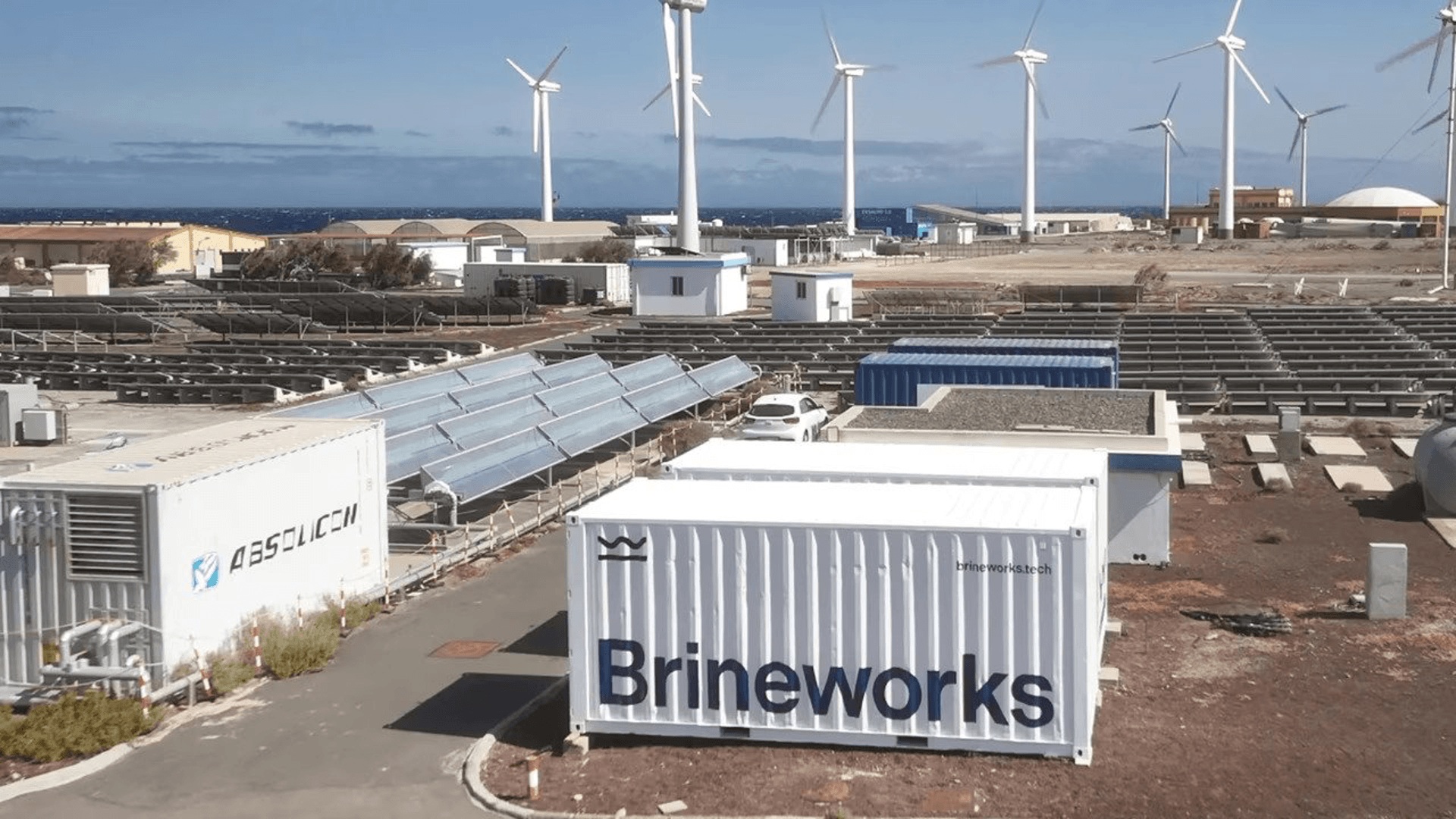
More recent portfolio activity supplies another test. Brineworks, whose 2025 seed financing included AiiM, develops an electrolyzer for carbon capture that can also produce hydrogen. In 2026 it reported an Amsterdam demonstration plant and a 500-ton carbon-removal pre-purchase through Milkywire, backed by Salesforce. Its current technology page targets capture below $200 a ton by 2030. That remains a target, dependent on engineering and cheap renewable power.
The lesson a reader can borrow is modest and useful: identify the next obstacle to adoption before deciding what support to seek. Sometimes it is manufacturing equipment. Sometimes it is supplier information or a first committed buyer. AiiM’s portfolio makes that work visible. The next order is where the investment thesis meets its examination.