At Peninsula Regional Medical Center in Maryland, an infusion pump could be missing without having left the building. Staff needed a pump. The inventory said one existed. The practical answer was to hunt the corridors or buy another. After the hospital attached AeroScout Wi-Fi tags to its pumps, it reported avoiding $250,000 in additional pump purchases in the first year. The machines had not become cheaper. They had become findable.
- AeroScout paired battery-powered Wi-Fi tags with MobileView software to locate equipment and people inside large facilities.
- Its first idea was Bluetooth. The business turned toward enterprise Wi-Fi, where customers already had a network.
- Hospitals used it for pumps, monitors, patient flow and temperature alerts; factories and logistics sites used it for moving assets.
- Stanley Healthcare bought AeroScout in 2012 for about $238.8 million. The RTLS brand now sits inside Securitas Healthcare.
The hospital's experience exposes a category of waste that spreadsheets handle badly. A pump in a storeroom and a pump no one can locate look identical in an asset register. To a nurse standing beside a patient, they are opposites. AeroScout's business lived in that gap between ownership and availability.
The first thing to fail was the first idea
The company began in 1999 as BlueSoft, with a Bluetooth focus. A few years later it changed direction and eventually its name. The new proposition was active RFID tags that could announce themselves over standard Wi-Fi. Founder and chief executive Yuval Bar-Gil had traded a technology story for an operational one: instead of asking customers to admire a new radio, ask them what they waste time looking for.
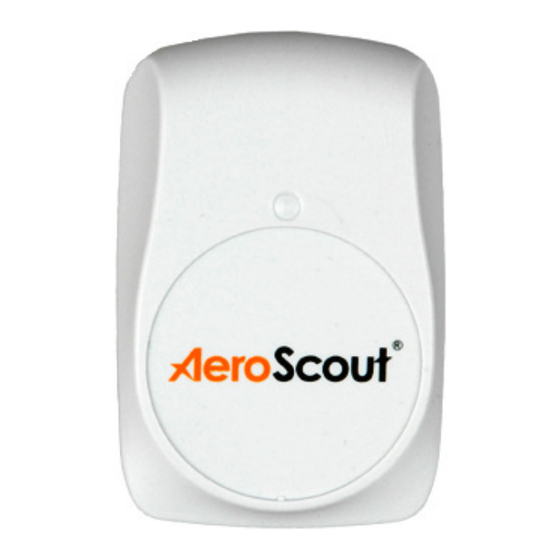
AeroScout did not invent Wi-Fi or hospital inventory. Its contribution was a practical combination. Attach a battery-powered tag to a movable thing; let wireless access points hear it; calculate where it is; show the result in software a staff member can use. The T2 tag's beaconing method sent messages without joining the network as an ordinary client, which helped keep network impact modest. Some later tags and installations added motion sensing, call buttons, temperature sensing or chokepoint detection. The company sold location as a working system, not a dot on a map.
That last step matters. A coordinate is a poor substitute for an answer such as “the clean pump is in the ICU.” MobileView gave customers maps, alerts and reporting. In today's Securitas Healthcare offering, the platform also supports asset management, environmental monitoring, patient flow and staff workflow. A hospital can use the same location layer for a search, an out-of-range refrigerator alert or a view of how patients move through a department.
The pump was only the opening act
At York Hospital in Pennsylvania, AeroScout's system tracked gurneys, infusion and feeding pumps, portable monitors and other mobile devices. The hospital had already put a Cisco wireless network in place for data and voice. That made Wi-Fi tracking appealing: it could use infrastructure the hospital owned. Chad Noll, then a biomedical engineering manager, said the system let staff find critical equipment quickly, especially when the emergency department was busy. His point was not that every search was dramatic. It was that the searches kept happening.
“We no longer have to manually search the entire facility multiple times a day to track down items.”Chad Noll, WellSpan York Hospital
Peninsula Regional pushed the idea further. Its case study says tagged equipment entering the laundry area could trigger an alarm, rescuing items such as telemetry monitors before they disappeared with the linens. It estimated nearly $36,000 a year in savings on those monitors. It also monitored 67 medication refrigerators, two medication freezers and three other temperature locations. Replacing manual checks with wireless readings saved an estimated 1,700 staff hours a year, according to the hospital's account. Those are customer-reported results, not a universal promise; they do show how a locating platform can become an operations platform.
Other settings produced other searches. Cisco's 2007 manufacturing package combined its wireless controllers, access points and location appliance with AeroScout tags and MobileView. The targets were aerospace parts, automotive tools, semiconductor production and mining equipment. A UK parcel carrier deployed thousands of tags on roll cages. AeroScout had found a market wherever valuable things moved, Wi-Fi covered the site and the price of uncertainty exceeded the price of tagging.
The clever part was already in the ceiling
AeroScout competed with other real-time location systems, including Ekahau, Radianse, RadarFind and Awarepoint. The choice was rarely about a single tag in isolation. A buyer had to weigh coverage, precision, installation effort, integration and the work staff would actually change. AeroScout's advantage was easiest to explain when a customer already had compatible enterprise Wi-Fi: the network could do double duty. Its Cisco relationship helped turn that argument into a packaged manufacturing solution and opened doors in healthcare.
Existing Wi-Fi was not magic. Access point placement affects location accuracy; a building designed merely to connect laptops may need more careful surveying for locating assets. Tags need batteries and maintenance. Asset names must match what people call things. Peninsula Regional's biomedical director Mark Cornelius found that nurses and engineers did not always use the same name for an infusion pump. A search box is impressive only when its vocabulary matches the ward.
That is the part a reader can copy without buying an RTLS system. First, count the recurring searches: what do staff borrow, misplace, rent unnecessarily or check by hand? Then choose a narrow test with a measurable cost, such as pump rentals or refrigerator logs. Map the existing network and the people who will act on alerts. Decide what “found” means in practice. A dot that is accurate within several metres may be ample for a factory bay and inadequate for a particular hospital room. Train the people who use the equipment before calling the deployment complete.
A good exit, and a second life
The business found backers as the market grew. A $21 million Series C in 2007 was led by Menlo Ventures; AeroScout raised another $16 million in 2010, led by Evergreen Venture Partners. By the time Stanley Healthcare acquired it in 2012, contemporary reporting put its customer count near 800, including about 500 hospitals. Stanley's annual report recorded a purchase price of approximately $238.8 million, net of cash acquired. That was the price of an established customer base, hardware, software and know-how, not merely a bag of tags.
In 2022, Securitas acquired Stanley Security and Healthcare. The healthcare business took the Securitas Healthcare name in 2023, and AeroScout RTLS remains a named platform in its catalog. The product is still described around the same elementary problem: where are the assets, people and conditions that matter? AeroScout's enduring insight is almost embarrassingly plain. Before buying more of something, learn where the first one went.