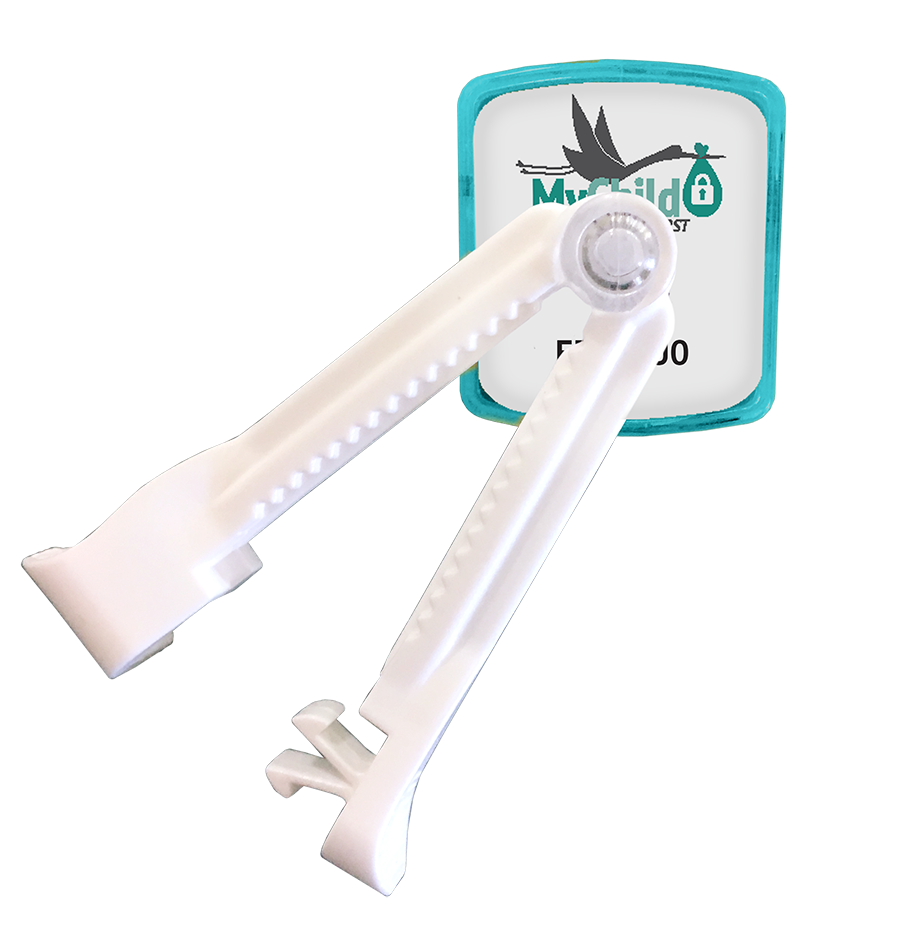
Consider an umbilical cord clamp. It is a small object with a fairly urgent first job. At McRoberts Technologies, it can have a second: carrying an identification number that matches the bands worn by a newborn and mother. The clamp becomes part of a system for answering a question nobody wants a hospital to get wrong. Which baby belongs with which family?
- McRoberts sells safety hardware and software to hospitals, hotels and cruise operators.
- Its products connect a person’s location with an alert, an access decision or a record.
- The technology business began in 1992, following a family security business founded in 1876.
- Its useful lesson: design around the handoff where somebody loses track.
A clamp with a second job
There is something pleasingly unfashionable about engraving a number onto a piece of plastic. Nobody needs to charge it. Yet it belongs in the same catalog as radio tags and browser software. McRoberts works across that boundary, where a physical object becomes useful information and information becomes a safety procedure.
The family’s first security problem involved cargo. William J. McRoberts, a coffee inspector working on Brooklyn’s waterfront, founded McRoberts Protective Agency in 1876 to serve cargo owners and carriers. In 1992, the agency established a separate technology company. The guard assets were sold in 2016, when the technology business was spun off. Its history page identifies CEO Meredith McRoberts as its sole owner.
Those dates matter. Calling McRoberts Technologies a software company founded in 1876 makes a splendid sentence and a poor description. The family history supplies continuity; the current business supplies locating systems, software and services. Its customers buy a working installation, rather than an ancestral anecdote.

The ordinary exception
A protected hospital unit still has to function as a hospital. Patients leave for treatment. Staff transfer them between units. A product that regards every departure as suspicious has misunderstood the assignment.
MyChild’s clinical help guide makes the exception explicit. A user selects a departure and destination unit and starts a timed bypass. The patient’s status changes. An approaching deadline produces a warning; an expired timer produces an alarm. Completing the bypass acknowledges arrival and restores active status. This is the sort of feature that rarely wins a glamorous product photograph. It deserves one.
The practical distinction is permission. An authorized journey has an expected destination and a time window. An unexpected journey demands attention. By making the routine move legible, the software gives staff a way to keep doing their jobs without treating the protection system as an obstacle.
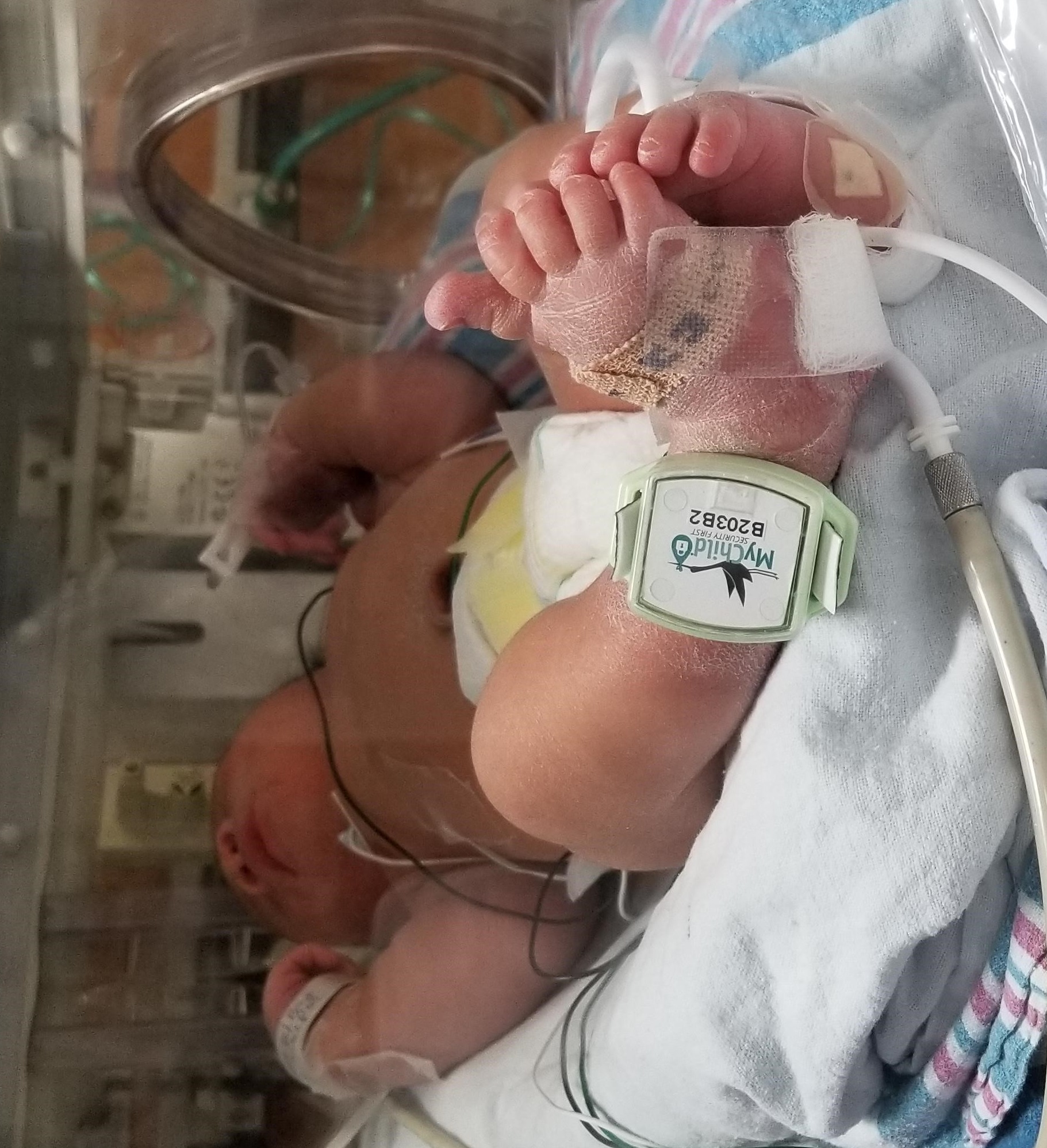
MyChild connects patient tags to receivers and monitoring software, with optional door and elevator controls. McRoberts reports that the system serves roughly half a million infants and pediatric patients each year. That is the company’s stated coverage, rather than a measured reduction in incidents.
“The graphical user interface is so easy to use and intuitive.”Ruth Purchase, RN, an early MyChild6 user in Missouri, quoted in the company’s announcement
The browser-based MyChild6 interface also moves monitoring beyond a dedicated console. McRoberts offers local and cloud hosting. For a buyer, this makes the conversation concrete: who needs access, from which devices, and under whose IT arrangements?
Help needs an address
A hotel employee or nurse pressing a panic button is asking somebody else to act. The recipient needs to know where to go. StaffWatch puts the employee’s location on a floorplan and provides a wearable call for help. UrgenTag-Ultra adds an ultrasound option for finer location granularity.
The details reveal the intended conditions of use. StaffWatch’s button is recessed and can be found by touch; its lanyard is designed to break away. On-demand locating can be enabled or disabled. These are decisions about a person working in a building, potentially under stress, rather than a dot moving beautifully across a demonstration screen.
- 01TagA person calls for help
- 02ReceiverThe signal is relayed
- 03SoftwareLocation gives context
- 04ResponderA person takes action
Illustrative sequence. Coverage, configuration and the response procedure determine the installation’s usefulness.
Other applications adapt the same broad approach. WanderWatch handles vulnerable patients approaching exits, with a supervised configuration adding tag monitoring. AssetWatch locates equipment and records movement-based utilization information, maintenance needs and lease reminders. A stationary asset can prompt investigation; movement alone cannot prove that a machine was providing care.
McRoberts sits in a market with established alternatives. Securitas Healthcare’s Hugs and RF Technologies’ Safe Place also offer infant protection using tags and monitored exits. McRoberts’ pitch emphasizes plug-in receivers, hosting choices and its tag service. A purchasing team should compare those particulars in its own building.
The boat between the boats
Cruise operations supply a particularly awkward version of the location problem. Knowing a passenger boarded a ship says little about which tender they took or where they are during an excursion. Every change of vehicle introduces another opportunity for the record to fall behind the person.
McRoberts says a major security incident in 2015, when a cruise line lacked exact information about excursion passengers’ locations, prompted PaxTrak. Its PaxTrak-C application records passengers at transition points, including tender boarding. The company says it developed and implemented that application in 60 days. The operational failure it describes was a gap in passenger accountability.
McRoberts’ reported development and implementation time for PaxTrak-C.
The suite extends into deliveries, ship visitors and vendors, and drydock access. Its excursion application, PaxTrak-X, adds checkpoint scanning, GPS tracking and emergency SMS communication. Here the reader can borrow a method: identify the transition where a record becomes unreliable, then put a deliberate check there. A scan is useful only when people actually perform it.
The bill is bigger than the button
McRoberts’ catalog makes some costs visible. A Staff Tag is listed at $255. A pack of 100 non-sterile clamps is $65. A 100-pack of numbered sterile-clamp identification kits with insert bands is $654. Those prices, checked in September 2026, buy catalog items; they do not describe an installed safety system.
Different products and pack sizes. Installation and system subscriptions require a quotation.
The business model reaches beyond the first shipment. McRoberts sells hardware, software subscriptions, installation, maintenance and consumables. Compatible applications can share receiver infrastructure. That offers a practical expansion argument: an existing installation may support another use without another complete receiver network.
STEP, its Simple Tag Exchange Program, is a service built around a weekly chore. A hospital returns used tags and receives an equivalent number of tested, disinfected replacements. Per-patient tag use shifts inventory and processing work to the supplier. Hospitals considering it can compare the service fee with the labor and stock management they would otherwise carry themselves.
The door still has to work
The test comes where the software meets the building. An FDA MAUDE report records a facility’s allegation that a MyChild installation failed to control elevators during an April 2018 event. It is a malfunction report, not a finding about cause or the reliability of the product across installations. It does make elevator integration a sensible subject for acceptance testing.
That lesson applies across the catalog. A mapped alert needs a responder. A controlled exit needs working integration. A timed transfer needs staff who understand the procedure. A cruise checkpoint needs somebody to scan the card. A system cannot supply accountability if the underlying work never happens.
McRoberts advertises installation, training, maintenance and support by its own US-based technicians around the clock. Its team page also describes user feedback influencing upcoming software functions. Those services belong in the buying decision alongside the tag and screen: the product has to remain usable after the demonstration ends.
The company’s most transferable idea is modest enough to be useful. Start with the particular place where a person, an object or a responsibility slips out of view. Design the ordinary movements and their exceptions. Then test what the next person actually receives. A doorway is a good place to begin. It has a habit of exposing whether anybody is paying attention.
Follow the tags
Explore the systems, the company’s own updates and its product video.