The patient is discharged. The treatment happened, the notes are written, and somewhere between the chart and the claim, the hospital must compress a complicated human episode into a set of codes. It is a peculiar act of translation: a story told by doctors, nurses, scans, laboratory results, and medication lists becomes the language a payer will accept. The more complicated the case, the easier it is for some detail to vanish in translation.
AKASA lives in that interval. The South San Francisco company builds AI for hospital revenue cycle teams. Its earlier work took on repetitive chores such as checking claim status and prior authorizations. Its newer bet is more consequential: read the clinical record before billing, point to coding and documentation gaps, and give specialists a chance to correct them while the encounter is still fresh.
- The customer: U.S. hospitals and health systems, especially coding, clinical documentation integrity, and revenue cycle teams.
- The job: review inpatient records before a bill goes out, with suggestions tied to evidence in the chart.
- The shift: from automating routine status checks to interpreting messy clinical language with models tuned to each health system.
- The test: whether added accuracy and saved staff time justify the contract, integration, and review work.
The missing sentence in a mountain of text
An inpatient encounter can produce dozens of clinical documents. Notes from different people may describe the same illness in different words. A laboratory value may matter only when read beside a medication or a physician's assessment. Traditional rules and keyword tools are useful for tidy fields; a long medical chart is neither tidy nor brief. AKASA's CEO Malinka Walaliyadde has described that wall of text as the barrier that older software could not really cross.
Large language models changed the company's calculation. AKASA says its models are trained on clinical and financial data, then tailored to a health system's own records, documentation habits, and case mix. Coding Optimizer reviews source documentation and flags missed, unsupported, or mis-sequenced codes. CDI Optimizer looks for clinically supported documentation gaps and possible queries. The combined Prebill Optimization Suite puts those two functions in the same part of the workflow, where the facts of care are still being turned into the account of care.
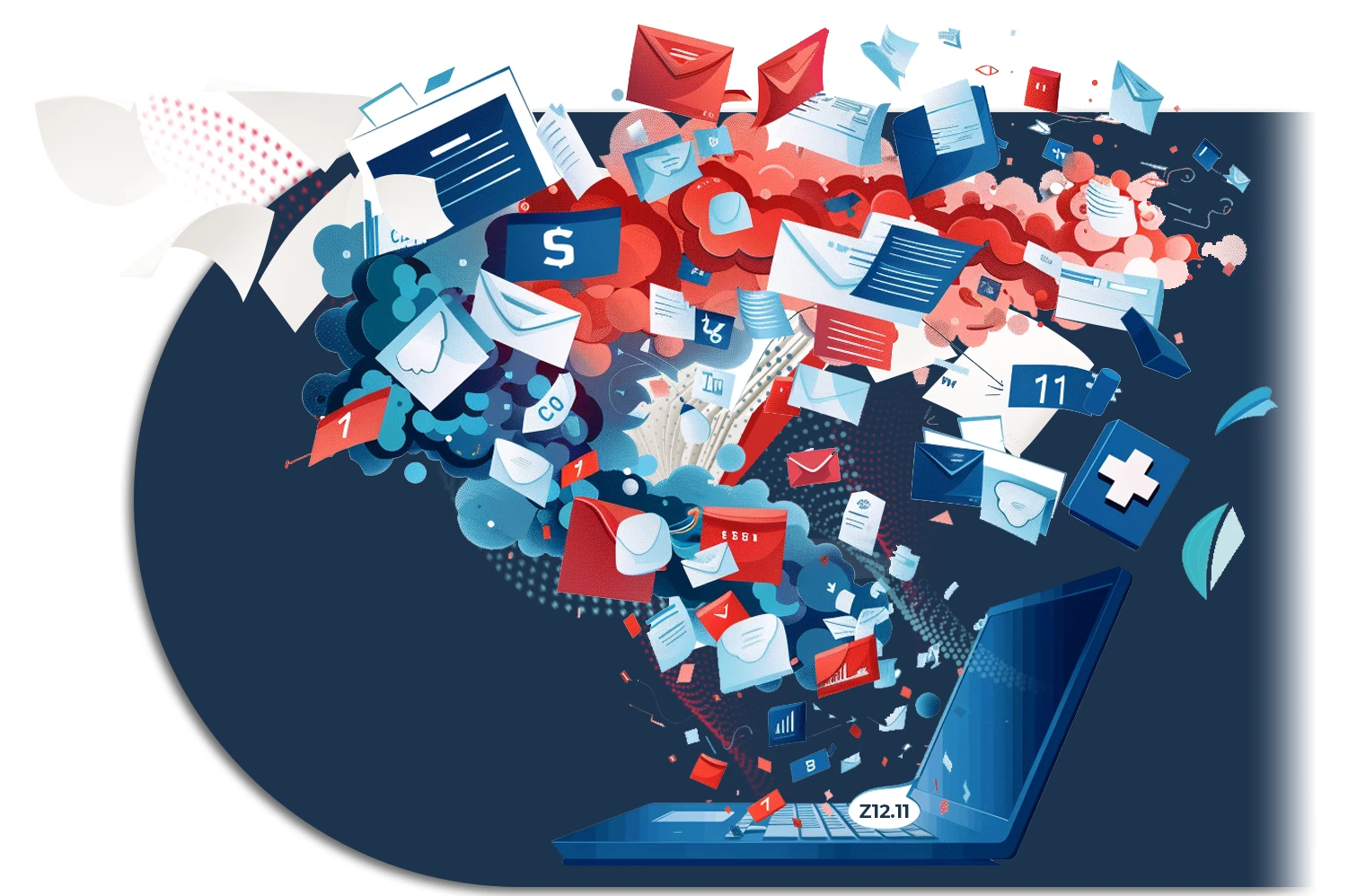
The distinction matters. A coding tool that simply suggests more codes may raise a hospital's audit risk. AKASA says its suggestions link back to supporting chart evidence and are reviewed by people. The product is meant to make the reader of the record faster and better informed, not to make clinical judgment disappear.
The company learned to read later
The founders did not begin with an AI doctor in a billing office. AKASA launched as Alpha Health. Its 2020 pitch, called Unified Automation, targeted the repetitive work around medical reimbursement. A claim had to be checked; an authorization status had to be retrieved; a staff member had to visit a payer portal or make a call. These were expensive minutes repeated thousands of times.
That first approach found a real market. AKASA raised a $20 million Series A in 2020 and a $60 million Series B in 2021. At Nebraska Methodist Health System, an AKASA case study reports more than 56,000 accounts statused and over 5,000 hours of work saved in eight months. Those are operational claims from a customer case study, not a universal forecast. They nevertheless explain why the company could earn a place in the revenue cycle before asking customers to trust it with the harder task of reading charts.
The company did not publicly describe that first product as a failure. The limitation was narrower and more instructive: workflow automation could retrieve a status, but older software struggled to understand the full clinical story. The arrival of capable language models made that larger job plausible. In 2024 AKASA released a medical coding assistant; in 2025 it added CDI Optimizer. A decade's worth of medical software ambition had suddenly acquired a reader.
A live test with a very large chart room
In April 2025, Cleveland Clinic and AKASA announced a strategic collaboration for medical coding. By October, the clinic had rolled AKASA's coding tool across its U.S. locations in four months and used it on tens of thousands of encounters. The partners then widened the relationship into clinical documentation integrity. AKASA now says its technology processes all of Cleveland Clinic's enterprise inpatient volume. The interesting achievement is the fit between a model and an enormous existing operation: the AI had to enter a workflow already populated by clinicians, coders, documentation specialists, and compliance rules.
AKASA says its wider client base represents about 500 hospitals across all 50 states. Its platform page says its healthcare-specific models have been trained on 43 million clinical documents. Those figures describe reach and training material, not the accuracy of any single recommendation. A hospital evaluating the product still has to ask what a recommendation changes: a corrected diagnosis, a better quality indicator, fewer denials, less time in a queue, or a charge that is genuinely supported by the record.
Company and customer reported figures; different programs and periods.
What the contract buys
AKASA sells to institutions, not patients. Walaliyadde has described two contract models: subscriptions, generally linked to facility size, and performance based arrangements in which payment follows agreed results. There is no public list price. The economic question is therefore concrete rather than glamorous. Count the subscription or success fee, the integration work, the hours spent validating suggestions, and any additional audit burden. Then compare those costs with supported revenue, saved labor, cleaner quality capture, and fewer avoidable corrections.
That calculation also locates AKASA among its alternatives. A hospital can rely on human coding and CDI teams, buy rules based computer assisted coding, use EHR features, or hire a specialist vendor. AKASA's claim is that a model tuned to a particular health system can read the full record and surface evidence across both coding and CDI. The difference is meaningful only if it performs in the hospital's own case mix. A polished demonstration with easy charts will not settle the question.
The practical lesson is almost stubbornly unromantic. Pick a workflow with a measurable baseline. Start with a defined population of encounters. Require every suggestion to show its evidence. Let the people responsible for compliance review the output. Compare against a credible control, and price the staff time needed to make the model useful. AKASA's early claim-status work offered this kind of counting; its new clinical products need the same discipline, with higher stakes.
There are settings where the calculation gets harder: inconsistent records, weak integration, a small inpatient volume, too few experts to review suggestions, or a contract whose performance measure rewards extra codes more readily than accurate ones. None of these makes the idea worthless. They make the real unit of value clearer. AKASA is selling a second reading of the patient's story. The sale succeeds only when that second reading is better, provable, and worth its price.