In June 2010, Adam Wexler had a complaint about Radiohead. More precisely, he had a complaint about the way the internet arranged Radiohead. A shopper could find the familiar hit without breaking a sweat. Finding a less obvious favorite required considerably more digging. Wexler thought the people who knew the records ought to have a say in the order.
He put the argument on his blog, comparing the sales-led listings at music stores with the fan rankings on his own service, GoRankem. The grievance was small enough to fit inside a record collection and large enough to occupy much of a working life: popularity could tell you what people encountered without telling you what devoted listeners treasured.
Sixteen years later, after co-founding PrizePicks, Wexler has returned to that unfinished argument. The Hidden Jams, his nonprofit music discovery platform, gives fans a way to rank songs in an artist’s catalog. Between the first attempt and the second came enterprise software, professional basketball, a fantasy sports business and a change in what he could afford to build.
The record collector’s objection
Wexler grew up in the Atlanta area and graduated from the University of Georgia’s Terry College of Business in 2007. Real estate was his major. Music was exerting a competing pull. He belonged to the inaugural class of Georgia’s Music Business Program, a useful place to discover that a career can begin with a subject that keeps interrupting your other plans.
Facebook’s arrival on campus made building an internet company seem possible to him. He found an engineer and pursued a music concept. By 2009, he was promoting Rank ’em with the sort of marketing equipment that requires neither a media agency nor a procurement department: a signboard. The subject was Wilco, and whether the most popular songs were really the best ones. A concert crowd was a sensible place to start that argument.
His blog supplied another clue. In 2008, while helping the Nashville band The Minor Kings, he compared the sequence of an album to a baseball batting order. An opening track should get things moving; the big hit belonged in a position to bring everyone home. Even before fantasy sports became his occupation, he was borrowing its vocabulary to explain music.
“Doubt me, please do.”
Adam Wexler’s personal motto
The fan in this story has opinions and wants to put them to work. That is a recurring feature of Wexler’s projects. He describes himself as a contrarian, and the motto leaves little room for confusion about his response to discouragement. It also has the advantage of being short enough to remember when the discouragement arrives.
A company changes its audience
GoRankem attracted listeners but struggled to pay its way. Wexler’s early Kickstarter campaign had a $1,000 target, reached it in six days and ultimately brought in about $2,500. That helped cover hosting. It could not, by itself, supply a durable business model. In 2011, his work shifted toward Insightpool, an enterprise social media business.
The change meant learning to sell to companies. The underlying curiosity about people’s interests remained useful. Insightpool examined social connections and helped brands identify and engage audiences. By spring 2016, it had more than 50 employees and more than 100 brand customers. A group that had started by thinking about music listeners was now working on relationships between businesses and the people they hoped to reach.
In a 2013 conversation, Wexler admitted that saving money could become its own obstacle. He had been reluctant to buy project management software even when the team could have used it. There is a recognizable early-founder calculation here: every expense looks optional until the cost of avoiding it becomes visible. Experience supplied a less romantic picture of thrift.

Insightpool was acquired by TrendKite in 2018. Wexler had already moved into sports. During the Atlanta Hawks’ 2014-15 season, he worked as a digital consultant after CEO Steve Koonin brought him in to help with fan engagement. It was a practical education in how a team could build a relationship with its city beyond the minutes on the court.
Pizza, pink shirts and a stubborn problem
Fantasy sports offered a problem Wexler understood from the inside. He had played since seventh grade. A season demanded time, attention and patience; a disappointing start could drain the entertainment from the weeks still to come. SidePrize, developed with Tareq Dowla and Sam Solomon, let friends arrange additional weekly challenges using their existing fantasy teams.
One early question concerned the commissioner: why did the person doing the organizing also inherit the least enjoyable administrative work? Another concerned everyone languishing in the standings. A fresh head-to-head contest could give a losing season something to offer. SidePrize was looking for smaller units of competition inside a longer commitment.
The company joined the Dodgers’ accelerator with R/GA in 2015. Its pitch centered on keeping league rivalries interesting, even after a team’s playoff prospects had dimmed. Wexler had already watched an earlier business grow past 50 employees, but he thought the program’s sports connections and creative help could still be useful. Having started companies did not make him finished with learning how to start one.
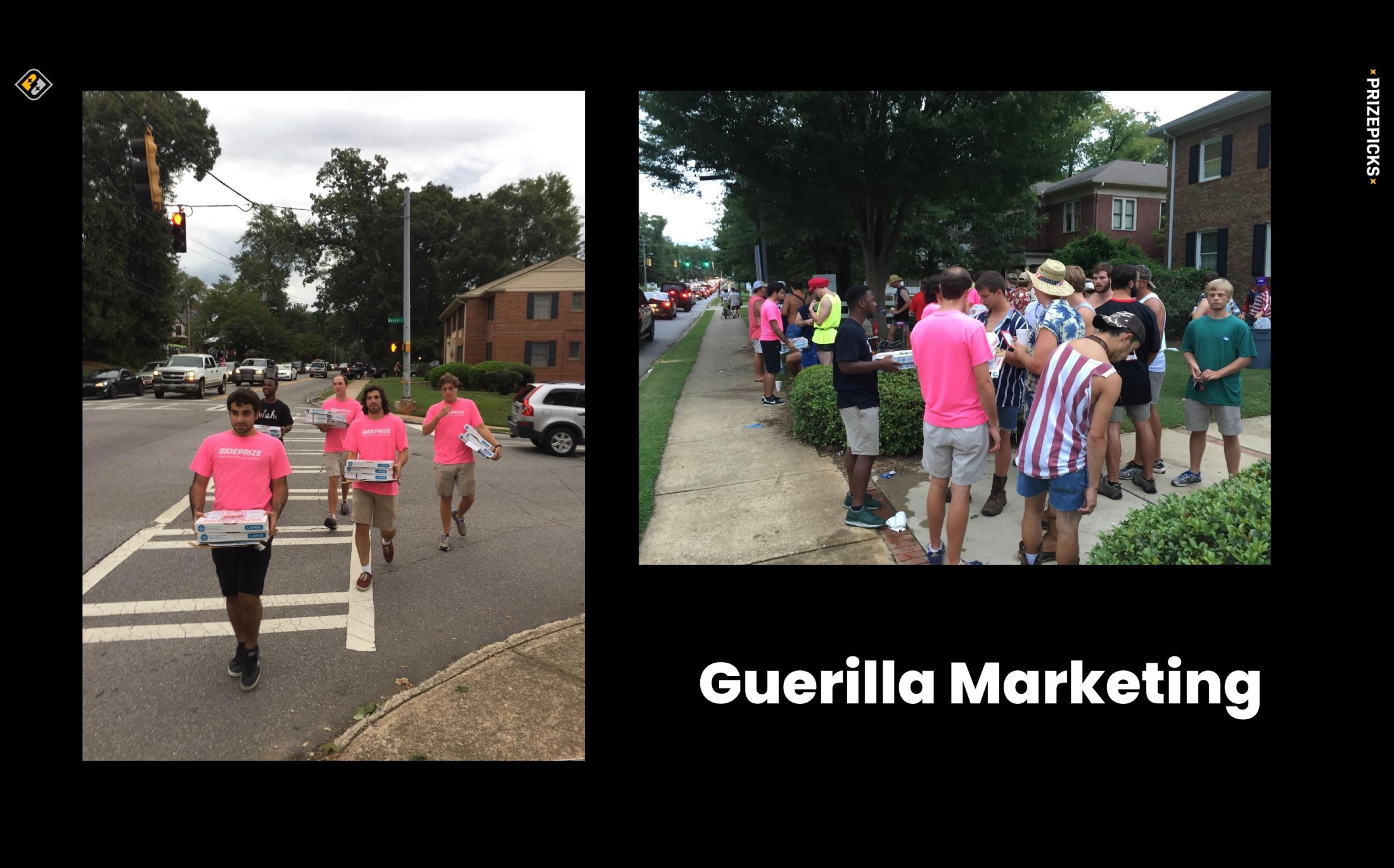
The details resist the tidy legend of an overnight success. There were pink shirts, tailgate pizza and six colleagues sharing a three-bedroom house in Marina del Rey. The accelerator ended with a pitch at Dodger Stadium in November 2015, just as New York’s attorney general moved against daily fantasy operators. Investor enthusiasm cooled. A promising presentation cannot make its own weather.
Wexler later described that timing as a serious interruption to investment and innovation. The lesson had consequences beyond one fundraising effort. A product could be appealing, its team could be working hard, and the business could still be pushed into an entirely different timetable. Continuing required more than giving the original presentation again.
Less homework, more game
PrizePicks launched in 2017 with Wexler and Jay Deuskar as co-founders. Its familiar format put individual player projections at the center of the experience. Fans chose whether an athlete would finish above or below a number. It reduced the preparation associated with assembling a conventional fantasy roster and made room for people whose enthusiasm exceeded their available research time.
The product’s breadth also mattered. By 2021, Wexler was discussing a lineup of sports and esports that included the NFL, NBA, League of Legends and Counter-Strike. A partnership with basketball creator Kenny “KOT4Q” Beecham showed how the business could reach fans through people they already watched. His earlier work in social media had found a new application.
Growth eventually changed the job. In April 2024, PrizePicks announced a $25 million Atlanta headquarters investment and plans to add 1,000 jobs over seven years. In August, former Blizzard Entertainment president Mike Ybarra became CEO, and Wexler moved to executive chairman. At that transition, the company reported more than 10 million community members.
On January 16, 2026, Allwyn completed its purchase of a 62.3 percent stake. The original agreement implied an upfront enterprise value of $2.5 billion, potentially rising to $4.15 billion if performance conditions were met. Those figures describe the business and its transaction terms. Wexler remained on the board as his attention spread to new projects.
The first idea gets another hearing
The Hidden Jams announced Wexler as CEO and chairman in March 2026. It began in beta with an emphasis on rock acts with substantial catalogs. The premise gives committed listeners a formal job: order the songs, pool the judgments and make the results useful to the next person arriving at an unfamiliar artist page.
The nonprofit structure changes the pressure surrounding the work. Wexler is funding a service he wants to use, with a longer horizon than GoRankem could sustain. His stated ambition is to build a reference for future fans as well as existing ones. The project can proceed artist by artist, paying attention to the catalogs themselves.
One example makes the distinction concrete. Wexler described a Futurebirds track that ranked 81st by streaming popularity but first among fans. The Hidden Jams uses the gap between those signals to identify overlooked favorites. It is a pleasing assignment for a founder: ask people about something they love, then take their answers seriously.
His next entertainment project gives participants a rather different assignment. EightState Studios, which he founded in 2026, produced The Spell Off LIVE!, hosted by DC Young Fly with Funny Marco as remote host. Celebrities and creators faced spelling challenges, with winners directing donations to educational nonprofits. The first season’s eight episodes are now available on YouTube. A classroom exercise has acquired a considerably more theatrical guest list.
A familiar court, a different contribution
In May 2026, Wexler committed $10 million to Georgia men’s basketball and the Athletic Director Excellence Fund. His father, Alan, had been a two-sport Georgia athlete and editor-in-chief of the student newspaper. The family connection helps explain why this particular institution remains part of his plans, long after graduation.
The commitment supports personnel and operating expenses as well as the fund. It brings the story back to a recurring choice: how to give a community the resources to become more involved in something it already cares about. For Georgia basketball, that involvement now includes a substantial financial promise from a former student.
Wexler’s career has taken a circuitous route through songs, software, fantasy contests and live spelling. The return to music makes the route easier to read. He began with the suspicion that fans knew something the rankings were missing. Having built a business around their willingness to make a pick, he is giving them another way to be heard.
Read, watch, follow
- The Hidden Jams
- PrizePicks
- X / @thewordpainter
- Wexler’s early music blog
- Sam Solomon’s SidePrize archive
- 2013 founder interview
- The return to music / SPIN
- 2026 career update / The Atlanta Journal-Constitution
- Georgia basketball commitment / UGA
- The 2024 CEO transition
- The Allwyn transaction closes
- The original acquisition terms
- LegendsNLeaders / video interview
- Jeff Gross / video interview
- The Spell Off LIVE! / Season 1
More from the early years
- Rank ’em in Terry Magazine / 2009
- Insightpool in Terry Magazine / 2016
- SidePrize’s Dodgers accelerator pitch / 2015
- The fantasy commissioner problem / 2015
- Wexler on the early setbacks / 2018
- Player projections and creator partnerships / 2021
- PrizePicks’ Atlanta expansion / 2024
- The Hidden Jams announcement / March 2026
- The Spell Off cast announcement / August 2026