Company Hardware · Taiwan · Est. 1976
The Taiwanese Underdog That Turned Cheap Into a Six-Way Global PC Fight
Acer spent decades as the value pick in a market ruled by giants. Now it is the world's sixth-largest PC vendor, betting on gaming, recycled plastic, and AI to stay in the fight.
In 1976, a Taiwanese engineer named Stan Shih started a company with US$25,000 and 11 employees. It distributed electronic parts and consulted on microprocessors, and it went by the unglamorous name Multitech. Fifty years later that company is called Acer, it ships computers to more than 160 countries, and it holds a permanent seat in the most brutal hardware market on earth. The odd part is how it got there: by deciding, deliberately, not to own the factories that build its products.
For most of its life Acer wore the label "the affordable one." In a category dominated by Lenovo, HP, and Dell, it was the machine you bought when you wanted a real laptop without a premium price. That reputation was earned, and it is also increasingly out of date. Acer today runs a premium gaming brand, sells laptops made from recycled plastic, ships glasses-free 3D screens, and builds hardware most people would never guess came from a PC maker - a bike desk that generates electricity, a biometric smart ring, earbuds that translate 15 languages in real time. Roughly 28% of its 2024 revenue came from businesses other than PCs and displays.
01 / THE MODELOwn the brand, rent the factory
The decision that defines Acer came in 2000, when it spun off its contract-manufacturing operation into a separate company, Wistron. From then on, Acer designed, marketed, and distributed its own-brand hardware while paying other firms to actually build it. In Taiwan's tech world - where making things for other companies was the whole game - separating the brand from the assembly line was a genuinely contrarian move. It is also the reason a mid-size player still competes with rivals many times its size: Acer carries the brand, not the capital-heavy plants.
The value brand quietly became a portfolio company - and nobody sent out a press release about it.
That structure has a cost. Acer does not control its own supply chain the way a vertically integrated giant can, and it competes on design, distribution, and brand rather than on manufacturing muscle. But it also keeps the company nimble. When demand shifts - toward gaming, toward Chromebooks, toward AI PCs - Acer can move without retooling factories it would otherwise own.
02 / THE LINEUPFrom Aspire to Predator to a smart ring
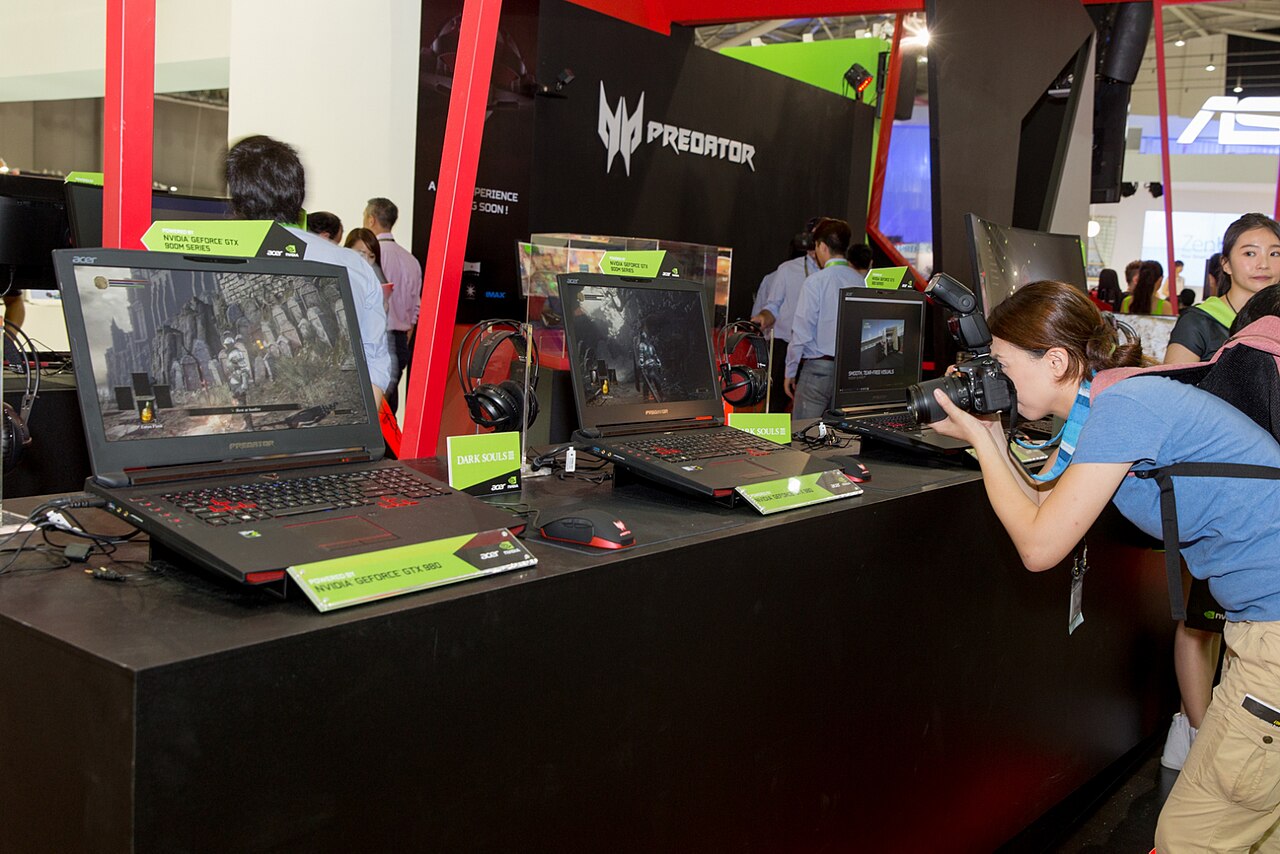
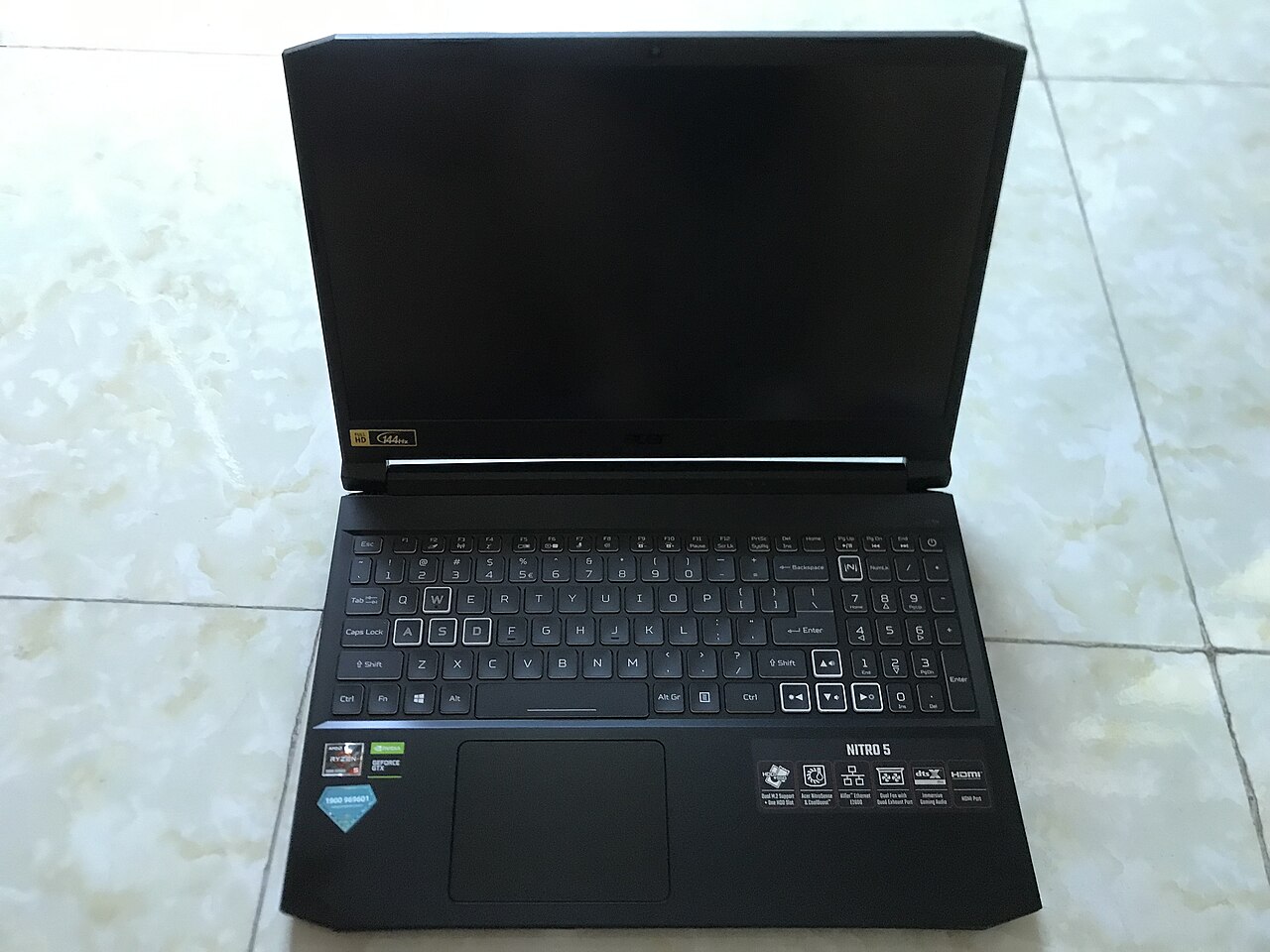
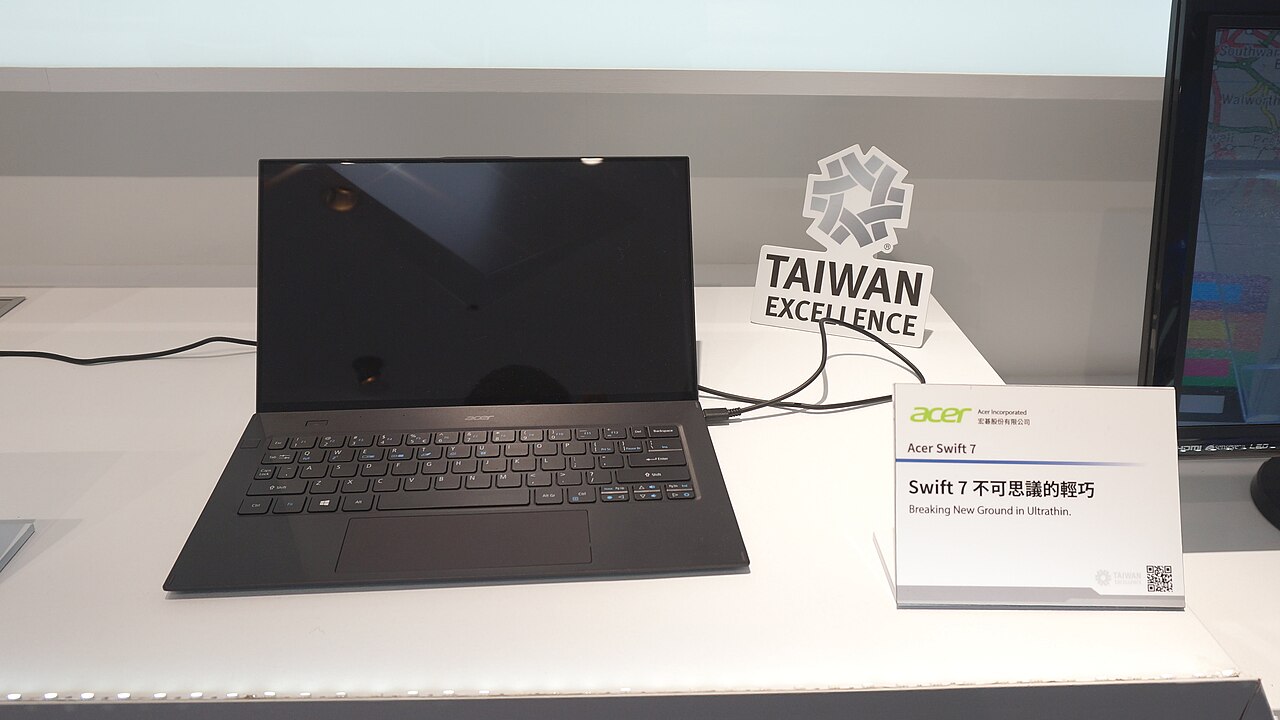
Acer's product map reads like a tour of the whole PC market. Aspire, launched in 1995, is the mainstream consumer line that made the brand a household name. Swift covers thin-and-light ultraportables, now refreshed as AI-ready Copilot+ machines. TravelMate serves business and IT-managed fleets, and ConceptD - Pantone-validated - targets creators and 3D designers. On the enthusiast end, Predator is the premium gaming brand of Helios and Triton laptops, Orion desktops, monitors, and peripherals, with Nitro sitting a rung below at mid-range prices.
Then there is everything that does not fit the laptop box. SpatialLabs is glasses-free stereoscopic 3D, commercialized while most rivals stayed on the sidelines. Vero is the eco line built from post-consumer recycled plastic. Altos covers servers. And in 2025 Acer added a biometric smart ring called FreeSense and AI Transbuds, earbuds that translate 15 languages two ways - hardware that has nothing to do with the shelf full of budget notebooks people still associate with the name.
03 / THE DIVERSIFICATIONThe 28% that isn't a PC
The most interesting number in Acer's 2024 results is not the revenue total - it is that 28.3% of it came from businesses other than PCs and displays. For a company whose identity is "the affordable laptop," that is a quiet reinvention. Gaming peripherals, lifestyle mobility, wearables, sustainability products, and a set of subsidiaries now carry nearly a third of the load. It is a hedge against the one risk every PC maker shares: that the next slump in laptop demand takes the whole business down with it.
Where the money comes from
Share of Acer group revenue, FY2024 (approximate)
sustainability products & subsidiaries
04 / THE FIGHTA six-way race for the desktop
The global PC market has settled into a six-way contest, and Acer is at the bottom of the podium - which is a stranger place to be than it sounds. Sitting at roughly 7% share means it is smaller than Lenovo, HP, Dell, Apple, and ASUS. It also means it has survived, profitably, in the top six of the hardest hardware category for decades. Plenty of once-famous PC names - some of which Acer itself absorbed - did not.
Global PC market share, 2024
Estimated unit share among the top vendors
Acer's answer to being outgunned is not to out-shout anyone. ASUS owns the loudest gaming brand; Apple owns premium; Dell and HP own the enterprise fleet. Acer competes on price-to-performance across a wide catalog and picks spots where it can be first or different - glasses-free 3D, recycled-plastic laptops, cloud gaming on a Chromebook. Breadth is the strategy. The more categories it plays in, the fewer single points of failure it has.
Staying in the top six for decades in the most brutal hardware category is its own kind of win.
05 / THE GREEN BETRecycled plastic, and a factory-free path to 2035
Sustainability in consumer electronics is usually a marketing checkbox. Acer built a supplier platform around it. Earthion, launched in 2021, coordinates partners across energy, packaging, manufacturing, logistics, and recycling. The Vero line puts the idea on shelves: laptops made with post-consumer recycled plastic, shipped in recycled-paper boxes. Acer joined RE100 with a pledge to reach 100% renewable energy by 2035, and it says it hit its 2020 carbon-reduction target. The framing the company uses for all of it is "Conscious Technology."
The "Conscious Technology" concept is designed with human at the heart, and the planet in mind.Jason Chen, Chairman & CEO
Whether the rest of the industry follows is the open question. Recycled materials cost more and complicate supply chains, and one mid-size vendor cannot bend the whole market alone. But Acer has made the eco line a real product family rather than a single hero device - which is a harder, and more credible, thing to do.
06 / THE HISTORYFifty years of breaking barriers
The through-line from Multitech to today is one founder's conviction that a Taiwanese company could build a global brand, not just parts for other people's brands. The rename to Acer in 1987 - Latin for "sharp, acute, energetic" - was a statement of intent. The Wistron split in 2000 made the brand independent of the factory. The Gateway acquisition in 2007, which also brought in Packard Bell and eMachines, lifted Acer into the global top tier in a single stroke.
- 1976Founded as Multitech
Stan Shih and partners start with US$25,000 and 11 people in Hsinchu, Taiwan.
- 1987Renamed Acer
A new name - Latin for sharp and energetic - signals global ambition.
- 1995Aspire launches
The consumer line that makes Acer a household PC name.
- 2000Wistron spun off
Manufacturing splits from brand; Acer goes asset-light before it was fashionable.
- 2007Acquires Gateway
Buying Gateway, Packard Bell and eMachines vaults Acer into the global elite.
- 2017Jason Chen takes the helm
The ex-TSMC and Intel executive becomes Chairman & CEO and steers toward diversification.
- 2021Earthion & SpatialLabs
A sustainability platform and glasses-free 3D arrive in the same year.
- 2025AI PCs and beyond
Copilot+ laptops, a smart ring, and translation earbuds debut at CES and Computex.
Fast facts
- Started with US$25,000 and 11 employees
- Once made Apple II clones as Multitech
- Sponsored Scuderia Ferrari in the 2000s
- Sold an early carbon-fiber Ferrari laptop
- eKinekt bike desk generates up to 75 watts
- Runs the Predator League esports series
- Turns 50 in 2026
- HQ in New Taipei City, Taiwan
07 / WHAT'S NEXTUsing AI as cover to grow sideways
Acer's recent launches share a pattern. At CES 2025 it showed the Predator Triton 14 AI, billed as the first laptop with a graphene thermal interface, alongside Copilot+ machines across Aspire and Swift. At Computex 2025 it leaned into student-focused AI laptops, a 500Hz OLED gaming monitor, the FreeSense ring, and the AI Transbuds. The AI PC wave gives Acer a reason to refresh its whole catalog - and cover to keep expanding into wearables and lifestyle hardware where the margins, and the brand story, look different from a commodity laptop.
The bet underneath all of it is the same one Stan Shih made in 1976: that a Taiwanese company can keep earning a place at the global table by staying sharp, staying broad, and refusing to be only one thing. Whether that holds through the next PC downturn is the test - but 50 years in, Acer has passed that test before.