A receipt is a peculiar kind of money. It proves that money has gone out, but it can also be the ticket that brings some of it back. Between those two events sits a surprisingly elaborate business. Someone must read the document, identify the expense, check the account and decide whether to reimburse it. Acclaris built its place in healthcare around that interval.
- The job: administer benefit accounts and turn eligible expenses into reimbursements.
- The customer: employers, health plans, banks and benefits administrators serving employees and retirees.
- The deal: Towers Watson bought Acclaris for an announced $140 million in 2015.
Consider an old IBM reimbursement form bearing the Acclaris name. It asks for the provider, patient, service date, expense and amount paid. A canceled check will not do. Keep the original receipts. The instructions are fussy because the transaction is fussy: having paid for something and being entitled to reimbursement are separate questions.
The business inside the paperwork
Founded in Tampa in 2001, Acclaris supplied configurable software alongside the people and processes needed to administer accounts. Its territory included health savings accounts, health reimbursement arrangements, flexible spending accounts, commuter accounts and custom reimbursements. The abbreviations sound interchangeable. The operating rules are not.
WTW’s current spending-account description makes the distinction tangible. An HSA belongs to the employee and pairs with a high-deductible health plan. An HRA is funded and owned by an employer or plan sponsor. An FSA lets employees set aside money for covered expenses. An administrator has to make different arrangements feel understandable on the same screen.
That combination explains Acclaris’s market position. A health plan or bank could offer accounts without developing every administrative function itself. An employer could provide benefits without turning its HR department into a receipt-processing operation. Acclaris sold institutional customers a combination of technology and operational work; employees encountered the resulting service when they needed their money.
- 01ExpensePay for eligible care
- 02EvidenceSubmit the receipt
- 03ReviewCheck the plan rules
- 04PaymentReceive reimbursement
First, the fax stopped keeping up
The operational stakes appear in a FAXCOM vendor case study. Acclaris was receiving more than 5,000 fax pages daily. Its previous system developed hardware and software problems and could not grow with demand. A busy signal prompted a support call; failed faxing could push documents into postal mail, adding work.
Acclaris replaced that arrangement with a hybrid setup: an on-site server backed by cloud capacity for peaks and outages. Subhadip Chatterjee, its IT vice president, put the priority plainly:
“A big driver for us is reliability.”Subhadip Chatterjee, Acclaris IT vice president
The case study reports savings without quantifying them. Its useful lesson is the chain reaction: an unreliable intake channel created work elsewhere. The proposed fix addressed continuity while preserving a familiar submission method. For another operator, the copyable move is to count the calls and manual handling generated by a failed handoff before buying more front-end features.
Why the buyer wanted the back office
In May 2015, Towers Watson acquired Acclaris for $140 million in cash. A subsequent SEC disclosure recorded $139.5 million in total consideration after accounting adjustments. The distinction matters: one is the announced deal price, the other the later accounting measure.
Acclaris entered the buyer’s Exchange Solutions segment. The strategic logic was straightforward. Choosing coverage and administering the accounts attached to it belonged in a connected service. The buyer was acquiring a functioning account operation, with technology and established customer relationships, rather than merely adding another enrollment screen.
Announced acquisition price
The announcement described more than 600 staff across Tampa, Kansas and India. It forecast approximately $35 million in calendar-year revenue. Dividing the announced purchase price by that forecast gives roughly four times revenue. That arithmetic offers context for the purchase; it is no substitute for knowing margins, retention or the costs of serving each account.
Earlier investors had backed the same mixture of software and execution. A 2010 buyout brought together Staley Capital, Trident Capital, HarbourVest Partners and existing investor Updata. ORIX Ventures increased a financing commitment in 2014 to support platform development. Those steps suggest sustained interest in expanding the operation before the strategic sale.
The name behind the app
Today, the corporate trail leads to Via Benefits. Google Play lists Acclaris Inc as publisher of Via Benefits Accounts, with an August 2026 update. The app supports receipt uploads, reimbursement submissions, balance checks, debit-card spending and claim history. Its package identifier still contains “acclaris” and “acclaim.” Corporate history survives in small technical details.
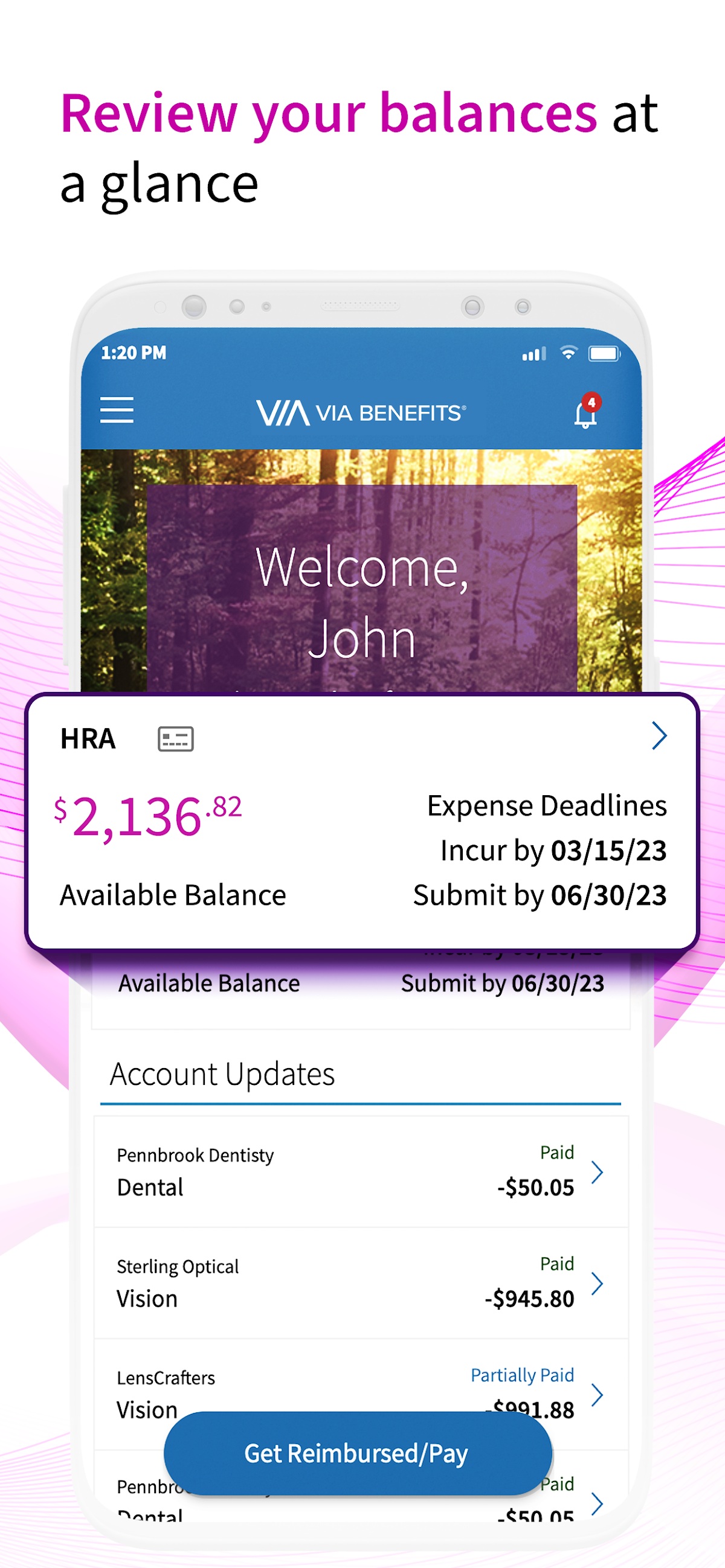
The economics become concrete in one current client arrangement. Ohio’s OPERS says Via Benefits administers its HRA reimbursements and deducts $2.60 monthly for administration. That is a specific program’s charge, not an Acclaris price list. Participants can submit documentation through the website or app, track requests and arrange direct deposit.
There are limits to what convenience solves. Via Benefits’ reimbursement guidance still requires eligible expenses and supporting evidence. A photograph cannot make an ineligible claim payable. Nor does an app remove the need to fund the underlying account. The service fits an institutional benefits arrangement; its usefulness depends on that arrangement’s rules and the quality of the administration.
A little fun, a lot of follow-through
For a company associated with receipts, Acclaris had an amusing early personnel experiment. In 2005, reporting from its Kolkata operation described a quarterly “chief fun officer” role encouraging practical ideas. Kalyan Kar, its managing director, linked creative suggestions with recognition and advancement. Even a paperwork business needed people willing to reconsider the process.
The enduring question for anyone evaluating benefits technology is therefore concrete: what happens after submission? Ask how documents arrive, how exceptions get handled and how participants learn what happened. Acclaris’s history makes those apparently small questions worth asking before the next receipt disappears into the queue.