A click is a tiny act of optimism. Someone sees an advertisement and decides that the next page might contain something useful. Then the page loads. A location has to be found. A promise has to be interpreted again. Somewhere in that ordinary little journey, a business can lose the customer it has just paid to attract.
Acadia, the Atlanta marketing agency, works across those transitions. Its proposition is straightforward: bring the people buying attention closer to the people managing commerce, creative, and customer data. The interesting question is whether that proximity produces better decisions. A longer menu of services, by itself, tells a prospective client very little.
- Built for brands that need several marketing specialties to work together.
- Grew by acquiring teams in search, social, analytics, commerce, and testing.
- Pledges client-owned accounts and no principal-based media buying.
01 / The marketer with too many agencies
In 2021, former 360i chief executive Jared Belsky and BizChair founder Sean Belnick launched Acadia. Belnick had started his furniture business at 14. Belsky knew the large-agency world. Their shared opportunity sat in the middle: companies ambitious enough to need sophisticated marketing, without the staff to coordinate a small army of vendors.
Belsky described the problem in a December 2021 Digiday interview. A mid-sized company might hire separate specialists for search, analytics, Shopify, segmentation, and email. Each could improve its own numbers while the marketing director struggled to make the pieces agree. The coordination burden landed on the person who had hired help.
“A mid-market growth marketer can’t string seven boutique agencies together.”
Jared Belsky · Campaign US · 2021
Acadia launched on August 17 with 65 employees, combining Techwood Digital, Nicely Built, and Imagine Media. Its announced customers included Greenlight, Pipette Baby, Natura Wines, and Nasdaq. These were existing teams and relationships assembled into a broader offer. The founding bet was that shared management could make specialist expertise easier to use.
02 / Buying the missing skills
The acquisitions show how that offer developed. Lift361 brought first-party data expertise and ShopFluency in 2021. Bobsled Marketing joined in early 2022, adding retail marketplace depth. Its founder, Kiri Masters, later explained that the Bobsled name would retire while the team continued inside Acadia. In January 2023, Acadia announced the acquisition of conversion specialist SplitTesting.com.
CRUSH followed in April 2025. Founded by Matthew Rosenfeld, the Amazon agency worked with brands including David Protein and Malk. Acadia’s announcement put its retail media and marketplaces group near 150 people, within an agency of more than 250 experts. That dated snapshot shows how central commerce had become to the business.
Then, first-party data
03 / The losing click wins
Consider Acadia’s published Sky Zone case. Generic membership advertisements led to a brand-level page, leaving visitors to locate their park. Acadia tested localized creative linked to park-specific destinations. Generic ads earned a 1.05% click-through rate; localized ads earned 0.43%. Judged by clicks alone, the generic route looked better.
Purchases changed the verdict. Acadia reports that localization increased return on ad spend by 45%, lowered acquisition cost by 23%, and produced roughly 20% more purchases on similar spending. It reports 90% confidence. These are agency-reported results from one test, rather than a forecast for another advertiser.
for the localized approach
The lesson worth copying is the test design: examine the advertisement and destination together, then judge a business outcome. For a local service, removing the location hunt may matter. That inference needs testing wherever local relevance is weak, purchases are infrequent, or attribution cannot reliably connect an advertisement to a sale.
04 / What the client actually buys
Today the offering spans marketplace management, paid media, analytics, content, SEO, and conversion optimization. A consumer brand can get help with Amazon advertising and product presentation alongside social creative. A multi-location operator can connect media planning with geography. Acadia also presents Analyze, its proprietary intelligence platform, as a way to interpret performance and identify opportunities.
Some assignments reach inside the customer’s organization. In January 2024, Academy Sports + Outdoors named Acadia its customer analytics agency. The arrangement included embedded specialists helping develop the retailer’s internal capabilities, with work spanning customer understanding, predictive modeling, dashboards, and audience activation. The relationship could build the client’s own expertise as well as supply outside help.

05 / Follow the money, including the fee
Acadia competes with a holding-company agency, a collection of boutiques, and the client’s own team. Its business is contracted agency work. In a 2024 AdExchanger interview, Belsky argued for agreed service fees and against principal-based buying, where an agency purchases media inventory and resells it. That stance makes the compensation conversation part of the product.
Acadia publicly promises that clients own their accounts and that it will avoid that resale model. The buying implication is practical: put account access, media charges, agency compensation, and budget decisions in the agreement. Evaluate the total cost of the work, including the people required on the client side to make it useful.
06 / Together is a daily assignment
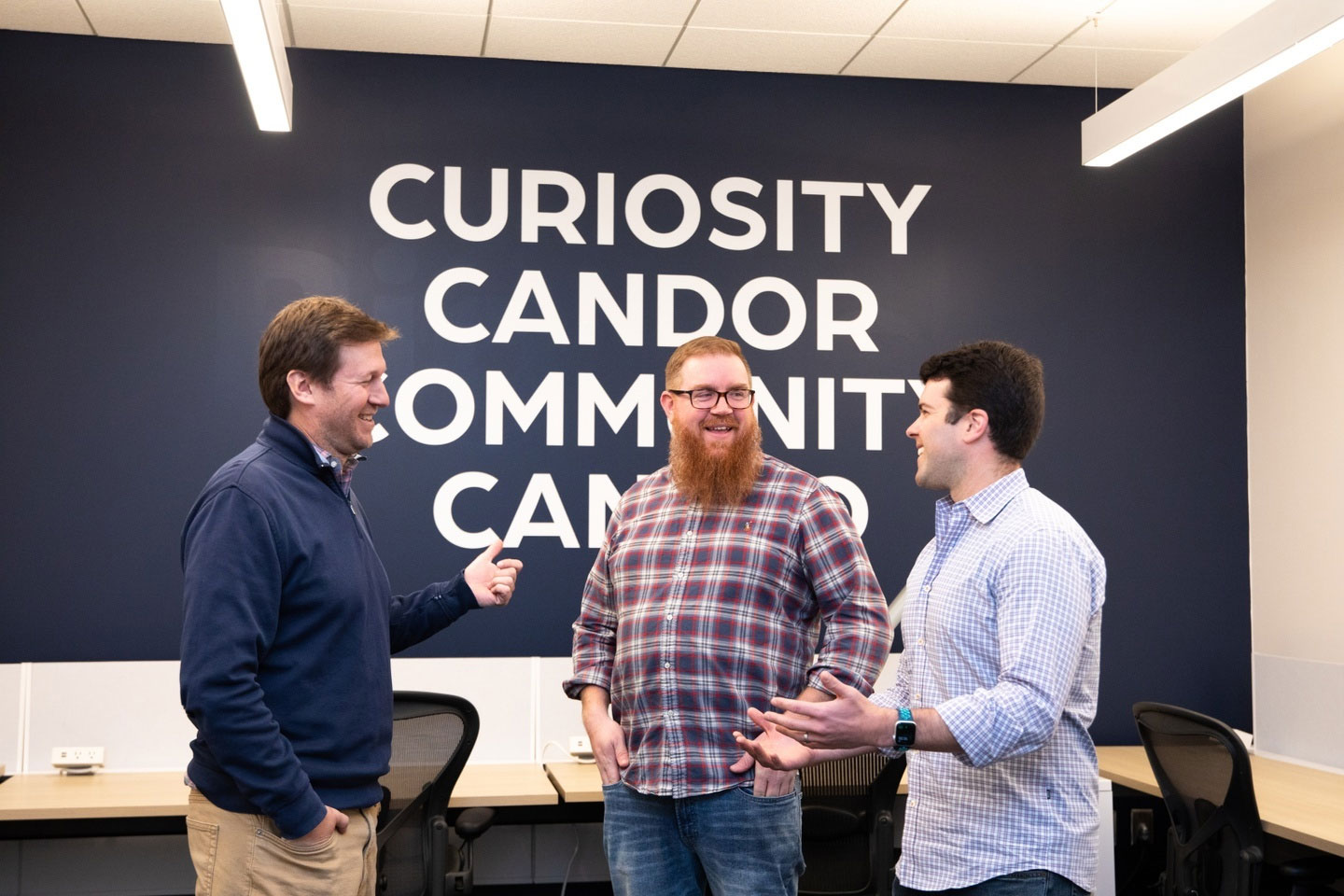
Acadia says every employee is a shareholder and that it has no private-equity or institutional capital. Its values include candor, curiosity, community, and can-do. Those commitments matter most when specialists disagree over a budget. The real operating test is whether evidence can move money away from one team’s preferred channel.
In March 2026, Acadia received Ad Age’s Media Agency of the Year recognition. By October, it was reporting two US Search Awards for AirSculpt work. Recognition gives buyers a reason to look. The more useful next step is to bring one awkward customer journey, one shared outcome, and the willingness to change the plan.