An electricity bill is an oddly discreet document. It knows the total and declines to discuss the particulars. A credit card statement will name the restaurant, the shop and the regrettable purchase. Electricity tends to arrive as a number. Abhay Gupta has spent much of his working life trying to make that number explain itself.
Gupta co-founded Bidgely with Vivek Garud, building a business around an overlooked resource: the information already coming out of electricity meters. The company dates its founding to 2011. Its name comes from the Hindi word for electricity. The proposition has an appealing domestic scale. Before asking people to change their energy habits, help them understand what those habits cost.
That question connects a consistent career. Gupta worked on the machinery that collected information, moved into the products that made use of it, and eventually became responsible for persuading utilities to do something with it. Follow that progression and the electricity bill begins to look less like dull paperwork and more like unfinished work.
An engineer crosses the meter
His education began with electrical engineering at the Indian Institute of Technology Delhi, followed by a master’s at the University of Southern California. He later added an MBA at Santa Clara University. The combination matters to this story: an engineer can ask whether a measurement is possible; a business has to ask who needs it and who will pay.
Sun Microsystems, Broadcom, Echelon and Grid Net feature in his professional history. He worked in hardware engineering and chip design before taking on product marketing, product management and business development. At Grid Net, he was director of product management. These were jobs close enough to the meter to see the distance between collecting a reading and understanding a household.
There is a pleasing lack of destiny in the way Gupta describes the transition. He says he arrived in product management and smart-meter building “somehow in my career.” The interesting discovery came through the work itself. Meters were producing data with more possibilities than the industry was using. The instrument had advanced; the conversation around its measurements had room to catch up.
In his account, utilities had long concentrated on producing electricity and delivering it reliably. Consumer technology companies, meanwhile, were learning to tailor experiences to individual users. Gupta saw an opening in that difference. An energy provider could understand customers in greater detail, then use that understanding to make its service more relevant. The ambition started with information already being collected.
Six months, give or take a startup
Starting the company brought a different kind of estimation problem. Gupta and his wife thought securing funding and forming the core team might take roughly six months. It took more than fourteen. He also left behind a daily three-hour commute when he began the business at home. The calendar, evidently, was harder to optimize than the journey to work.
He credits help from people connected with IIT Delhi and Sun Microsystems, along with early investor Vinod Khosla. His recollection makes room for the brainstorming, introductions and patient support that precede a funding announcement. Money did eventually arrive. Gupta’s lesson was that receiving it opened another stretch of work, with people to hire and a company to build.
“efforts are great, but results matter”
Abhay Gupta, on a lesson that shaped his career
The startup had an important practical choice to make. By 2017, Gupta was describing a service that used meter data supplied by utilities, without installing additional sensors inside homes. The utility paid for the software, and its customers received the insights. Household reach influenced the annual charge. A seemingly modest product decision had consequences for how the business could spread.
Every extra device would mean another installation and another expense. Working through existing meters and utility relationships gave Bidgely a way to reach households through infrastructure already in place. In that same period, Gupta described work across North America, Europe, Australia and New Zealand. Expansion also meant adapting the route to market: he saw local partnerships as useful for entering Japan.
The customer has a timetable
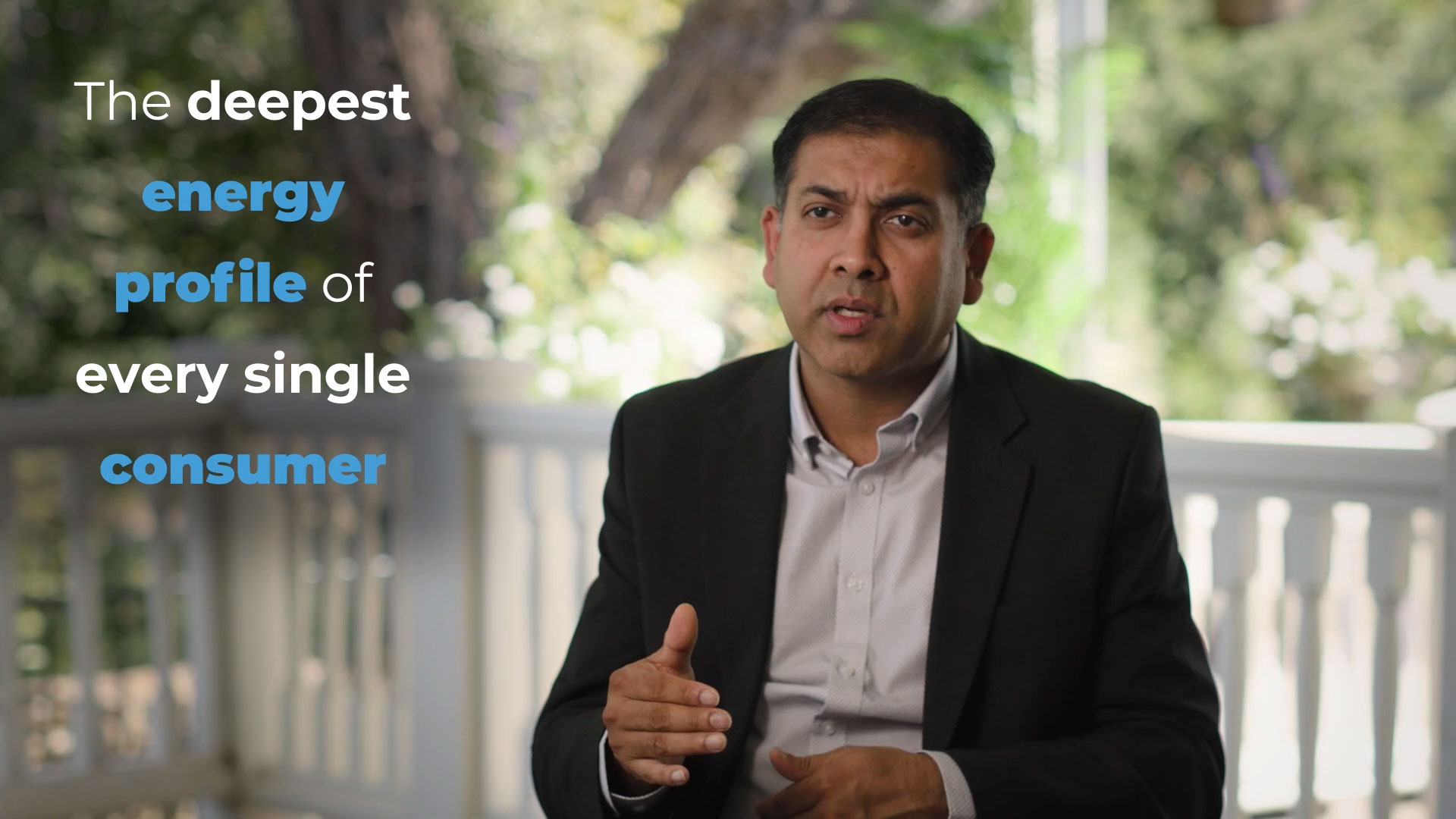
Gupta’s explanations return to an unglamorous unit of progress: a better decision. In a 2020 discussion of home energy management, he laid out a sequence that started with understanding customers’ behavior and usage, then identifying a useful next interaction. Recommendations, rates and programs would follow from that understanding. The service also needed revisiting as people’s needs changed.
Consider the ordinary friction involved. A household may receive an invitation to join an energy program without understanding why it applies to them. A recommendation can arrive at an inconvenient moment, or require more explanation than anyone has time to read. Gupta’s approach puts that problem inside the product. An insight has to be relevant enough to survive an ordinary afternoon.
He also argued that time-of-use programs depend on identifying opportunities for each customer to move consumption. Cheaper hours are only helpful when a household has something it can reasonably shift. The engineering question meets the timetable on the fridge. Rates and recommendations have to connect with routines, purchases and decisions made by people who have other things to think about.
His conversations about the grid widened accordingly. In 2022, he discussed distributed energy resources with utility executive Elizabeth Cook, including the importance of planning ahead as supply and demand changed. Rooftop generation and new electrical loads make the household part of the planning problem. Knowing the customer becomes useful to people responsible for equipment and capacity as well as customer service.
What used the electricity?
What can I change?
When will demand arrive?
Where should we plan?
Let somebody else build with it
By 2020, Gupta was describing a broader role for analytics across utilities’ decisions. He expected more sophisticated customer targeting and saw opportunities for energy providers to offer services beyond selling kilowatt-hours. That was an ambition, rather than a finished destination. It required the same underlying information to become useful in several places, each with its own priorities and constraints.
In October 2024, he explained another way to distribute the capability: Disaggregation as a Service. Bidgely would make its energy intelligence available through an API so utilities and their partners could use it within other applications. In practical terms, the analysis could become an ingredient in somebody else’s work. The company’s own interface would no longer be the only place to encounter it.
Gupta’s argument drew on conversations with utilities already sharing discoveries across departments. At Avista, people were meeting regularly with Bidgely to discuss use cases and new questions. That detail gives the strategy some texture. An API can sound like a technical footnote; behind it is a group of colleagues asking whether information gathered for one purpose might solve another problem.
Bidgely added a different kind of capability in March 2025 by acquiring Grid4C. Its predictive analytics included fault detection, diagnostics and load forecasting. The announced plans covered household appliances as well as grid assets. Those plans extended the questions the software might help answer, from explaining consumption toward anticipating problems and helping utilities prepare for them.
Organizational work followed the technical work. In July 2026, Bidgely announced Gautam Aggarwal’s promotion to president and chief revenue officer, Ted Nielsen’s promotion to chief technology and product officer, and Creighton Oyler’s appointment as chief operating officer. Gupta continued as CEO. He emphasized the combined depth of the leadership team as the company pursued wider deployment of its software.
In a conversation with Ameren Illinois president Lenny Singh, Gupta also discussed the role of appliance-level analysis in grid planning. The shared subject was practical preparation: understanding where new demand will appear and how it changes the use of existing equipment. It is a further step along the same career path, from helping build the meter to helping people responsible for the network interpret what it sees.
The thread is easy to recognize even as the applications change. A household and a utility each need an explanation they can use. Delivering it means knowing enough about both audiences to make a complicated measurement answer a plain question. That has remained the center of Gupta’s work.
Gupta was also named a finalist for Chief Trailblazer of the Year in the 2025 S&P Global Platts Global Energy Awards. The recognition gives his work a public marker, though the underlying problem remains stubbornly everyday. A customer with an unexpectedly large bill needs a specific explanation. A planner looking at new demand needs usable detail. The distance between those two desks helps explain why his original question has kept generating work for the company.
The wrong hours
A September 2026 conversation with Oklahoma Gas & Electric’s Kirby Brinlee supplies a useful test of Gupta’s original idea. Customers in the utility’s variable peak pricing program had been moving their consumption to the wrong hours. They were responding, but the response missed the intended timing. Personalized messages and recommendations helped make the program more useful to both customers and planners.
There is something wonderfully human about that complication. A tariff can be carefully designed. A customer can be willing to help. The connection between the two still needs attention. Gupta’s business lives in that connection: taking detailed information and making it useful at the moment someone has to decide what to do.
The electricity bill remains a good place to begin. It arrives in an actual household, where numbers compete with the rest of life. Gupta has built a career around giving those numbers enough detail to support a choice. A meter records what happened. The next conversation is about what someone can do tomorrow.