An electricity bill can tell you how much your household consumed while remaining maddeningly discreet about who consumed it. The air conditioner, the water heater and the car in the garage all arrive at the bottom of the page under the same number. Imagine a restaurant presenting a bill that says only “food.” You would pay it, perhaps. You would have questions.
- The job: infer appliance-level energy use from meter data.
- The buyer: utilities and energy retailers, serving households and businesses.
- The evidence: Rocky Mountain Power reported 41 GWh saved in under a year.
- The wager: the same clues can improve bills, program recruitment and grid planning.
Bidgely has built a business around those questions. Its UtilityAI software interprets energy data, looking for the patterns left by appliances, then puts the findings into reports, customer conversations and utility analytics. The customer might see a breakdown of cooling costs. The utility might see a group of homes worth approaching about a thermostat program. Both begin with the same meter.
A bill without an itemized receipt
The technical name is load disaggregation, also called non-intrusive load monitoring. Electricity consumption changes over time as equipment runs. Machine-learning models use those patterns to infer which end uses contributed to the total. The attraction is practical: the utility already collects meter data. Bidgely’s core approach does not require fitting a separate sensor to every appliance.
Inference matters here. A software-generated appliance breakdown is an interpretation of measurements, rather than a submeter reading from each device. The detail available depends on the input. Monthly readings can support energy profiles and reports; interval readings offer a much richer picture of when a car charges or cooling demand rises. Treating both as equally precise would be a splendid way to disappoint an engineer.
Abhay Gupta and Vivek Garud founded Bidgely in 2011. Gupta’s background included Grid Net, Echelon and Sun Microsystems; Garud had worked on voice recognition at Microsoft. The pairing is apt: one founder knew the energy industry, the other had experience extracting meaning from a complicated signal. The name means “electricity” in Hindi. A restrained name for a company engaged in electrical detective work.

Four cents buys a saved kilowatt-hour
In 2018, Rocky Mountain Power contracted Bidgely to replace its existing Home Energy Reports program. These reports are an unusually modest instrument of energy policy: tell people about their consumption, offer advice, and see whether their behavior changes. Bidgely added appliance-oriented explanations and recommendations, including for customers without smart meters.
Less than a year after introduction, the reported savings exceeded 41 gigawatt-hours. The average cost was approximately four cents per saved kilowatt-hour, described as about 25 percent below conventional report programs. That is the number to linger over. Utilities procure efficiency as well as electricity, and a persuasive report must eventually earn its keep in program economics.
Four cents is a measure of that program’s savings cost, rather than a Bidgely subscription price or a promise to every buyer. There were also transition costs. PacifiCorp’s 2018 Idaho filing records initial startup fees when the administrator changed from Opower to Bidgely. The accounting is useful because it punctures the illusion that changing software costs only whatever appears on a sales slide.
“Customers were more aware, and it motivated them to make different energy use decisions.”Shawn Grant, Rocky Mountain Power
In a Bidgely customer account, April 2024
Rocky Mountain Power later extended the idea to small and medium businesses, introducing digital Business Energy Reports in Utah, Idaho and Wyoming in 2020. A shop’s operating hours and equipment differ from a household’s. Personalization has to accommodate those differences if the advice is to survive a glance from the person paying the bill.
Recruit the charging habit, not just the car
Now consider an electric vehicle. Knowing that a customer owns one is useful. Knowing that the customer charges it during the hours when the grid is strained is more useful. A driver already charging overnight may have little additional demand to shift. A driver plugging in during the peak window may offer a substantial opportunity.
Bidgely describes an NV Energy campaign that narrowed roughly 33,000 EV candidates to about 1,000 high-value targets. Its published account reports a 41 percent click-through rate and more than 300 recruits in the first 24 hours. These are campaign results, rather than a universal conversion formula. Their appeal lies in the sequence: inspect the load, choose the audience, then spend the effort on outreach.
This also clarifies two jobs often bundled together. Energy efficiency lowers total consumption. Load shifting moves consumption to a more useful time. A car can receive the electricity it needs while becoming less troublesome to the grid. For households, the benefit depends on the rate and charging schedule; for utilities, it depends on which constraint the program is designed to relieve.
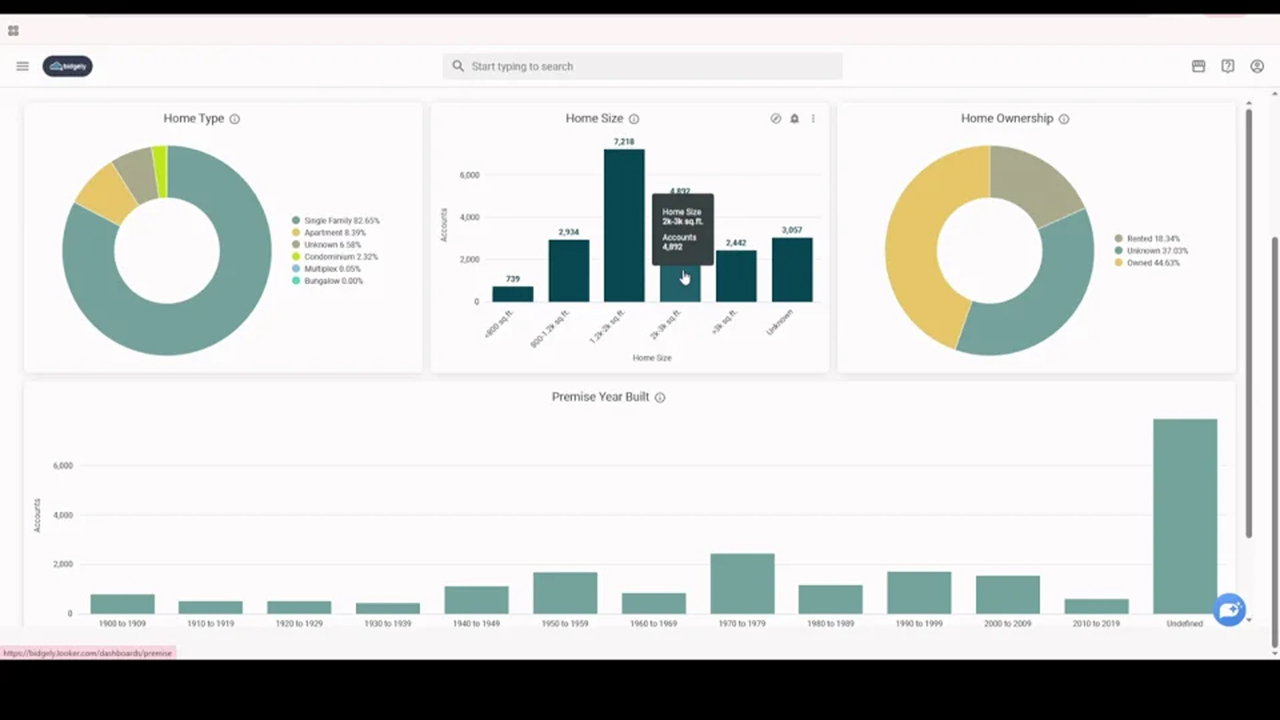
One data asset, several utility departments
Bidgely’s buyer is an energy provider. Residents generally encounter the company through their utility’s reports, portal, alerts or service representatives. Alongside Rocky Mountain Power and NV Energy, published customer examples include Pacific Power, Avista, PSEG Long Island and Southern California Gas. The work extends beyond electricity-only households to gas customers and businesses.
The product range follows the data into different departments. Home Energy Reports and customer tools explain usage. Analytics Workbench supports segmentation and program analysis. EV and demand-flexibility offerings help target charging and rate programs. Grid analytics helps planners understand the demand behind particular assets. Disaggregation as a Service makes the intelligence available for other applications.
Distribution matters, too. Through NISC, Bidgely’s insights integrate with SmartHub, a platform used by cooperative and municipal utilities. The partnership’s September 2025 expansion offered Analytics Workbench capabilities to members. An analytics vendor reaches more buyers when its work fits inside software they already use.
There is competition. Oracle Utilities Opower offers reports, digital engagement and demand-flexibility products, and also advertises AI and patented disaggregation. Bidgely’s position therefore needs a more demanding explanation than “it uses AI.” Buyers can compare the quality of appliance insights, the uses supported, integration effort and measured program outcomes. A stylish pie chart is a poor substitute for those answers.
The algorithm moves closer to the buyer
Bidgely’s financing has backed an expanding enterprise software business. A $27 million Series C was announced in January 2018, followed by $26 million in strategic financing in September 2021. CIBC announced an increased $18 million growth-financing commitment in July 2023. The last figure describes a financing commitment, so it should not be casually added as though it were an identical equity round.
The expansion became tangible in March 2025, when Bidgely acquired Grid4C. The announced rationale included appliance fault diagnostics and granular load and distributed-energy-resource forecasting. In late 2025, UtilityAI Pro added another adoption route: bringing utility-specific models into the buyer’s own data environment. Both moves broaden the role of the original intelligence beyond sending better reports.
September 2026 brought Agentic CX, a suite for chat, voice systems and service representatives. Its five announced agents cover high-bill analysis, home energy audits, solar scenarios, EV scenarios and rate selection. The premise is sensible: a conversational interface becomes more useful when the underlying analysis can explain the household’s actual energy pattern. Fluency alone cannot diagnose a bill.
A better clue still needs a useful next step
The transferable lesson is to work backward from a decision. Want a customer to change charging hours? Establish that charging occurs during the relevant window. Want to offer an equipment rebate? Identify the likely equipment and savings opportunity. Then measure what changed. This sequence is available to anyone designing a program, even without Bidgely’s algorithms.
The conditions deserve equal attention. Detailed time-based decisions need suitable data. Recommendations need an action the customer can take; a tenant may have little authority to replace heating equipment. Rates and incentives need to make the change worthwhile. Grid teams need to connect household findings to the assets they plan. These are implementation requirements, and software does not abolish them.
Bidgely’s own account puts cumulative savings above 1.5 TWh in May 2025; its current DSM page claims more than 2 TWh. Those are company-reported totals across deployments. The more instructive story remains the small unit beneath them: a household receiving an explanation it can use, and a utility getting evidence about what happened next. Electricity is sold by the kilowatt-hour. Understanding it takes rather more work.