A wind farm is a strange sort of factory. Its fuel arrives without a bill, but it refuses to keep office hours. When the wind blows, electricity prices may be low. When prices jump, the turbines may be still. That mismatch is the question Lee Taylor took into business school in 2012. The thesis became Resurety, a Boston company that first sold ways to manage the financial risk of intermittent generation and now sells something more ambitious: a clearer view of the market itself.
- What it does: models project revenue, contract risk and carbon impact, then helps qualified parties transact clean-power deals.
- Who uses it: energy buyers, developers, investors and traders; named clients include Meta, Invenergy and HASI.
- Why it matters: the value of a clean megawatt-hour changes with the hour, the grid node and the generator it displaces.
The weather was the first counterparty
Taylor's starting point sounds obvious only after someone says it aloud. A gas plant worries about the price of fuel. A wind or solar project gets its fuel free, but cannot choose when it arrives. The variable is volume, and volume lands inside a power market whose prices can lurch by the hour. Resurety's earliest product was a hedge against that intermittency. Its job was to let a seller or buyer put a more dependable number on future revenue or cost.
There was no single disaster that gave Taylor the idea. He has described the company as his graduate-school thesis project. The dramatic public demonstration came later, during the February 2021 Texas freeze. Prices soared just as weather and operations disrupted supply. Resurety used the episode to argue for hourly generation and price analysis in REmap, its then-current intelligence tool. Taylor's blunt conclusion was that fortunes depend on the right hours, not merely on a handsome annual production total.
“One of the great benefits of renewable energy is that the fuel is free.”Lee Taylor, founder and CEO, in a 2023 interview
That sentence has a second half. Free fuel does not mean free certainty. A long-term power purchase agreement can be profitable on paper and painful in a particular month. A project might produce when its local grid is crowded, depressing the price it actually captures. A buyer can hedge at one pricing hub while the generator settles at a different node. None of this is visible in an annual average.

Make the invisible hour legible
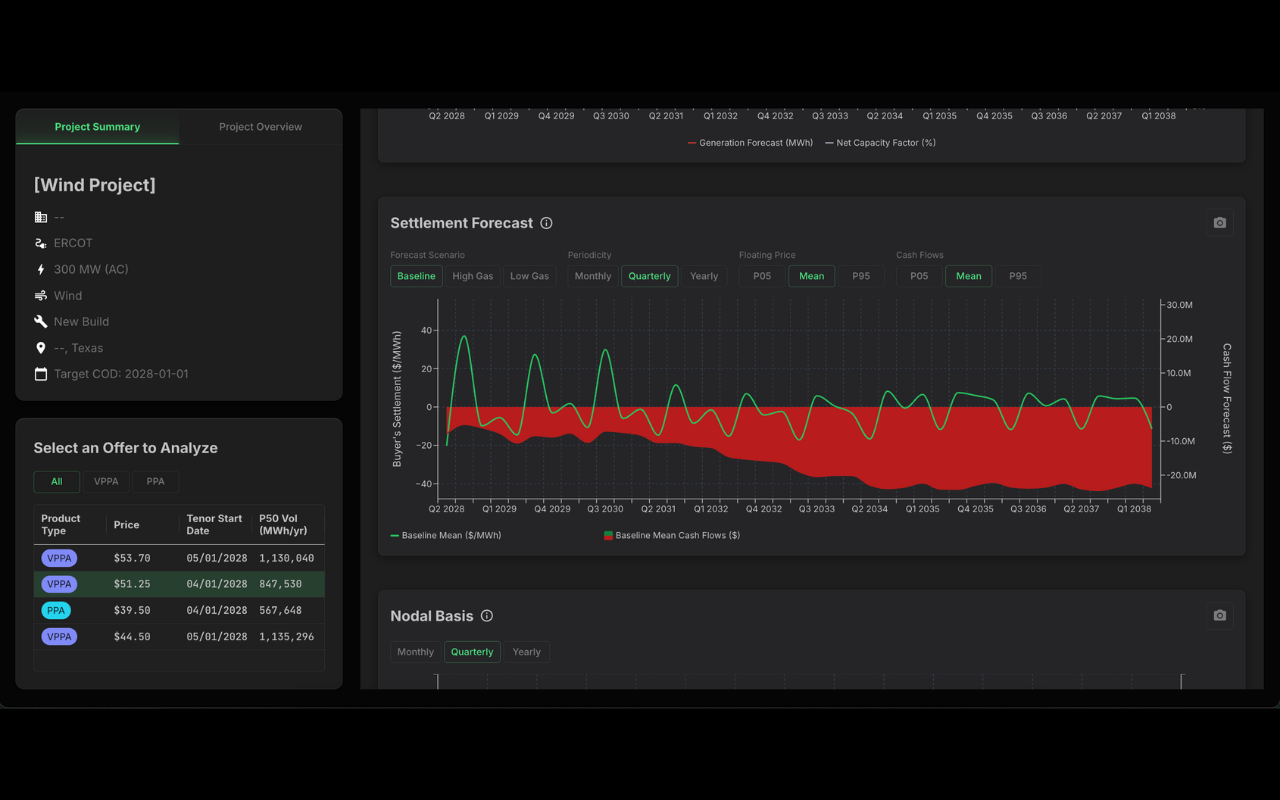
CleanSight is Resurety's answer to that information problem. Its Discover tools combine historical and forecast power prices, generation estimates, project comparisons and emissions data. A developer can test how a proposed solar project might earn money. A corporate buyer can compare offers with a view of basis risk and likely carbon impact. An investor can examine the real-world performance of an asset before assigning it a value.
After a contract is signed, CleanSight Manage brings settlement, generation and portfolio data into one place. The company offers expert reviews and invoice auditing alongside the software. Resurety says it caught more than $2 million in invoice errors for clients in a recent year. That is a useful reminder that procurement is an opening act: a 15-year agreement produces 180 monthly opportunities for a number to go astray.
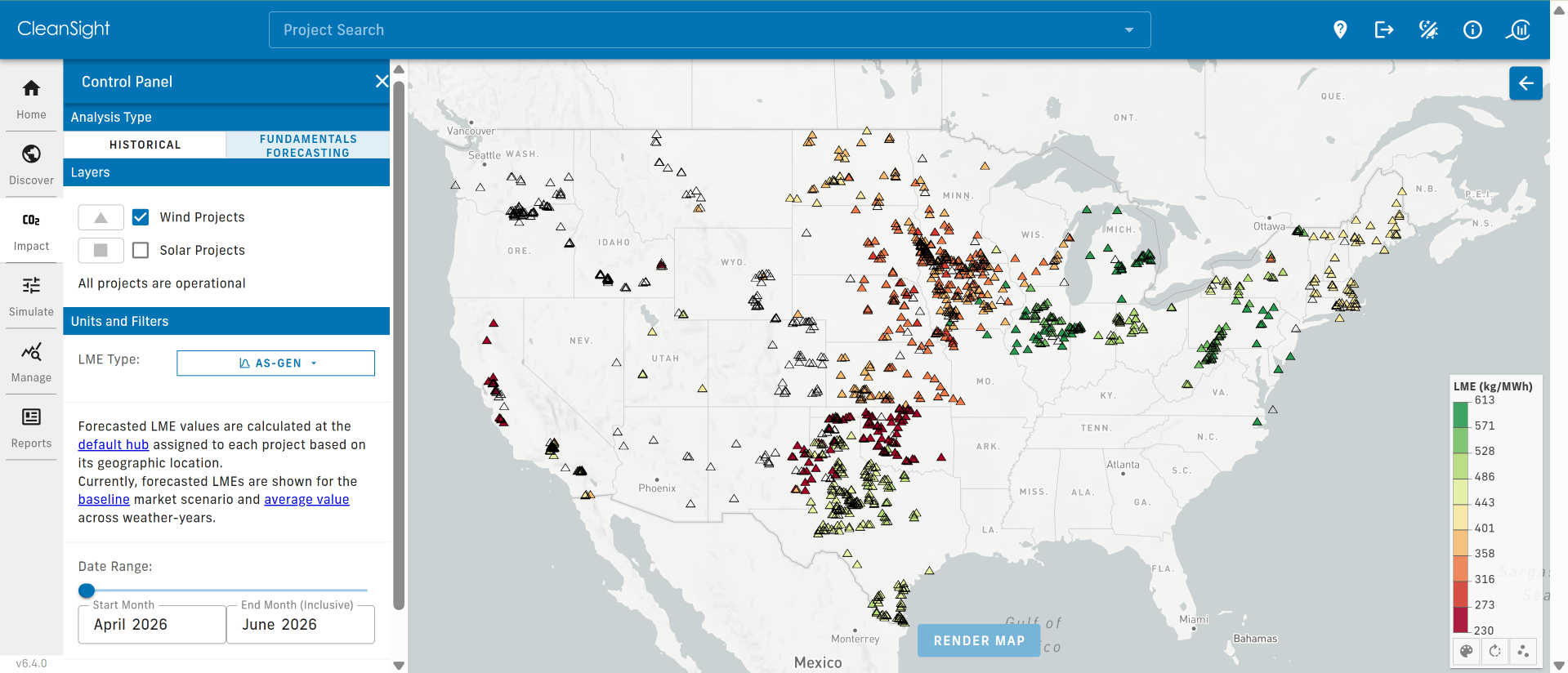
The company's carbon work adds another wrinkle. A megawatt-hour of clean power does not displace the same emissions everywhere or every hour. Its locational marginal emissions data estimates the carbon avoided at a specific place and time. That lets a buyer ask a more pointed question than “How many clean megawatt-hours did I buy?”: “Which fossil generation did this project actually push off the grid?” Resurety has said Microsoft asked it to improve the accuracy of that accounting. Its customer stories describe Akamai using the data to refine avoided-emissions calculations and Broad Reach Power applying it to storage decisions.
Then they built a place to trade
Analysis reveals a good deal. It does not, by itself, put another party across the table. Historically, many clean-power contracts have been sourced and negotiated through brokers, requests for proposals, spreadsheets and email. Prices can be hard to compare because every project has its own generation shape, location and terms. Resurety's second act was to put the negotiation on a screen.
In October 2024 the company announced a $32 million Series C, led by S2G Ventures and Citi with Angeleno Group participating, to launch CleanTrade. The marketplace shows bids and offers for as-generated energy contracts and provides a path from sourcing through evaluation, negotiation and execution. It supports virtual PPAs and, through its broader platform, physical PPAs and project-specific renewable energy certificates. A participant must qualify and sign an agreement; this is a market for institutions, not a retail power-shopping app.
Cargill and Mercuria executed the first reported transaction on CleanTrade in January 2025. In August that year, REsurety Markets LLC received registration from the US Commodity Futures Trading Commission as a swap execution facility. The regulatory step matters: it gives the financial swaps side of the marketplace a formal rulebook, reporting obligations and market oversight. The company also handles physical contracts under a separate part of its platform.
The distinction from another PPA marketplace is quite specific. LevelTen Energy and others also help buyers find renewable projects. Resurety couples its project-level weather, price and emissions models with a federally registered venue for as-generated energy swaps. It is a data business that built a trading desk-shaped door into its own findings. Whether that combination wins broad liquidity is a question the market, rather than a press release, will answer.
A price that other people can see
Liquidity needs a common reference point. In 2026, S&P Global Energy partnered with Resurety to use CleanTrade bids, offers and trades in Platts PPA price assessments. The arrangement gives Resurety's marketplace data another route into the wider market, while independent price reporting can make private negotiations less of a guessing game. The company says CleanTrade now displays more than $30 billion in notional value and more than 18 gigawatts of clean energy. Those are platform figures, not completed transaction volume.
The business has several ways to earn: enterprise software, advisory work and marketplace transaction fees. Public price lists are scarce; CleanTrade makes its current fee schedule available to registered participants. The $32 million raise describes money put into building the market, not the price of becoming a customer. Its customer list spans corporate buyers and owners of power assets, and its own case studies show investment firms using the analysis in deal review.
There is a practical lesson in the sequence. Start by naming the risk in its natural unit. For Resurety that unit was the hour, then the node, then the contract's settlement. Gather enough trusted data to price it, keep watching after the signature, and build a transaction venue only when both sides can understand what is being traded. This approach is useful where power prices vary sharply, contracts are complex and buyers care about real emissions impact. It has less to offer a tiny one-off purchase with simple terms, or a market where too few qualified counterparties will show up to make a visible price meaningful.
Taylor's thesis grew into a company because a clean-energy market needed more than clean intentions. It needed someone willing to count the inconvenient hours. Resurety now wants to make those hours tradeable. The wind still refuses to keep office hours; at least the people financing it can see the clock.