Aaron O’Hearn was supposed to market a product. Instead, he found himself helping remake the company that would have to sell it. At Rev, customers wanted things the catalog did not offer and contracts did not accommodate. Sales incentives pointed elsewhere. Demand had arrived; the organization was still getting dressed.
His account of the next eighteen months is unusually heavy on internal work: inventing roles, changing compensation arrangements, writing memos and having conversations that had somehow escaped everybody’s job description. He says the legal business went from zero to $9 million in annual recurring revenue. About 80 percent of his work, by his estimate, happened inside the company.
There is a pleasing complication here. A decade earlier, O’Hearn had helped build a school to prepare people for startup life. Now he was describing the work of preparing an established company for something new. The classroom had changed size. The difficulty of getting people and opportunity into the same room had followed him.
Eight weeks to learn the room
Startup Institute began in Boston in 2012, with O’Hearn, Shaun Johnson, Katie Rae and Reed Sturtevant as co-founders. O’Hearn had worked on special projects at Techstars Boston. He knew the world of early companies from close enough to see the distance between an available job and somebody ready to do it.
The school offered eight-week programs in web development, product and design, marketing, and sales. Its bet was that technical instruction needed company. Students also had to learn how to communicate, accept feedback and make themselves useful when the work refused to stay inside a tidy job description.
In a young business, an employee can discover that the procedure is being invented during the meeting about the procedure. O’Hearn treated that uncertainty as something people could learn to navigate. The instructors came from working startups. Their experience supplied both practical lessons and introductions to the employers students hoped to join.
The arrangement made the teaching and hiring worlds overlap. By March 2013, the institute was preparing to expand to New York. Early employers could meet potential colleagues through the program; students could see how those companies actually worked. A network became part of the education, rather than a mysterious extracurricular activity enjoyed by people who already had one.
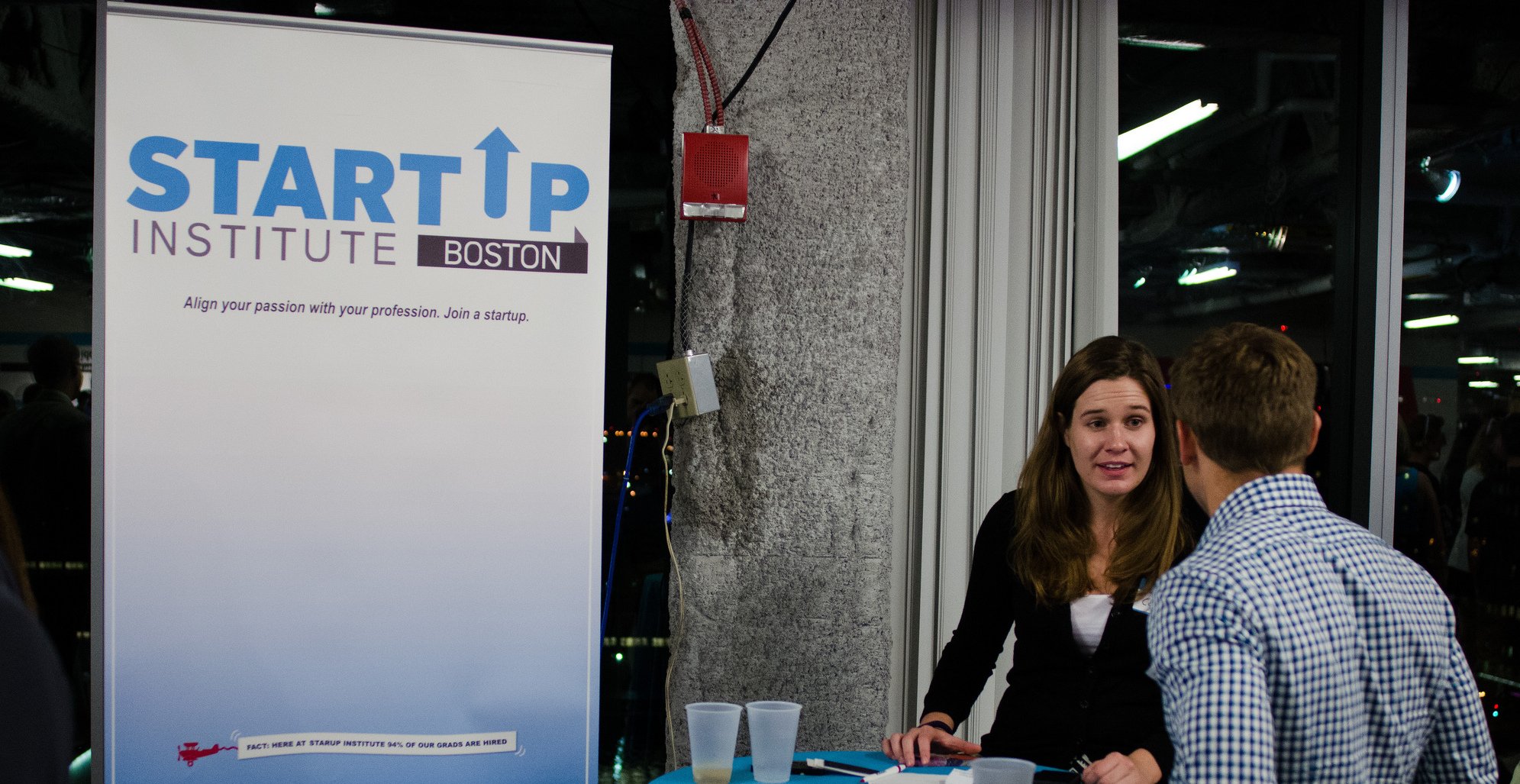
By January 2014, London and Berlin were joining Boston, New York and Chicago on the institute’s map. Expansion carried a specific conviction: a city could accumulate investment and promising companies while still struggling to assemble teams. O’Hearn’s proposed contribution was a workforce able to participate in that growth.
One employer offered a useful test. The Grommet had hired eight institute graduates by the time its co-founder Jules Pieri discussed the program in early 2014. She valued their familiarity with the ambiguity of a young company. Graduates arrived with some expectation that the ground would move. That could spare an employer a good deal of explaining.
There was a real price attached to the experiment. Full-time students had to make room for an intensive course, and tuition meant committing money as well as time. The institute reported that nine in ten graduates found full-time work within three months. That was the school’s contemporary claim, tied to a particular period, rather than a promise that every career change would end neatly.
The founder changes seats
O’Hearn’s own career change was less tidy. He left the Startup Institute CEO role in 2015. In his later telling, he had been let go. He identifies the company’s difficulty acquiring customers predictably as a principal reason. It is a pointed admission from somebody whose subsequent work would keep returning to the mechanics of revenue.
He moved to Austin and joined Funsize, the product design studio. He wanted proximity to product teams: to understand their decisions, their working habits and how he could contribute. For somebody who had spent years helping others make professional transitions, becoming a learner again was a fairly literal application of the curriculum.

In a 2016 conversation with his Funsize colleagues, he described a thread through his earlier jobs: understanding what mattered to people, then helping arrange a path toward it. He also recalled advice to increase his “surface area for luck.” Being useful and meeting more people could make unexpected opportunities more likely. It was a practical explanation for a career that resisted straight lines.
By September 2017 he was announcing a return to Boston as a Techstars director. He had moved back from France in 2011 to work with Rae and Sturtevant on the program that became the 2012 Boston class. Returning meant reconnecting those early-stage companies with a wider community, including larger businesses that might become useful partners.
The intervening Austin chapter had put him around product design work for companies including Honeywell, Facebook, Walmart, Dell and OpenTable. His announcement made room for the local barbecue, too. He could appreciate the menu and still feel the pull of another kind of work. Career reinvention occasionally comes with excellent side dishes.
A memo can be a growth tool
O’Hearn joined Rev in 2022 to run product marketing. His description of what followed helps explain why the distinction between founder and employee has become less decisive in his thinking. He found work that suited him inside an existing organization, even though he had previously assumed that working for himself was what he preferred.
He describes the legal-business build as an organizational problem as much as a commercial one. A potential customer’s requirements crossed product, pricing, contracts, operations, support and sales. The company needed a way to coordinate that work while continuing to run its existing business. Each promising deal could expose another piece that needed attention.
His early deliverables included internal deal memos. Those expanded into strategy documents and plans spanning different functions. The unglamorous paperwork mattered because somebody had to decide how the organization would deliver what customers wanted. An internal agreement could move the business forward before a fresh piece of marketing ever reached a buyer.
He has also written about revising his opinion of strategy. Earlier in his career, the word had sounded to him like something large companies purchased when they had lost touch with customers. A manager’s observation prompted him to reconsider. Diagnosing an opportunity, understanding competitors and choosing a focused course of action had already been part of his own useful work.
That reconsideration gives his story some texture. He is willing to put an earlier opinion beside a later experience and let the experience win. Having founded a school for workplace learning, he has accumulated a few public examples of needing to do some himself.
The podcast that stopped for a rethink
With Andrew Nalband, O’Hearn co-founded Mavin. Their work began with hands-on go-to-market services before developing a product around signals of buyer interest on LinkedIn. O’Hearn leads go-to-market; Nalband leads product. The company now describes two connected activities: Mavin Signal and services that help teams build their revenue operations.
In March 2025, O’Hearn shared a small, deflating episode from the early business. He and Nalband had gone on a podcast, and the host interrupted midway to regroup. Their explanation of what they were doing had apparently failed to make compelling listening. O’Hearn admitted that the experience stung.
Afterward, he and Nalband reconsidered it. They were spending their days talking to customers and solving problems, often manually, before finding ways to make those solutions repeatable. That work did not automatically produce an entertaining pitch. He came to see the awkward recording as a reminder of their priorities. A bruised ego could be educational without becoming a company strategy.
“We’re spending 100% of our time talking to customers and building product for them.”
Aaron O’Hearn, reflecting on Mavin’s early work, March 2025
The product that emerged looks across a team’s LinkedIn activity for signs that people at target accounts are researching the business. Mavin’s account of its origins emphasizes listening to interest that already exists. For O’Hearn, it is another attempt to make the uncertain business of finding customers a little more observable.
Who has room to take this on?
Today, his personal site lists another role: VP of People at Phoenix Tailings. It also describes work building a go-to-market motion at Dropoff and founding Flow Partners, an AI implementation service. Across these assignments, he emphasizes whether an organization has the people, incentives and working arrangements to absorb a new undertaking.
The range is broad, but the question has become fairly precise. Somebody must own the new work. Their manager must have a reason to free them for it. Compensation, responsibilities and the ability to support a customer need to catch up with the ambition. A launch date alone cannot settle any of those matters.
Outside those assignments, he says he has invested in more than 35 pre-seed and seed-stage companies and continues mentoring at Techstars and New England universities. His reading interests include behavioral economics, decision psychology and evolution. Away from work, he spends time with his children and fishes for striped bass.
The fishing is a welcome detail in a career full of programs, motions and functions. O’Hearn says he is often wishing he were fishing when he is doing something else. Even a person concerned with how work gets adopted can appreciate an empty stretch of calendar. He has spent enough time discovering what happens when everybody’s is already full.
Keep following the work
Personal website ↗LinkedIn ↗X ↗Mavin ↗The return to Boston ↗Listen: the Funsize conversation ↗Startup Institute in 2013 ↗The early classroom ↗GitHub ↗Wellfound ↗