Before Todd Cozzens had a company to sell, he had a boat to share. He and Peter Wright were high-school students when they co-owned a 470, the beginning of a sailing partnership that would take them from Chicago to international championships. It is an appealingly practical opening to a business career: two young people, one piece of equipment, and no possibility of succeeding without agreeing on what to do with it.
The familiar version of Cozzens’s life begins later, with Picis, the software business he co-founded and led, or Transformation Capital, the investment firm he helped establish. The earlier version involves sails, travel money and a competitive partnership measured over years. The sailor already knew that a promising position could disappear, and that being pleased with yesterday’s performance was a poor substitute for preparing for tomorrow’s.
A boat shared before a business was built
Wright and Cozzens began campaigning seriously in the Star class in 1978. Their first regatta in that effort was the Bacardi Cup. They won against a fleet of 93 other boats. In 1979 came the Star North American title and a third-place finish at the World Championship in Sweden. Two years later, they finished second at the Worlds in Marblehead, Massachusetts.
Those results make a handsome list. The machinery behind them was less decorative. By 1983, their campaign had consumed their own money, family loans and time away from work. Keeping a boat competitive required testing and tuning. Keeping the sailors competitive required getting them to races. A campaign had bills as well as ambitions, and an empty calendar could be as damaging as an inferior sail.
At home, they trained out of Chicago Yacht Club’s Belmont Harbor station. They sought advice from experienced local sailors, including Buddy Melges, and planned trips to major events. The enterprise depended on people beyond the two aboard. A photograph of a winning boat leaves most of its support network ashore.
Gold, with more work scheduled
In 1983 they won the Western Hemisphere Championship in New Orleans with a race to spare. That summer brought third place at the European Championship in Kiel and silver at the pre-Olympic regatta in Long Beach. It was a busy season to fit around the rest of a life.
Cozzens’s response to the European result was to look at the competition’s preparation. The German sailors had a substantial support programme and repeated opportunities to train together. He admired the work behind their speed. He could be encouraged by his own results and still see a demanding winter ahead. A medal offered evidence of progress; the opposing boats offered reasons to keep working.
At the Pan American Games in Venezuela, Wright and Cozzens won gold in the Star class. Their series included three race victories in shifting conditions off Puerto La Cruz. They held off a Brazilian challenge. The achievement belonged to a partnership with a history, rather than a team assembled for one agreeable afternoon.
Then came the next training schedule. There is a particular comedy in a sporting life: the reward for getting good enough to contend is usually permission to work harder. Gold could go in a cabinet. The boat still needed attention.
The apprenticeship in selling
Cozzens graduated from Marquette University and later completed Harvard Business School’s Program for Management Development. His working education included a long stretch at Marquette Medical Systems. The company and the university shared a name, but one taught him in classrooms and the other put him in front of customers.
At Marquette, he held sales and management positions, including vice president of sales from 1983 to 1995 and president of a division. He helped lead the company through an initial public offering alongside its founder, Mike Cudahy. It was later acquired by GE. This was an apprenticeship that extended beyond getting a signature: he saw a business grow, become public and negotiate a change of ownership.
Cudahy remained an important figure for him. Cozzens has spoken warmly about the founder’s influence and mentorship. That connection complicates the solitary-founder portrait that business biographies sometimes prefer. Before he became the experienced executive on someone else’s board, he had an experienced founder to learn from.
He has described negotiations over Marquette’s sale as involving Jack Welch and Jeff Immelt directly. A transaction with GE put the small details of a business against the requirements of a much larger buyer. Sailing had its technical vocabulary. This setting supplied another, with considerably more paperwork.
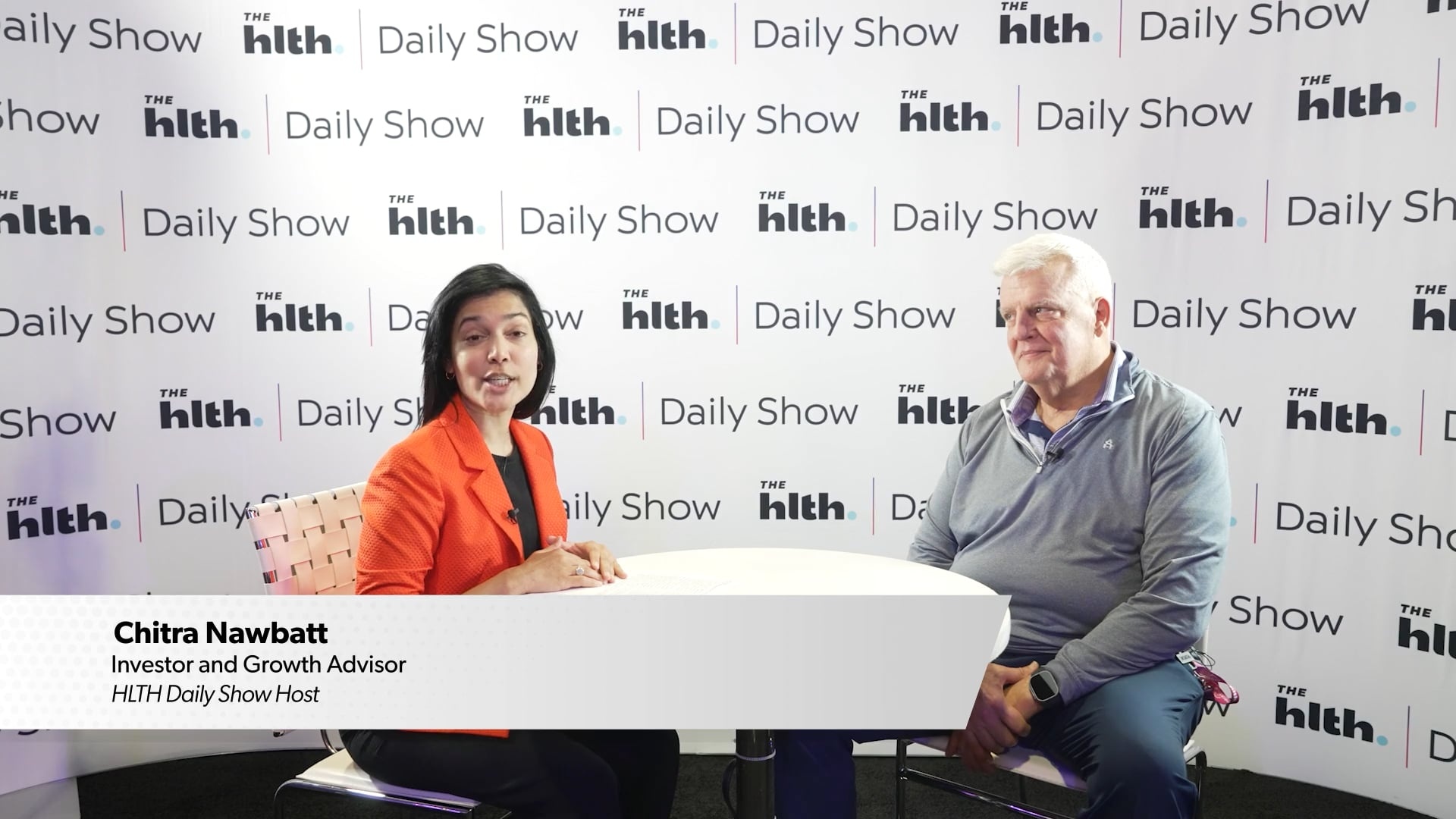
Interview still: The HLTH Daily Show / CodeBreaker Mindset.
A company, then a change of owner
Picis put Cozzens in the founder’s seat. He has described encountering its technology during his travels, reaching an agreement with its technical founders and securing seed funding. The story contains several kinds of work: recognising a commercial possibility, finding a way to build together and persuading others to finance it.
By the time Picis filed its 2006 registration statement, Cozzens’s titles included chief executive, president and vice chairman. Titles are dry reading, but those three suggest the range of demands in a growing company. Product, customers, employees and investors all required attention. Having a view of the market did not remove the daily obligation to run the place.
UnitedHealth Group acquired Picis in 2010. Cozzens stayed on and became involved in the formation of Optum, taking operating and strategy responsibilities. His career could have been compressed at that point into a founder-and-exit sentence. Staying added another chapter, inside an organisation with a different scale and a different collection of assets.
An acquisition changes who owns the company. It can also change the founder’s education. Cozzens moved from building one business to considering how businesses fit together, including work on strategy and acquisitions. The view from that seat would matter when he crossed into investing.
- MarquetteSales, management, IPO
- PicisCo-founder and CEO
- OptumOperations and strategy
- SequoiaInvesting, 2012-2015
- TransformationBuilding an investment firm
Learning the other side of the table
From 2012 to 2015, Cozzens worked at Sequoia Capital. The founder who had sought capital was now involved in deciding where it should go. An operator’s familiarity with selling and delivery can make a pitch more interesting, and the questions after it rather more specific.
In September 2015, he joined Leerink Capital Partners to lead an investment initiative. He and Jared Kesselheim subsequently built Leerink Transformation Partners, the predecessor firm whose formation the partners date to 2016. In November 2019, they announced Transformation Capital Partners as a new management company for existing and future funds.
Those stages matter because an investment firm has a building story too. It needs partners, a point of view and people willing to entrust it with money. Cozzens brought company-building experience; Kesselheim brought his own investing background, including years at Bain Capital Ventures. The partnership was designed to combine different kinds of experience.
The distinction between running and advising is a delicate one. A board member can remember the pressures of the chief executive’s job without assuming possession of it. Good advice still has to survive contact with someone else’s company, team and circumstances. A founder’s earlier success supplies experience, not a spare set of keys.
“inspect what you expect”
Todd Cozzens, in conversation with Gary Bisbee, 2021
That phrase captures his attention to execution. There is a large distance between approving a plan and knowing whether it has worked. It is also an unglamorous instruction, which may be part of its usefulness. The verb requires somebody to look.
The scorecard keeps changing
The more recent chapters still involve new companies and new technologies. Ahead of a January 2025 conference discussion, Cozzens described an interest in businesses built around AI, established companies adopting it and its use within the investment firm itself. In February 2026, a financing announcement named him to Alaffia Health’s board after Transformation Capital led its Series B.
The continuity is in the work of choosing and helping to build. The equipment changes. A sailor who once assessed a competing boat’s preparation now has businesses to examine and entrepreneurs to work alongside. The analogy has limits, of course. A company cannot settle all its arguments by rounding a buoy.
There were also choices about what to stop doing. Cozzens stepped away from grand prix sailing to give his attention to the businesses he led and his family: his wife, Carme, and daughters, Chloe and Chantal. Even an appetite for competition has to share a calendar.
Golf has offered a replacement pursuit, accompanied by a modest assessment of his chances of troubling course records. It is a pleasing final detail for someone whose earlier sport involved international rankings. A successful business career does not entitle a ball to land where instructed.
From the schoolboys’ shared boat to the investment partnership, Cozzens’s story keeps returning to preparation and other people. He has had trophies, transactions and changes of role. He also has a game still capable of reminding him that the next shot requires its own work.