The problem was a taskboard. At a behavioral-health provider, staff used an internal application to coordinate work across detox, residential treatment, halfway housing, and reentry programs. The backend ran on ColdFusion. The screen had become cumbersome. Finding overdue work meant navigating around the very tool meant to organize it.
- Custom engineering for healthcare, fintech, and established business systems.
- Its own AI products for documents, video, and enterprise workflows.
- A practical starting point: improve one repeatable job, then expand.
10decoders added a React interface, task summaries, charts, search, and bulk actions. The existing business logic stayed in place. The company reports a four-person team and three months to production readiness. It is an unusually helpful introduction to a business whose service list otherwise sprawls across much of enterprise technology.
Look closely at that choice. A working backend contains accumulated decisions about how an organization operates. Replacing it creates another job. Improving the taskboard addresses the irritation staff already have. The interesting engineering decision was where to stop.
A place between the model and Monday morning
10decoders occupies the space between buying software and making it useful inside an existing organization. Its work includes custom applications, cloud and data engineering, integrations, modernization, and testing. Healthcare and financial services are its principal markets; its current pitch centers on mid-market companies with real operational complexity.
That puts it alongside specialist development firms and larger digital engineering consultancies. The alternatives also include hiring an internal team or buying a packaged tool. Its combination of domain knowledge, delivery teams, and proprietary products is a positioning choice. Buyers still need to judge the people and proposed scope.
Healthcare makes the requirement easy to understand. A new application may need to exchange records with an existing clinical system, respect access permissions, and leave a record of what happened. 10decoders describes work across electronic health records, billing, prior authorization, and HL7/FHIR interoperability. A clever answer from a model solves only part of that assignment.
Three products, three kinds of friction
DocuFindr addresses paperwork. Its current healthcare offering covers durable medical equipment intake, order verification, and prior authorization. Documents become inputs to an operating process: extract the information, check what is present, identify what needs attention, and move the case forward. The attraction is less retyping and less time hunting through a file.
CheiAI sits closer to the enterprise AI foundation. The platform describes document-grounded question answering, database queries, access controls, and agent workflows. A team can begin with finding information before asking software to perform a sequence of actions. Those are different levels of responsibility, with different demands on the underlying data.
VuFindr looks through cameras. It markets operations and compliance intelligence from existing CCTV for settings including restaurants, retail, hospitality, and manufacturing. Detecting an event matters because somebody can receive an alert and investigate it. Hours of footage become more useful when an operator knows where to look.
The three products give the services business reusable starting points. They also reveal a preference for work already producing evidence: forms, records, queries, images. There is something refreshingly tangible about that selection. The raw material exists. The job is to organize it well enough to act.
The decision that should only be made once
Another company case study concerns property-management-system integrations for a travel marketing platform. Vendor APIs, authentication, and documentation varied. Architectural decisions were repeatedly revisited. 10decoders built a catalog of vendor knowledge and a rule-based matrix for choosing integration patterns, then used AI assistance to prepare artifacts and implementation drafts.
The company reports two integrations in roughly four days altogether, compared with an estimated thirty days under the previous approach. Engineers retained approval gates. The useful change was making earlier decisions available to the next project. A recurring task became a process with a memory.
That is the part another team can copy: classify the job, capture reference implementations, require a mapping before coding, and review the result. The same economy appears in its QA modernization work. Separate sandbox runs let testers investigate problems while official release metrics retain their meaning.
Buy a smaller first decision
The commercial offer follows this preference for bounded steps. Its Blueprint engagement produces architecture and a delivery roadmap. Assurance adds senior oversight to a client’s team. Outcome puts end-to-end delivery and operations with 10decoders. The distinction is who does the work and who answers for its quality.
“Start small. Scale when we’ve earned it.”
10decoders’ engagement-model proposition
A Blueprint fee is credited against qualifying follow-on work signed within 90 days. Separately, Clutch lists a $25,000 minimum project and hourly rates of $25-$49. Those figures establish a buying context, rather than the price of the taskboard or a product subscription. Scope and ongoing operation still determine the bill.
Fit matters. A reusable integration catalog needs enough recurring work to justify maintaining it. A focused interface rebuild depends on a backend worth preserving. AI document workflows need representative documents and people able to review exceptions. A company seeking a quick, generic website has a different problem from these buyers.
The people behind the repeatable work
Founder and CEO Venkatachalam Dekshinamurthy leads the business alongside founder and CTO Edrin Thomas. Delivery centers in Chennai and Madurai connect it to international customers. The company’s published leadership roster also includes co-founders responsible for delivery, R&D, and go-to-market work.
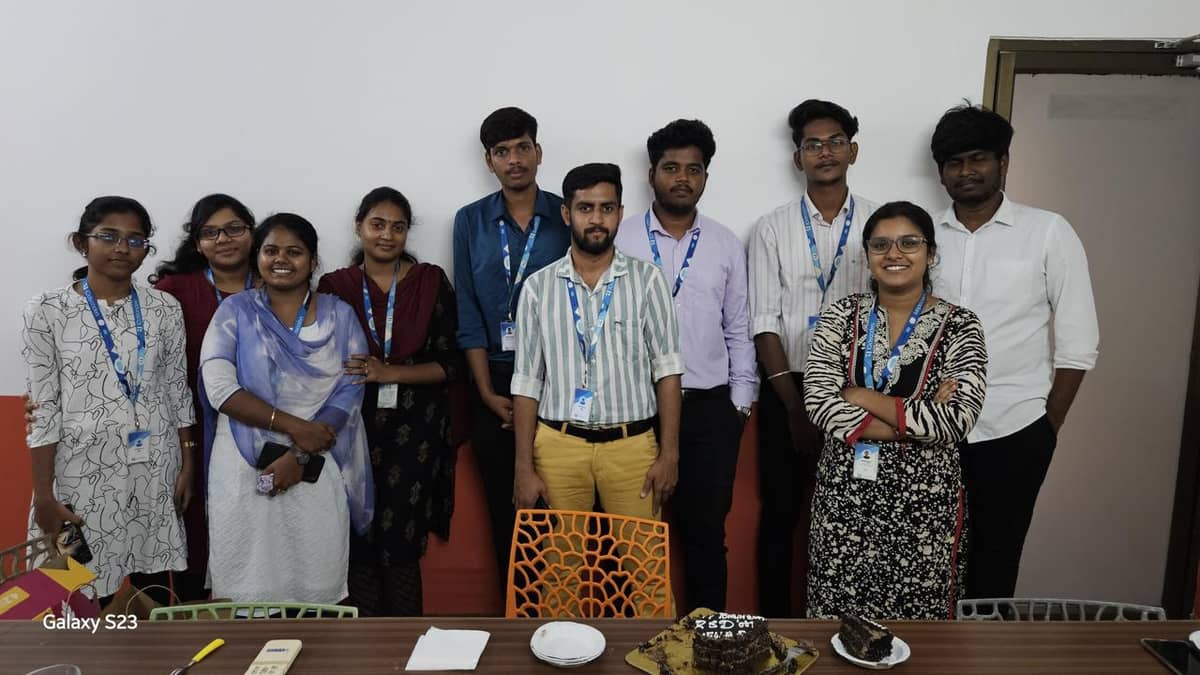
Its stated culture includes structured learning and Reset & Rise, a returnship for women coming back after a career break. Its research interests stretch to spirometry, retinal imaging, and soil-moisture sensing. The range is wider than the healthcare paperwork might suggest.
For a prospective customer, the taskboard remains the useful image to keep in mind. Identify a daily obstruction. Put a small team around it. Preserve the knowledge already embedded in the business. Make the improvement visible to the person who has to use it tomorrow.